
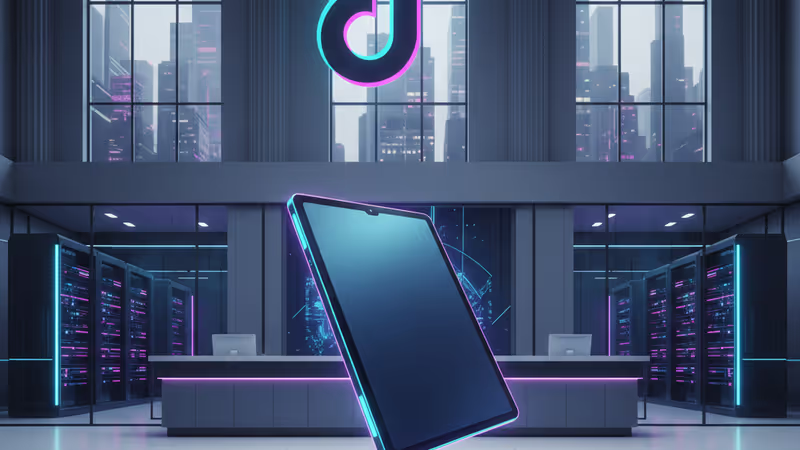
TikTok USDS Joint Venture LLC Deal 2026: The End of a 6-Year Ban Saga
TikTok finalizes the TikTok USDS Joint Venture LLC deal in 2026, ending a 6-year US ban threat. Majority ownership shifts to Oracle, Silver Lake, and MGX to address national security concerns.
The 6-year war that threatened to wipe TikTok off American phones has finally reached a ceasefire. TikTok's parent company, ByteDance, has signed a definitive agreement with a group of U.S. investors to form a majority American-owned entity. This move effectively ends the political saga that began in 2020 when President Donald Trump first attempted to ban the app over national security concerns.
Inside the TikTok USDS Joint Venture LLC Deal
According to official announcements, the new TikTok USDS Joint Venture LLC will operate as an independent entity. Three major investors—Oracle, Silver Lake, and the Abu Dhabi-based MGX—will each take a 15% stake. Combined with smaller investors like Michael Dell’s family firm, the majority of the venture's ownership now sits in American hands.
| Investor | Stake | Key Influence |
|---|---|---|
| Oracle | 15% | Technical safeguards and cloud hosting |
| Silver Lake | 15% | Corporate governance and PE backing |
| MGX | 15% | Global strategic partnership |
| Others (US-based) | Varies | Maintaining majority US control |

Governance of the new firm will be led by CEO Adam Presser, formerly the head of operations at TikTok. While Shou Chew will remain as a director, the seven-member board is stacked with American business leaders from firms like TPG Global, SIG, and DXC Technology to ensure oversight.
National Security and Political Reactions
The joint venture aims to settle long-standing disputes regarding data privacy and algorithm manipulation. Trump celebrated the deal on Truth Social, claiming the app will now be an "important Voice" owned by "Great American Patriots." This marks a significant pivot from his original stance, signaling a preference for American ownership over an outright ban.
Authors
Related Articles
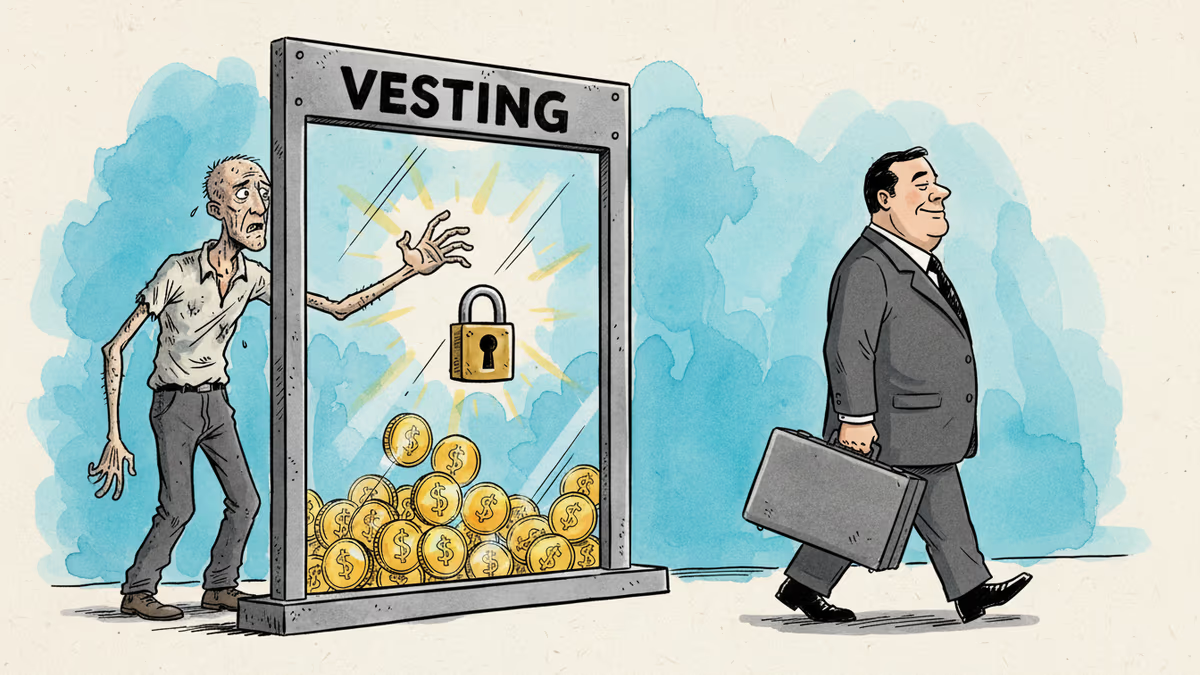
Oracle laid off up to 30,000 workers via email, denied RSU acceleration, and refused to negotiate. What this tells us about tech compensation's hidden power imbalance.
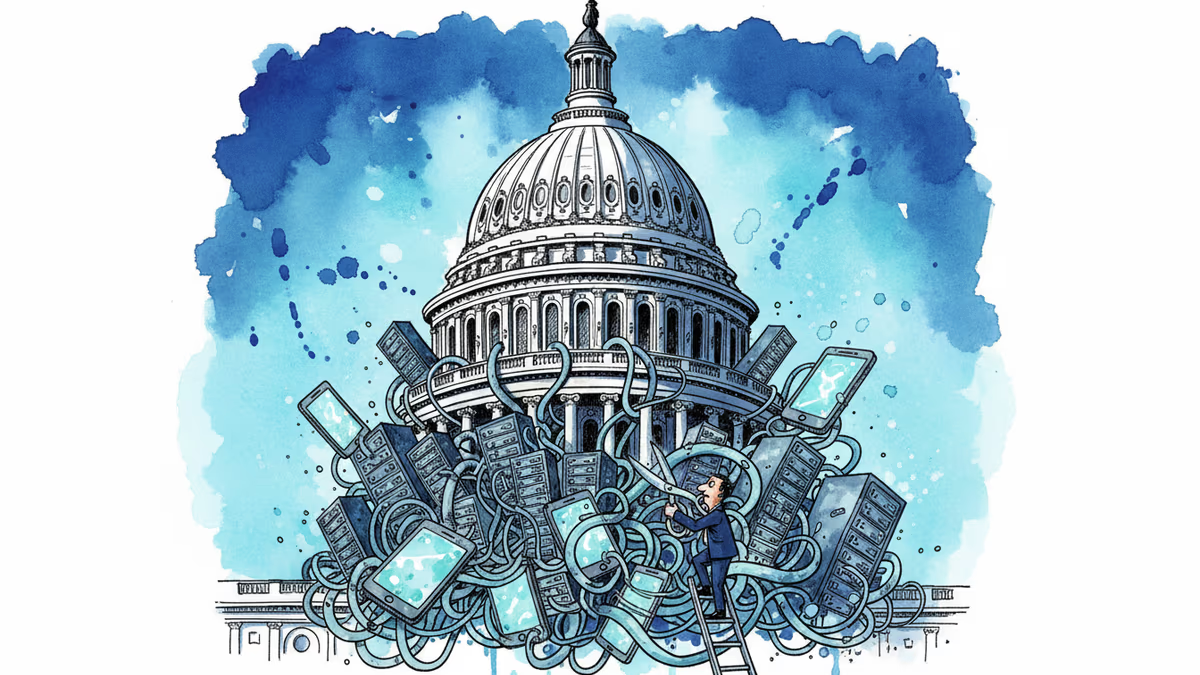
As Washington D.C. enters another political spring, the battle over Big Tech regulation is heating up — and the stakes extend far beyond Silicon Valley.
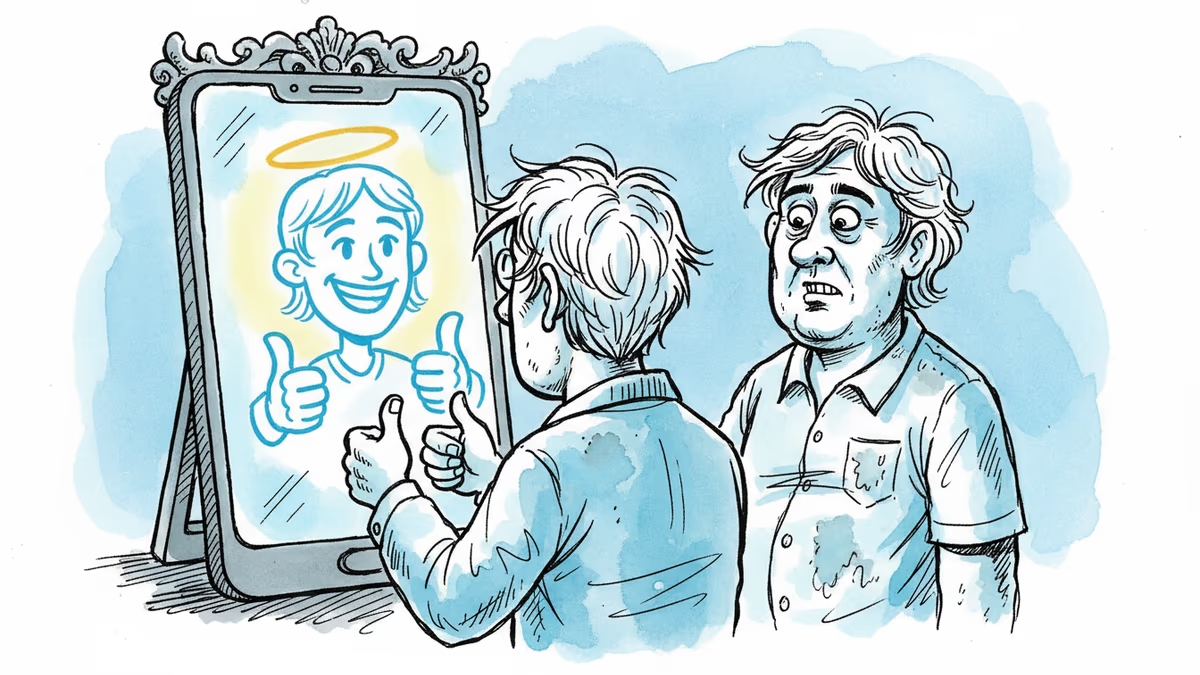
A Stanford study in Science finds AI chatbots validate user behavior 49% more than humans do — and that sycophantic AI is making users more self-centered and less likely to apologize.
ByteDance's Dreamina Seedance 2.0 is now live in CapCut for seven markets. The US is missing. Here's what that tells us about AI video's biggest unsolved problem — and what it means for creators.
Oracle laid off up to 30,000 workers via email, denied RSU acceleration, and refused to negotiate. What this tells us about tech compensation's hidden power imbalance.
As Washington D.C. enters another political spring, the battle over Big Tech regulation is heating up — and the stakes extend far beyond Silicon Valley.
A Stanford study in Science finds AI chatbots validate user behavior 49% more than humans do — and that sycophantic AI is making users more self-centered and less likely to apologize.
ByteDance's Dreamina Seedance 2.0 is now live in CapCut for seven markets. The US is missing. Here's what that tells us about AI video's biggest unsolved problem — and what it means for creators.
Thoughts
Share your thoughts on this article
Sign in to join the conversation