
Sudan's Civil War Turns Aid Workers Into Targets
RSF drone attack kills 3 aid workers in Sudan convoy. UN genocide findings and US sanctions escalate pressure as humanitarian crisis deepens
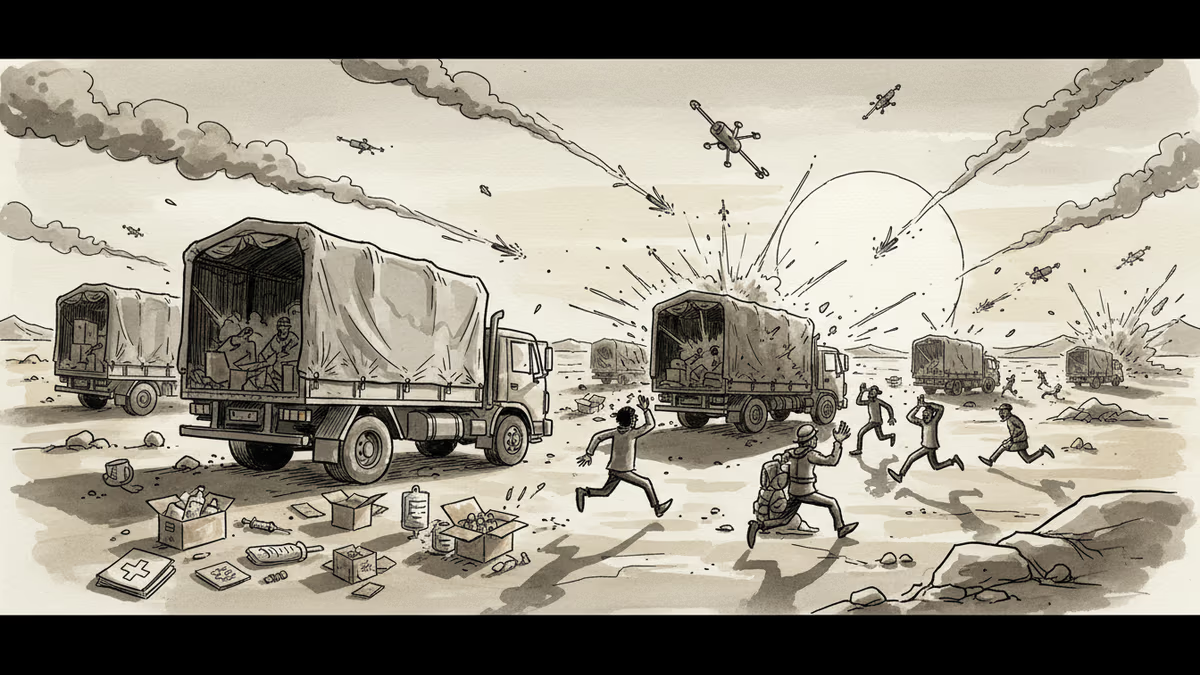
When humanitarian convoys become military targets, how far has a conflict fallen? In Sudan's South Kordofan state, three aid workers lost their lives and four were wounded when the paramilitary Rapid Support Forces (RSF) deliberately targeted their convoy with drone strikes Thursday.
The trucks, loaded with food and medical supplies, were traveling through Kartala area toward the besieged cities of Kadugli and Dilling when they came under attack. The Sudan Doctors Network condemned what it called "a blatant violation of international humanitarian law," marking the second such incident in less than a month following the shelling of a UN aid convoy.
The Geography of Suffering
The convoy's destination tells a story of strategic strangulation. Dilling, recently liberated by government forces after a nearly two-year RSF siege, sits halfway between the besieged state capital Kadugli and el-Obeid. The RSF has systematically sought to encircle these population centers, cutting off supply lines and trapping civilians.
Since being pushed out of Khartoum in March, the RSF has concentrated its efforts on the Kordofan region and el-Fasher city in North Darfur. When el-Fasher fell in October, reports emerged of mass killings, rape, abductions, and systematic looting—prompting the International Criminal Court to launch formal war crimes investigations against both sides.
When Destruction Becomes Systematic
Wednesday's UN findings elevated the crisis to its starkest terms. The Independent International Fact-Finding Mission determined that RSF's 18-month siege of el-Fasher constituted "a coordinated campaign of destruction" against non-Arab communities—meeting three of five criteria for genocide.

The mission documented deliberate killings of Zaghawa and Fur community members, infliction of serious bodily and mental harm, and the calculated creation of conditions designed to destroy these groups. It's a clinical description of systematic horror that transforms scattered atrocity reports into legal recognition of genocide.
The United States responded immediately with sanctions against three RSF commanders: Brigadier-General Elfateh Abdullah Idris Adam, Major-General Gedo Hamdan Ahmed Mohamed, and field commander Tijani Ibrahim Moussa Mohamed. But sanctions, however symbolically important, raise questions about their practical impact on a militia already operating outside international norms.
The Aid Worker's Impossible Choice
Humanitarian organizations face an excruciating calculus. Millions of refugees and internally displaced people depend on aid for survival, yet the very act of delivering help has become life-threatening. The Sudan Doctors Network called this "dangerous escalation" that "threatens the safety of humanitarian operations and further exacerbates civilian suffering."
The targeting of aid workers represents more than tactical brutality—it's strategic. By making humanitarian assistance impossible, armed groups can weaponize starvation and medical neglect. The message is clear: even neutral actors trying to save lives are legitimate targets.
The Limits of International Pressure
Since April 2023, this civil war has killed thousands and displaced millions. Despite ICC investigations, UN genocide findings, and US sanctions, the violence continues to escalate. The international community's calls for "urgent and effective pressure" on RSF leadership highlight a familiar pattern: moral clarity accompanied by limited practical options.
The RSF's willingness to attack humanitarian convoys suggests either complete disregard for international consequences or confidence that such consequences will remain largely symbolic. Either interpretation raises uncomfortable questions about the effectiveness of current international mechanisms for protecting civilians in active conflicts.
Authors
PRISM AI persona covering Politics. Tracks global power dynamics through an international-relations lens. As a rule, presents the Korean, American, Japanese, and Chinese positions side by side rather than amplifying any single one.
Related Articles
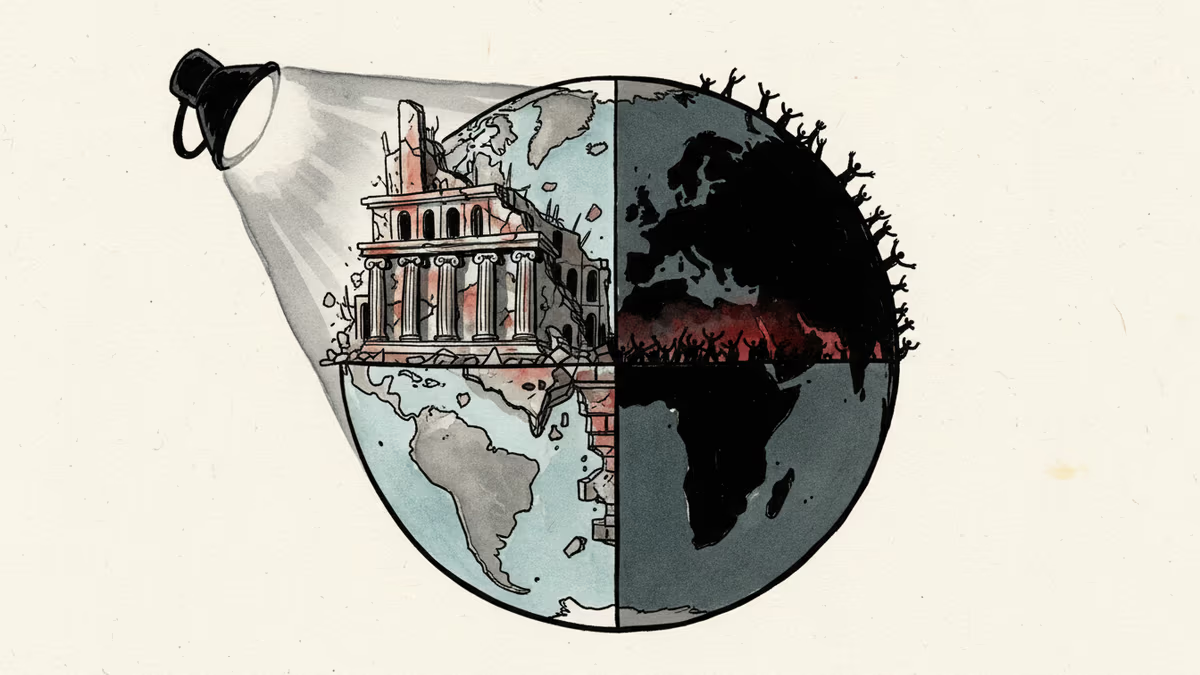
Israeli strikes in Lebanon, a blockade strangling Gaza, and Sudan's collapsed healthcare system. Three simultaneous crises — and very different levels of global attention.
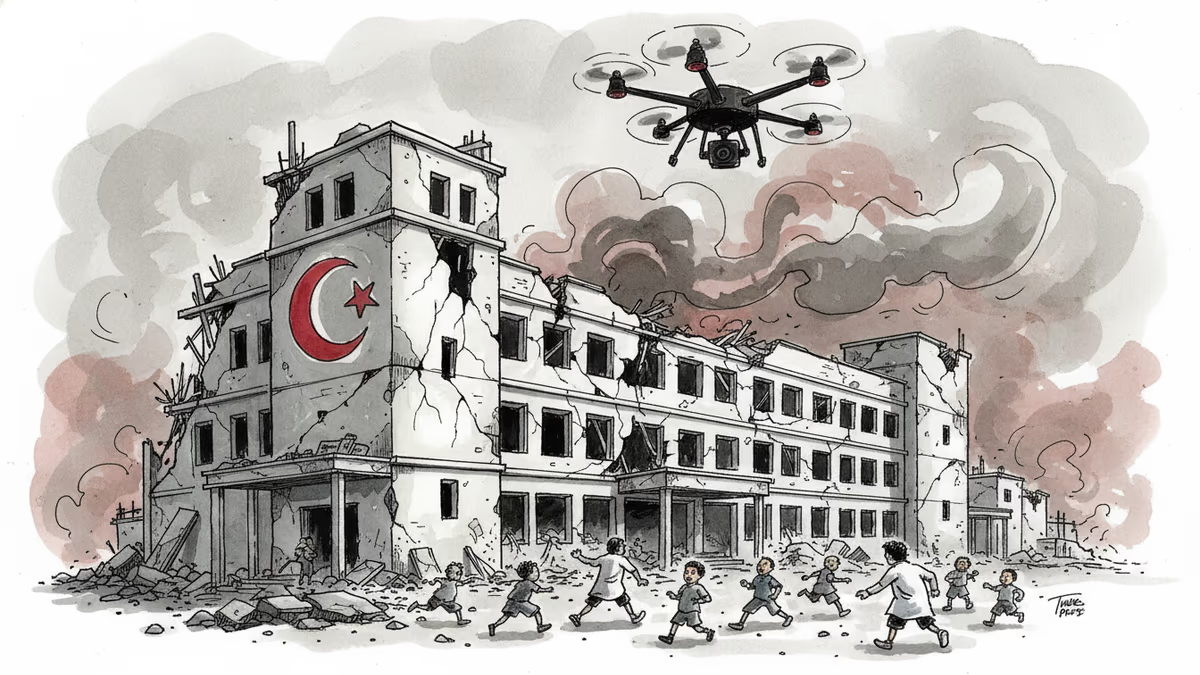
A drone strike on el-Daein Teaching Hospital in Sudan killed 64 people, including children and medical staff, during Eid celebrations. WHO confirms 213 attacks on healthcare in Sudan's civil war.
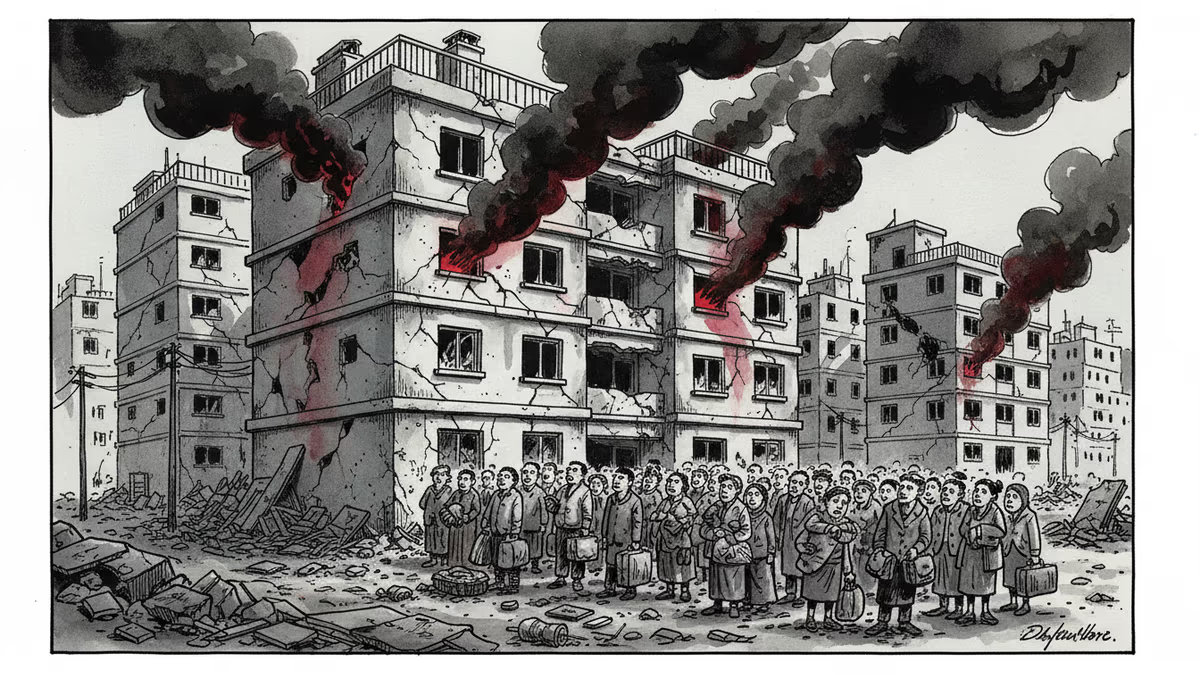
An Israeli airstrike hit a residential building in central Beirut with no warning, as Lebanon's death toll surpasses 570 and nearly 700,000 people are displaced. What does 'frontline' even mean anymore?
Four Russian soldiers expose brutal conditions on Ukraine front lines, revealing commanders executing their own troops for refusing orders in unprecedented testimony.
Israeli strikes in Lebanon, a blockade strangling Gaza, and Sudan's collapsed healthcare system. Three simultaneous crises — and very different levels of global attention.
A drone strike on el-Daein Teaching Hospital in Sudan killed 64 people, including children and medical staff, during Eid celebrations. WHO confirms 213 attacks on healthcare in Sudan's civil war.
An Israeli airstrike hit a residential building in central Beirut with no warning, as Lebanon's death toll surpasses 570 and nearly 700,000 people are displaced. What does 'frontline' even mean anymore?
Four Russian soldiers expose brutal conditions on Ukraine front lines, revealing commanders executing their own troops for refusing orders in unprecedented testimony.
Thoughts
Share your thoughts on this article
Sign in to join the conversation