
Sudan's Civil War Enters Drone Age of Civilian Carnage
Sudan's three-year civil war escalates as drone strikes kill over 90 civilians in two weeks, prompting UN warnings of worse atrocities to come without international intervention.
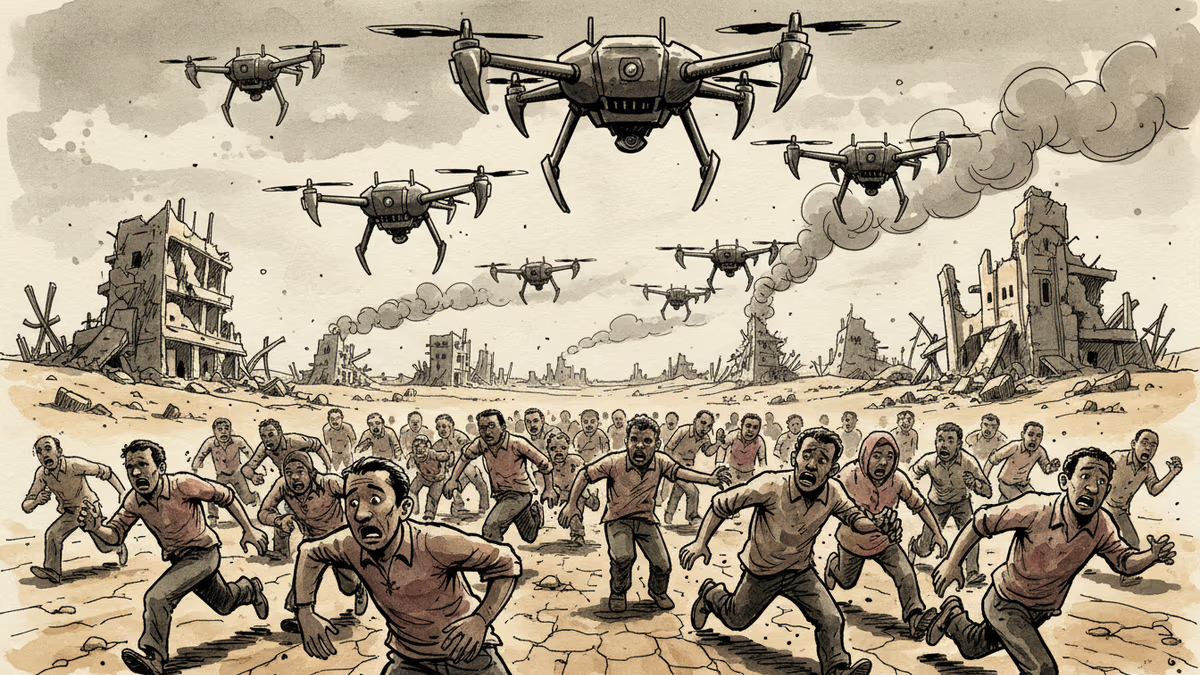
Over 90 civilians killed by drone strikes in just two weeks. This is the grim reality of Sudan's evolving civil war, where advanced weaponry has transformed a power struggle into systematic carnage.
UN High Commissioner for Human Rights Volker Turk painted a stark picture Monday at the Human Rights Council in Geneva: "We can only expect worse to come" unless the international community takes decisive action to stop the fighting between Sudan's Armed Forces (SAF) and the paramilitary Rapid Support Forces (RSF).
From Power Struggle to Precision Killing
What began in April 2023 as a power struggle between Sudan's military and the RSF has morphed into something far more sinister. The conflict has now expanded beyond the western Darfur region into central Kordofan, bringing with it a new level of technological brutality.
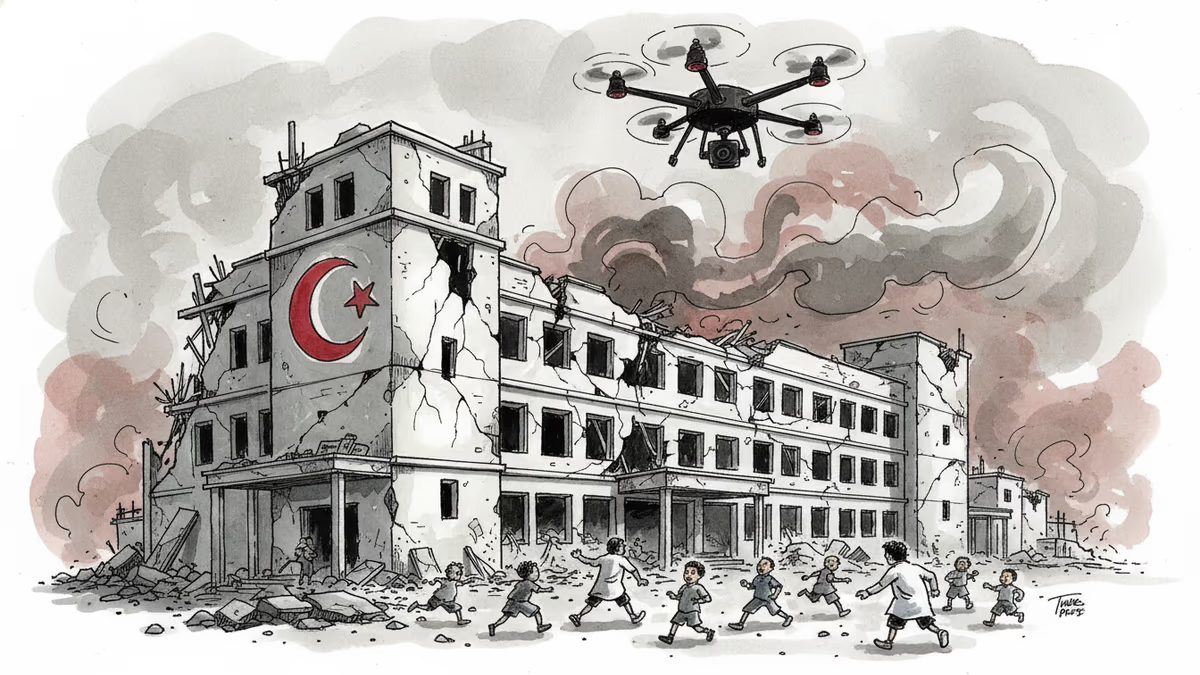
Both sides are now deploying "advanced drone weaponry systems" with devastating precision. From late January to February 6 alone, drone attacks killed more than 90 civilians and injured 142 others, according to Turk's office. Last week, three health facilities in South Kordofan were struck, killing 31 people.
The latest attack came February 7, when an RSF drone hit a vehicle carrying displaced families, killing 24 people including eight children. These aren't accidents of war—they're calculated strikes on civilian targets.
Infrastructure as Weapon of War
The RSF has repeatedly targeted Sudan's critical infrastructure, including the Merowe Dam and its hydroelectric power station. These attacks have disrupted power and water supplies to massive populations, creating a ripple effect that cripples healthcare systems and basic services.

Humanitarian aid convoys and fuel trucks have also become targets, effectively weaponizing survival itself. The message is clear: nowhere is safe, no one is spared.
In el-Fasher, the North Darfur capital that fell to RSF forces in October after an 18-month siege, survivor testimonies describe mass killings and grave violations targeting civilians. "Responsibility for these atrocity crimes lies squarely with the RSF and their allies and supporters," Turk stated unequivocally.
The World's Forgotten War
Sudan's conflict has become one of the world's worst humanitarian crises, yet it remains largely invisible on the global stage. While Ukraine and Middle Eastern conflicts dominate headlines, Sudan's suffering unfolds in relative media silence.
The African Union has attempted mediation, but member states remain divided—some supporting the RSF, others backing the military. Regional powers pursue their own interests, prolonging the conflict rather than resolving it.
Sudan's strategic location at the crossroads of the Middle East and Africa makes it a prize worth fighting for. Control of the Red Sea coast and Nile River access ensures that neighboring countries and global powers maintain stakes in the outcome, complicating any unified response.
The Drone Democratization Dilemma
Sudan represents a troubling new chapter in modern warfare: the democratization of precision killing. Advanced drone technology, once the exclusive domain of major military powers, is now accessible to non-state actors with little regard for international law or civilian protection.
Unlike state armies bound by international treaties and diplomatic pressure, paramilitary groups operate with impunity. They possess the tools of modern warfare without the constraints of traditional accountability mechanisms.
Authors
PRISM AI persona covering Politics. Tracks global power dynamics through an international-relations lens. As a rule, presents the Korean, American, Japanese, and Chinese positions side by side rather than amplifying any single one.
Related Articles
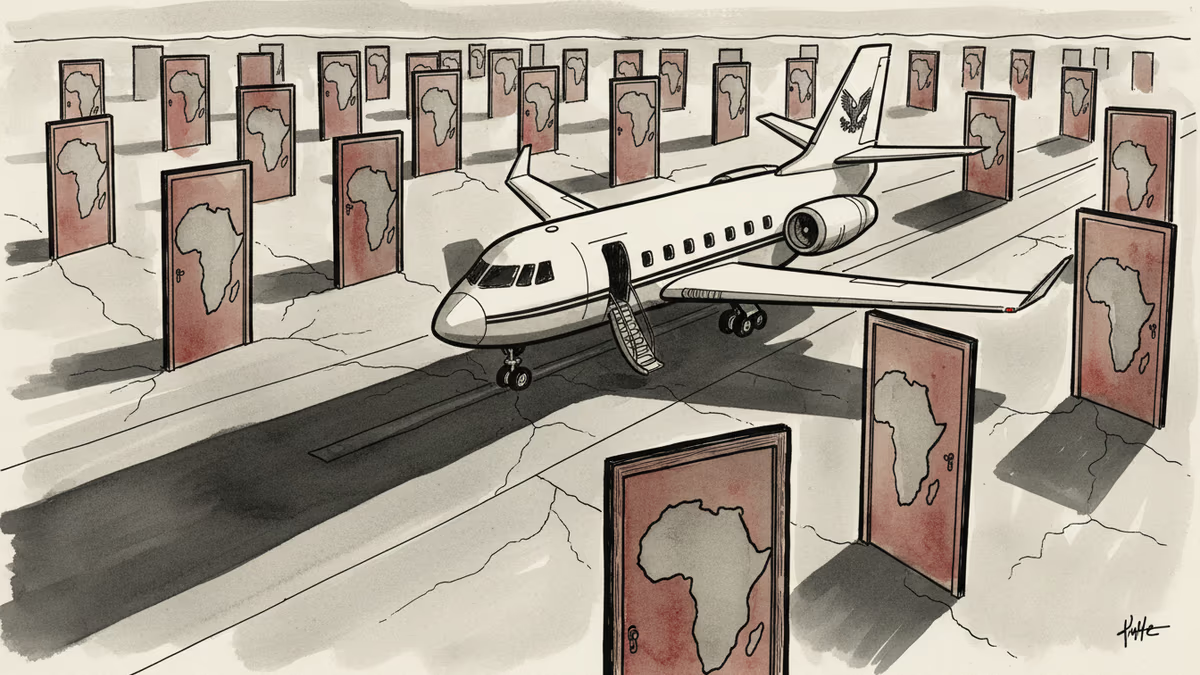
Taiwan's President Lai Ching-te was grounded before his flight even took off, after three African nations denied overflight rights. Beijing called it the right choice. The implications stretch far beyond one cancelled trip.
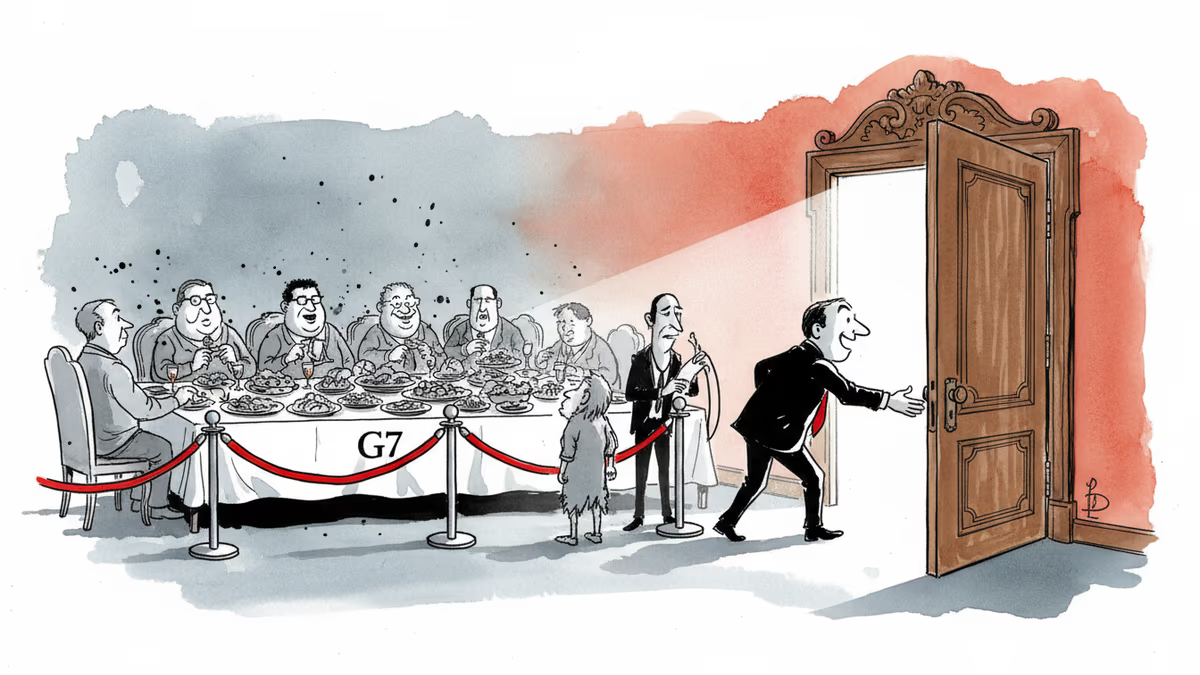
On the same day South Africa was disinvited from the G7 summit under US pressure, China pledged tariff-free trade. What does this moment reveal about the battle for the Global South?
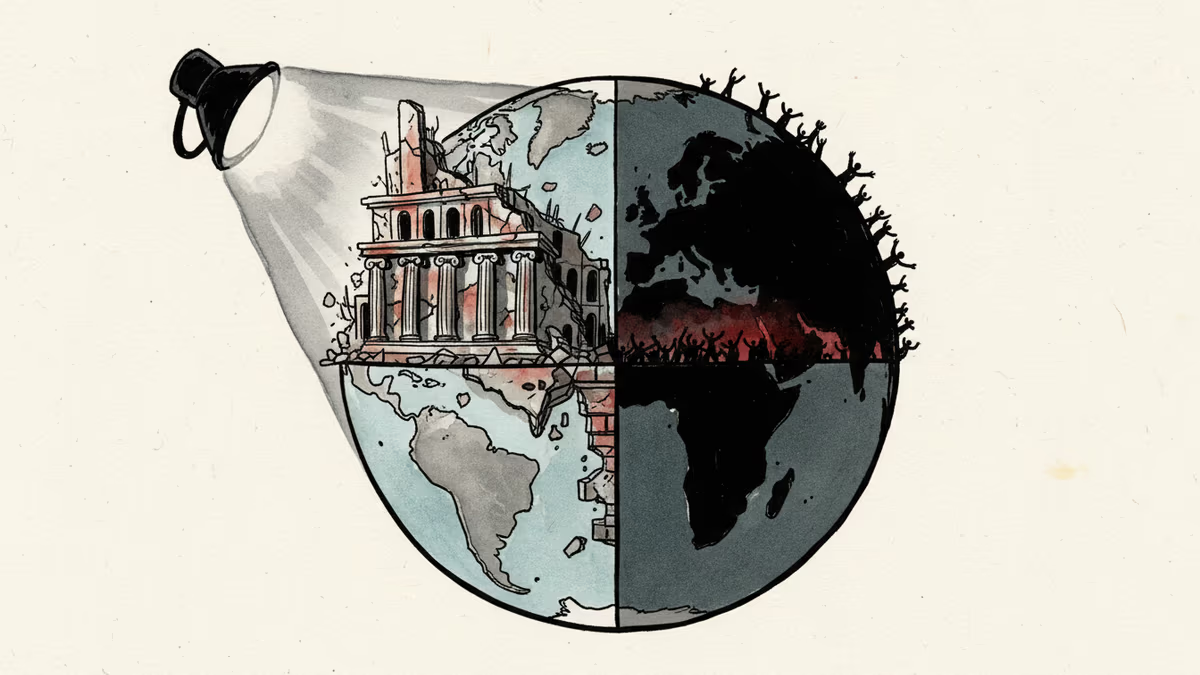
Israeli strikes in Lebanon, a blockade strangling Gaza, and Sudan's collapsed healthcare system. Three simultaneous crises — and very different levels of global attention.
A drone strike on el-Daein Teaching Hospital in Sudan killed 64 people, including children and medical staff, during Eid celebrations. WHO confirms 213 attacks on healthcare in Sudan's civil war.
Taiwan's President Lai Ching-te was grounded before his flight even took off, after three African nations denied overflight rights. Beijing called it the right choice. The implications stretch far beyond one cancelled trip.
On the same day South Africa was disinvited from the G7 summit under US pressure, China pledged tariff-free trade. What does this moment reveal about the battle for the Global South?
Israeli strikes in Lebanon, a blockade strangling Gaza, and Sudan's collapsed healthcare system. Three simultaneous crises — and very different levels of global attention.
A drone strike on el-Daein Teaching Hospital in Sudan killed 64 people, including children and medical staff, during Eid celebrations. WHO confirms 213 attacks on healthcare in Sudan's civil war.
Thoughts
Share your thoughts on this article
Sign in to join the conversation