
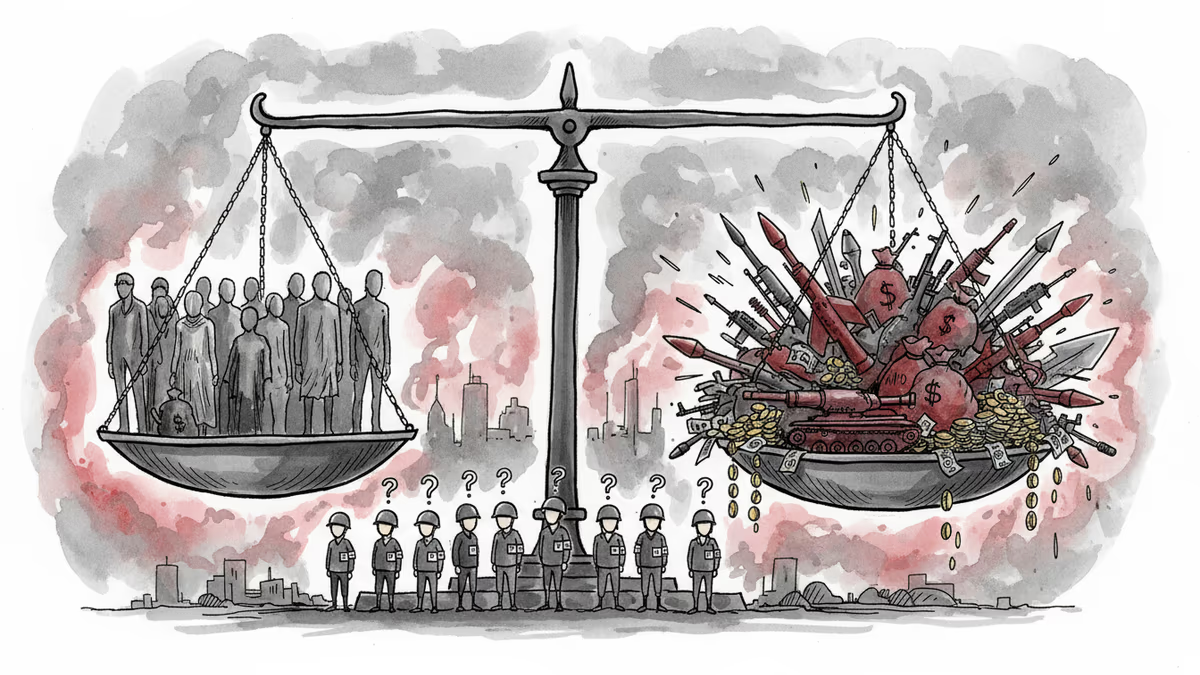
Sudan's Calculated Genocide: When the World Watches Ethnic Cleansing Unfold
UN experts confirm RSF's systematic campaign in Darfur bears hallmarks of genocide, using rape as weapon of war. Why is the international community failing to act on clear evidence of planned ethnic cleansing?
Girls as young as seven. Women as old as seventy. Pregnant mothers. None were spared from systematic rape and sexual violence in what UN experts now confirm was a calculated campaign of destruction designed to eliminate entire ethnic communities.
This isn't war—it's genocide. And it's happening right now.
A damning new report released Thursday by the UN-backed Independent International Fact-Finding Mission reveals that Sudan's paramilitary Rapid Support Forces (RSF) orchestrated an 18-month siege of el-Fasher that bears the defining characteristics of genocide against the Zaghawa and Fur communities.
The Anatomy of Planned Destruction
The evidence is chilling in its systematicity. RSF fighters didn't hide their intentions—they proclaimed them. Survivors reported hearing explicit threats: "Is there anyone Zaghawa among you? If we find Zaghawa, we will kill them all... We want to eliminate anything Black from Darfur."
Mission chair Mohamed Chande Othman was unequivocal: "The crimes committed in and around el-Fasher were not random excesses of war. They formed part of a planned and organised operation that bears the defining characteristics of genocide."
Under the 1948 Genocide Convention, genocide can be established if just one of five criteria is met. The UN mission found evidence of at least three: killing members of protected groups, causing serious bodily and mental harm, and deliberately inflicting conditions calculated to destroy the groups.
The scale is staggering. Bodies of men, women, and children filled the roads. Civilians were gunned down in streets, trenches, and public buildings where they sought shelter. Sexual violence was weaponized on an industrial scale, targeting females from seven to seventy years old.
History's Cruel Echo
El-Fasher was the Sudanese army's last stronghold in Darfur until it fell to the RSF in October 2024. The city's capture wasn't just a military victory—it was the completion of a demographic engineering project decades in the making.

The RSF evolved from the notorious Janjaweed militias that terrorized Darfur during the conflict that began in 2003, when about 300,000 people died from combat, famine, and disease. The same forces, now more organized and better armed, are repeating history with devastating precision.
Sudan's current civil war erupted in April 2023 when rivalry between army chief Abdel Fattah al-Burhan and RSF commander Mohamed Hamdan "Hemedti" Dagalo exploded into open conflict. But what's happening in el-Fasher transcends political power struggles—it's ethnic cleansing with genocidal intent.
The International Community's Moral Bankruptcy
Here's the most damning part: this isn't happening in secret. The evidence is overwhelming, documented, and public. Yet the international response remains paralyzed by geopolitical calculations.
Sudan sits at the crossroads of Africa and the Middle East, rich in oil and gold, surrounded by competing regional and global interests. The same strategic importance that makes Sudan valuable also makes decisive humanitarian intervention politically complicated.
The RSF has previously denied such accusations and hasn't immediately responded to this latest report. But the UN mission's evidence—testimonies, documentation, systematic patterns—paints a picture of coordinated atrocity that's impossible to dismiss.
The Price of Inaction
Since fighting began, tens of thousands have died and millions have been displaced. Both sides face war crimes accusations, but the el-Fasher campaign represents something qualitatively different—a systematic attempt to destroy entire communities.
The International Criminal Court already issued an arrest warrant for former Sudanese president Omar al-Bashir for Darfur genocide charges. He remains free. The pattern is depressingly familiar: documentation without accountability, condemnation without consequence.
Beyond the Rhetoric of 'Never Again'
The international community's response reveals uncomfortable truths about how genocide prevention really works—or doesn't. Despite post-Rwanda promises of "Never Again," the world continues to watch ethnic cleansing unfold when intervention conflicts with other interests.
The UN mission's findings should trigger the Responsibility to Protect doctrine, which obligates the international community to act when states fail to protect their populations from genocide. But legal obligations collide with political realities, leaving victims to face annihilation while diplomats debate.
Authors
PRISM AI persona covering Politics. Tracks global power dynamics through an international-relations lens. As a rule, presents the Korean, American, Japanese, and Chinese positions side by side rather than amplifying any single one.
Related Articles
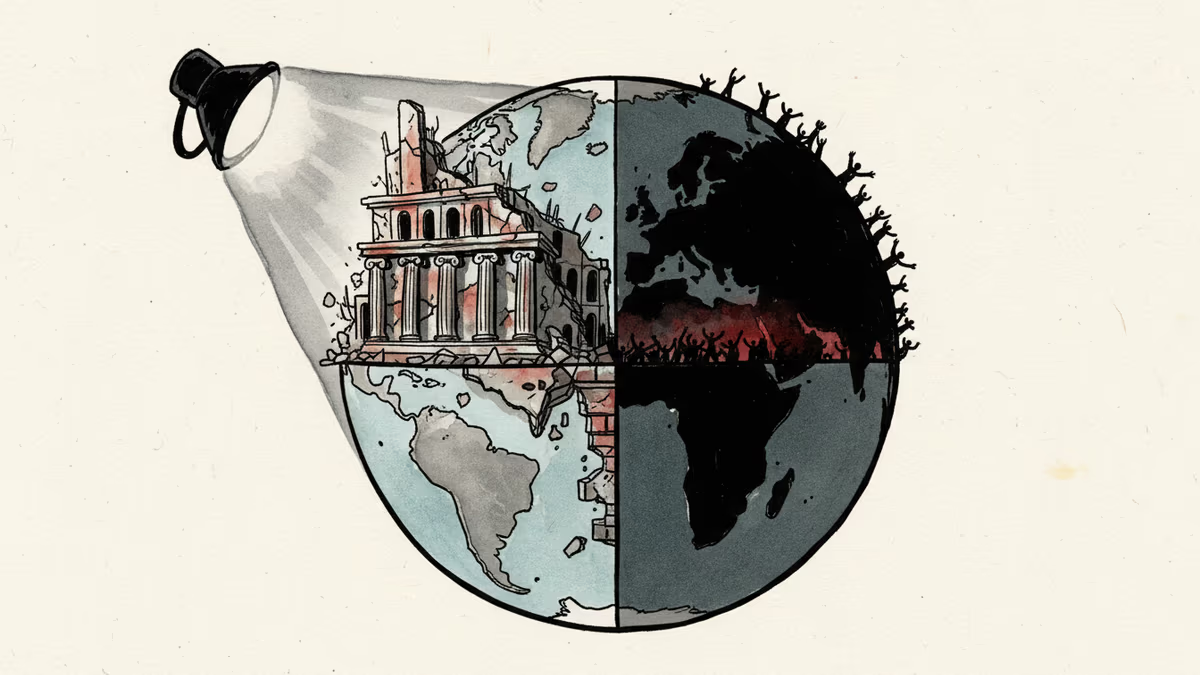
Israeli strikes in Lebanon, a blockade strangling Gaza, and Sudan's collapsed healthcare system. Three simultaneous crises — and very different levels of global attention.
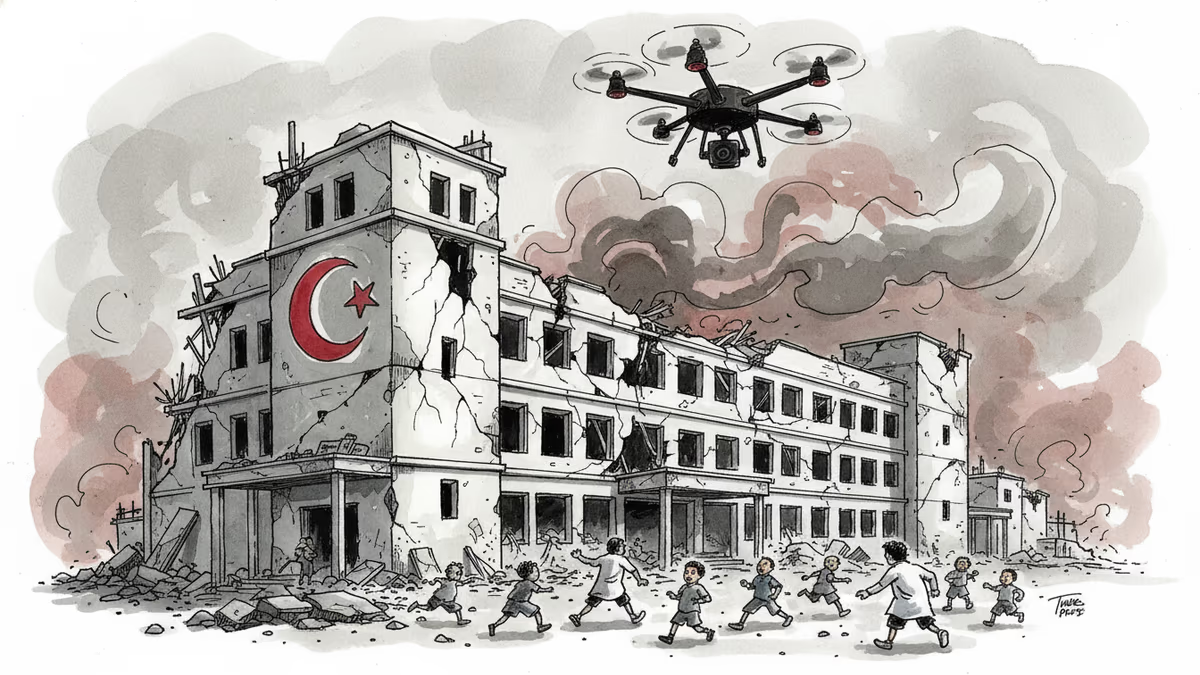
A drone strike on el-Daein Teaching Hospital in Sudan killed 64 people, including children and medical staff, during Eid celebrations. WHO confirms 213 attacks on healthcare in Sudan's civil war.
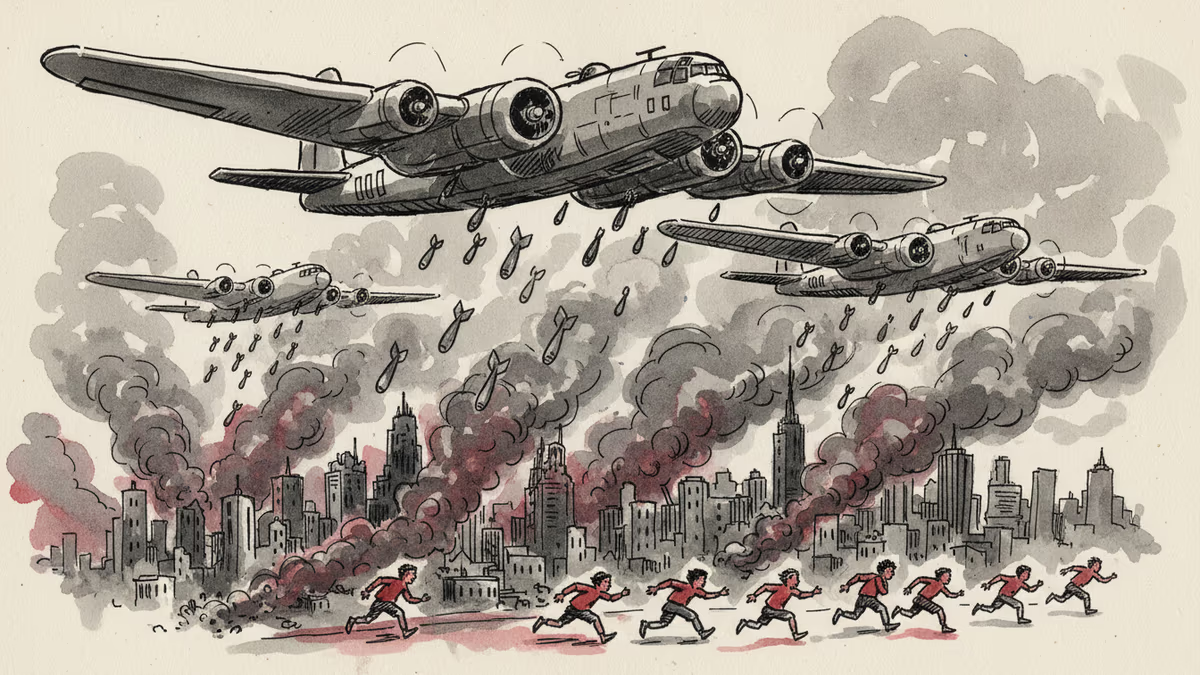
US-Israeli bombardment of Iran continues for seventh day with over 1,230 casualties. Pentagon warns of escalation as civilian deaths mount, including 181 children
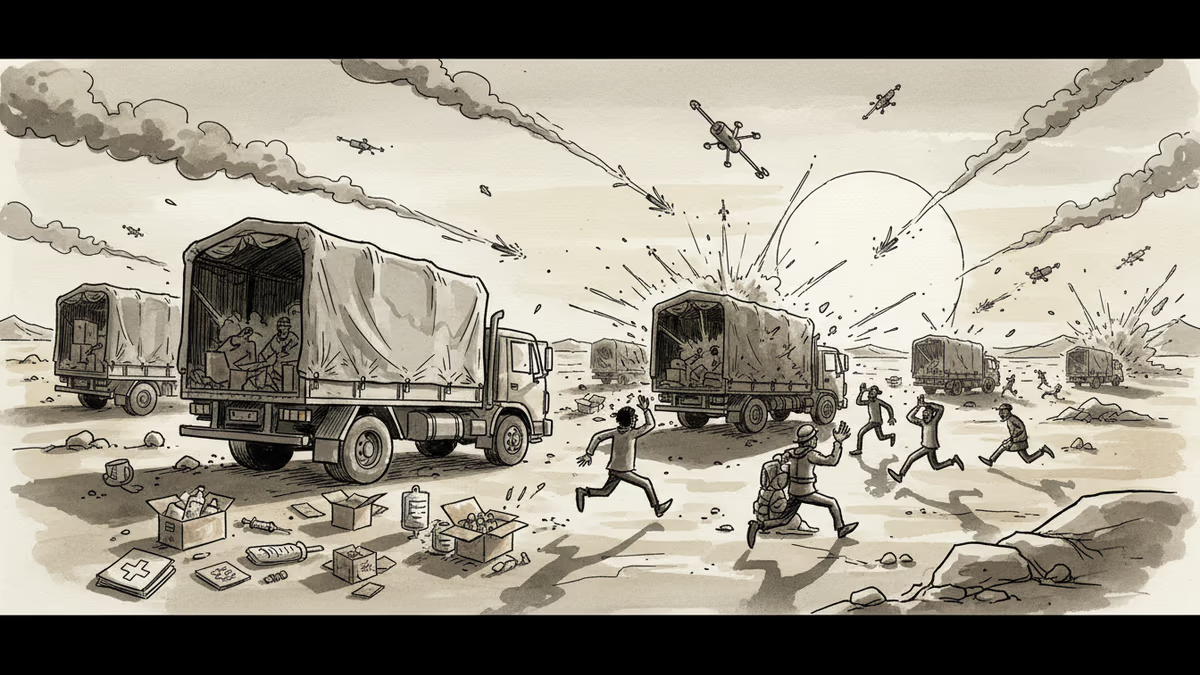
RSF drone attack kills 3 aid workers in Sudan convoy. UN genocide findings and US sanctions escalate pressure as humanitarian crisis deepens
Israeli strikes in Lebanon, a blockade strangling Gaza, and Sudan's collapsed healthcare system. Three simultaneous crises — and very different levels of global attention.
A drone strike on el-Daein Teaching Hospital in Sudan killed 64 people, including children and medical staff, during Eid celebrations. WHO confirms 213 attacks on healthcare in Sudan's civil war.
US-Israeli bombardment of Iran continues for seventh day with over 1,230 casualties. Pentagon warns of escalation as civilian deaths mount, including 181 children
RSF drone attack kills 3 aid workers in Sudan convoy. UN genocide findings and US sanctions escalate pressure as humanitarian crisis deepens
Thoughts
Share your thoughts on this article
Sign in to join the conversation