
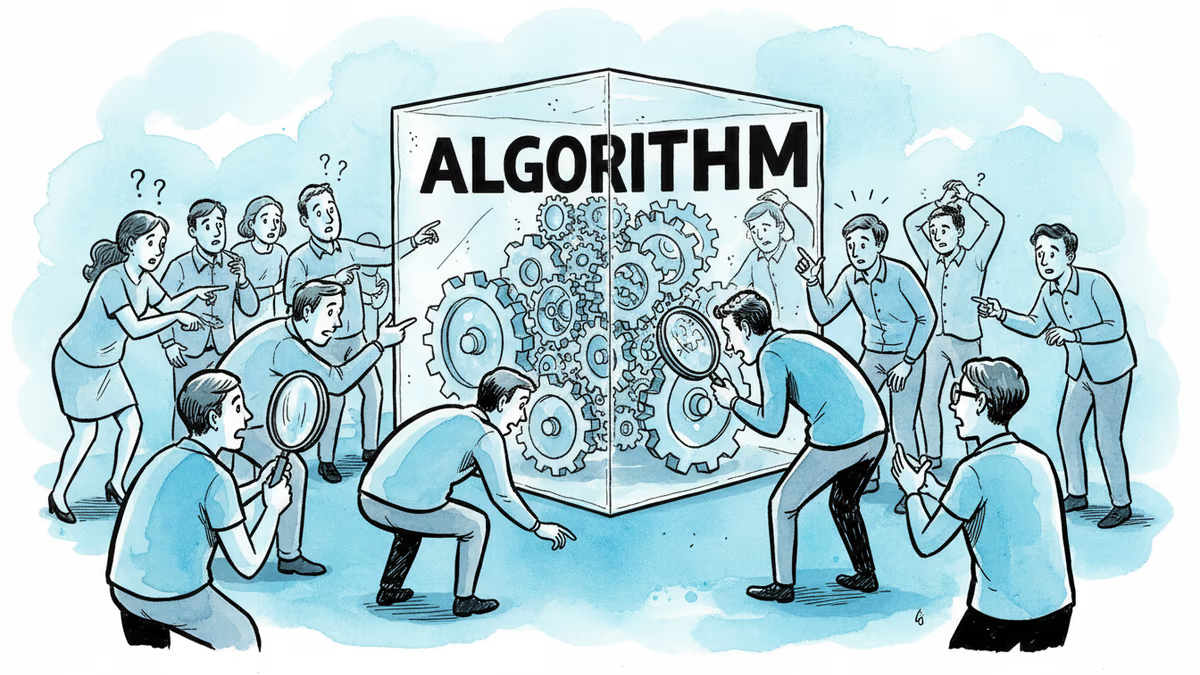
Your Friends Can Now Hack Your Algorithm
Threads' Dear Algo feature turns personal feed curation into a social experience. But when algorithms become transparent, what happens to privacy?
141.5 Million People Just Got a New Superpower
When Threads overtook X in daily mobile usage last month—141.5 million vs 125 million users—it wasn't just a numbers game. It was a signal that Meta's Twitter alternative had found its groove. Now, with the launch of "Dear Algo," Threads is betting that the next evolution of social media isn't just about better algorithms—it's about letting users control them.
The concept sounds simple: type "Dear Algo, show me more posts about podcasts" in a public post, and your feed adjusts for three days. But here's where it gets interesting—and controversial.
The End of Secret Preferences
Traditional social media personalization happens in shadows. You hit "Not Interested," follow accounts, or simply scroll past content. Your preferences remain private, known only to you and the algorithm.
Threads is flipping that script. When you ask the algorithm for more NBA content during a live game, everyone sees your request. They can even repost it to apply the same filter to their feeds. Meta frames this as "turning personalization into a community experience."
Privacy advocates aren't buying it. The Electronic Frontier Foundation's latest report warns that public preference sharing could create new forms of social pressure and data harvesting opportunities.
Social media strategists, however, see potential. "It's like having a focus group that never ends," says Sarah Chen, a digital marketing consultant. "Brands can literally watch consumer interests shift in real-time."

Racing Against X's Real-Time Crown
This move directly challenges X's historical dominance in real-time conversation. By letting users instantly adjust their feeds for breaking news, live events, or trending topics, Threads is positioning itself as the platform that adapts to the moment.
Platform researchers note the strategic timing. As X continues to lose daily active users—down 13% since last year according to Similarweb—Threads is capturing the "right now" audience that once belonged exclusively to Twitter.
But there's a catch: the public nature of Dear Algo requests might actually slow adoption. Early user feedback suggests many feel uncomfortable broadcasting their interests, especially for sensitive topics.
The Algorithm Transparency Paradox
Dear Algo represents something bigger than a feature update—it's part of a growing movement toward algorithm transparency. Users increasingly demand to know why they see what they see. But transparency comes with trade-offs.
AI developers point out that truly transparent algorithms are easier to game. If everyone knows how the system works, bad actors can exploit it more effectively.
Consumer advocates argue the opposite: transparency empowers users to make informed choices about their digital consumption.
The feature is currently live in the US, New Zealand, Australia, and the UK, with plans for broader rollout.
Authors
Related Articles
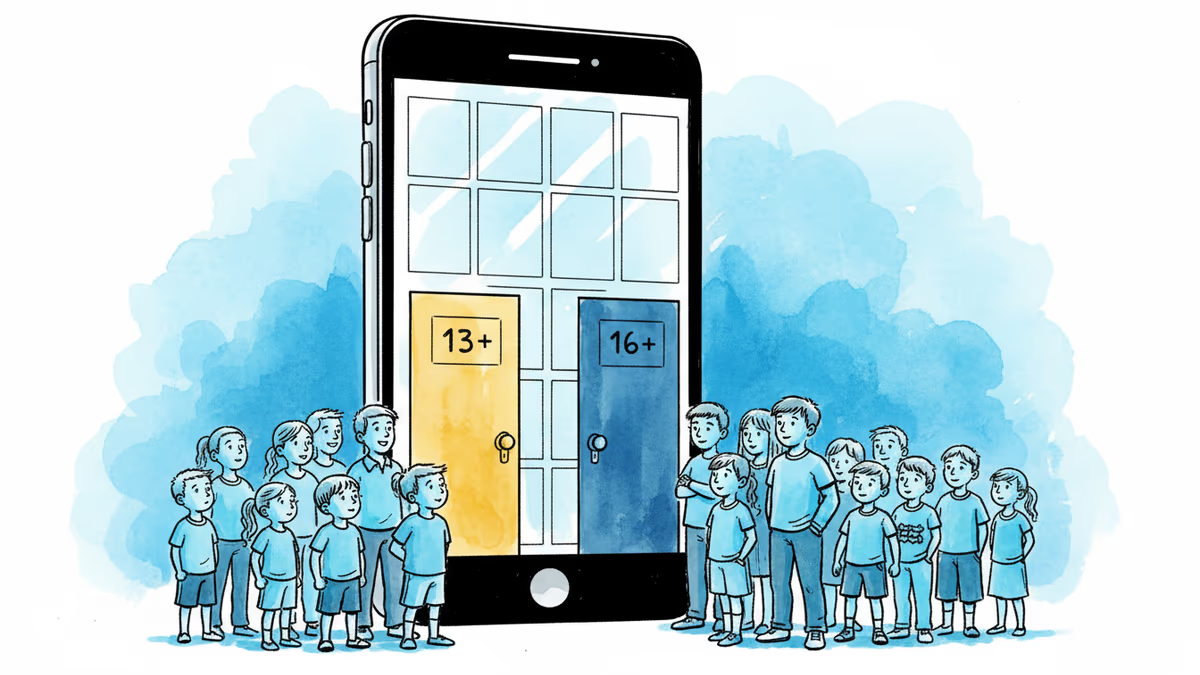
Indonesia introduces age-tiered social media restrictions, allowing 13+ for low-risk platforms and 16+ for high-risk ones. How does this compare to Australia's blanket ban?
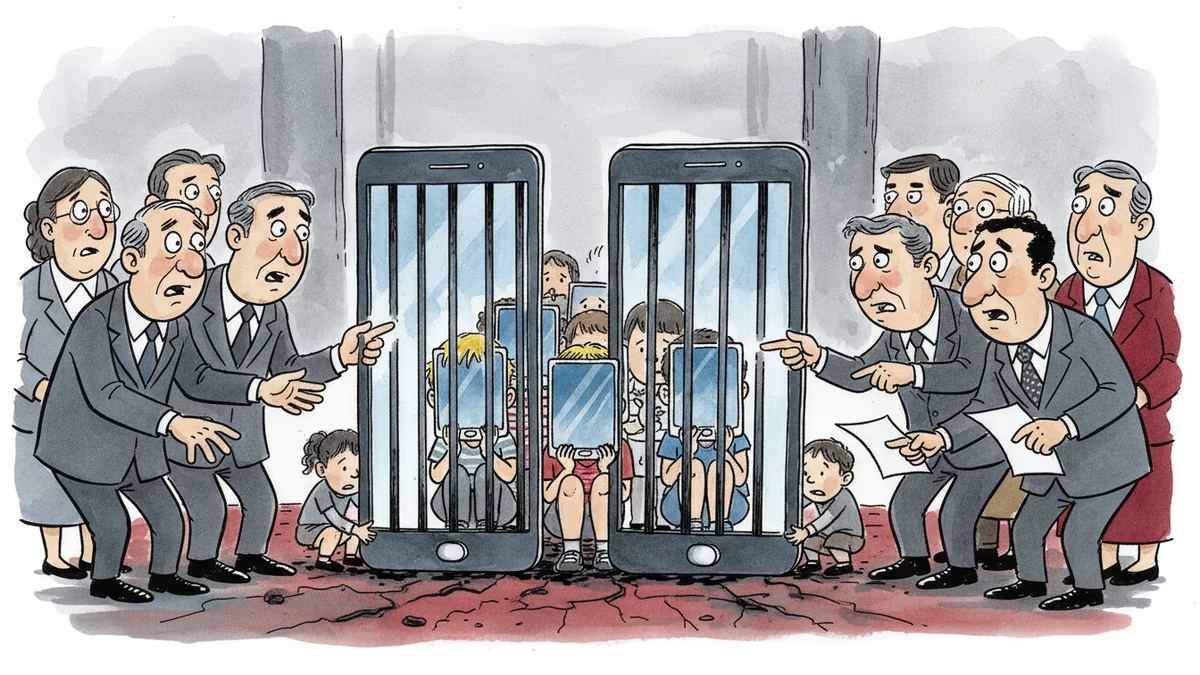
From Australia's $34M fines to France's parliamentary vote, 10 countries are restricting teen social media access. A global experiment in digital parenting begins.

Middle East missile strikes trigger global doomscrolling epidemic. Neuroscience reveals why we can't stop scrolling through bad news and how to break free.
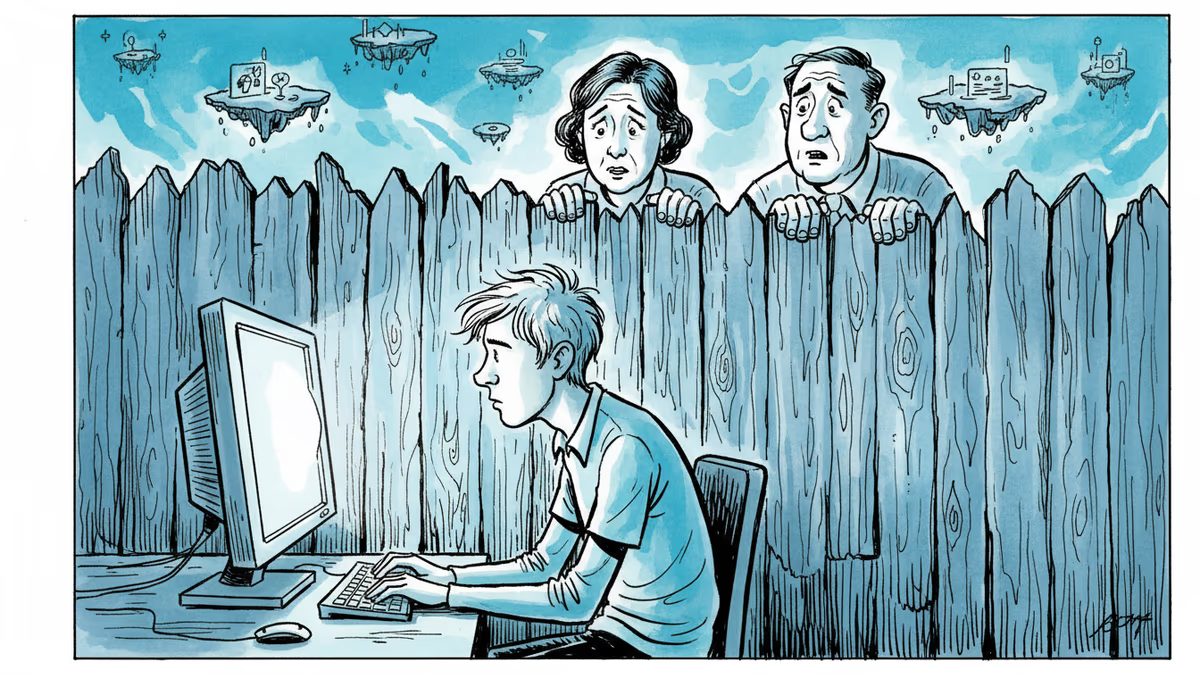
Instagram's new suicide search alerts for parents raise questions about whether surveillance-based solutions truly protect teens or simply push their struggles underground.
Indonesia introduces age-tiered social media restrictions, allowing 13+ for low-risk platforms and 16+ for high-risk ones. How does this compare to Australia's blanket ban?
From Australia's $34M fines to France's parliamentary vote, 10 countries are restricting teen social media access. A global experiment in digital parenting begins.
Middle East missile strikes trigger global doomscrolling epidemic. Neuroscience reveals why we can't stop scrolling through bad news and how to break free.
Instagram's new suicide search alerts for parents raise questions about whether surveillance-based solutions truly protect teens or simply push their struggles underground.
Thoughts
Share your thoughts on this article
Sign in to join the conversation