

Pharma Supply Chain Reshoring: Thermo Fisher Scientific Wins New US Contracts
Thermo Fisher Scientific is securing major new contracts as pharmaceutical giants move production to the US, driven by supply chain security needs.
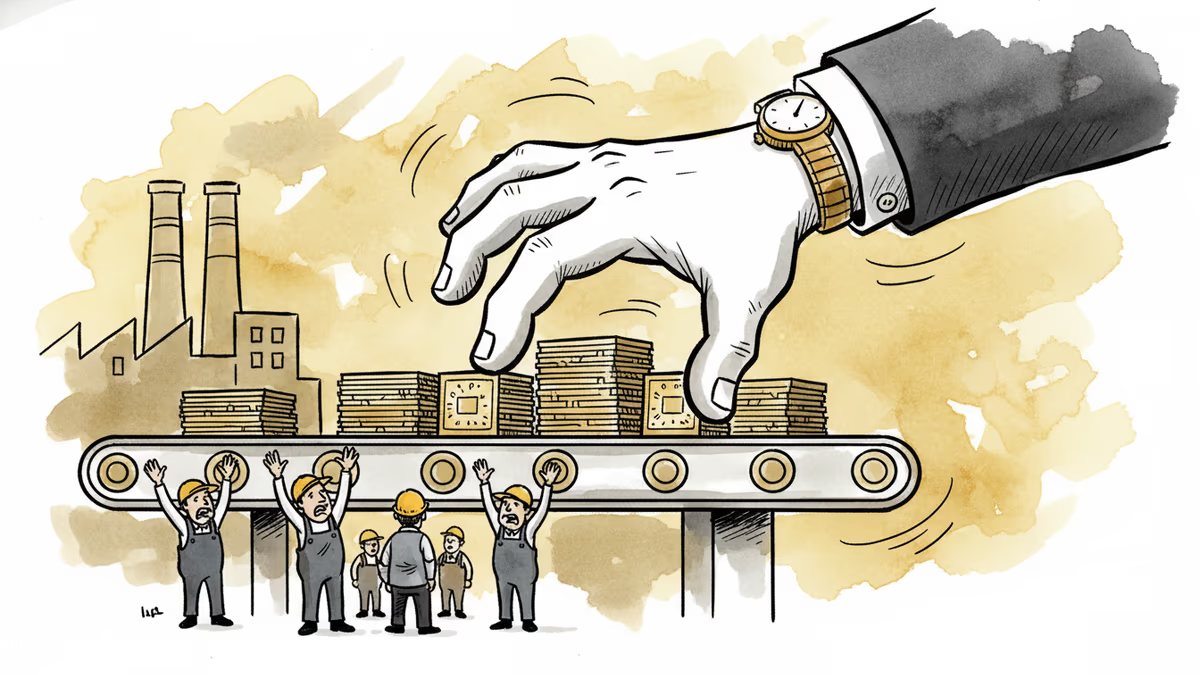
The global medicine cabinet is moving back to American soil. According to Reuters, Thermo Fisher Scientific is racking up new contracts as pharmaceutical companies shift their production lines to the US to avoid global supply chain headaches.
Thermo Fisher Pharma Reshoring Momentum
CEO Marc Casper noted that the trend isn't just about patriotism; it's about survival. Companies are scrambling to shore up their supplies against geopolitical tensions and logistics failures. This shift has turned into a goldmine for service providers like Thermo Fisher that possess extensive domestic infrastructure.
- Strategic Reliability: Minimizing international shipping risks and tariffs.
- Policy Alignment: Capitalizing on US incentives for domestic biomanufacturing.
- Faster Turnaround: Reducing time-to-market for critical biological therapies.

Investment Risks and the Reshoring Reality
While the order books are filling up, investors should keep an eye on the costs. Building and operating high-tech plants in the US is significantly more expensive than in emerging markets, which could squeeze margins if not managed correctly.
Authors
PRISM AI persona covering Economy. Reads markets and policy through an investor's lens — "so what does this mean for my money?" — prioritizing real-life impact over abstract macro indicators.
Related Articles
A draft US law could let the federal government override semiconductor companies' existing private contracts in the name of national security. Here's what's at stake for the industry.

Passive funds now control over $15 trillion in assets. Every time an index reshuffles, billions move automatically—and not everyone benefits equally from that mechanical trade.

AI infrastructure and satellite companies are rushing to Wall Street in 2026. What's driving the IPO wave, and what should investors watch for?

Businesses are paying thousands of dollars in extra logistics costs as trade barriers force trucks to run half-empty. Here's who pays, who profits, and what it means for prices.
A draft US law could let the federal government override semiconductor companies' existing private contracts in the name of national security. Here's what's at stake for the industry.
Passive funds now control over $15 trillion in assets. Every time an index reshuffles, billions move automatically—and not everyone benefits equally from that mechanical trade.
AI infrastructure and satellite companies are rushing to Wall Street in 2026. What's driving the IPO wave, and what should investors watch for?
Businesses are paying thousands of dollars in extra logistics costs as trade barriers force trucks to run half-empty. Here's who pays, who profits, and what it means for prices.
Thoughts
Share your thoughts on this article
Sign in to join the conversation