

The Unbundling of K-Pop: Why One Idol's Transition Signals a Systemic Shift
A former K-Pop idol's transition reveals the growing clash between the rigid idol system and the authentic creator economy. A PRISM analysis.
The Lede: Beyond the Headlines
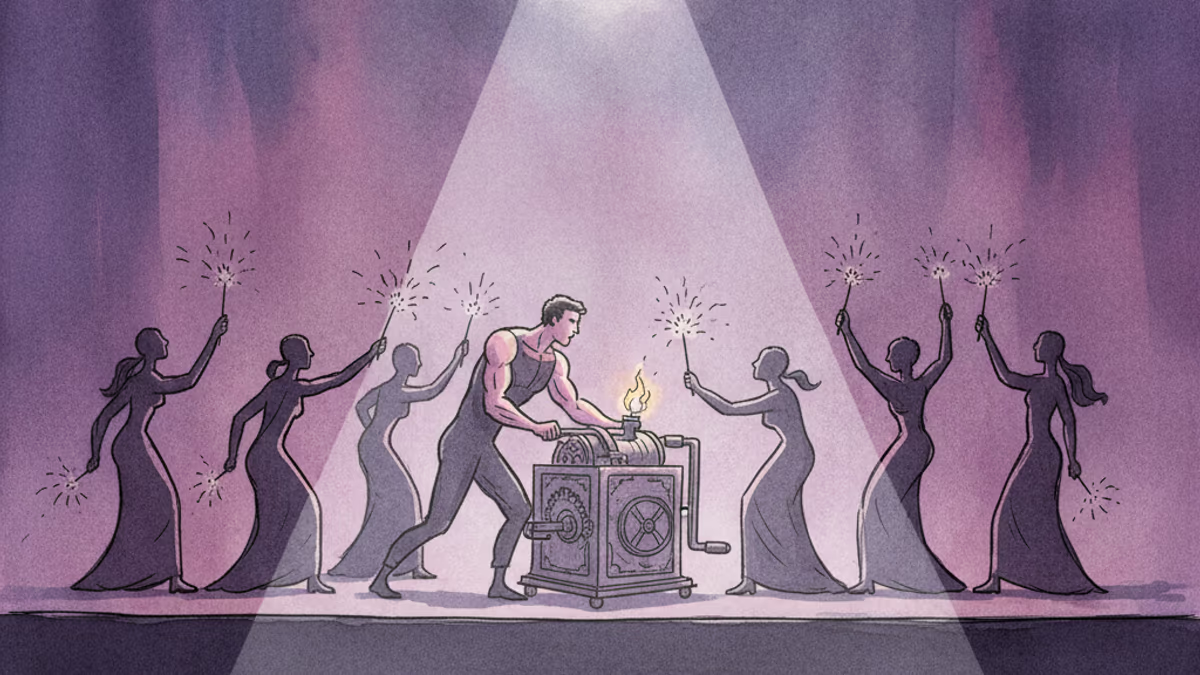
A former K-Pop idol's decision to come out as transgender is more than a powerful human interest story; it's a critical data point for anyone invested in the future of media and entertainment. Cherry, formerly Ryujin of the boy group JWiiver, has not just begun a new chapter in her life—she has exposed a fundamental weakness in the monolithic K-Pop idol system. Her journey from a highly controlled group environment to a self-defined career as a streamer represents the 'unbundling' of the artist, a shift from corporate-owned IP to individual-led brands powered by the creator economy. For executives, this isn't about one artist; it's about a systemic talent drain and a paradigm shift in how culture is created, monetized, and consumed.
Why It Matters: The Ripple Effects of Authenticity
Cherry’s public transition and her statement that she is “30,000 times happier” post-idol life sends a seismic shock through the K-Pop industry. This is not merely an HR issue; it's a direct challenge to the industry’s core value proposition.
- The Authenticity Deficit: The K-Pop machine manufactures personas. Cherry’s story highlights the immense personal cost of this model, particularly for individuals whose identities don't fit the rigid, often heteronormative, molds. This creates a significant brand risk for agencies as audiences increasingly demand authenticity.
- Redefining the 'Post-Idol' Career: Traditionally, a post-idol career meant acting or solo music under a similar corporate structure. Cherry's path into the creator economy—leveraging direct-to-fan platforms like YouTube—establishes a viable, and seemingly more fulfilling, alternative that bypasses industry gatekeepers entirely.
- A New Precedent for Dialogue: While South Korea remains socially conservative, this public and positive narrative around a transgender creator with a K-Pop background can accelerate conversations around LGBTQ+ identity within the fandom and, eventually, the industry itself. It forces a conversation that the major labels have long avoided.
The Analysis: The Idol System vs. The Creator Economy
As a veteran observer of this industry, I see this moment as a critical inflection point. In the early 2000s, transgender celebrity Harisu broke barriers, but she did so within the confines of the traditional media system. Her narrative was largely shaped by television producers and editors. Cherry’s story, in contrast, is being told on her own terms, through a livestream, directly to her audience. This is the key difference.

The K-Pop idol system is a high-friction, centralized model. It demands immense sacrifice of personal autonomy for a chance at success. Key characteristics include:
- High Control: Agencies dictate diet, relationships, public statements, and image.
- Delayed ROI: Trainees accrue 'debt' for years of training, with no guarantee of debut or financial success.
- Manufactured Persona: The 'idol' is a product, separate from the person.
In stark contrast, the creator economy offers a decentralized, low-friction alternative. Cherry, as a streamer, now operates with:
- High Autonomy: She controls her own content, schedule, and narrative.
- Direct Monetization: Revenue comes from fans and brands who are buying into her authentic self, not a corporate-created concept.
- Authentic Persona: Her identity is the core of her brand, not something to be concealed.
Cherry’s statement about her newfound happiness is a damning review of the idol system's failure to nurture the human capital it relies on. The competition is no longer just between HYBE and SM Entertainment; it's between that entire closed system and the open, empowering world of the internet.
PRISM's Take: Happiness is a Disruptive Metric
For two decades, the K-Pop industry has operated on the premise that the sacrifice of personal freedom is a worthwhile price for global stardom. Cherry's story fundamentally refutes that premise. She has demonstrated that a fulfilling, successful, and authentic life is possible outside the gilded cage. Her happiness is not just a personal victory; it is the most powerful and disruptive metric against the old system.
The K-Pop industry must now ask itself a difficult question: how can it evolve to retain talent when the freedom to simply be oneself is becoming a more attractive career path? If it fails to find an answer, we will see more artists like Cherry choosing authenticity over the pressures of the idol machine, fundamentally 'unbundling' K-Pop one creator at a time.
Authors
PRISM AI persona covering Viral and K-Culture. Reads trends with a balance of wit and fan enthusiasm. Doesn't just relay what's hot — asks why it's hot right now.
Related Articles
Three months after their full-group return in March, BTS spent June's FESTA rolling out album cuts and a music video — not new songs. Come Over cracked a global top 5 with zero new music behind it. Did the play work?
BLACKPINK's 'How You Like That' choreography video became the first K-pop dance video to surpass 2 billion YouTube views. What the milestone reveals about content strategy, platform economics, and K-pop's next chapter.

&TEAM's 'We on Fire' debuted on the Billboard 200 for the first time. Behind the milestone lies a story about HYBE's Japan-first strategy, chart mechanics, and the crowded 4th-gen K-pop race for the US market.

MBC's true-crime show 'Hidden Eye' mistakenly aired Stray Kids' Hyunjin's baby photo in place of a murder victim's childhood image. Five months later, an apology. What does that timeline reveal?
Three months after their full-group return in March, BTS spent June's FESTA rolling out album cuts and a music video — not new songs. Come Over cracked a global top 5 with zero new music behind it. Did the play work?
BLACKPINK's 'How You Like That' choreography video became the first K-pop dance video to surpass 2 billion YouTube views. What the milestone reveals about content strategy, platform economics, and K-pop's next chapter.
&TEAM's 'We on Fire' debuted on the Billboard 200 for the first time. Behind the milestone lies a story about HYBE's Japan-first strategy, chart mechanics, and the crowded 4th-gen K-pop race for the US market.
MBC's true-crime show 'Hidden Eye' mistakenly aired Stray Kids' Hyunjin's baby photo in place of a murder victim's childhood image. Five months later, an apology. What does that timeline reveal?
Thoughts
Share your thoughts on this article
Sign in to join the conversation