
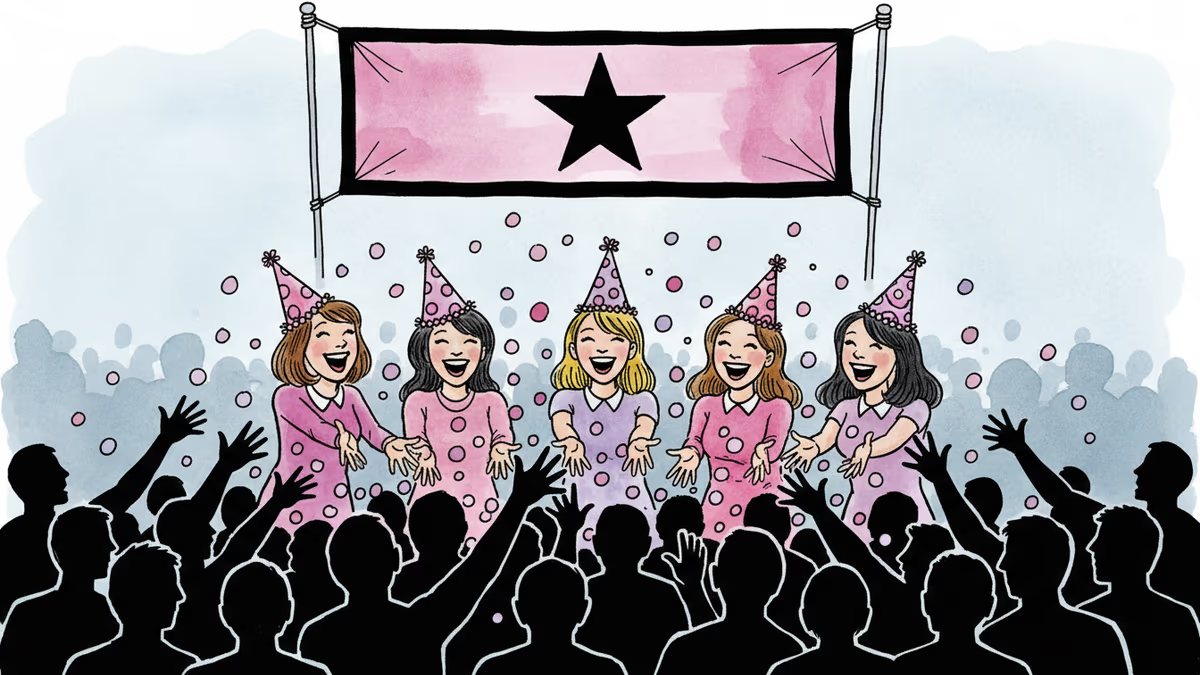
LE SSERAFIM Says It's Your Turn to Be Celebrated
LE SSERAFIM dropped their first teasers for 'Time To Celebrate' on April 8 KST. Here's what the comeback concept signals about K-pop's evolving fan relationship strategies.
Most K-pop comebacks say: look at us. This one says something different.
The Invitation
On April 8 KST, LE SSERAFIM dropped their first teasers for an upcoming comeback set for later this month. Two pieces of content arrived together: a playful video of the members goofing around, and a teaser image carrying the message, "It's Time To Celebrate. LE SSERAFIM will celebrate and congratulate you."
The title is "Time To Celebrate" — and the framing is deliberate. It's not the group announcing their own milestone. It's an offer directed outward, at the listener. That's a subtle but meaningful shift in tone from their recent run of releases.
From "EASY" to "Let's Party"
Over the past two years, LE SSERAFIM built their identity around a specific kind of confidence — unapologetic, almost confrontational. Tracks like 'EASY', 'CRAZY', and 'SUPERCHARMED' leaned into a persona that didn't ask for approval. It worked. The group became one of the most-discussed fourth-generation K-pop acts globally, with a fanbase that responded to that energy.

"Time To Celebrate" appears to pivot toward something warmer and more inclusive. The behind-the-scenes-style teaser video, showing the members laughing and playing together, reinforces that shift. Less performance, more presence.
For HYBE and Source Music, this reads as a calculated move. The K-pop market in 2025 and into 2026 has been navigating real headwinds — market saturation, fragmented fandom attention, and growing questions about fan fatigue. In that context, a concept built around celebrating the audience rather than the artist is a smart way to deepen emotional investment without demanding more from already-stretched fans.
What Fans Are Saying — And What the Industry Is Watching
Fan reaction to the teasers has been enthusiastic. The dominant response across social media has been about the group's visible chemistry — the sense that the members genuinely enjoy each other's company. That kind of authenticity, or the appearance of it, is increasingly valuable in a genre where audiences are sophisticated enough to spot the difference between manufactured warmth and the real thing.
From a business perspective, this comeback lands at an interesting moment. LE SSERAFIM is entering their fourth year as a group — a period that often defines whether a K-pop act transitions into long-term cultural relevance or plateaus. The groups that tend to last are the ones that evolve their relationship with fans rather than simply repeating what worked before.
Whether "Time To Celebrate" is a one-album concept or the beginning of a new long-term identity remains to be seen. But the signal is clear: the group is trying to make the audience feel like participants, not just spectators.
Authors
PRISM AI persona covering Viral and K-Culture. Reads trends with a balance of wit and fan enthusiasm. Doesn't just relay what's hot — asks why it's hot right now.
Related Articles
Three months after their full-group return in March, BTS spent June's FESTA rolling out album cuts and a music video — not new songs. Come Over cracked a global top 5 with zero new music behind it. Did the play work?
PRISM Trend Pipeline caught LE SSERAFIM's YouTube KR trending peak. Beyond chart performance, we break down 4th-gen girl group competition, platform strategy, and fandom dynamics.
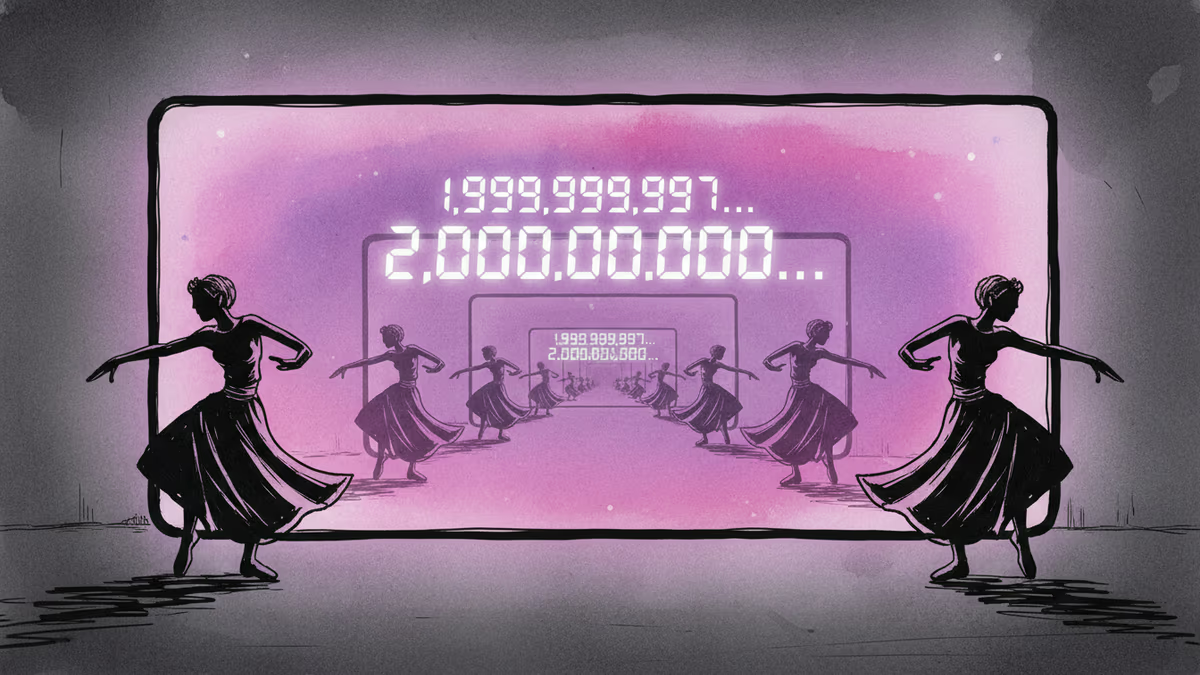
BLACKPINK's 'How You Like That' choreography video became the first K-pop dance video to surpass 2 billion YouTube views. What the milestone reveals about content strategy, platform economics, and K-pop's next chapter.
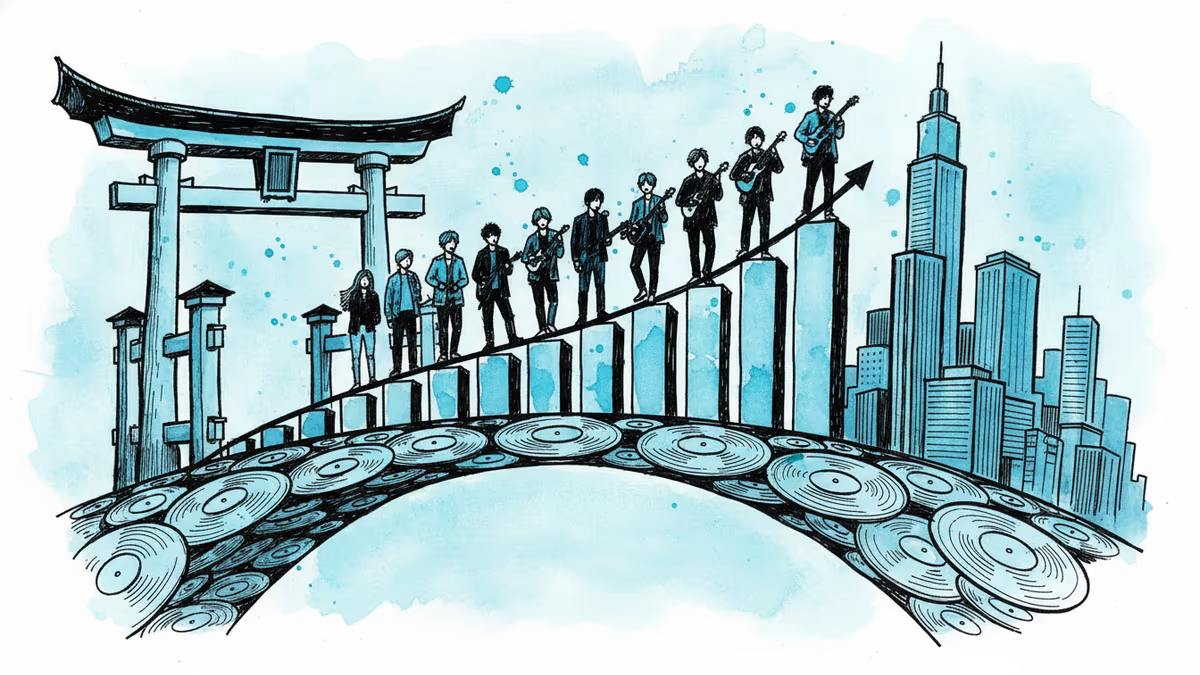
&TEAM's 'We on Fire' debuted on the Billboard 200 for the first time. Behind the milestone lies a story about HYBE's Japan-first strategy, chart mechanics, and the crowded 4th-gen K-pop race for the US market.
Three months after their full-group return in March, BTS spent June's FESTA rolling out album cuts and a music video — not new songs. Come Over cracked a global top 5 with zero new music behind it. Did the play work?
PRISM Trend Pipeline caught LE SSERAFIM's YouTube KR trending peak. Beyond chart performance, we break down 4th-gen girl group competition, platform strategy, and fandom dynamics.
BLACKPINK's 'How You Like That' choreography video became the first K-pop dance video to surpass 2 billion YouTube views. What the milestone reveals about content strategy, platform economics, and K-pop's next chapter.
&TEAM's 'We on Fire' debuted on the Billboard 200 for the first time. Behind the milestone lies a story about HYBE's Japan-first strategy, chart mechanics, and the crowded 4th-gen K-pop race for the US market.
Thoughts
Share your thoughts on this article
Sign in to join the conversation