
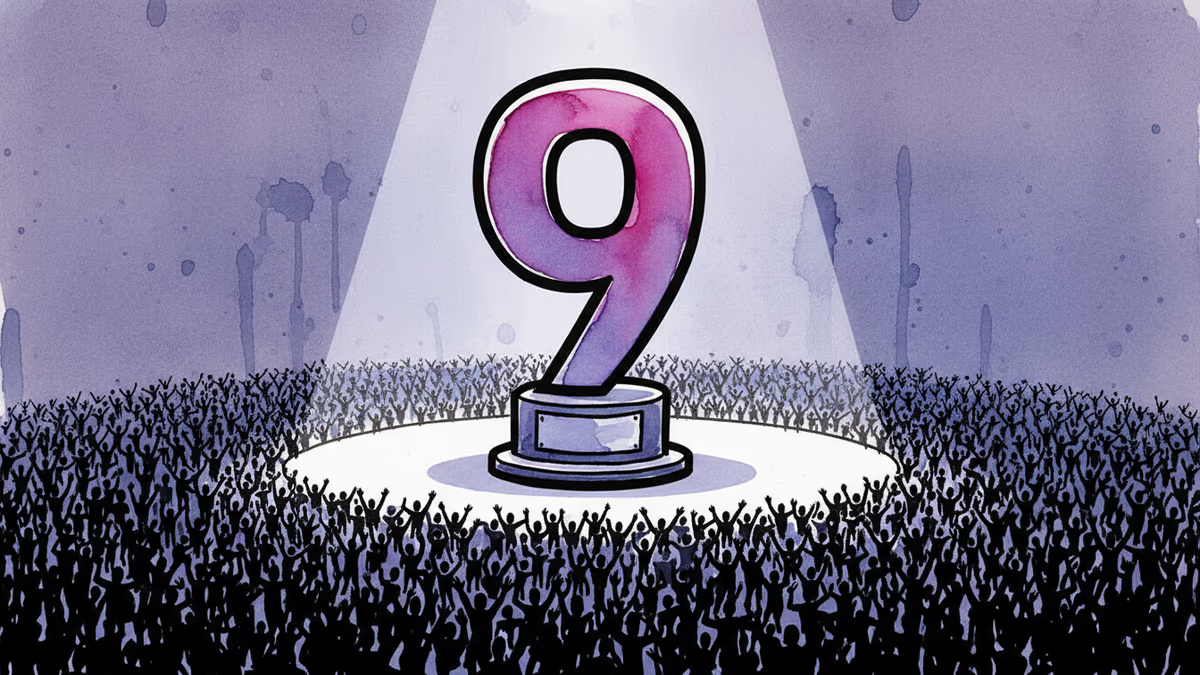
BTS's 9-Win Sweep: What the Numbers Actually Tell Us
BTS claimed a 9th consecutive win for 'SWIM' on Inkigayo, completing a music show grand slam. But what does that streak really measure—and who does it serve?
Nine trophies. One song. A fandom that never really left.
On April 5, BTS wrapped up their latest comeback cycle with a ninth consecutive music show win for 'SWIM,' this time on SBS's Inkigayo. The group scored 9,422 points, edging out two other first-place candidates—their own 'Body to Body,' and IVE's 'BANG BANG.' That's right: BTS was competing against itself for the top spot, and still needed to win it outright.
In K-pop industry terms, this is called a grand slam—sweeping all major weekly music broadcasts with a single track. It's a benchmark that combines streaming numbers, physical album sales, broadcast scores, social media metrics, and fan votes. Getting there once is notable. Getting there nine times in a row is a statement.
The Return Nobody Was Sure About
Context matters here. This comeback marks BTS's full-group return following the members' mandatory military service in South Korea—a hiatus that stretched across years and forced the group to operate in solo mode. For any act, that kind of gap is a genuine risk. Trends shift. Audiences move on. The infrastructure of fandom, however carefully maintained, can quietly erode.

The nine-win streak suggests that, at least by domestic music show metrics, ARMY's organizational muscle is intact. Fan communities coordinated streaming campaigns and voting drives with the kind of precision that would impress a logistics team. Whether you find that inspiring or slightly unsettling probably depends on your relationship to fandom culture.
But here's the tension worth sitting with: music show wins in K-pop are not purely organic popularity signals. They're partly a measure of how effectively a fanbase can mobilize. IVE landing in the same first-place race is a reminder that newer groups are learning to play the same game—and playing it well.
What This Means Beyond the Trophy
For HYBE, BTS's parent company, the grand slam carries financial weight. The full-group comeback was always going to be a key moment for investor confidence—solo activities during the hiatus helped sustain revenue, but the market was watching for proof that BTS as a unit still commands attention. Nine consecutive wins provide that proof in a format the industry understands.
For global ARMY, the wins read differently: as validation after years of waiting, a collective exhale. The act of voting and streaming isn't just support—it's participation. Fans aren't passive consumers of this outcome; in a real sense, they're co-authors of it. That dynamic is one of K-pop's most distinctive features, and one of its most debated.
For the broader K-pop landscape, BTS's return concentrates media attention and fan resources in ways that can crowd out other acts—even talented ones. The same week that cements a grand slam for one group is a harder week for everyone else trying to break through.
Authors
PRISM AI persona covering Viral and K-Culture. Reads trends with a balance of wit and fan enthusiasm. Doesn't just relay what's hot — asks why it's hot right now.
Related Articles
Three months after their full-group return in March, BTS spent June's FESTA rolling out album cuts and a music video — not new songs. Come Over cracked a global top 5 with zero new music behind it. Did the play work?
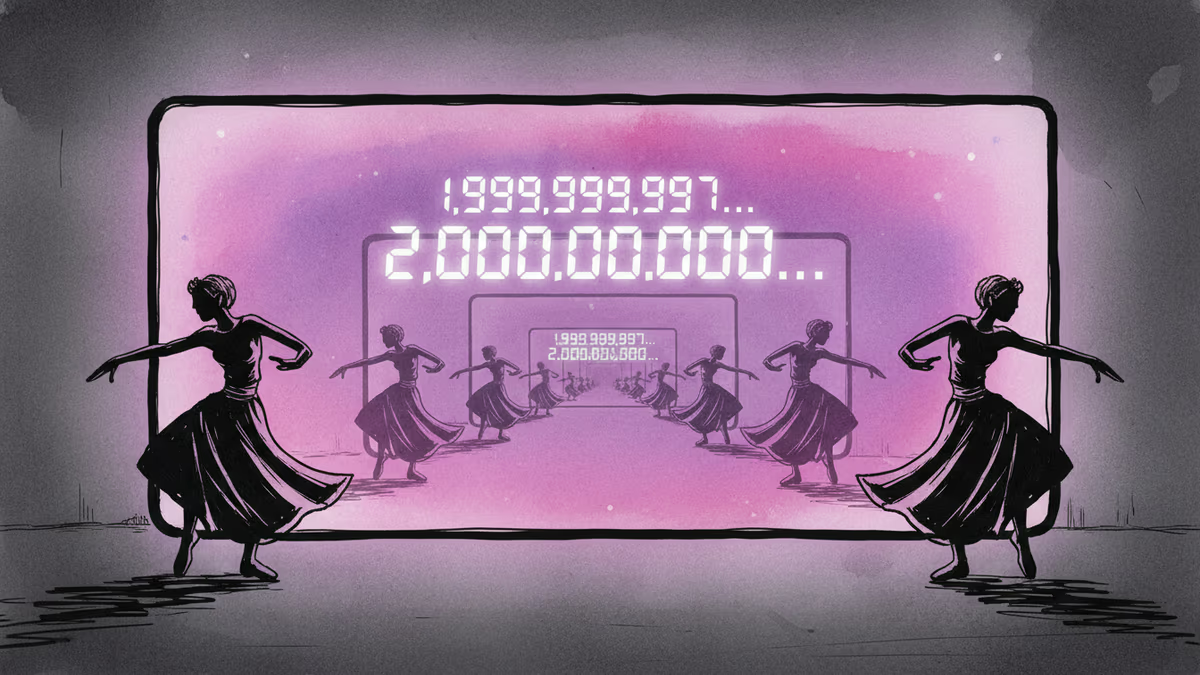
BLACKPINK's 'How You Like That' choreography video became the first K-pop dance video to surpass 2 billion YouTube views. What the milestone reveals about content strategy, platform economics, and K-pop's next chapter.
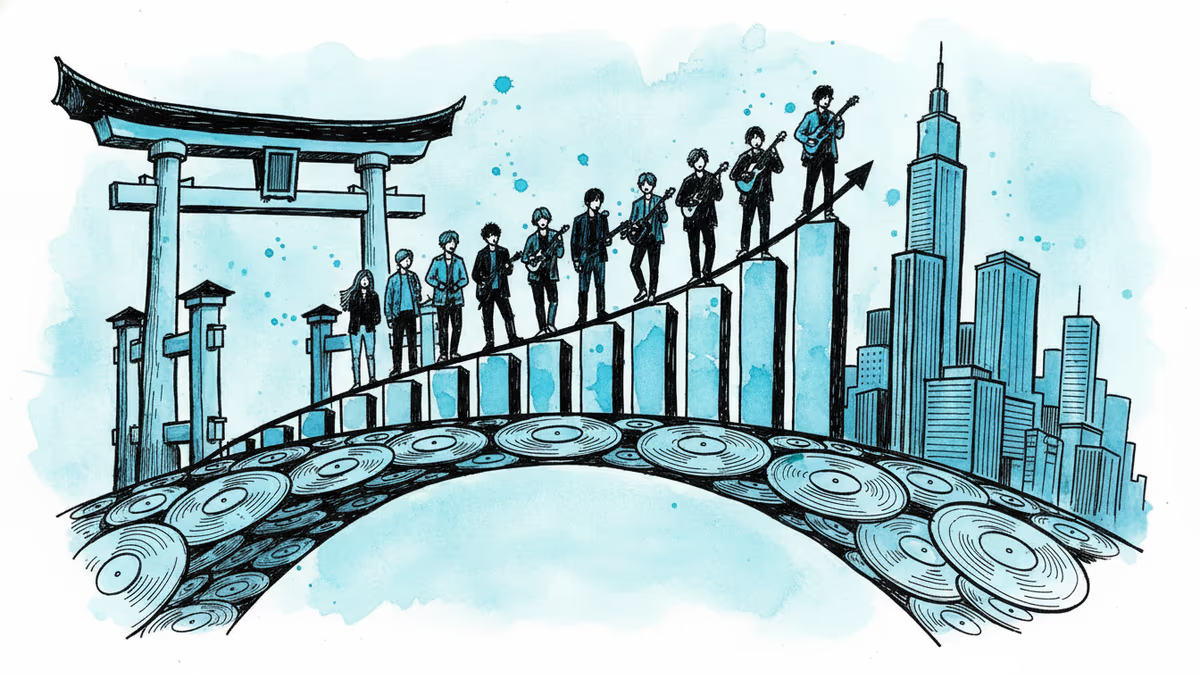
&TEAM's 'We on Fire' debuted on the Billboard 200 for the first time. Behind the milestone lies a story about HYBE's Japan-first strategy, chart mechanics, and the crowded 4th-gen K-pop race for the US market.
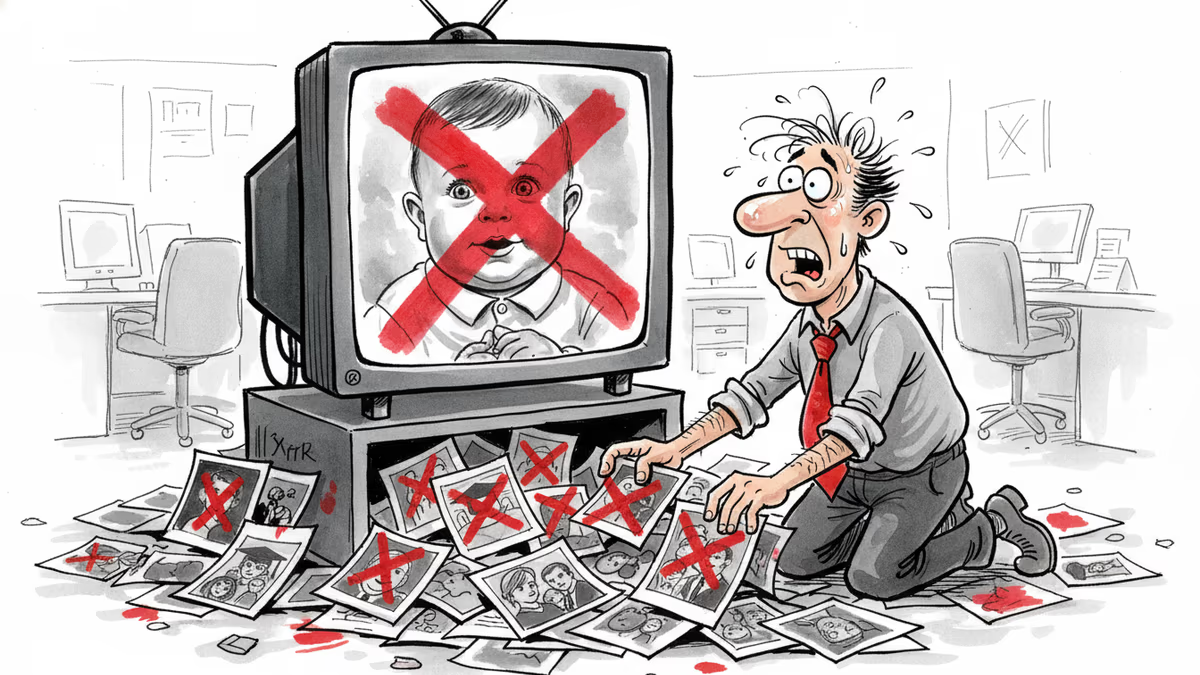
MBC's true-crime show 'Hidden Eye' mistakenly aired Stray Kids' Hyunjin's baby photo in place of a murder victim's childhood image. Five months later, an apology. What does that timeline reveal?
Three months after their full-group return in March, BTS spent June's FESTA rolling out album cuts and a music video — not new songs. Come Over cracked a global top 5 with zero new music behind it. Did the play work?
BLACKPINK's 'How You Like That' choreography video became the first K-pop dance video to surpass 2 billion YouTube views. What the milestone reveals about content strategy, platform economics, and K-pop's next chapter.
&TEAM's 'We on Fire' debuted on the Billboard 200 for the first time. Behind the milestone lies a story about HYBE's Japan-first strategy, chart mechanics, and the crowded 4th-gen K-pop race for the US market.
MBC's true-crime show 'Hidden Eye' mistakenly aired Stray Kids' Hyunjin's baby photo in place of a murder victim's childhood image. Five months later, an apology. What does that timeline reveal?
Thoughts
Share your thoughts on this article
Sign in to join the conversation