

The Silent Boom: Why Every Home is Becoming Its Own Power Grid
Beyond camping, portable power stations are a sign of a global shift to personal energy sovereignty. Our analysis reveals the market forces and tech shifts driving this silent boom.
The Lede
A new appliance is quietly infiltrating homes across the globe, moving from the campsite to the kitchen. The portable power station, once a niche gadget for off-grid enthusiasts, is undergoing a profound market repositioning. This isn't just about a new product category gaining traction; it's a direct market response to a crisis of confidence in our foundational infrastructure. The meteoric rise of brands like Jackery, Bluetti, and Anker isn't a tech trend—it's a leading indicator of a global shift towards personal energy sovereignty, driven by grid fragility, the remote work revolution, and maturing battery technology.
Why It Matters
The proliferation of these 'power-in-a-box' solutions signals a crucial turning point. Consumers are no longer just buying a product; they are buying insurance against systemic failure. For decades, the uninterruptible power supply (UPS) market was a sleepy B2B category for data centers and hospitals. The consumer equivalent, the gas generator, was a loud, noxious, and cumbersome last resort. The new breed of silent, fume-free, and increasingly powerful battery stations creates an entirely new market segment at the intersection of consumer electronics, home improvement, and disaster preparedness. This has second-order effects that most are overlooking:
- Threat to Incumbents: Traditional generator manufacturers like Honda and Generac face a disruptive threat from agile, digitally native electronics brands that consumers already trust for their phones and laptops.
- New Household CAPEX: A $1,500 power station is becoming a standard capital expenditure for homeowners in disaster-prone regions like California, Florida, or Texas, right alongside a new dishwasher or HVAC system.
- Enabling the Distributed Workforce: For the global remote workforce, reliable power is non-negotiable. These devices are evolving from a convenience to a business continuity tool, ensuring productivity during blackouts.
The Analysis
From Niche Gadget to Household Staple: The Three-Headed Driver
The explosion of the portable power station market isn't accidental. It's fueled by a powerful convergence of three macro trends:
1. Climate-Driven Grid Anxiety: With increasing frequency of extreme weather events—from wildfires in the US West to heatwaves crippling grids in Europe and Asia—public trust in centralized power infrastructure is eroding. Consumers are proactively seeking self-sufficiency rather than waiting for utility companies to restore power.

2. The Professionalization of 'Off-Grid': The post-pandemic normalization of remote work has untethered millions of professionals from the office. This distributed workforce requires a professional-grade power setup, whether they're working from a van, a rural cabin, or a suburban home during a storm. A dead laptop is no longer an inconvenience; it's a professional liability.
3. The Tech Tipping Point: LiFePO4 Changes the Game: For years, the lithium-ion batteries in these devices (Li-NMC) were similar to those in laptops—good energy density, but with a limited lifespan of 500-800 charge cycles and higher thermal runaway risk. The shift to Lithium Iron Phosphate (LiFePO4 or LFP) batteries, as seen in most new premium models, was the crucial tipping point. LiFePO4 offers 3,000-4,000+ cycles and is chemically far more stable and less prone to fire. This transforms the device from a disposable gadget into a 10-year home appliance, fundamentally changing the value proposition and justifying the four-figure price tag.
The New Competitive Landscape: Battle for the Battery-Powered Home
The market is rapidly moving beyond a simple feature-for-feature comparison. We're seeing the emergence of distinct brand strategies. Jackery built its brand on the 'solar generator' concept, bundling panels and batteries to appeal to the outdoor and RV crowd. Anker is brilliantly leveraging its immense brand equity in the small power bank space to scale up, offering a trusted name to consumers entering the category for the first time. Meanwhile, brands like Bluetti and EcoFlow are pushing the upper limits of capacity and output, marketing modular, expandable systems that can directly challenge permanent home backup solutions like the Tesla Powerwall, but at a fraction of the upfront cost and complexity.
PRISM Insight
Investment & Market Impact
For investors, the portable power station market is a 'picks and shovels' play on two megatrends: climate adaptation and the electrification of everything. The real opportunity may not be in the brand names themselves, but further down the supply chain. Companies that manufacture the high-quality LiFePO4 cells, the sophisticated battery management systems (BMS), and the efficient inverters are the hidden engines of this boom. The Total Addressable Market (TAM) is no longer just 'campers'; it is every household in a region with an unreliable grid.
Actionable Guidance for Homeowners
The mental model for purchasing these devices needs to evolve. Don't think of it as a single, static purchase. Think of it as the first block in a modular, personal energy system. Start with a core unit of 1-2kWh capacity to run essentials like your refrigerator, router, and laptop during an outage. Later, you can add solar panels for recharging during extended blackouts. The year after, you might add an expansion battery to double your capacity. This 'Lego block' approach to energy independence is far more accessible and affordable for the average family than a full-scale solar and battery installation.
PRISM's Take
The portable power station is the Trojan horse for energy decentralization. It is normalizing the concept of home energy storage and personal grid management for the mass market. What begins as a purchase for emergency preparedness fundamentally changes a household's relationship with energy. It's the first step away from being a passive consumer of a centralized utility and toward becoming an active manager of a personal, resilient microgrid. This isn't just about keeping the lights on; it's about a quiet, consumer-led revolution in power infrastructure.
Authors
Related Articles
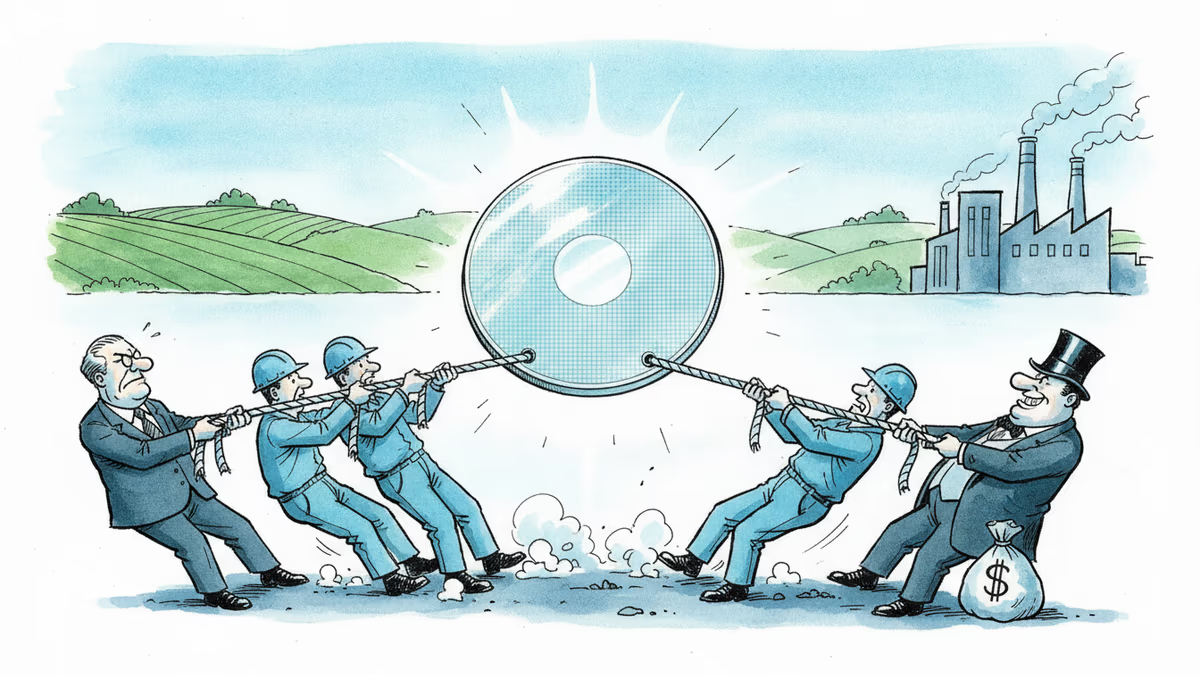
Samsung Electronics' union branch revealed that 84% of survey respondents oppose the government's roughly $290 billion (₩400 trillion) semiconductor megaproject in Gwangju. Government, management, the union and shareholders are all reading the same national project in sharply different ways.
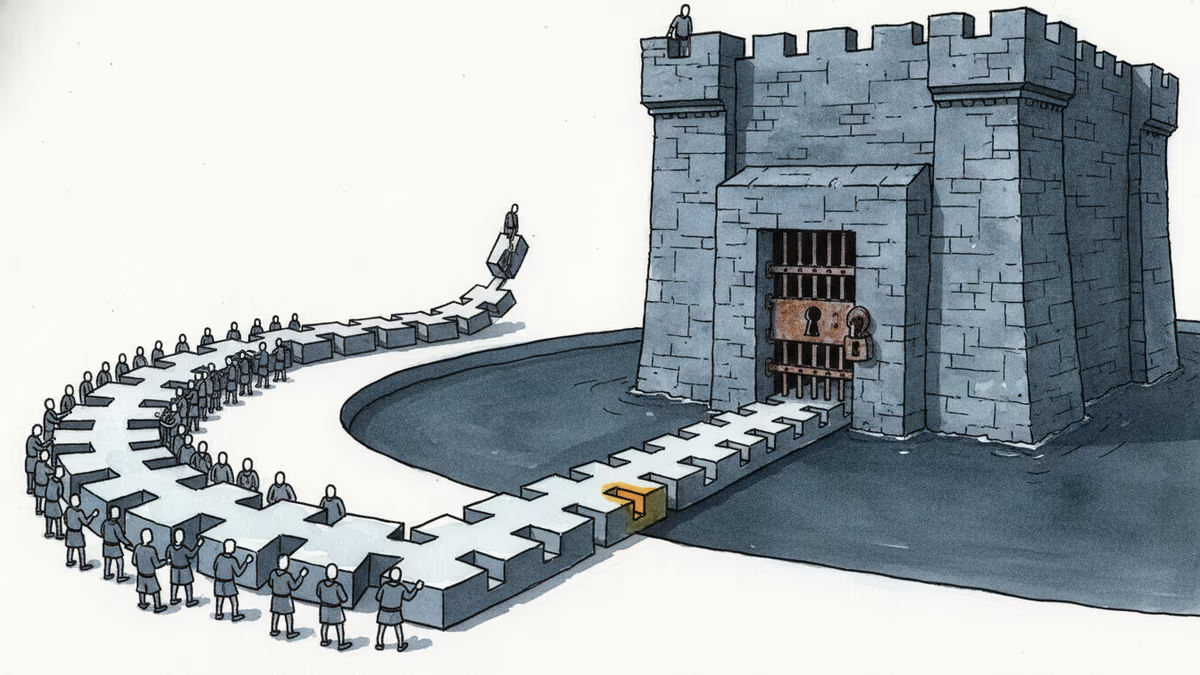
Nvidia shipped roughly a billion RISC-V cores in 2024, then announced it would run CUDA on the open standard. We break down how royalty-free instruction sets and open software stacks are trying to route around CUDA's lock-in. Part 2 of the Semiconductor Sovereignty series.
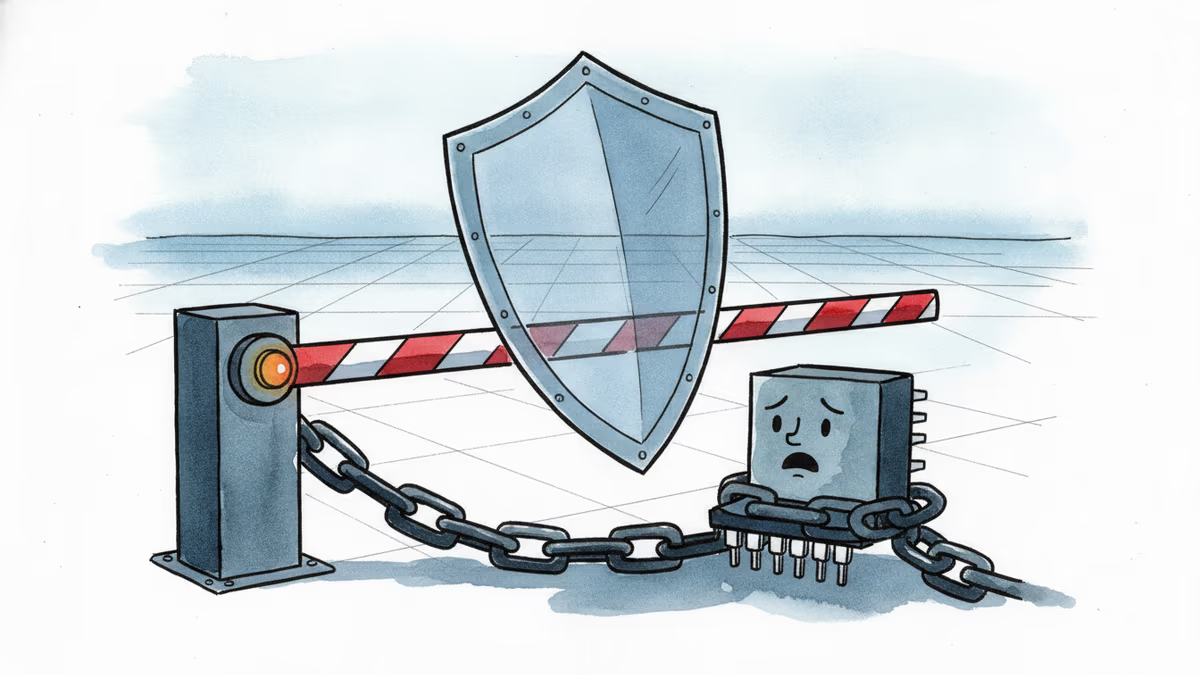
US AI-chip export controls split into three layers in the first half of 2026 — January easing, a May crackdown on circumvention, and a pending bill. Nvidia erased China from its guidance and still posted a record $81.6 billion quarter. A look at the export policy that both shields and cages it.

AMD's MI325X matches or beats Nvidia on memory and bandwidth — yet Nvidia's 86-92% share holds. The real moat is CUDA, 20 years in the making. Part 1 of 4.
Samsung Electronics' union branch revealed that 84% of survey respondents oppose the government's roughly $290 billion (₩400 trillion) semiconductor megaproject in Gwangju. Government, management, the union and shareholders are all reading the same national project in sharply different ways.
Nvidia shipped roughly a billion RISC-V cores in 2024, then announced it would run CUDA on the open standard. We break down how royalty-free instruction sets and open software stacks are trying to route around CUDA's lock-in. Part 2 of the Semiconductor Sovereignty series.
US AI-chip export controls split into three layers in the first half of 2026 — January easing, a May crackdown on circumvention, and a pending bill. Nvidia erased China from its guidance and still posted a record $81.6 billion quarter. A look at the export policy that both shields and cages it.
AMD's MI325X matches or beats Nvidia on memory and bandwidth — yet Nvidia's 86-92% share holds. The real moat is CUDA, 20 years in the making. Part 1 of 4.
Thoughts
Share your thoughts on this article
Sign in to join the conversation