
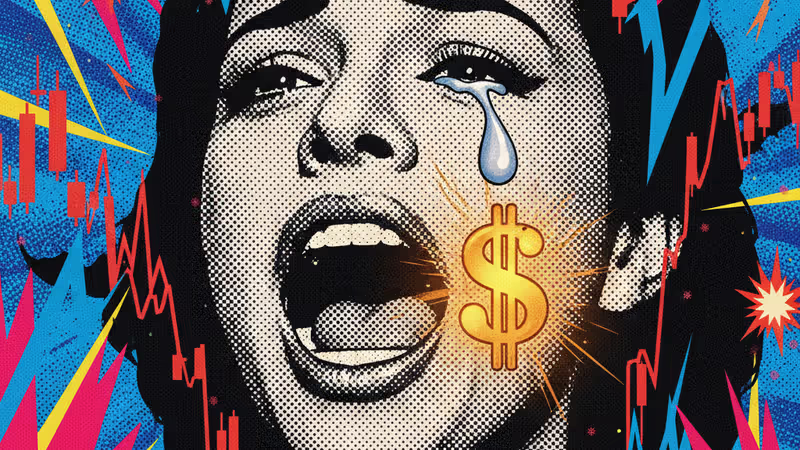
The Authenticity Crash: Why Celebrity Vulnerability is the New Market Currency
Beyond gossip: Celebrity vulnerability is a market signal. Discover why the authenticity crash is reshaping marketing, tech, and the entire creator economy.
The Lede
This isn't celebrity gossip; it's a market signal. The recent surge in public concern over figures like Christina Applegate and Bruce Willis marks a critical inflection point in the economy of influence. The carefully constructed veneer of celebrity perfection is fracturing, and what's emerging is a powerful new currency: verifiable vulnerability. For any leader building a public-facing brand—be it personal or corporate—understanding this shift from curated aspiration to raw authenticity is no longer optional. It's a fundamental change in the rules of engagement.
Why It Matters
The old playbook is obsolete. For decades, the value of a celebrity was tied to an aspirational ideal—a flawless, untouchable image. Brands paid for association with this perfection. That model is collapsing. Today, audience connection is forged in the fires of shared struggle, not in the glow of impossible glamour. This has second-order effects across multiple industries:
- Marketing & Endorsements: The ROI of a partnership now hinges on perceived authenticity. Brands are shifting from celebrity 'faces' to creators who offer genuine, often painful, glimpses into their lives. The risk is higher, but the reward—a deeply loyal, engaged audience—is exponentially greater.
- Media & Content: The demand is for stories that pierce the veil. The public's concern for figures like Michael J. Fox or the late wife of Liam Neeson isn't just sympathy; it's a desire for a deeper, more human narrative. This is driving a new cycle of documentaries, podcasts, and long-form content centered on struggle.
- The Creator Economy: This trend is the bedrock of the entire creator ecosystem. Influence is directly proportional to the strength of the parasocial bond, and that bond is cemented by shared vulnerability, not by displays of wealth or success.
The Analysis
We've witnessed a three-act evolution of fame. Act I was the Hollywood Studio System, which manufactured celebrity 'myths' with iron-fisted control. The public persona was a fictional product. Act II was the rise of tabloid and paparazzi culture, which sought to violently puncture that myth for profit. It was an adversarial relationship.
We are now deep in Act III: The Age of Mandated Transparency. Social media has disintermediated the old gatekeepers, forcing public figures into a direct, always-on relationship with their audience. The curtain is permanently gone. When Christina Applegate shares the brutal reality of her MS, or when Bruce Willis's family documents his cognitive decline, they are not just sharing personal news. They are servicing the new demand of the parasocial contract: in exchange for our attention and loyalty, you must show us your unvarnished truth.
This dynamic creates immense pressure. The celebrity is no longer just a performer but a full-time manager of their own public vulnerability, a task that comes with immense psychological costs. The audience, in turn, has become a massive, real-time focus group, offering support but also demanding ever-greater levels of disclosure.
PRISM Insight
This shift is fueling the 'Parasocial Economy,' and the investment implications are significant. The next wave of unicorns won't just be social platforms, but 'authenticity infrastructure'—the tools and services that support this new paradigm.
Look for explosive growth in:
- Mental Health Tech for Creators: Platforms providing confidential, on-demand mental and emotional support specifically for public figures managing the strain of constant exposure.
- AI-Powered Sentiment Analysis: Sophisticated tools that go beyond likes and comments to analyze the *quality* of parasocial bonds, helping brands identify truly resonant partners.
- Digital Identity Management: Services that help public figures strategically manage the boundary between public vulnerability and private life, preventing burnout and exploitation.
The future of brand value isn't follower count; it's the measurable depth of trust and emotional connection.
PRISM's Take
The era of the celebrity-as-deity is over. We are now in the age of the Human API, where public figures expose specific 'endpoints' of their personal lives—struggle, grief, illness—for public consumption and connection. This is a fragile, high-stakes evolution. The currency is no longer just fame; it's trust earned through painful honesty. The winners in this new economy won't be the most perfect or the most polished, but those who can manage this radical transparency without self-destructing. This isn't just a trend; it's the new, brutal reality of public life.
Related Articles
Beyond the meme: How the 'chaotic good' alignment is becoming a key strategy for disruption, brand loyalty, and even ethical AI design.
Celebrity photoshop fails signal a larger business trend: the 'Authenticity Tax.' PRISM analyzes the brand risk and the coming tech wave of digital provenance.
Beyond spoilers, the Duffer Brothers' Funko Pop stunt is a masterclass in IP management and fan engagement. PRISM analyzes the strategy.
The rise of bizarre online gifts signals a seismic shift in e-commerce. Discover why the niche product economy is the future of retail and brand strategy.