
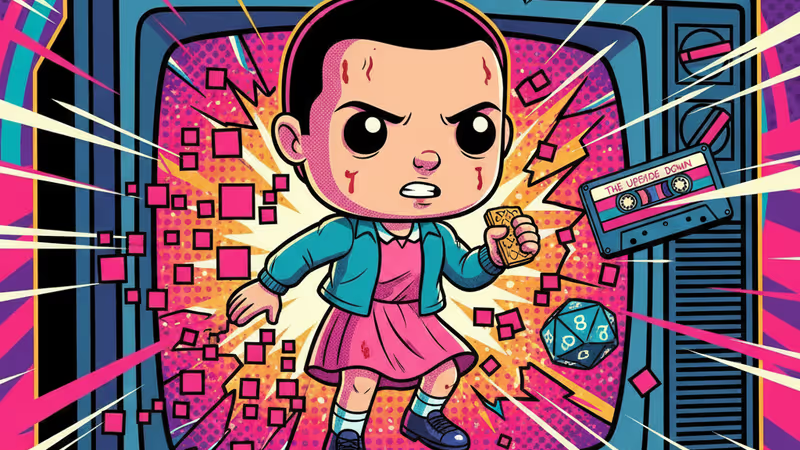
The Analog Playbook: How Stranger Things' Funko Stunt Redefines Engagement in the Streaming Wars
Beyond spoilers, the Duffer Brothers' Funko Pop stunt is a masterclass in IP management and fan engagement. PRISM analyzes the strategy.
The Lede: Beyond Spoilers
A seemingly playful late-night TV segment involving the Duffer Brothers and a few Funko Pop dolls is far more than a cute spoiler tease. For executives navigating the brutal attention economy, it’s a masterclass in high-ROI marketing, IP lifecycle management, and cultivating fan obsession. This isn't about what happens in the show; it's about a strategic shift in how flagship content franchises maintain cultural dominance between multi-year production cycles.
Why It Matters: The Engagement Flywheel
In a saturated streaming market, viewership metrics are only half the story. The real battle is for cultural real estate—the conversations happening on Reddit, TikTok, and YouTube long after the credits roll. The Duffer Brothers' analog stunt is a calculated play that generates a powerful flywheel effect:
- Low-Cost, High-Impact Marketing: A five-minute TV spot and a handful of vinyl figures generate thousands of hours of user-generated content, from forensic analysis videos to speculative fan fiction, all at zero incremental cost to Netflix.
- Transmedia IP Activation: This act directly connects the digital streaming product with a physical merchandise partner (Funko). It tells investors and the market that Stranger Things is not just a show, but a multi-platform IP stack capable of driving revenue far beyond subscriptions.
- Gamifying Fandom: By presenting a physical 'puzzle,' the creators transform passive viewers into active participants. This gamification deepens the audience's emotional investment, making them feel like insiders co-creating the narrative's meaning.
The Analysis: Depth Over Breadth
This tactic is a clever evolution of Alternate Reality Games (ARGs) used by shows like Lost in the mid-2000s, adapted for the modern social media landscape. While competitors like Disney+ rely on a high-volume firehose of content to keep subscribers engaged within their ecosystem, Netflix is executing a different strategy with its key tentpoles: maximizing the cultural half-life of each release.
Netflix has fewer mega-franchises than Disney. Therefore, it cannot afford for a blockbuster like Stranger Things to simply be a binge-watch phenomenon that is forgotten a week later. The Funko Pop 'riddle' is a strategic injection of intrigue designed to sustain conversation and relevance during the long wait between seasons. It’s a competitive move that prioritizes depth of engagement over breadth of catalog, building a resilient and devoted fanbase that is less likely to churn.
PRISM Insight: The Rise of the 'IP Stack'
The key takeaway for strategists and investors is the increasing value of a well-managed 'IP Stack.' A successful media property is no longer a monolithic piece of content. It is a core asset surrounded by layers of engagement opportunities—from physical merchandise and live experiences to digital communities and creator-led marketing.
The Duffer Brothers' stunt demonstrates the power of leveraging the 'creator as influencer.' Their perceived authenticity gives the puzzle weight, making it feel less like a corporate marketing beat and more like a genuine secret shared with fans. This highlights a crucial trend: the most potent marketing in the creator economy often comes from the source, blurring the lines between creation, promotion, and community management.
PRISM's Take: Manufacturing Obsession
This was not a red herring; it was a deliberate and brilliant act of brand stewardship. In an age of algorithmic content feeds and fleeting digital trends, the Duffer Brothers used a tangible, almost nostalgic method to command attention. They understand that in the streaming wars, the ultimate goal isn't just to acquire viewers, but to manufacture obsession.
By treating their audience as intelligent decoders rather than passive consumers, they've provided a blueprint for any brand seeking to build a dedicated community around its IP. The lesson is clear: don't just tell your audience a story. Give them a puzzle to solve, a world to inhabit, and a reason to care long after the screen goes dark.
Related Articles
The rise of bizarre online gifts signals a seismic shift in e-commerce. Discover why the niche product economy is the future of retail and brand strategy.
Netflix's new K-drama 'Cashero,' where money equals superpower, has become a viral sensation. We break down the best reactions and analyze why it's resonating globally.
Netflix's new K-drama 'Cashero,' where money equals superpower, has become a viral sensation. We break down the best reactions and analyze why it's resonating globally.
Netflix's new K-drama 'Cashero' has a hero whose powers are tied to his bank account. We break down why this concept went viral and what it says about our culture.