

The AI Tax Is Here: Global Memory Shortage Will Inflate PC & Phone Prices Until 2027
A global RAM shortage, driven by AI demand, is ending the era of cheap memory. Discover why your next phone and PC will cost more and what it means.
The Lede: The AI Gold Rush Comes for Your Wallet
This is not another cyclical supply chain hiccup. The projected multi-year shortage of RAM signals a fundamental, strategic pivot by the world's top semiconductor manufacturers. Faced with insatiable, high-margin demand from the AI sector, they are reallocating production away from consumer-grade memory. The result is what we're calling the 'AI Tax'—a premium on essential technology that will be paid not just by enterprises, but by every consumer and business upgrading their hardware for the foreseeable future. The era of cheap, abundant memory is definitively over, with direct consequences for product roadmaps, IT budgets, and consumer spending through at least 2027.
Why It Matters: The Ripple Effect of Resource Scarcity
The immediate impact is obvious: higher prices for everything from flagship smartphones to gaming PCs. But the second-order effects are where the real disruption lies.
- The Squeeze on OEMs: Device manufacturers like Dell, HP, and even Apple face a difficult trilemma: absorb the rising costs and sacrifice margins, pass the costs to consumers and risk lower sales, or skimp on memory and compromise performance. Expect to see base model devices with less RAM, turning what was once a standard component into a costly upgrade.
- Slowing the 'AI on the Edge' Revolution: The dream of powerful, on-device AI models requires plentiful, fast memory. If consumer devices are starved of affordable RAM, it could throttle the development and adoption of sophisticated client-side AI applications, forcing more processing back to the cloud.
- A New Digital Divide: The technology landscape is bifurcating. AI data centers, backed by massive capital, will operate on the cutting edge with a near-limitless supply of high-bandwidth memory (HBM). The rest of the world—consumers, schools, and small businesses—will compete for the increasingly expensive leftovers.

The Analysis: A Structural Shift, Not a Temporary Blip
We've seen memory shortages before, often caused by factory fires, floods, or demand spikes from cryptocurrency mining. This is different. Those were temporary disruptions to a stable market. Today's crisis is a deliberate, structural reallocation of manufacturing capacity driven by simple economics.
The memory market is an oligopoly controlled by Samsung, SK Hynix, and Micron. For them, producing a wafer of HBM for an NVIDIA AI accelerator is vastly more profitable than producing a wafer of DDR5 for the consumer market. They aren't just chasing demand; they are chasing astronomical margins. This isn't a supply problem—it's a priority problem. In this new hierarchy, the AI cloud is the top-tier client, and the consumer is now a distant second.
- Software Optimization is King: Software and OS developers who can deliver high performance with a smaller memory footprint will gain a significant competitive advantage. Efficient code is no longer just good practice; it's a critical business enabler.
- The Rise of CXL: Technologies like Compute Express Link (CXL), which allows for more flexible and efficient memory pooling in data centers, become even more critical. While not a direct consumer solution, it highlights where the enterprise market is heading to mitigate these very bottlenecks.
PRISM's Take: Budget for the AI Tax Now
The AI revolution is no longer an abstract concept happening in a distant cloud. It has reached down to the component level and is now directly impacting your budget. This memory shortage isn't a bug in the system; it's a feature of the current AI gold rush. For the next three years, RAM must be treated as a premium component, not a commodity. Businesses must revise hardware refresh budgets upward, and consumers should be prepared for either higher prices or performance compromises on new devices. The memory crunch is the first tangible, widespread cost of the AI era being passed on to everyone.
Authors
Related Articles
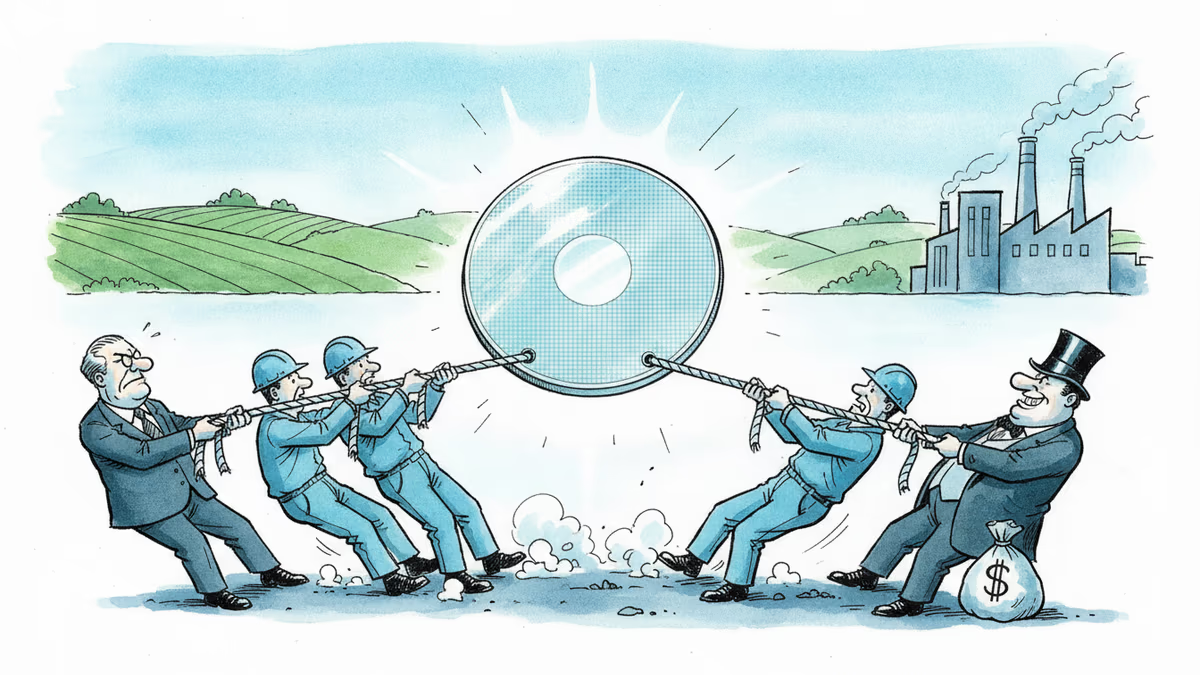
Samsung Electronics' union branch revealed that 84% of survey respondents oppose the government's roughly $290 billion (₩400 trillion) semiconductor megaproject in Gwangju. Government, management, the union and shareholders are all reading the same national project in sharply different ways.
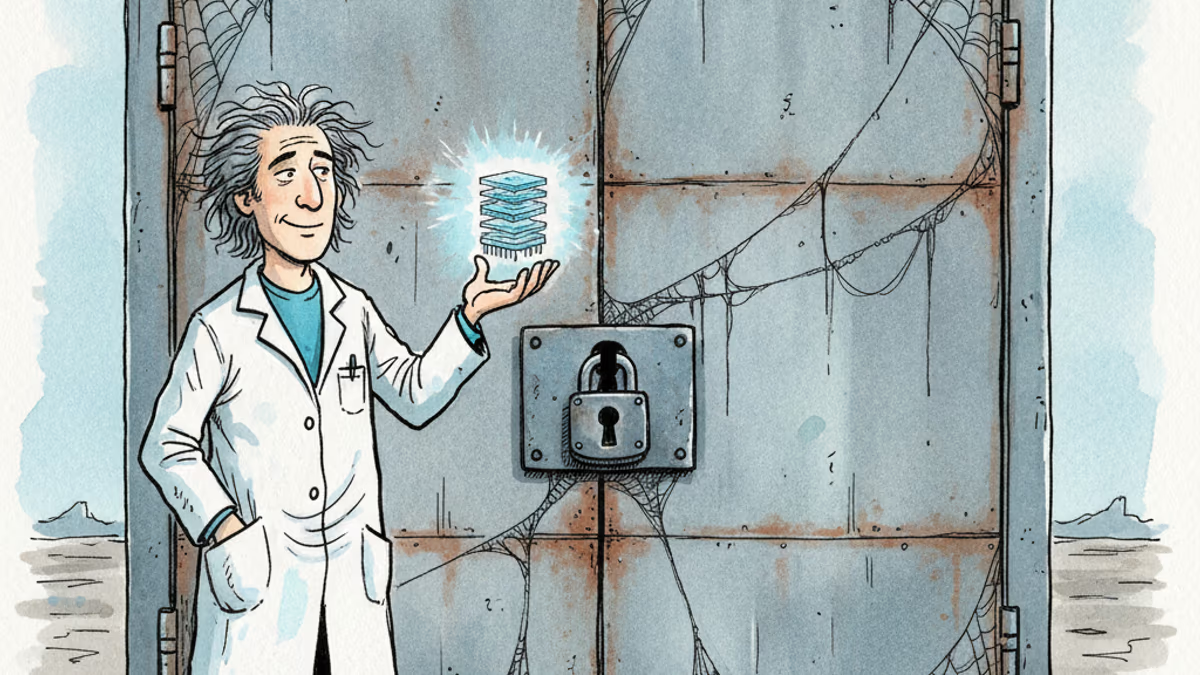
IBM has unveiled 'nanostack,' the world's first sub-1nm (0.7nm) chip research. Some say it adds a decade to Moore's Law; others say a lab demo is a long way from a fab. Either way, mass production isn't IBM's job.
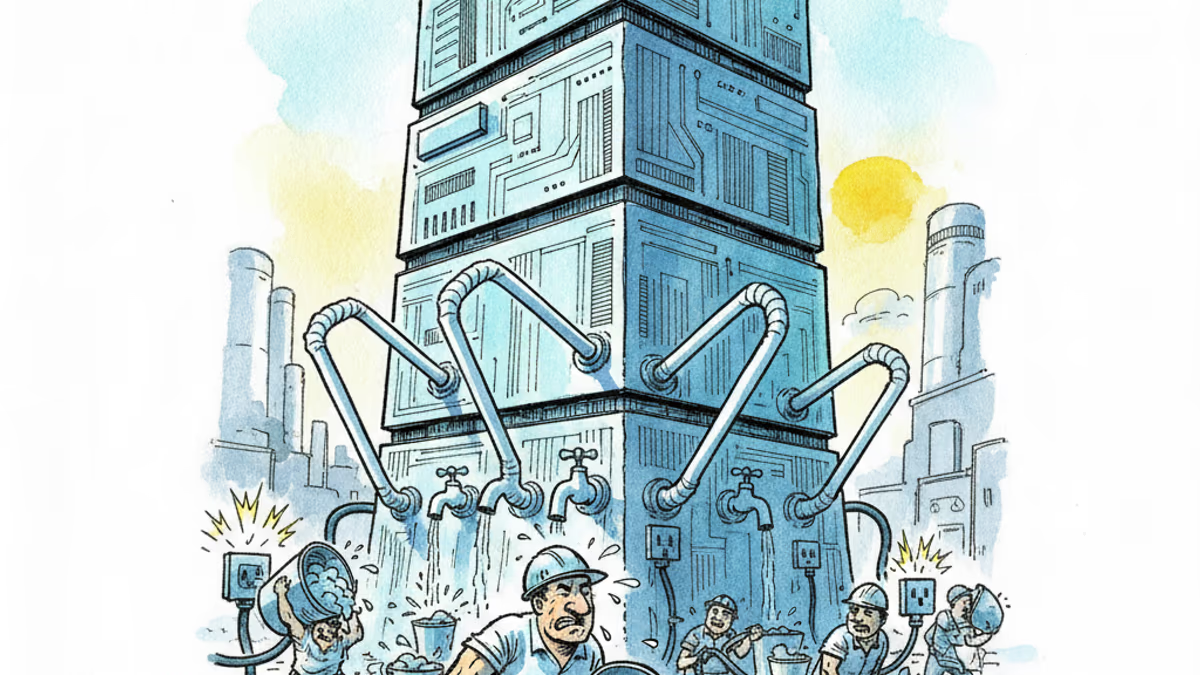
Samsung and SK unveiled a chip and AI investment package worth thousands of trillions of won on June 29. The headline number swings wildly by outlet, but the real contest isn't capital — it's water and power.
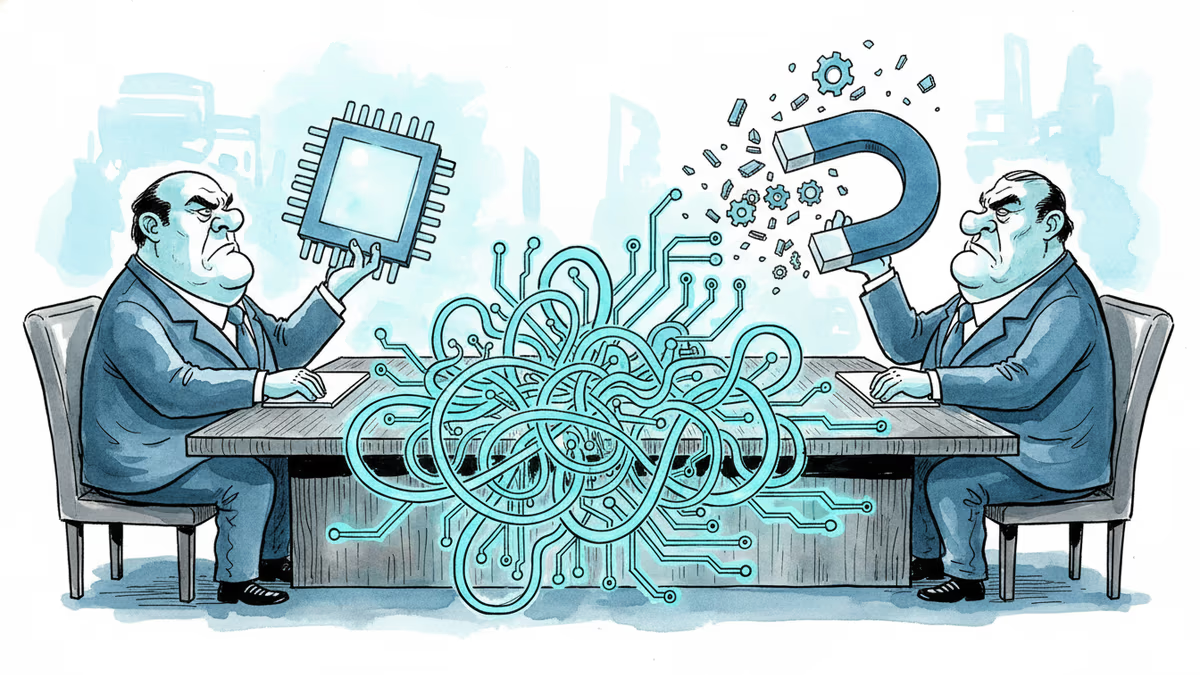
As Trump and Xi meet in Beijing, five tech flashpoints—chips, AI rivalry, supply chains, EVs, and rare earths—will quietly shape the global economy more than any diplomatic communiqué.
Samsung Electronics' union branch revealed that 84% of survey respondents oppose the government's roughly $290 billion (₩400 trillion) semiconductor megaproject in Gwangju. Government, management, the union and shareholders are all reading the same national project in sharply different ways.
IBM has unveiled 'nanostack,' the world's first sub-1nm (0.7nm) chip research. Some say it adds a decade to Moore's Law; others say a lab demo is a long way from a fab. Either way, mass production isn't IBM's job.
Samsung and SK unveiled a chip and AI investment package worth thousands of trillions of won on June 29. The headline number swings wildly by outlet, but the real contest isn't capital — it's water and power.
As Trump and Xi meet in Beijing, five tech flashpoints—chips, AI rivalry, supply chains, EVs, and rare earths—will quietly shape the global economy more than any diplomatic communiqué.
Thoughts
Share your thoughts on this article
Sign in to join the conversation