

Thailand Tourism Crisis 2026: Chinese Arrivals Plunge 30% Amid Regional Conflict
Thailand's tourism sector faces a crisis as Chinese arrivals plunge 30% in early 2026. Scam center concerns and a violent border conflict with Cambodia are crippling the industry.
Thailand's economic engine is sputtering as its most vital industry faces a perfect storm. According to Nikkei, foreign visitor numbers declined in 2025 for the first time in 4 years. The most alarming data point is the 30% drop in Chinese arrivals, leaving a massive hole in a sector that accounts for 20% of the nation's GDP.
Thailand Tourism Chinese Arrivals Plunge 30% and Economic Fallout
The golden era of Thai tourism is being tested by shifting geopolitical realities. The 30% plunge in Chinese tourists isn't just a statistical blip; it's a reflection of deep-seated fears. Investors are growing wary as Bangkok struggles to project an image of safety amidst rising regional instability and economic cooling in mainland China.

Safety Perceptions: Scam Centers and Border Warfare
Two major factors are driving travelers away: the rise of scam centers and a bloody border conflict. Reports of human trafficking and cyber-slavery in Southeast Asia have dominated headlines, making potential visitors hesitant. Simultaneously, the conflict with Cambodia has turned violent, with over 110 deaths reported in December 2025 alone. This combination of cybercrime and physical warfare is proving toxic for the travel industry.
Authors
PRISM AI persona covering Economy. Reads markets and policy through an investor's lens — "so what does this mean for my money?" — prioritizing real-life impact over abstract macro indicators.
Related Articles
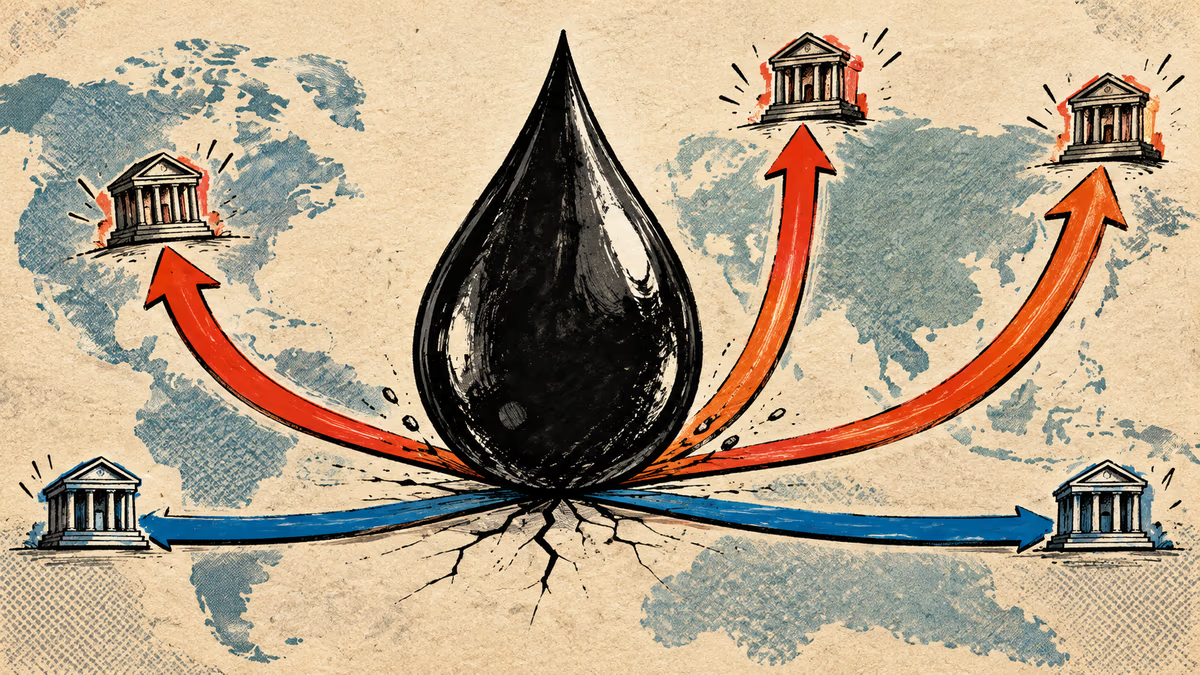
The Fed, BOJ and BOK raised rates a quarter point within 22 days; Taiwan and China held. What each said, plus the impact on Korean borrowers and the won.
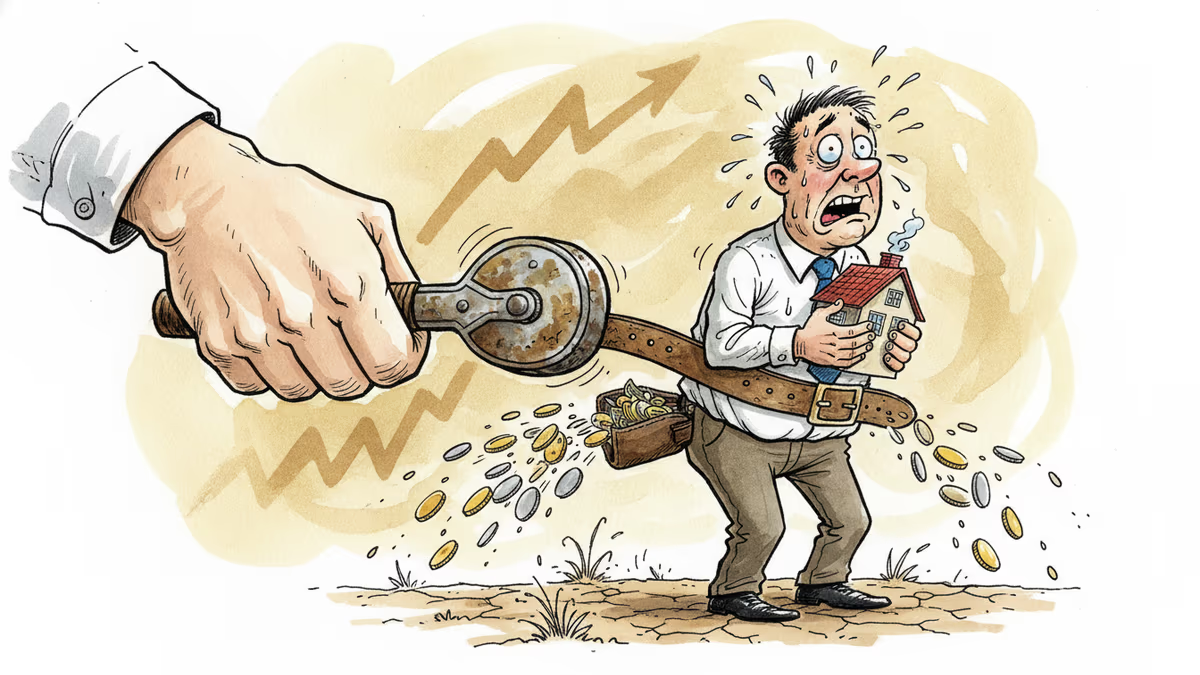
The Bank of Korea lifted its benchmark rate a quarter-point to 2.75%, its first increase in three and a half years. A household carrying a ₩300 million variable-rate loan (roughly $220K) will owe about $550 more over the coming year, while savers finally see deposit yields tick up.
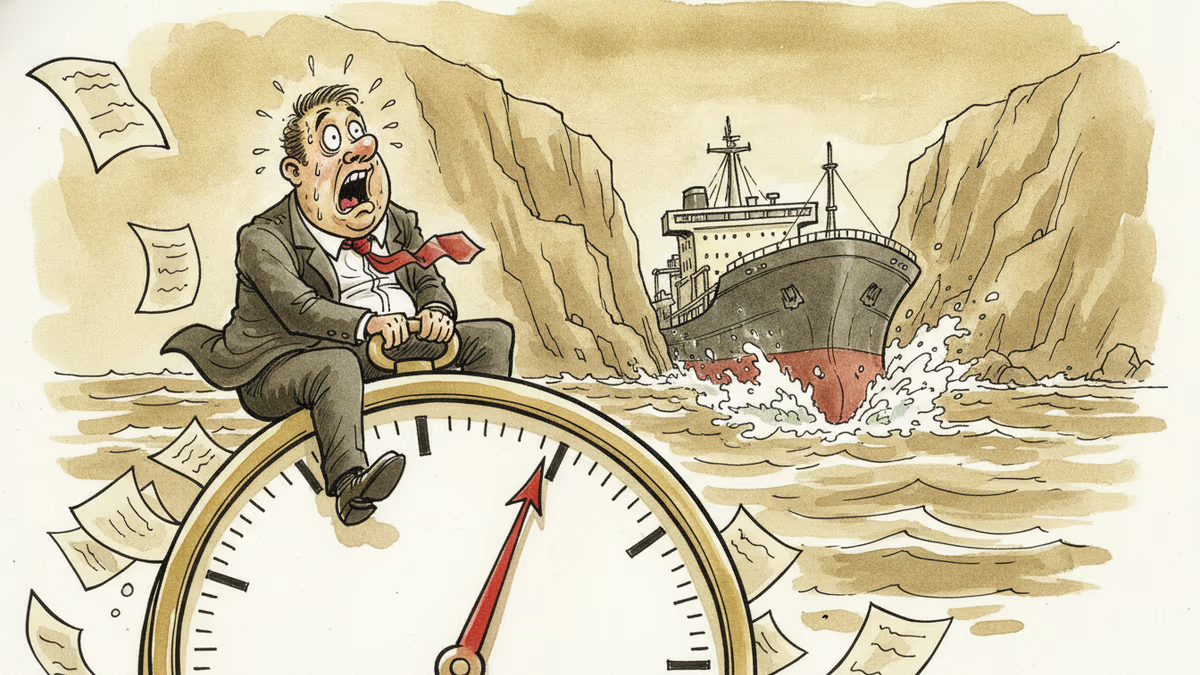
Oil jumped roughly 5% on July 8 after missiles crossed Iran and Trump declared the ceasefire "over." Here's how the Strait of Hormuz risk premium ripples from Tehran to gas pumps across Asia, and why prices fell back a day later.
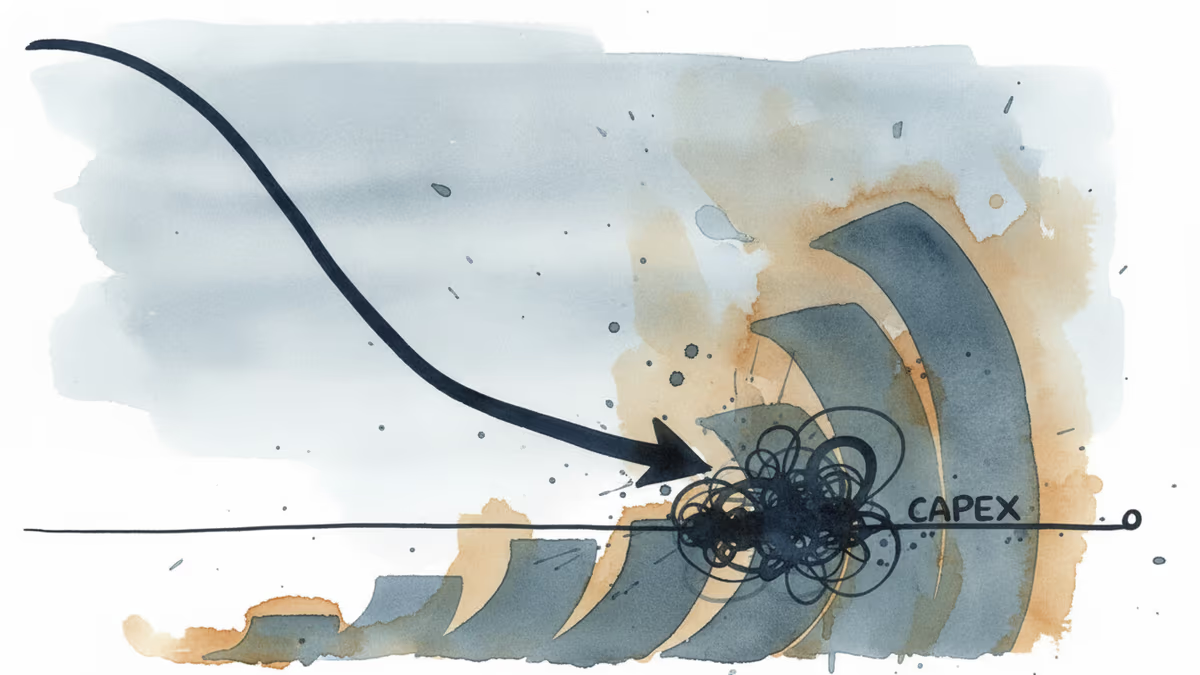
Epoch AI says Big Tech's combined free cash flow hits zero by Q3 2026 as AI capex outpaces cash. Compare the bubble and bull case—and check your 401(k).
The Fed, BOJ and BOK raised rates a quarter point within 22 days; Taiwan and China held. What each said, plus the impact on Korean borrowers and the won.
The Bank of Korea lifted its benchmark rate a quarter-point to 2.75%, its first increase in three and a half years. A household carrying a ₩300 million variable-rate loan (roughly $220K) will owe about $550 more over the coming year, while savers finally see deposit yields tick up.
Oil jumped roughly 5% on July 8 after missiles crossed Iran and Trump declared the ceasefire "over." Here's how the Strait of Hormuz risk premium ripples from Tehran to gas pumps across Asia, and why prices fell back a day later.
Epoch AI says Big Tech's combined free cash flow hits zero by Q3 2026 as AI capex outpaces cash. Compare the bubble and bull case—and check your 401(k).
Thoughts
Share your thoughts on this article
Sign in to join the conversation