
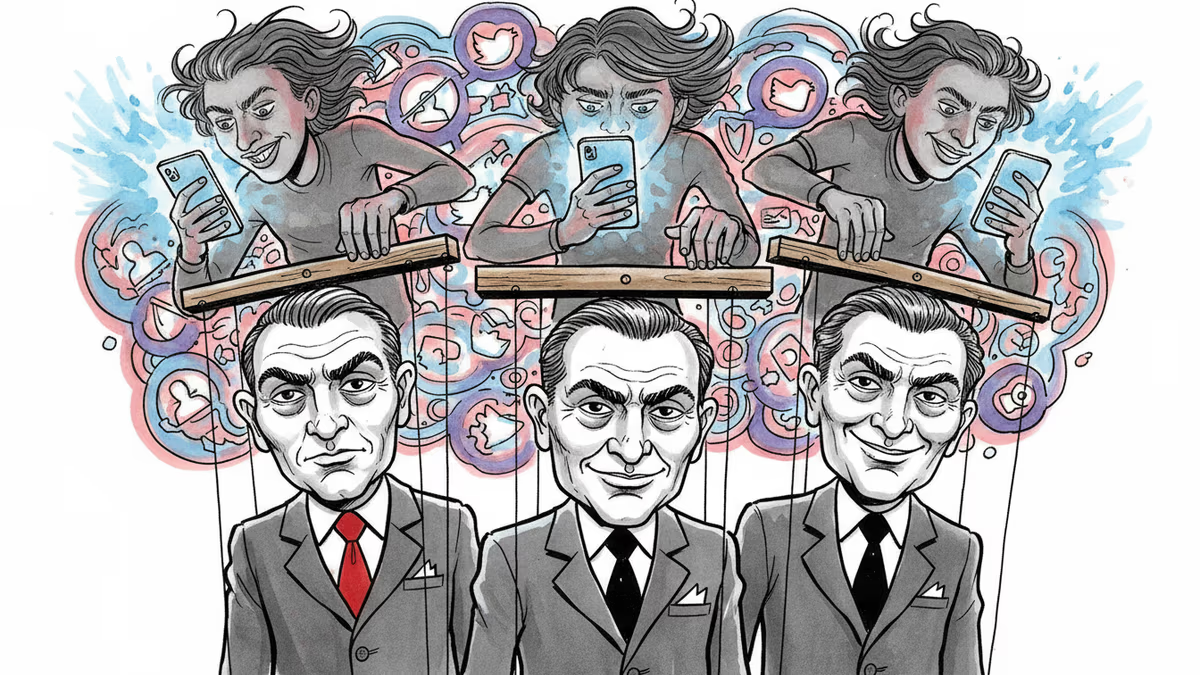
When Creators Become Kingmakers
A Texas House race reveals how social media creators are reshaping political campaigns. As 2026 midterms approach, the relationship between politicians and digital influencers presents new challenges for campaign strategists.
1.6 Million vs 2.6 Million: When Follower Count Meets Ballot Count
The Texas House race between James Talarico and Jasmine Crockett wasn't just another primary election. It was a preview of democracy's digital future, where TikTok creators wielded as much influence as traditional endorsements. Despite Crockett's 2.6 million TikTok followers dwarfing Talarico's 1.6 million, the real power players weren't the candidates themselves—they were the creators orbiting around them.
Crockett built her brand on viral confrontation, calling out Marjorie Taylor Greene's "bleach-blonde, bad-built, butch body" and telling Elon Musk to "fuck off." Talarico took a different path, delivering populist sermons across unconventional platforms like the Joe Rogan Experience, generating countless viral clips.
But the most explosive moments came from outside their campaigns entirely.
The Creator Wildcard
In January, the hosts of Las Culturistas, a pop-culture podcast, ignited a firestorm by telling listeners: "Don't waste your money sending to Jasmine Crockett, do not do it." The backlash was swift and brutal, forcing an apology that only amplified the controversy.
Then came February's bombshell. Dallas-based creator Morgan Thompson, with nearly 200,000 TikTok followers, claimed Talarico called Colin Allred a "mediocre Black man." The video exploded across social media, jumping from pro-Crockett communities into mainstream headlines.

Talarico's campaign pushed back hard, calling it a "mischaracterization" of an off-the-record conversation where he criticized Allred's campaign methods, not the man himself. "I would never attack him on the basis of race," Talarico insisted. "As a Black man in America, Congressman Allred has had to work twice as hard to get where he is."
The Trust Equation Problem
This episode exposed a fundamental challenge facing political strategists: creators operate outside traditional media rules. They don't follow journalistic standards about off-the-record conversations. Their primary loyalty isn't to politicians—it's to their audiences and the engagement that political content generates.
"There are so many factors that campaign staff have to deal with," explains Kyle Tharp, who writes the Chaotic Era newsletter on digital politics. "Do I put them in the press risers at the rally? Give them VIP access? A few minutes with the candidate? Screen their questions, or let them riff and hope for the best?"
The Trump 2024 campaign learned this lesson the hard way. After heavily relying on creators and podcasters to reach young male voters, many of those same influencers have turned against the administration. Comedian Andrew Schulz, who hosted Trump on his Flagrant podcast, now regularly criticizes the administration over its handling of Jeffrey Epstein-related files.
The Unmanageable Megaphone
Unlike traditional media relationships built on professional norms, creator partnerships rely on personal trust. When that trust breaks—as it did with Thompson and Talarico—there's little to prevent a hostile post from going viral and spinning completely out of control.
Creators aren't bound by editorial oversight or fact-checking processes. They can pivot from ally to adversary in a single post, armed with direct access to hundreds of thousands of engaged followers.
Authors
Related Articles
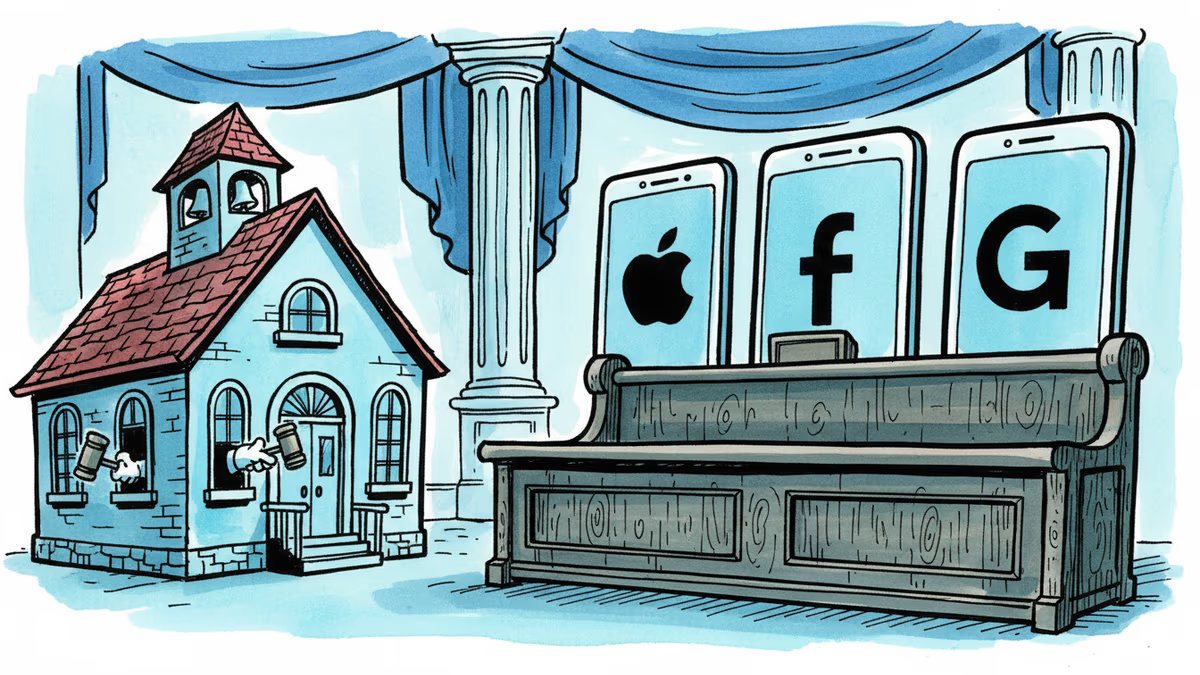
Snap, YouTube, and TikTok settled a landmark school district lawsuit over social media addiction. With 1,000+ similar cases pending, this could reshape Big Tech's liability landscape.
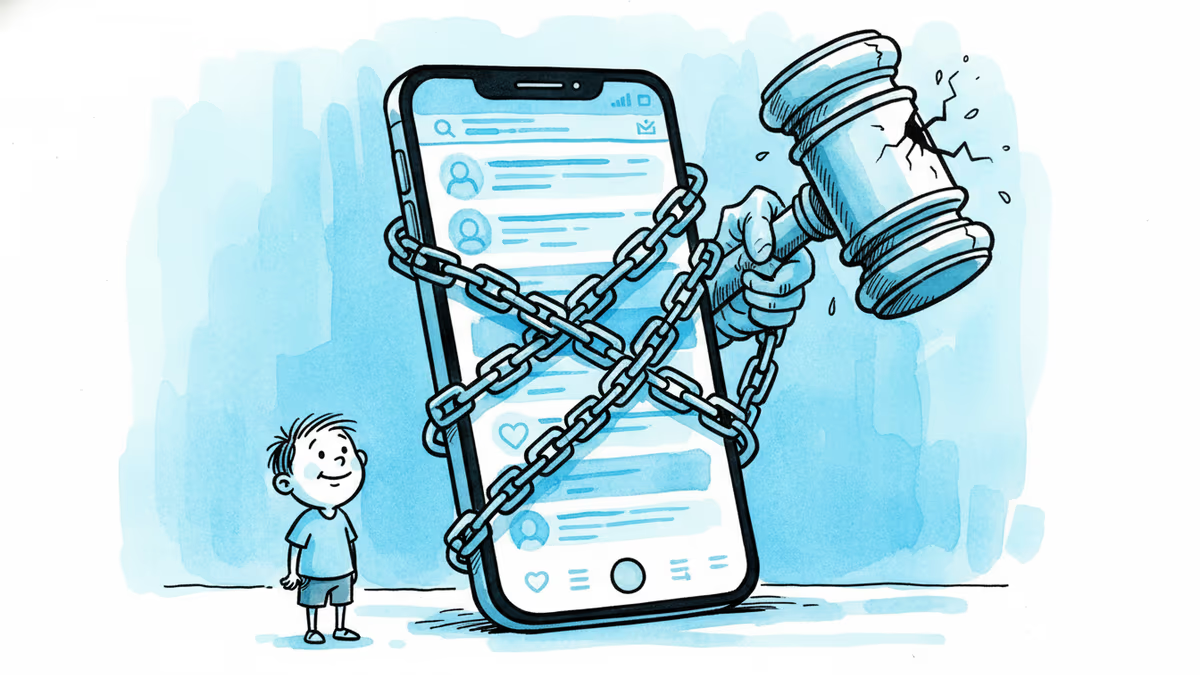
New Mexico already won $375 million from Meta. Now it wants something harder to give: a court order forcing Facebook, Instagram, and WhatsApp to redesign themselves. A three-week trial starts Monday.
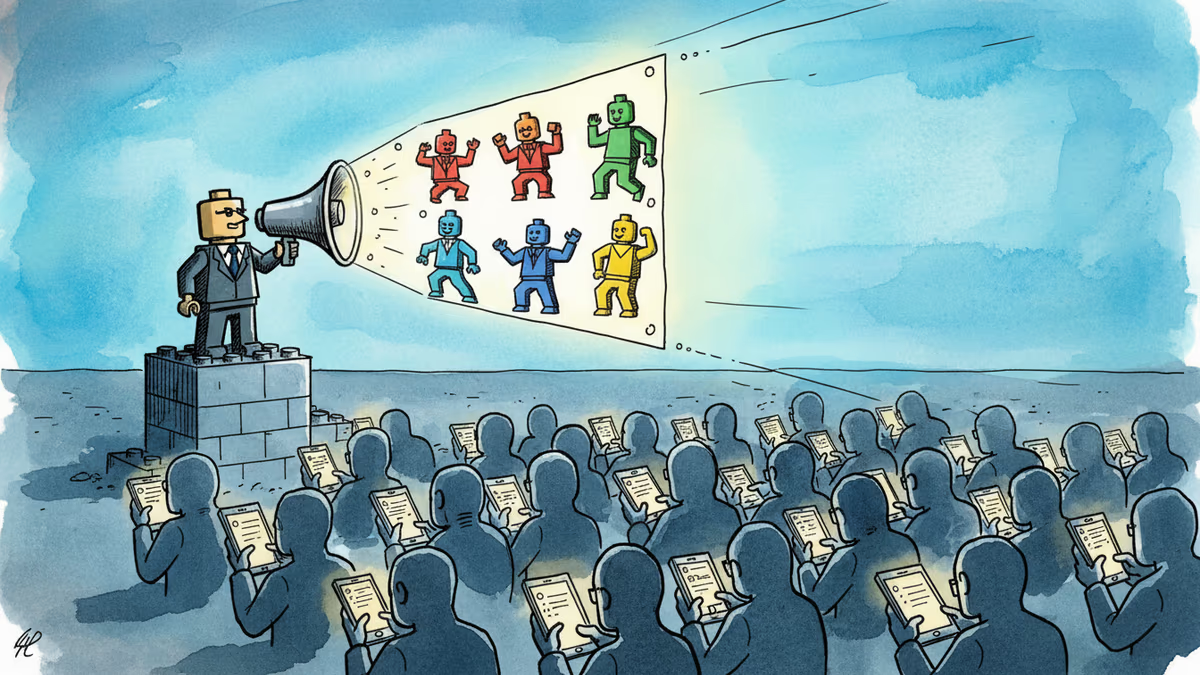
A small pro-Iran team is racking up millions of views with AI-generated Lego videos that mock Trump — and Americans are sharing them. What does that tell us about information warfare?
Reddit CEO Steve Huffman announced human verification for suspicious accounts. As AI bots flood the internet, one platform is drawing a line — but the line keeps moving.
Snap, YouTube, and TikTok settled a landmark school district lawsuit over social media addiction. With 1,000+ similar cases pending, this could reshape Big Tech's liability landscape.
New Mexico already won $375 million from Meta. Now it wants something harder to give: a court order forcing Facebook, Instagram, and WhatsApp to redesign themselves. A three-week trial starts Monday.
A small pro-Iran team is racking up millions of views with AI-generated Lego videos that mock Trump — and Americans are sharing them. What does that tell us about information warfare?
Reddit CEO Steve Huffman announced human verification for suspicious accounts. As AI bots flood the internet, one platform is drawing a line — but the line keeps moving.
Thoughts
Share your thoughts on this article
Sign in to join the conversation