
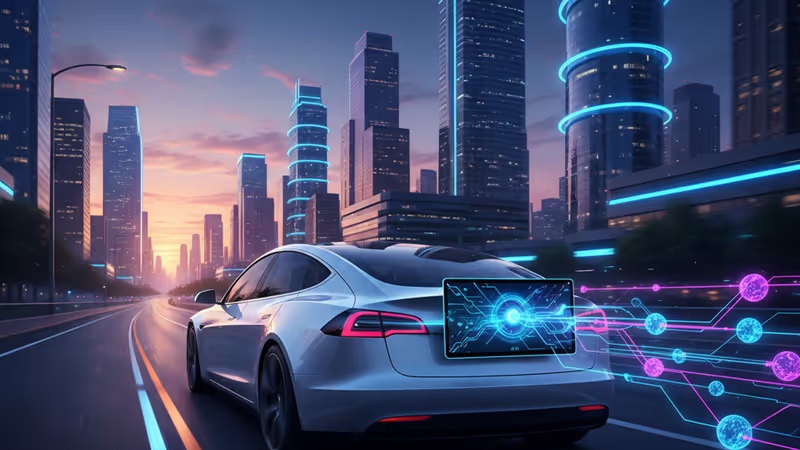
Broken Promises? The Tesla Robotaxi 2025 Reality vs. Musk’s Vision
A status check on the Tesla Robotaxi 2025 reality: Elon Musk's promise of 50% US coverage meets the hard truth of human supervision and limited rollouts in 2026.
The dream of a driverless America hasn't arrived as scheduled. While Elon Musk predicted that by the end of 2025, 50% of the US population would have access to unsupervised Tesla robotaxis, the reality on January 8, 2026, tells a much different story.
Tesla Robotaxi 2025 Reality: Still Under Supervision
According to reports from The Verge, Tesla's current service in Austin and San Francisco is far from the autonomous utopia promised. The service isn't open to the general public yet, and most vehicles still require a human safety driver or a supervisor in the passenger seat.

These employees aren't just along for the ride; they have access to a kill switch to take over if the AI falters. Although some unsupervised tests have been conducted, they remain the exception rather than the rule for the Tesla Robotaxi fleet.
The Gap Between Hype and Engineering
Musk’s bold timelines have long been a hallmark of Tesla's marketing strategy. However, the failure to reach the 50% coverage mark by late 2025 highlights the persistent challenges of edge cases and regulatory scrutiny in autonomous driving technology.
Authors
Related Articles
Waymo's new Ojai robotaxi isn't just a vehicle upgrade. It's the company's most serious attempt yet at cracking the cost problem that has kept autonomous vehicles from scaling. Here's what's really at stake.
SpaceX's IPO filing puts AI at the center, claiming a $26.5 trillion market opportunity. But can Grok compete with OpenAI and Anthropic for enterprise customers?
SpaceX filed a nearly 400-page S-1 with the SEC, targeting an IPO as early as June 12. Here's what the filing reveals—and what it doesn't.
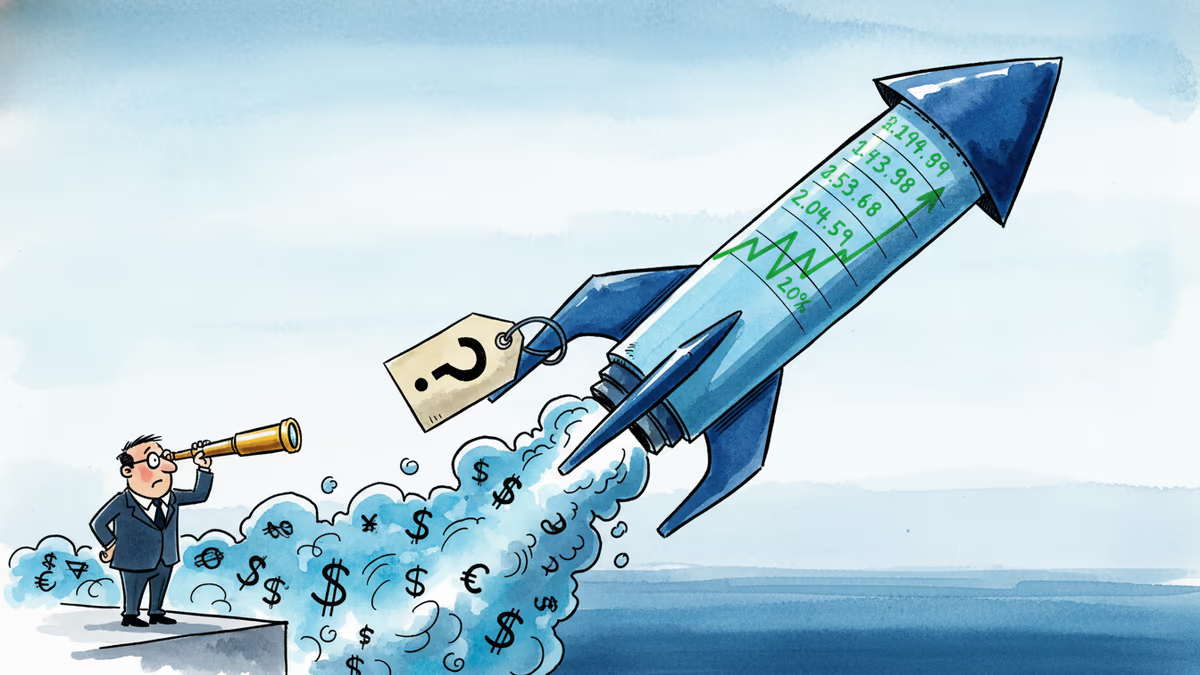
SpaceX has filed its S-1 with the SEC, targeting the Nasdaq under ticker SPCX. With $18.67B in revenue but a $4.9B loss, the IPO forces investors to answer one hard question.
Waymo's new Ojai robotaxi isn't just a vehicle upgrade. It's the company's most serious attempt yet at cracking the cost problem that has kept autonomous vehicles from scaling. Here's what's really at stake.
SpaceX's IPO filing puts AI at the center, claiming a $26.5 trillion market opportunity. But can Grok compete with OpenAI and Anthropic for enterprise customers?
SpaceX filed a nearly 400-page S-1 with the SEC, targeting an IPO as early as June 12. Here's what the filing reveals—and what it doesn't.
SpaceX has filed its S-1 with the SEC, targeting the Nasdaq under ticker SPCX. With $18.67B in revenue but a $4.9B loss, the IPO forces investors to answer one hard question.
Thoughts
Share your thoughts on this article
Sign in to join the conversation