
Tesla Sold 74,000 More Cars Than Expected — So Why Did the Stock Tank?
Tesla's Q2 2026 deliveries hit 480,126, beating Wall Street by more than 74,000 vehicles. Yet shares slid roughly 7% the same day — the worst drop in over a year. Here's why the beat and the sell-off tell the same story.
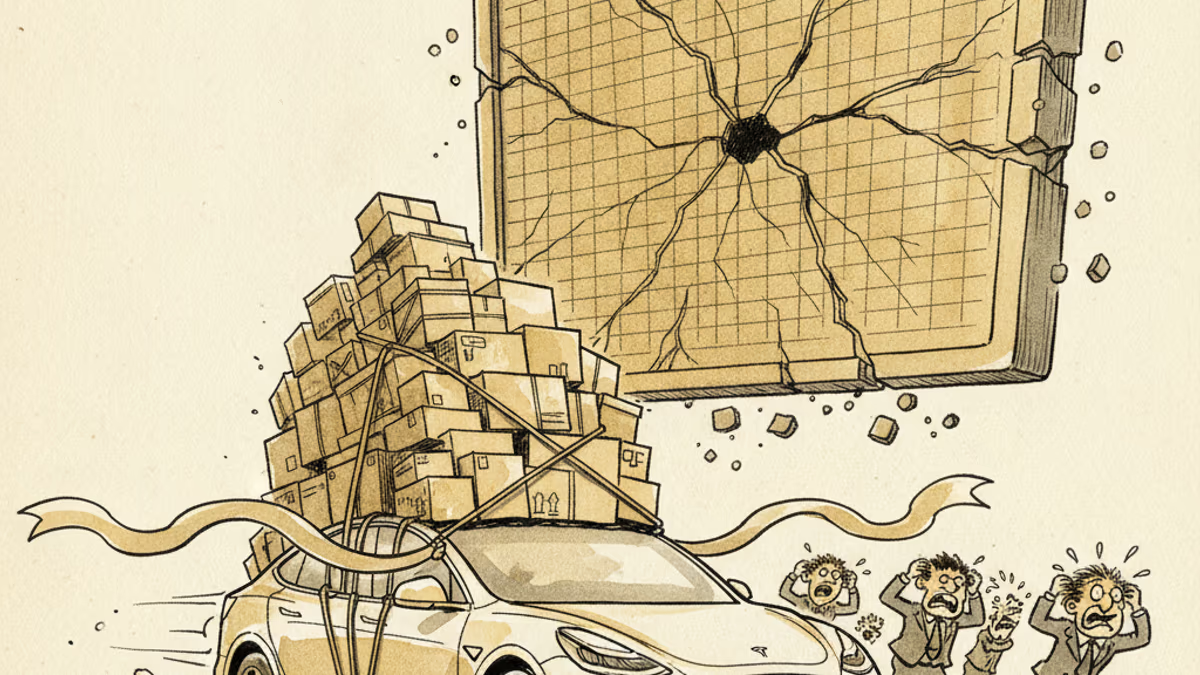
Tesla just crushed Wall Street's delivery estimate by more than 74,000 cars. Then the stock fell 7% the same day.
On July 2, 2026, Tesla reported second-quarter deliveries of 480,126 vehicles, blowing past the analyst consensus of 406,024 by roughly 74,000. Production came in at 451,758. For the first time in two years, deliveries turned positive year over year — and not by a little. Growth hit +25% against 384,122 a year earlier. On the scoreboard alone, it's a rout.
And yet TSLA closed down about 7% on the day, its worst single-session drop in more than a year by market trackers like 24/7 Wall St. A company that beat its own numbers watched its shares crater. That gap — the beat and the sell-off pointing in opposite directions — is the real story of the quarter.
Deliveries ran 28,368 ahead of production
Start with what's confirmed. Deliveries of 480,126 topped production of 451,758 by 28,368 units. In plain terms, Tesla sold more than it built, drawing down the inventory it had stacked up in Q1 — a positive signal for cash flow.
The mix, though, is lopsided. The Model 3 and Model Y accounted for 467,762 deliveries, or 97.4% of the total. Everything else — Model S, Model X, Cybertruck — added up to just 12,364. Two mass-market cars are still carrying the entire company, and that hasn't changed.
There was a bright spot beyond the cars. Energy storage deployments came in at 13.5 GWh, edging past the roughly 13.3 GWh the Street expected. With vehicle volume plateauing, the energy business is the “second growth engine” Tesla keeps pointing investors toward.
Why it bounced — the bull case
Bulls read this rebound as a structural recovery.
First, demand in Europe — a core market — genuinely came back after last year's collapse. One caveat worth flagging up front: Tesla doesn't break out regional deliveries in these releases. The “Europe led, North America lagged” narrative is an estimate built from national registration data, not a company disclosure.
Second, cheaper trims widened the buyer base. Third, non-auto lines like the 13.5 GWh of storage are starting to carry their weight. Fourth, deliveries running 28,368 units ahead of production reads as real demand soaking up inventory rather than cars piling up on lots.
Some outlets have also floated that a spike in oil prices, tied to tensions involving Iran, nudged European buyers toward EVs. But that causal link is editorial interpretation and speculation — there's no hard evidence to treat it as fact.
Deliveries beat consensus by 74,000 and the stock still closed at its worst level in over a year. The reason is timing. Per market commentary, TSLA had already run up more than 13% over the four sessions before the print, pricing in a strong number — and shares had now fallen on the delivery day three quarters running. The market's attention has shifted from “how many did they sell?” to “how much do they keep?” (margins) and “when does Full Self-Driving actually make money?” Truist's William Stein has argued that progress on FSD and other AI projects matters far more to Tesla's long-term cash flow and stock than the raw delivery count ever will.

Why it sold off — the bear case
Bears think that +25% headline hides an optical illusion.
Start with the base effect. The comparison quarter — 384,122 a year ago — was already a beaten-down low. Bounce off a soft floor and the growth rate looks bigger than the recovery really is.
Next, pulled-forward demand. With the U.S. federal EV tax credit set to expire, buyers likely rushed to close deals before it lapsed. If so, part of this quarter's strength is simply borrowed from the second half of the year. Cox Automotive has forecast that the credit's expiration could cut Tesla's U.S. sales by 20% — an analyst projection, not a certainty.
Then there's the margin blank. This release contained delivery and production counts and nothing else. Average selling price, automotive gross margin, and the regulatory-credit contribution won't surface until the full earnings report. If cheaper trims drove the volume, margins may have thinned in the process. “Volume recovered, profitability unconfirmed” is the most honest frame right now.
Valuation is in the mix too. Tesla's price-to-earnings ratio is reported to sit somewhere in the 400x range — a figure worth treating as a ballpark, since the sourcing is thin. Either way, the fact that volume climbed while the stock fell tells you the market is watching profitability and valuation, not unit counts.
The wider battlefield — Musk, rivals, and a fading subsidy
For readers outside the U.S., the rebound lands inside a bigger competitive picture.
The tax-credit story is the clearest global signal. The U.S. incentive that's now expiring — long a de facto floor under EV pricing — is exactly the kind of policy prop that legacy rivals and Chinese challengers alike have been racing to outgrow. In Europe, BYD has been muscling into Tesla's turf, and in the U.S., GM and Ford have poured money into EV lines with uneven results. A Tesla rebound raises the competitive temperature everywhere, but it doesn't say who wins the next round.
Then there's the Musk factor. Western analysts increasingly cite the CEO's political entanglements as a live risk to the brand — a variable that doesn't show up in a delivery table but can move demand in ways registration data only catches later. It's a soft signal, not a number, and it cuts both ways depending on the market.
One more caveat: the shift toward cheaper trims that powered the rebound tends to lean on Chinese-style LFP batteries rather than the higher-nickel chemistries Western and Korean cell makers built their franchises on. Whether that reshapes the supply chain is a real question — but the specific order sizes and adoption mix weren't confirmed in this reporting, so it's too early to call.
This +25% blends demand pulled forward ahead of the U.S. tax-credit expiration with a base effect off last year's low. Cox Automotive sees U.S. sales dropping 20% in the second half. So the verdict lands in Q3. Once the borrowed demand drains out and the easy comparison is gone, does the volume hold — and does the full earnings report actually show healthy margins? That's what separates a genuine “European structural recovery” from a one-off pile-up of temporary tailwinds.
The bottom line — Q3 and margins settle the argument
What this quarter leaves behind is two indicators pointing in opposite directions. Sales rebounded for the first time in two years, and the stock answered that news by falling.
The 480,126 deliveries are an unambiguous beat, more than 74,000 above consensus. The 7% slide is just as clear a signal that the market no longer treats volume as a reason to buy. How much of the pre-expiration rush and base effect washes out — and what the still-hidden margins actually print — is what decides whether this rebound was real. Until then, the only thing confirmed is the delivery count.
---
*Figures: Tesla Q2 2026 delivery and production release (July 2, 2026), cross-checked across multiple outlets (Electrek, notateslaapp, Sina, UDN and others). Regional delivery composition, the oil-price/demand link, the Cox Automotive forecast, and the P/E multiple are flagged separately as media interpretation or analyst estimates. Battery supply-chain specifics were not independently confirmed.*
This content is AI-generated based on source articles. While we strive for accuracy, errors may occur. We recommend verifying with the original source.
Related Articles
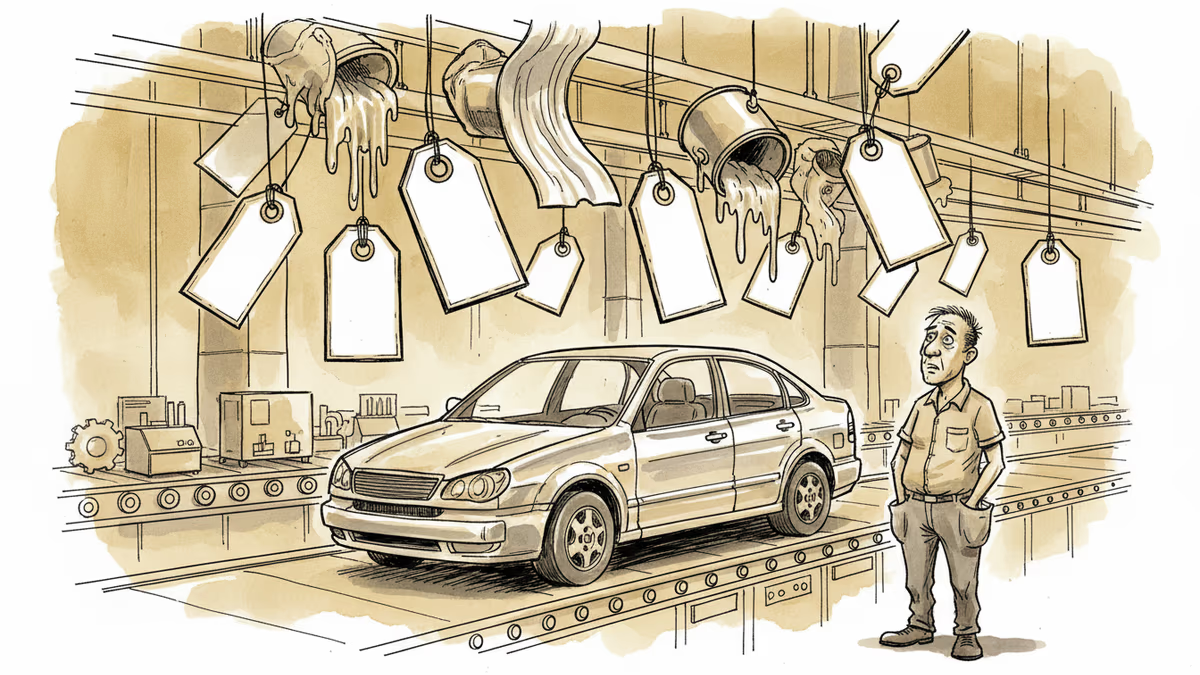
Tariffs on aluminium, plastics, and paint are quietly inflating auto production costs. Here's who pays, who profits, and what it means for the EV transition.

Elon Musk heads to federal court to defend against claims he manipulated Twitter's stock price during his $44 billion acquisition, with former investors alleging deliberate market manipulation.
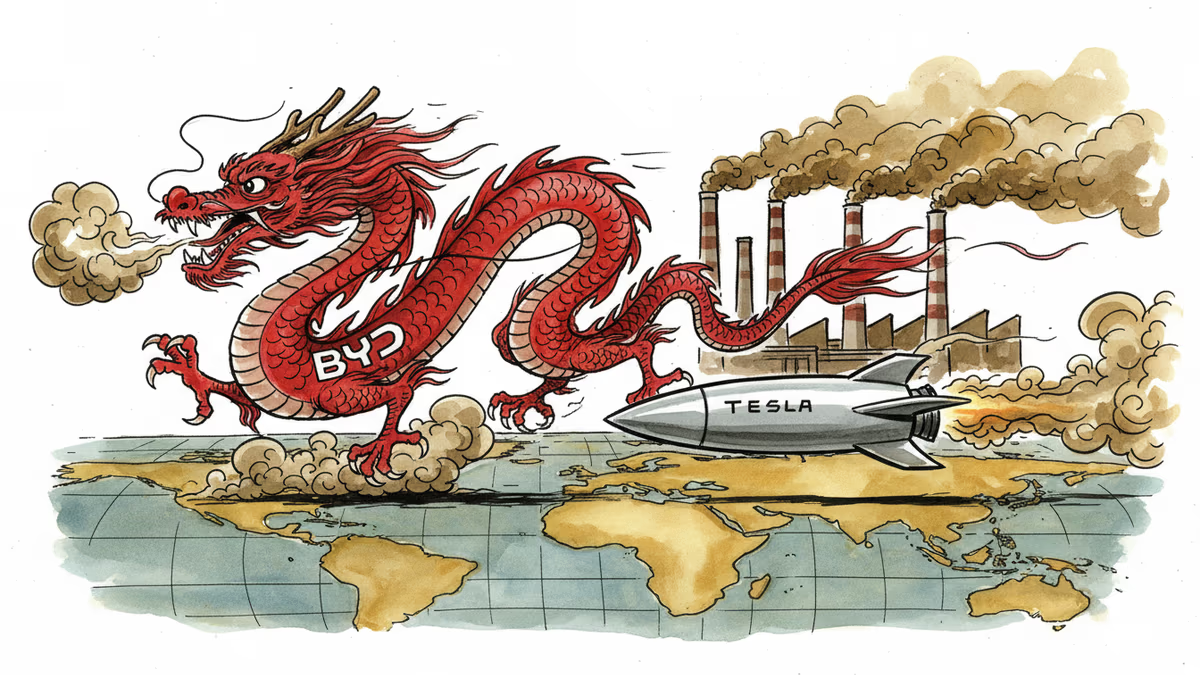
Chinese automaker BYD has overtaken Tesla in over 20 countries, reshaping the global EV landscape with aggressive expansion and competitive pricing strategies.

Tesla strikes a deal with German unions, ending months of labor disputes. But this peace treaty might reshape how Silicon Valley giants operate in Europe's worker-friendly landscape.
Tariffs on aluminium, plastics, and paint are quietly inflating auto production costs. Here's who pays, who profits, and what it means for the EV transition.
Elon Musk heads to federal court to defend against claims he manipulated Twitter's stock price during his $44 billion acquisition, with former investors alleging deliberate market manipulation.
Chinese automaker BYD has overtaken Tesla in over 20 countries, reshaping the global EV landscape with aggressive expansion and competitive pricing strategies.
Tesla strikes a deal with German unions, ending months of labor disputes. But this peace treaty might reshape how Silicon Valley giants operate in Europe's worker-friendly landscape.
Thoughts
Share your thoughts on this article
Sign in to join the conversation