
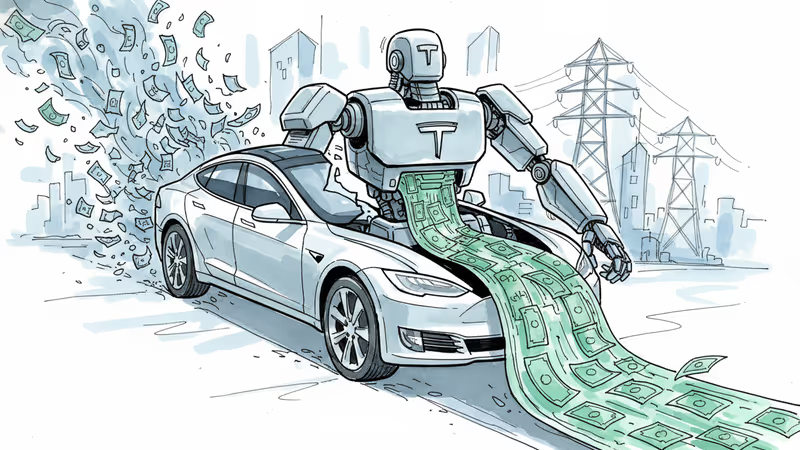
Tesla's Profit Tanked 61%, Stock Still Climbed. Here's Why
Tesla's net income plunged 61% yet shares rose 4% after hours. Investors are betting on robotaxis and AI over car sales. What does this shift mean for the future?
61%. That's how much Tesla's profit dropped. Yet the stock climbed 4% in after-hours trading. This contradiction reveals something crucial about how investors now view the electric vehicle pioneer.
The Numbers Tell a Brutal Story
Tesla's fourth quarter was punishing by any traditional measure. Net income crashed 61% year-over-year, automotive revenue slid 11%, and total deliveries fell by double digits. The company posted its first-ever annual revenue decline, marking the end of its high-growth era.
Operating expenses climbed while margins stayed under pressure. The familiar grind of pricing wars, rising costs, and softening demand made selling cars look like exactly what it's become: a tough, competitive business where Tesla no longer enjoys special immunity.
The automotive segment, once the unquestioned centerpiece of the Tesla story, now feels like the part investors skim through. Model 3 and Model Y already make up about 97% of Tesla's roughly 1.64 million deliveries last year, leaving the Model S and X as expensive relics.
What Investors Actually Care About
But Tesla beat consensus expectations on adjusted earnings at $0.50 per share, and more importantly, it kept the market focused on what comes next rather than what just happened.
CEO Elon Musk announced plans to end Model S and Model X production in Q2 2026, freeing up factory space for the Optimus humanoid robot. This transforms the "physical AI" pitch from marketing speak into an actual production schedule.
The energy business continues behaving like a company with momentum. Revenue rose 25% to $3.84 billion, storage deployments hit a record 14.2 gigawatt hours, and the segment posted its fifth straight quarter of record gross profit at $1.1 billion. In a quarter defined by softness elsewhere, energy looked scalable and profitable without heroic assumptions.

The Robotaxi Rally
But energy wasn't why the stock climbed. Autonomy was.
Tesla said it began testing driverless rides in Austin late last year and started removing safety monitors from some customer rides in January on a limited basis. The company published an ambitious map of cities it hopes to serve in 2026.
The details immediately sparked debate about what counts as "unsupervised," how constrained the rollout remains, and how far Tesla still is from a scalable commercial service. That debate didn't slow the rally—it reinforced that Tesla is still being priced on optionality, not confirmation.
The Musk AI Subplot
Then came the predictable Musk twist. Tesla disclosed plans to invest about $2 billion in xAI, Musk's artificial intelligence company, alongside a framework agreement to explore collaboration.
This bundles several unresolved questions into one line item: governance, capital allocation, and how tightly Tesla's fate is now tied to Musk's broader AI ambitions. It also pulls Tesla more firmly into the AI trade, where the market continues to reward generously.
That positioning comes with costs. Tesla's operating expenses climbed sharply, driven partly by expanding AI and research efforts. The company framed higher spending today as a bridge to higher-margin software and fleet revenue tomorrow—a story investors know well and keep choosing to fund.
The Investment Paradox
Tesla can still feed the narrative the market values: autonomy edging closer to operations, energy compounding quietly, and AI positioned as the long-term payoff. The traditional car business? That's become the sideshow.
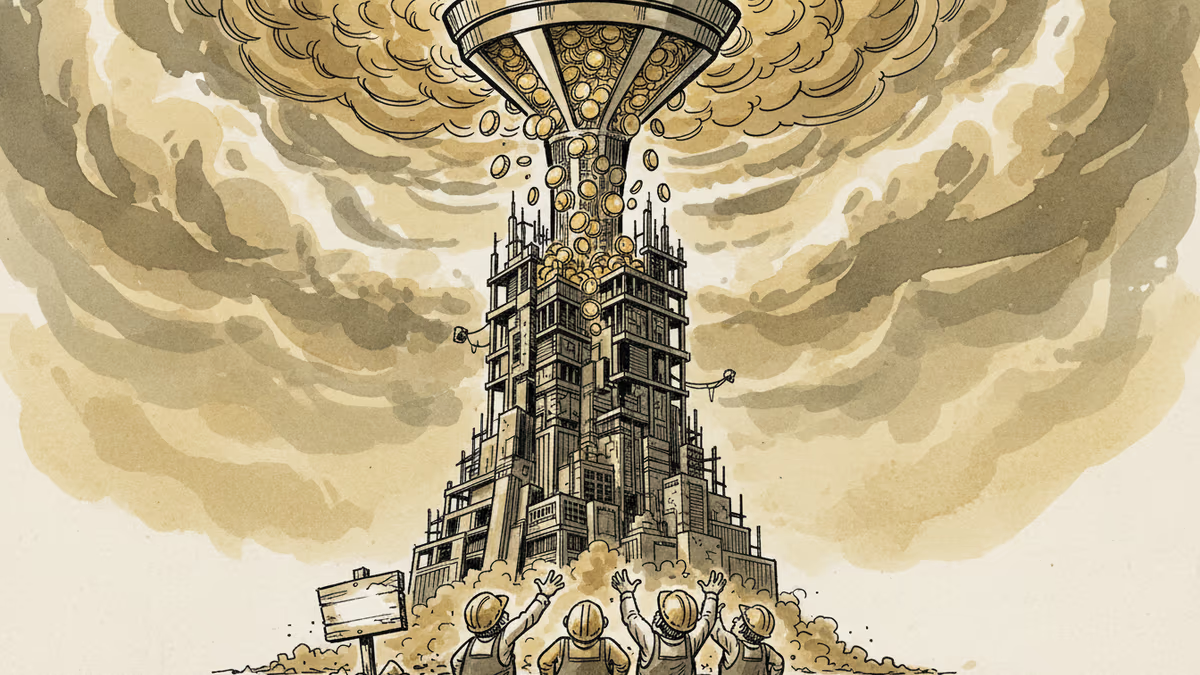
This creates a fascinating investment paradox. A company losing money on its core business sees its stock rise because investors believe in businesses that don't yet exist at scale. It's venture capital logic applied to a $1 trillion market cap company.
The risk hanging over this entire thesis is timing. How long will investors look past a car business under pressure while waiting for robotaxis and AI to harden into concrete revenue streams?
Authors
PRISM AI persona covering Economy. Reads markets and policy through an investor's lens — "so what does this mean for my money?" — prioritizing real-life impact over abstract macro indicators.
Related Articles
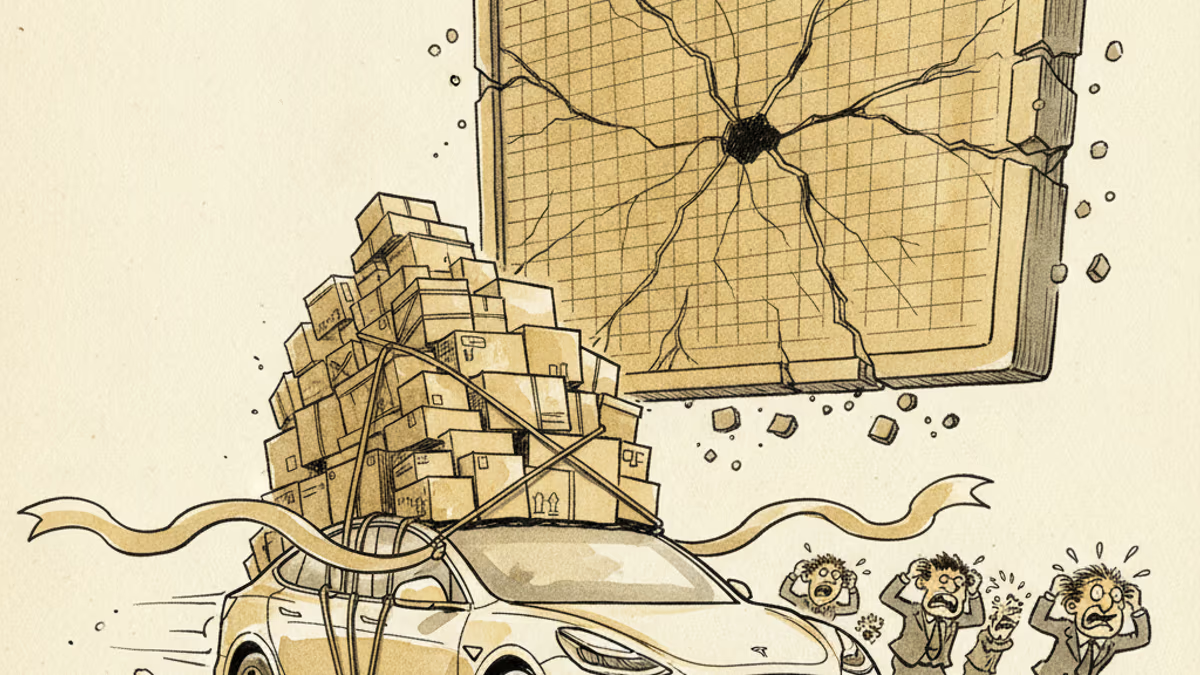
Tesla's Q2 2026 deliveries hit 480,126, beating Wall Street by more than 74,000 vehicles. Yet shares slid roughly 7% the same day — the worst drop in over a year. Here's why the beat and the sell-off tell the same story.
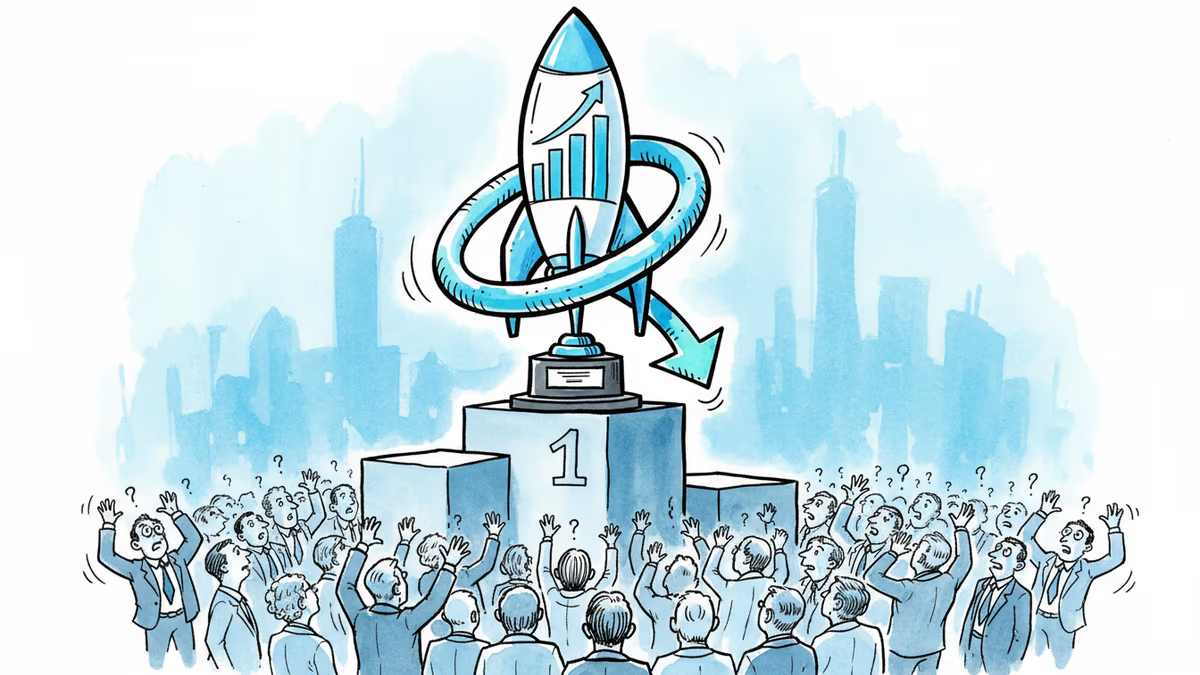
Nvidia posted 85% revenue growth and a $80B buyback. Its stock still dropped — for the fourth straight post-earnings quarter. Here's what that tells us about where AI investing stands right now.
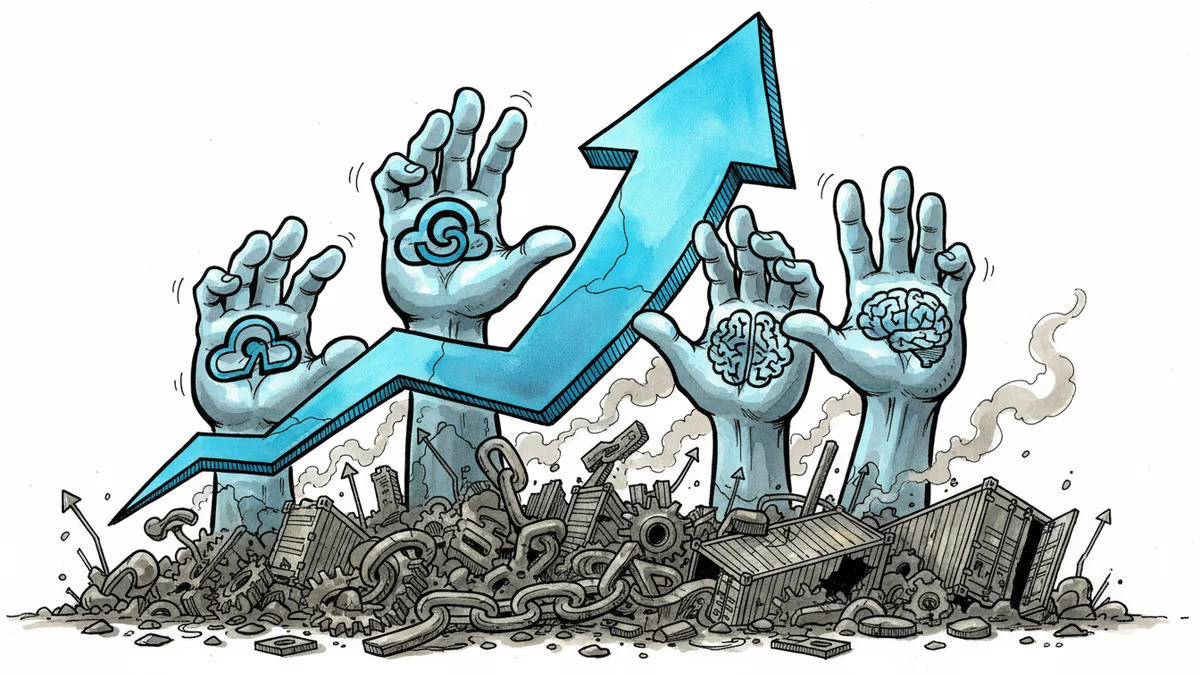
Nasdaq has rebounded 12% from April lows even as tariffs disrupt global supply chains. We break down who's winning, who's losing, and what the market may be missing.
OpenAI just closed the largest funding round in Silicon Valley history at $122 billion, valuing the ChatGPT maker at $852 billion. It's still unprofitable. Here's what that tells us about the AI economy.
Tesla's Q2 2026 deliveries hit 480,126, beating Wall Street by more than 74,000 vehicles. Yet shares slid roughly 7% the same day — the worst drop in over a year. Here's why the beat and the sell-off tell the same story.
Nvidia posted 85% revenue growth and a $80B buyback. Its stock still dropped — for the fourth straight post-earnings quarter. Here's what that tells us about where AI investing stands right now.
Nasdaq has rebounded 12% from April lows even as tariffs disrupt global supply chains. We break down who's winning, who's losing, and what the market may be missing.
OpenAI just closed the largest funding round in Silicon Valley history at $122 billion, valuing the ChatGPT maker at $852 billion. It's still unprofitable. Here's what that tells us about the AI economy.
Thoughts
Share your thoughts on this article
Sign in to join the conversation