
Silicon Valley Is Selling AI Friends. We're Not Buying It.
Silicon Valley is pitching AI companions as the cure for loneliness. From vandalized NYC subway ads to expert warnings, this is your guide to why we're not buying it.
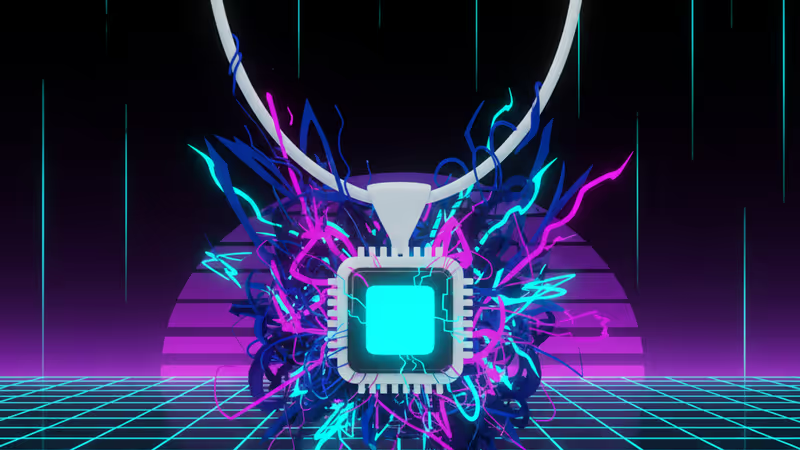
For a vibe check on our collective feelings about AI, look no further than the walls of the New York City subway. This fall, a new advertiser named Friend debuted its product: a white AI companion necklace promising to be someone “who listens, responds, and supports you.”
It was the perfect canvas for public commentary. “If you buy this, I will laugh @ you in public.” “Warning: AI surveillance.” “AI slop.” The backlash to the ad campaign, which its founder said cost less than $1 million, became a meme and even earned coverage in The New York Times. It seems the suggestion that AI’s killer app could be a cure for loneliness struck a deeply human nerve.
The year 2025 has seen a wave of such offerings from Silicon Valley. More than two years after the US surgeon general declared loneliness an “epidemic,” tech companies are positioning AI as the solution. Beyond simply encouraging users to pour their hearts out to ChatGPT, the industry has proffered AI-powered travel guides, dating app wingmen, and intimate chatbots.
“What's particularly striking is that these [Silicon Valley] leaders are actively and openly expressing their desire for AI products to replace human relationships,” says Lizzie Irwin, a policy communications specialist at the Center for Humane Technology. “They sold us connection through screens while eroding face-to-face community, and now they're selling AI companions as the solution to the isolation they helped create.”
The appeal is understandable: relationships with bots are far less messy. “ChatGPT is not leaving its laundry on the floor,” notes Melanie Green, a communications professor at the University of Buffalo. She compares it to the “hyperpersonal” relationships of the early internet, where people filled in the blanks about strangers with positive attributes. With AI, it’s even more potent because “it’s always telling us what we want to hear”—a kind of digitally generated toxic positivity.

In April, Meta CEO Mark Zuckerberg argued that AI could substitute for human connection, suggesting on a podcast that society would one day “find the vocabulary” for why these relationships are valuable. Psychologists countered that AI could never replace human bonds, and my group chats wondered if Zuckerberg knew what a friend was.
The problem is, AI hasn’t proven to be a very good companion. Often prone to sycophancy, bots can affirm dangerous delusions. The New York Times spoke with individuals who claimed chatbots led them down paths of delusional thinking, with some believing they were prophets. This spring, OpenAI had to roll back a GPT-4o update that was “overly flattering and agreeable.” A good friend gasses you up; they don’t lie to you.
For younger generations raised on social media, the outcomes can be harrowing. A Common Sense Media report found that 72% of over 1,000 US teens surveyed have interacted with AI companions. In a separate assessment, Stanford investigators posing as teens found it was “easy to elicit inappropriate dialog from the chatbots—about sex, self-harm, violence toward others, drug use, and racial stereotypes.”
AI may be filling a critical gap in mental healthcare, as Shira Gabriel, a social psychology professor, points out. “We have a real crisis right now in America where we just don't have enough therapists,” she says. But this solution is fragile. When AI companion maker Soulmate shut down in 2023, users mourned profoundly. “People are reacting to AI losing their data as a death,” Gabriel notes, a finding that worries her most.
The tide of public opinion is shifting. A Pew report from mid-September noted that 50% of respondents believed AI would worsen people’s ability to form meaningful relationships; only 5% believed it would improve them. As Irwin states, “Relationship-building requires skills that cannot be created through the frictionless interactions that chatbots provide—such as navigating conflict, reading nonverbal cues, practicing patience, or experiencing rejection.”
Ultimately, the graffiti on the subway wall says it all. By Halloween, the scribbled-on sentiment on the Friend ad had been simplified to a single word: “no.” Humans are hardwired for real, messy, imperfect connection. If the pandemic taught us anything, it’s that the small talk with a barista is what gets us through the day. That’s something a computer will never be able to replicate.
Authors
Related Articles
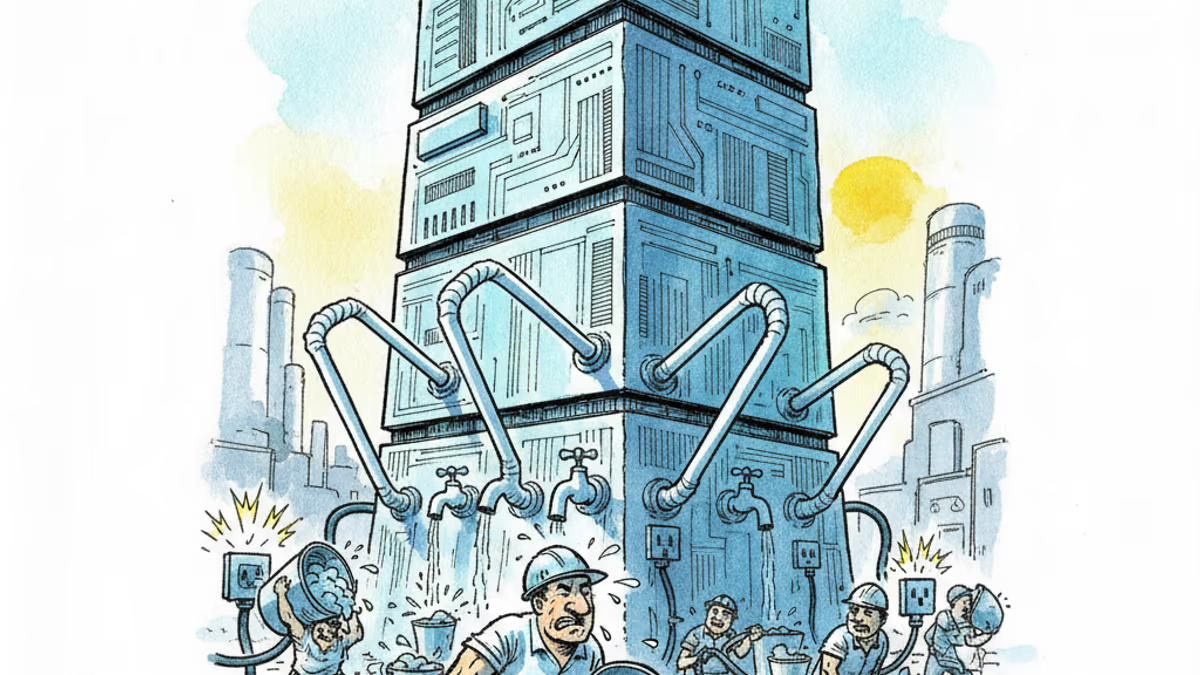
Samsung and SK unveiled a chip and AI investment package worth thousands of trillions of won on June 29. The headline number swings wildly by outlet, but the real contest isn't capital — it's water and power.
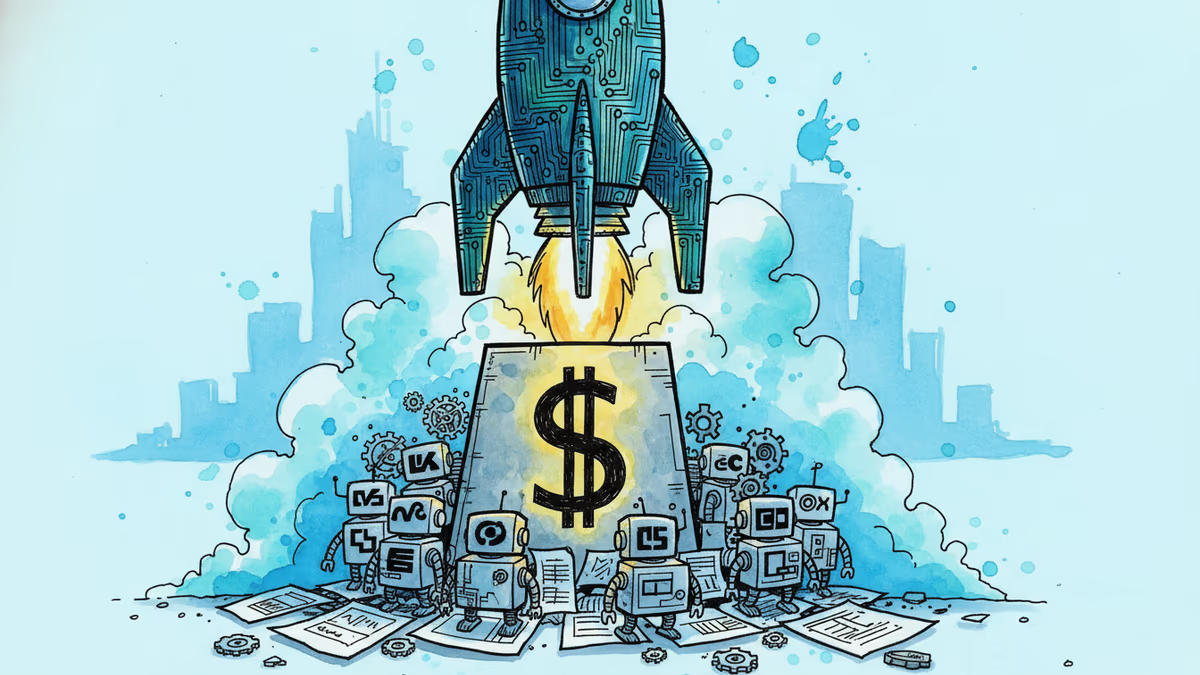
SpaceX's IPO filing puts AI at the center, claiming a $26.5 trillion market opportunity. But can Grok compete with OpenAI and Anthropic for enterprise customers?
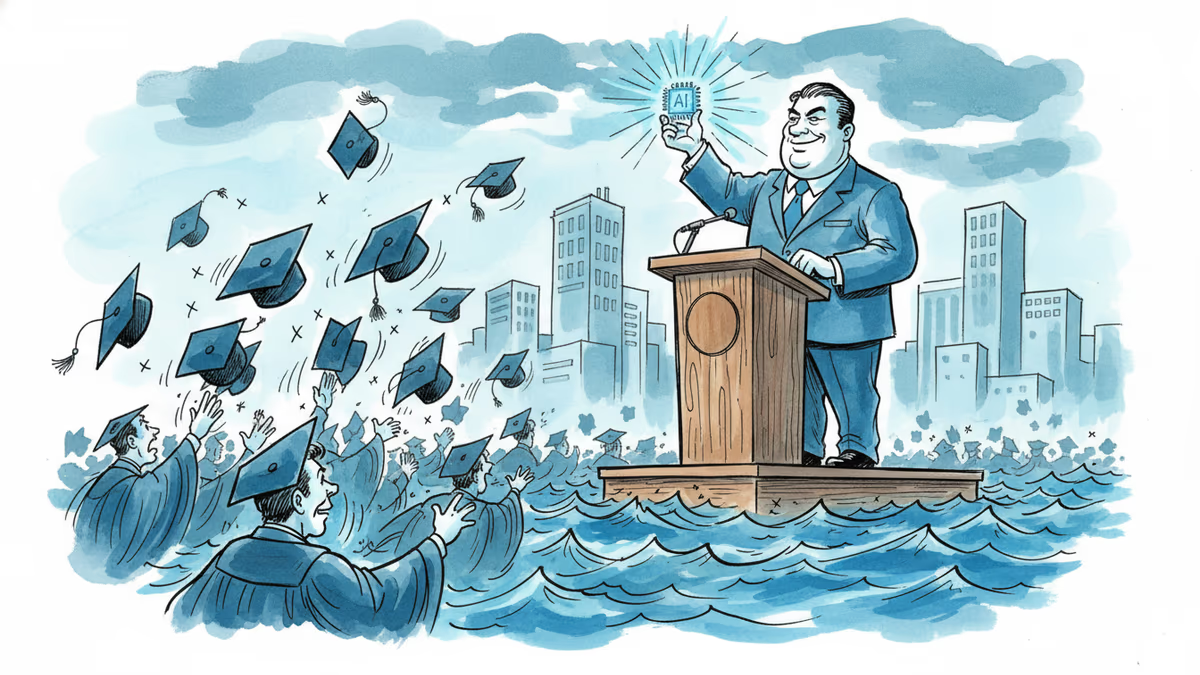
Viral videos show 2026 graduates jeering executives who praise AI at commencement ceremonies. It's not just rudeness — it's a signal about who pays for technological optimism.
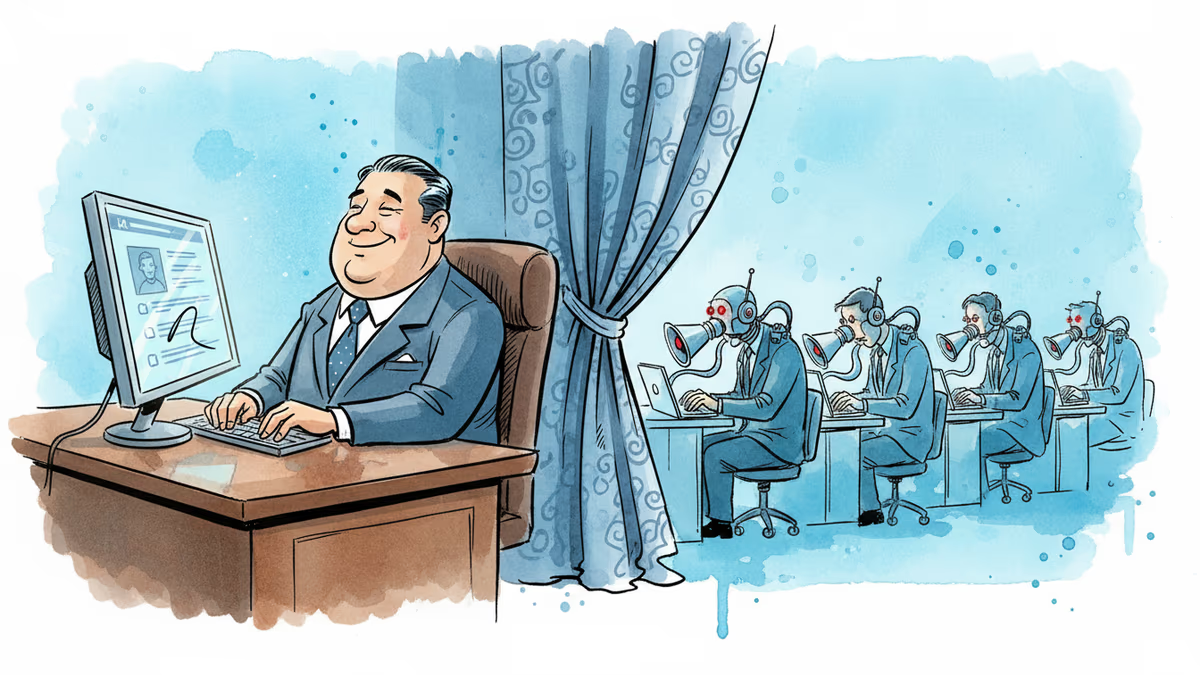
Filipino virtual assistants using AI to ghost-manage LinkedIn profiles for executives is now a structured industry. 30 comments a day, fake engagement rings, and a platform struggling to tell real from fabricated.
Samsung and SK unveiled a chip and AI investment package worth thousands of trillions of won on June 29. The headline number swings wildly by outlet, but the real contest isn't capital — it's water and power.
SpaceX's IPO filing puts AI at the center, claiming a $26.5 trillion market opportunity. But can Grok compete with OpenAI and Anthropic for enterprise customers?
Viral videos show 2026 graduates jeering executives who praise AI at commencement ceremonies. It's not just rudeness — it's a signal about who pays for technological optimism.
Filipino virtual assistants using AI to ghost-manage LinkedIn profiles for executives is now a structured industry. 30 comments a day, fake engagement rings, and a platform struggling to tell real from fabricated.
Thoughts
Share your thoughts on this article
Sign in to join the conversation