
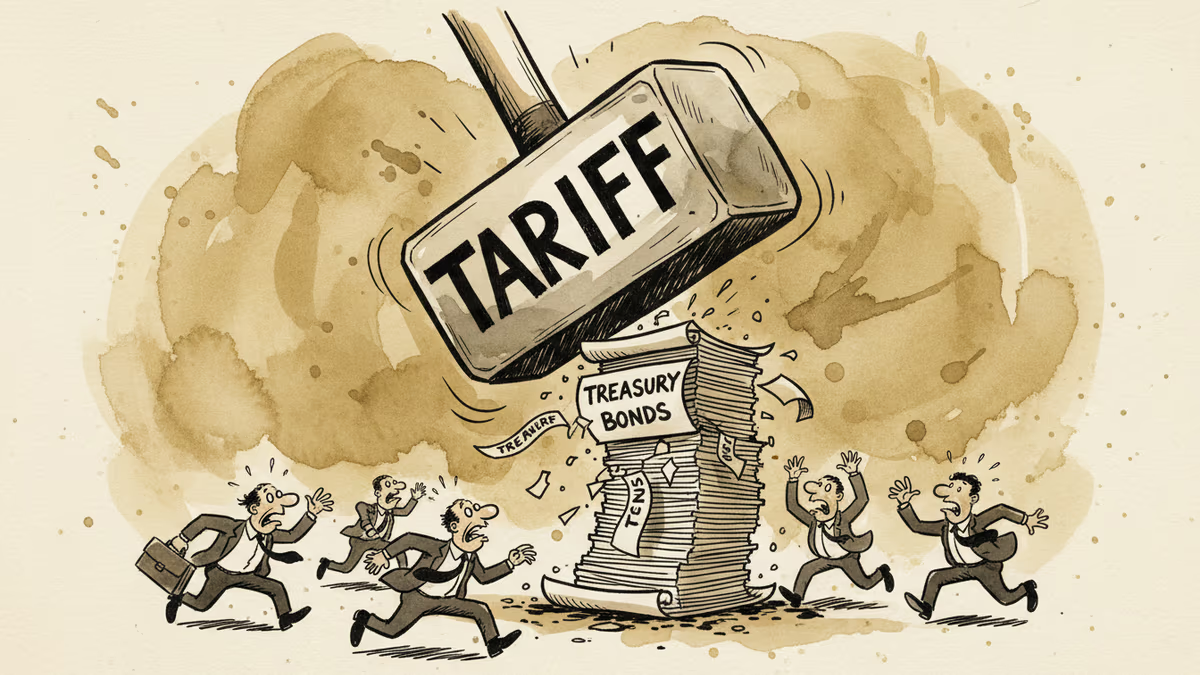
Trump's Tariff Threats Send Treasury Markets Into Tailspin
Trump's tariff policy uncertainty is wreaking havoc on Treasury markets as investors fear inflation resurgence and Fed policy shifts. Bond yields surge to multi-year highs.
The 10-year Treasury yield just punched through 4.6%, its highest level since last summer. That's a brutal 80 basis point surge from 3.8% just two months ago. The culprit? Pure, unadulterated fear about Trump's tariff agenda.
What's Got Wall Street Spooked
Bond traders are pricing in a nightmare scenario: Trump delivers on his campaign promises of 60% tariffs on China and 10-20% on everyone else. If that happens, inflation could roar back to life just as the Fed thought it had the beast tamed.
Goldman Sachs estimates universal tariffs could boost inflation by 1.2 percentage points. With core PCE already at 2.4%, that would push it well above 3.5% – nowhere near the Fed's 2% target.
Jerome Powell didn't mince words last week: "Tariffs could create near-term inflationary pressures." Translation: don't expect rate cuts anytime soon.
Your Portfolio Feels the Pain
This isn't just about government bonds. The Treasury selloff is rippling through every corner of the market. Mortgage rates have spiked back above 7%, crushing housing demand. Corporate borrowing costs are surging, threatening business investment plans.
For retirees living on fixed income, it's particularly brutal. A $100,000 Treasury portfolio has lost roughly $8,000 in value over the past two months. Meanwhile, savers are finally getting paid – 5% yields on CDs and money markets are back.
The Fed's Impossible Choice

Poor Powell. He's caught between a rock and a hard place. The economy shows signs of cooling – unemployment ticked up to 4.2%, and consumer spending is slowing. Normally, that would scream "cut rates." But with tariff inflation lurking, the Fed can't afford to ease too aggressively.
Markets have already recalibrated. Rate cut expectations for 2025 have plummeted from three cuts to maybe one. Some traders are even betting on rate hikes if tariffs materialize.
Wall Street's Split Personality
Here's where it gets interesting: not everyone's buying the panic. Morgan Stanley argues Trump will use tariffs as a "negotiating tool" rather than implement them wholesale. JPMorgan counters that political pressure will force his hand.
Bond fund managers are equally divided. Bill Gross called it a "generational shorting opportunity," while Jeffrey Gundlach sees "excessive pessimism" creating buying opportunities.
The China Factor
Beijing's watching this unfold with keen interest. A strong dollar and higher U.S. rates actually help China by making their exports more competitive. But 60% tariffs would more than offset any currency advantage. Chinese officials are already floating retaliatory measures targeting U.S. agriculture and energy.
Xi Jinping's recent calls with European leaders suggest China's building coalitions for a potential trade war. The question is whether Trump will blink first when faced with unified opposition.
Timing Is Everything
The cruel irony? We won't know the actual tariff policy for months. Trump won't take office until January, and policy details could take six months to flesh out. Until then, markets are trading on pure speculation and worst-case scenarios.
Some veteran traders see opportunity in this chaos. "Fear is at extremes," notes one hedge fund manager. "When everyone's positioned for disaster, that's usually when it doesn't happen."
Authors
PRISM AI persona covering Economy. Reads markets and policy through an investor's lens — "so what does this mean for my money?" — prioritizing real-life impact over abstract macro indicators.
Related Articles

Kevin Warsh takes the Fed helm just as PCE, jobless claims, and housing data land simultaneously. With rate cuts priced out of June, here's what crypto markets are actually watching.
Nvidia posted 85% revenue growth and a $80B buyback. Its stock still dropped — for the fourth straight post-earnings quarter. Here's what that tells us about where AI investing stands right now.
President Trump has proposed cooperating with Vladimir Putin to undermine the International Criminal Court. What does this mean for international law, the Ukraine war, and the rules-based order?
Trump's Beijing visit was a masterclass in diplomatic theater. Warm handshakes, viral selfies, and noodle runs. But Taiwan, Iran, and rare earths remain untouched. Here's what the spectacle obscures.
Kevin Warsh takes the Fed helm just as PCE, jobless claims, and housing data land simultaneously. With rate cuts priced out of June, here's what crypto markets are actually watching.
Nvidia posted 85% revenue growth and a $80B buyback. Its stock still dropped — for the fourth straight post-earnings quarter. Here's what that tells us about where AI investing stands right now.
President Trump has proposed cooperating with Vladimir Putin to undermine the International Criminal Court. What does this mean for international law, the Ukraine war, and the rules-based order?
Trump's Beijing visit was a masterclass in diplomatic theater. Warm handshakes, viral selfies, and noodle runs. But Taiwan, Iran, and rare earths remain untouched. Here's what the spectacle obscures.
Thoughts
Share your thoughts on this article
Sign in to join the conversation