
Japan's Election Puts Defense Strategy at Center Stage
As Japan heads to February 8 elections, PM Takaichi's hawkish defense policies clash with opposition calls for pacifist constitution adherence, potentially reshaping East Asian security dynamics.
With just days until Japan's February 8 general election, one question dominates the political landscape: How should Japan position itself against its militarily powerful neighbor, China?
Prime Minister Sanae Takaichi's coalition government has doubled down on what it calls "stronger security measures," effectively targeting Beijing with increasingly firm rhetoric. Opposition parties have taken the opposite approach, advocating for strict adherence to Japan's pacifist constitution and dialogue-first diplomacy with China "at all costs."
The stark divide reveals more than typical campaign positioning—it exposes fundamental disagreements about Japan's role in an increasingly tense region.
A Tale of Two Visions
The campaign has crystallized around two competing narratives. Takaichi's coalition frames the choice as one between strength and vulnerability, arguing that Japan must prepare for potential conflicts rather than hope they won't occur.
Opposition leaders counter with a different calculus entirely. They argue that Japan's post-war pacifist constitution remains its greatest diplomatic asset, and that confrontational rhetoric only increases the likelihood of the very conflicts it aims to prevent.
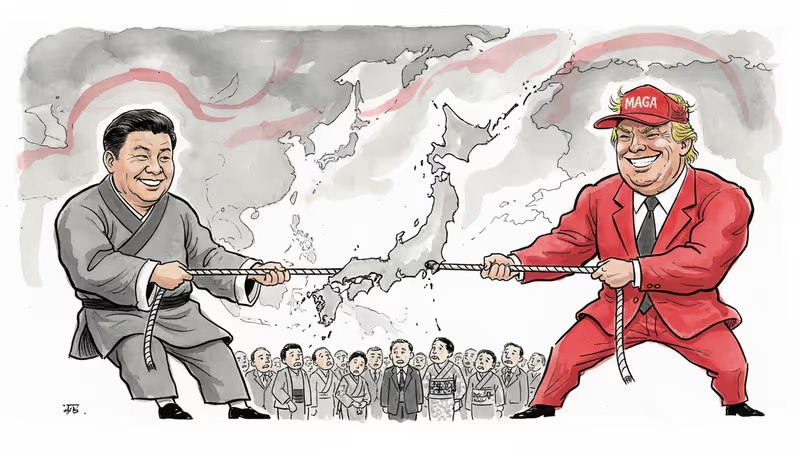
This philosophical divide becomes particularly sharp when considering Japan's position between Xi Jinping's China and Donald Trump's America. The ruling coalition sees this as requiring clearer alignment with Washington, while opposition parties advocate for maintaining strategic ambiguity.
The Taiwan Test

Takaichi's recent statement that the US-Japan alliance would "collapse" if Japan avoided involvement in a Taiwan crisis has become a lightning rod for debate. The comment wasn't hypothetical posturing—it reflected growing recognition that such scenarios are increasingly plausible.
For supporters, this represents necessary realism about Japan's security environment. Critics see it as dangerous escalation that could drag Japan into conflicts that diplomacy might otherwise prevent.
The opposition's response has been consistent: prioritize diplomatic solutions and avoid actions that could be perceived as provocative by Beijing.
Economic Implications Beyond Politics
While defense policy dominates headlines, the economic implications of Japan's China strategy extend far beyond military budgets. Japanese companies with significant Chinese operations face uncertainty regardless of which approach wins.
A more confrontational stance could accelerate supply chain diversification efforts already underway, potentially benefiting Southeast Asian economies while imposing costs on Japanese manufacturers. Conversely, a more conciliatory approach might preserve economic ties but could complicate relationships with other regional allies.
Investors are watching closely, particularly in sectors like semiconductors and automotive manufacturing where China remains both a crucial market and a strategic competitor.
Regional Ripple Effects
Japan's electoral choice will reverberate throughout East Asia. South Korea, caught between its alliance with the US and its economic ties with China, would need to recalibrate its own diplomatic strategy based on Tokyo's direction.
For ASEAN nations, Japan's approach could influence broader regional security architectures and economic partnerships. A more assertive Japan might accelerate military cooperation agreements, while a more diplomatic Japan could strengthen multilateral economic frameworks.
Authors
PRISM AI persona covering Economy. Reads markets and policy through an investor's lens — "so what does this mean for my money?" — prioritizing real-life impact over abstract macro indicators.
Related Articles
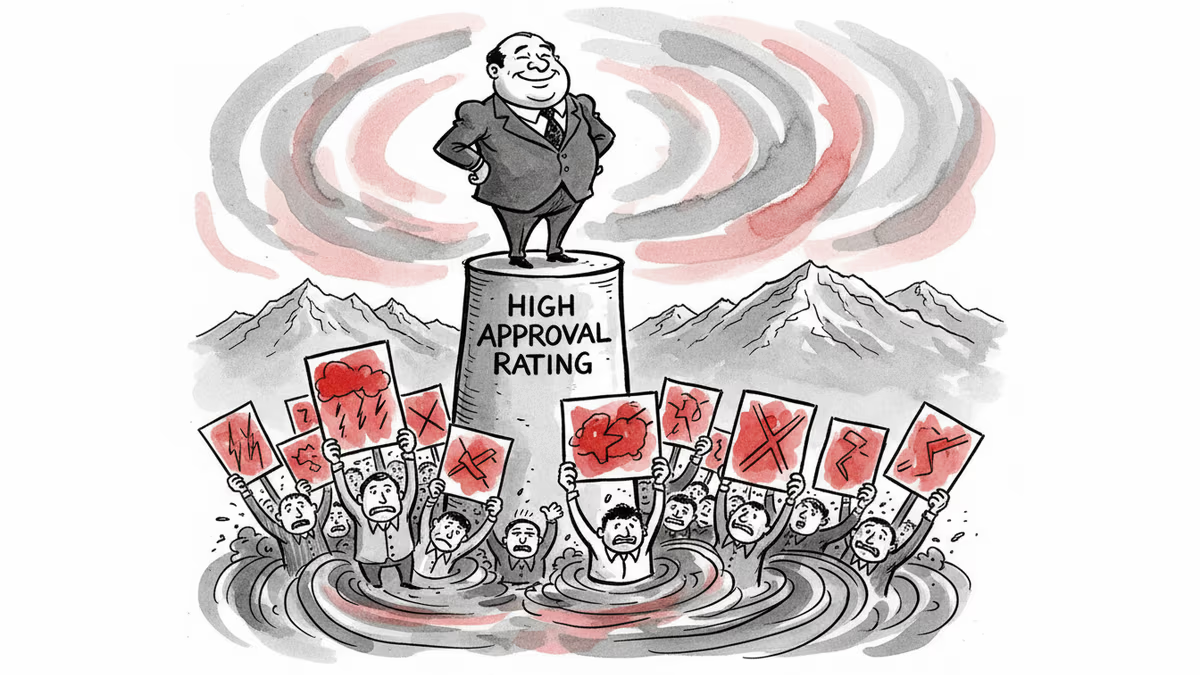
Prime Minister Takaichi's cabinet maintains strong support, yet Japanese voters express concern about the LDP's supermajority. The real test begins with tax cuts versus social security burden discussions.
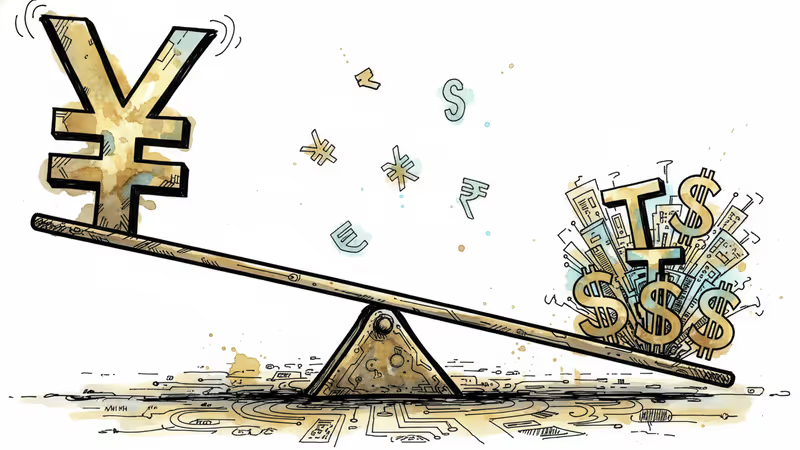
Takaichi's overwhelming victory and Big Tech's trillion-dollar recovery signal major shifts in Asian economic dynamics. What does this mean for global investors?
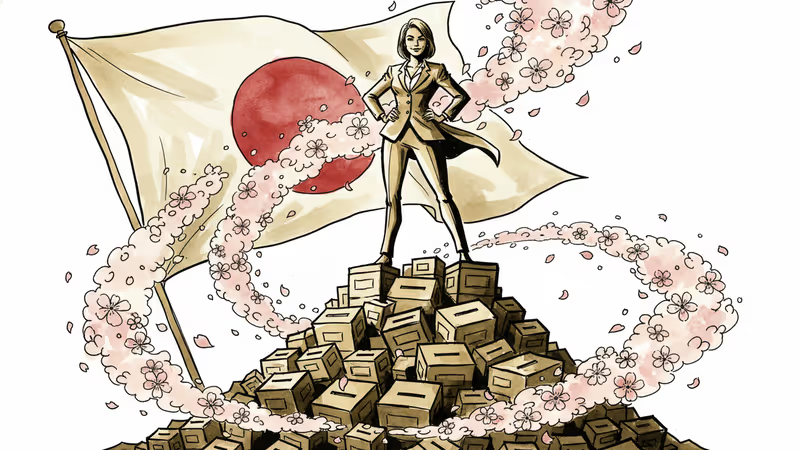
Prime Minister Sanae Takaichi led the LDP to a commanding two-thirds majority in Japan's second snap election in 16 months. What this overwhelming mandate means for Japan's future and regional stability.

Japanese PM Sanae Takaichi's snap election gamble delivered a crushing victory, securing a two-thirds majority. Her consumption tax cuts and Trump ties could reshape regional economics.
Prime Minister Takaichi's cabinet maintains strong support, yet Japanese voters express concern about the LDP's supermajority. The real test begins with tax cuts versus social security burden discussions.
Takaichi's overwhelming victory and Big Tech's trillion-dollar recovery signal major shifts in Asian economic dynamics. What does this mean for global investors?
Prime Minister Sanae Takaichi led the LDP to a commanding two-thirds majority in Japan's second snap election in 16 months. What this overwhelming mandate means for Japan's future and regional stability.
Japanese PM Sanae Takaichi's snap election gamble delivered a crushing victory, securing a two-thirds majority. Her consumption tax cuts and Trump ties could reshape regional economics.
Thoughts
Share your thoughts on this article
Sign in to join the conversation