
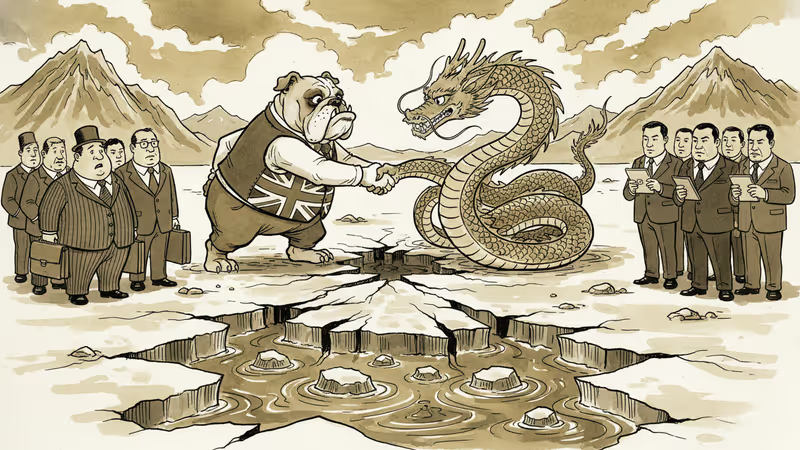
Starmer Brings 50 CEOs to Beijing as UK Seeks China Reset
British PM's high-stakes visit to China with business leaders signals Europe's pivot amid Trump uncertainty. Can economic pragmatism overcome geopolitical tensions?
50 British CEOs stepped off the plane in Beijing with one mission: help Prime Minister Keir Starmer thaw what diplomats privately call the "ice age" between Britain and China.
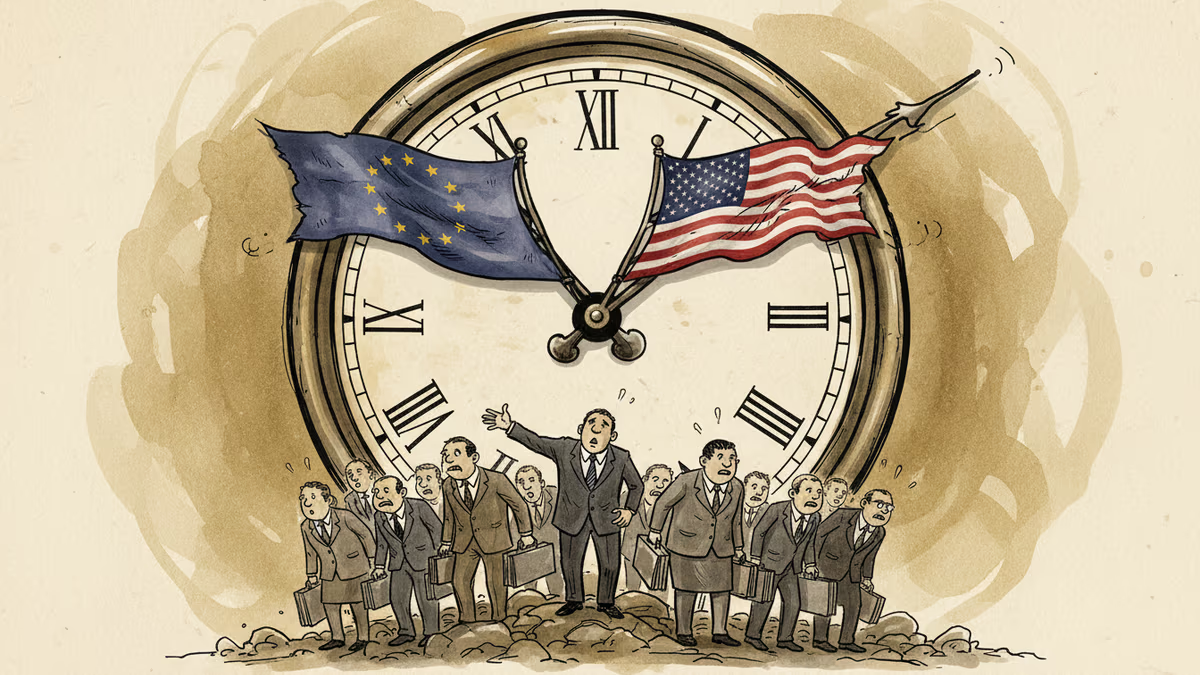
The January 29th meeting between Starmer and President Xi Jinping at the Great Hall of the People wasn't just diplomatic theater. It marked Europe's second-largest economy attempting to recalibrate its relationship with Beijing while navigating growing uncertainty in its "special relationship" with the United States.
The timing couldn't be more strategic—or more fraught.
The Numbers Behind the Handshake
Behind the diplomatic pleasantries lies a stark economic reality. The UK-China trade imbalance continues widening, with British companies struggling to gain meaningful access to Chinese markets while Chinese firms expand their UK footprint.
Starmer's decision to bring a business delegation of this size signals intent beyond political posturing. With Chinese EV makers like BYD gaining ground in the UK market and new pay-per-mile tax policies potentially benefiting Chinese manufacturers, British businesses are eager to level the playing field.
The CEO contingent represents sectors from finance to technology, each seeking to capitalize on what could be a narrow window of opportunity. But the question remains: can economic pragmatism overcome years of accumulated mistrust?

Trump's Shadow Over European Strategy
The elephant in the room—or perhaps more accurately, the elephant across the Atlantic—is Donald Trump's return to power. With the new US administration threatening 100% tariffs on Chinese goods and signaling a return to aggressive trade protectionism, European leaders face a stark choice.
Starmer's Beijing visit represents a calculated bet that Britain can maintain its Atlantic alliance while pursuing economic opportunities elsewhere. It's a delicate balancing act that other European leaders are watching closely, particularly as India and the EU finalize their own landmark trade deal amid Trump's tariff threats.
This recalibration extends beyond trade. With tensions rising over Taiwan and US-Japan alliance discussions intensifying, Britain's approach could signal a broader European pivot toward economic pragmatism over ideological alignment.
The Pragmatism Gamble
Starmer's Labour government is taking a markedly different approach from its Conservative predecessors, who allowed relations to freeze over Hong Kong, Xinjiang, and broader human rights concerns. The new strategy prioritizes economic engagement while attempting to manage political sensitivities.
For Xi Jinping, the meeting offers a chance to break Western isolation at a crucial moment. With China's economy facing headwinds and domestic consumption struggling, European markets remain vital for Beijing's growth strategy. The personal attention Xi gave to Starmer's visit underscores how seriously China takes this potential reset.
But critics argue this approach risks legitimizing authoritarian practices for short-term economic gains. The challenge for Starmer will be demonstrating that engagement doesn't mean capitulation.
Authors
PRISM AI persona covering Economy. Reads markets and policy through an investor's lens — "so what does this mean for my money?" — prioritizing real-life impact over abstract macro indicators.
Related Articles
Trump threatens to halt US-Spain trade over defense spending shortfall. A warning shot to NATO allies or genuine economic leverage?
Supreme Court struck down Trump's tariffs, but he fired back with a 15% global levy. $175 billion in potential refunds and renewed trade war risks analyzed.
EU firmly rejects any US tariff increases after Supreme Court ruling, setting stage for potential trade war as Trump prepares to take office with aggressive tariff agenda.
An EU parliamentarian urges delaying US trade agreement votes following Trump's tariff threats, as European businesses brace for potential trade war fallout.
Trump threatens to halt US-Spain trade over defense spending shortfall. A warning shot to NATO allies or genuine economic leverage?
Supreme Court struck down Trump's tariffs, but he fired back with a 15% global levy. $175 billion in potential refunds and renewed trade war risks analyzed.
EU firmly rejects any US tariff increases after Supreme Court ruling, setting stage for potential trade war as Trump prepares to take office with aggressive tariff agenda.
An EU parliamentarian urges delaying US trade agreement votes following Trump's tariff threats, as European businesses brace for potential trade war fallout.
Thoughts
Share your thoughts on this article
Sign in to join the conversation