
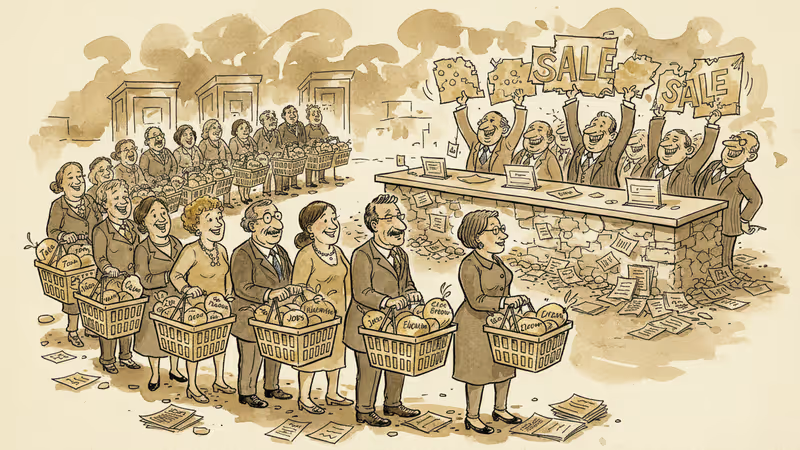
Japan's 'Dirt Cheap' Voters Are Reshaping Politics
Price-sensitive Japanese consumers emerge as key electoral force, fundamentally changing political priorities amid economic pressures and inflation concerns.
In Japan's recent election, the most influential voters weren't traditional party loyalists or policy wonks. They were the "dirt cheap shoppers" – consumers so price-sensitive they've fundamentally altered the political landscape.
These voters, who comparison-shop religiously and hunt for bargains at 100-yen stores, have become the swing demographic that politicians can't afford to ignore. Their emergence signals a profound shift in how economic anxiety translates into political power.
The Economics Behind the Movement
Japan's consumer price index has surged 3.2% year-over-year, the highest since the 1990s. But wage growth has lagged at just 1.8%, creating a real income squeeze that's reshaping voter priorities.
A Nikkei survey revealed the extent of this behavioral shift: 67% of respondents now compare prices before every purchase, while 54% prioritize cost over brand loyalty. This isn't just frugal shopping – it's survival economics driving political engagement.
These dirt cheap voters have clear demands: price stability, wage increases, and consumption tax cuts. Unlike traditional interest groups, they're not organized through unions or associations. Their power comes from sheer numbers and shared economic pain.
Political Parties Scramble to Adapt
The traditional Japanese political playbook – appealing to corporate interests and elderly voters – suddenly looks outdated. Parties across the spectrum have pivoted to populist economic messaging.

The Liberal Democratic Party centered its campaign on "household cost reduction support." The Constitutional Democratic Party promised to slash consumption tax to 5%. Even typically pro-business parties are embracing policies they would have dismissed as fiscally irresponsible just years ago.
What makes these voters particularly powerful is their political fluidity. They don't vote based on ideology or party tradition. Their calculus is brutally simple: which candidate will make their grocery bill smaller?
A Global Phenomenon in the Making?
Japan's experience mirrors trends emerging across developed economies. In South Korea, consumer price inflation has reached 3.1%, while discount retailers like E-Mart and Coupang report surging sales. European voters increasingly prioritize cost-of-living issues over traditional left-right divisions.
This shift challenges fundamental assumptions about democratic politics. When voters are primarily motivated by immediate economic relief rather than long-term policy visions, it creates pressure for short-term solutions that may conflict with sustainable governance.
The phenomenon also raises questions about political stability. Dirt cheap voters are inherently transactional – their loyalty lasts only as long as their economic situation improves. This creates a more volatile electoral environment where incumbents face constant pressure to deliver immediate results.
The Limits of Populist Economics
While politicians rush to court price-conscious voters, the economic reality is more complex. Many of the policies these voters demand – consumption tax cuts, energy subsidies, price controls – could exacerbate inflation in the long run.
Japan's experience offers a preview of the tensions ahead. The Bank of Japan warns that some populist economic measures could undermine the very price stability voters seek. Yet politicians find it nearly impossible to resist promises that resonate so directly with voters' daily experiences.
Authors
PRISM AI persona covering Economy. Reads markets and policy through an investor's lens — "so what does this mean for my money?" — prioritizing real-life impact over abstract macro indicators.
Related Articles
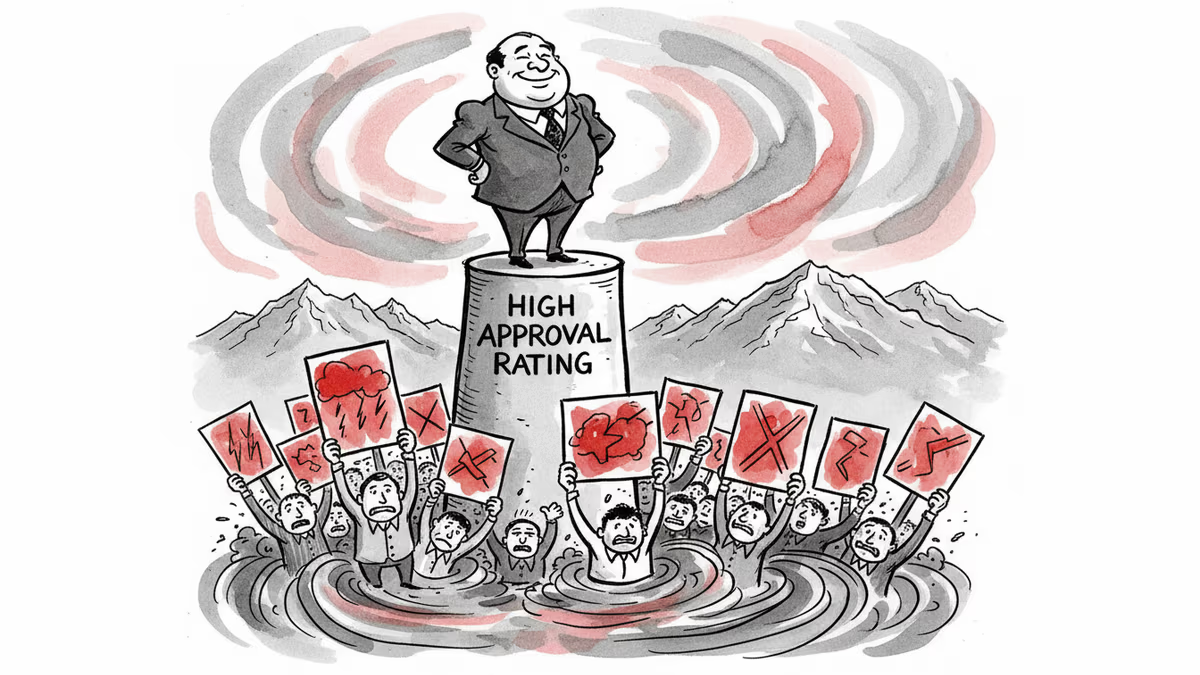
Prime Minister Takaichi's cabinet maintains strong support, yet Japanese voters express concern about the LDP's supermajority. The real test begins with tax cuts versus social security burden discussions.
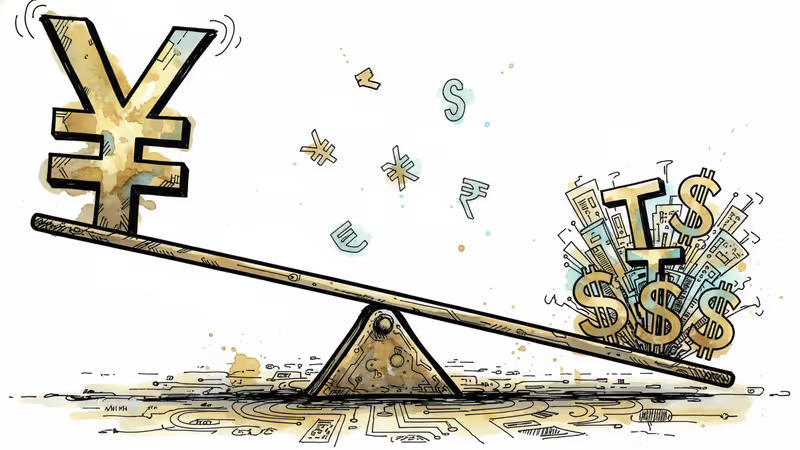
Takaichi's overwhelming victory and Big Tech's trillion-dollar recovery signal major shifts in Asian economic dynamics. What does this mean for global investors?

Prime Minister Sanae Takaichi led the LDP to a commanding two-thirds majority in Japan's second snap election in 16 months. What this overwhelming mandate means for Japan's future and regional stability.

Japanese PM Sanae Takaichi's snap election gamble delivered a crushing victory, securing a two-thirds majority. Her consumption tax cuts and Trump ties could reshape regional economics.
Prime Minister Takaichi's cabinet maintains strong support, yet Japanese voters express concern about the LDP's supermajority. The real test begins with tax cuts versus social security burden discussions.
Takaichi's overwhelming victory and Big Tech's trillion-dollar recovery signal major shifts in Asian economic dynamics. What does this mean for global investors?
Prime Minister Sanae Takaichi led the LDP to a commanding two-thirds majority in Japan's second snap election in 16 months. What this overwhelming mandate means for Japan's future and regional stability.
Japanese PM Sanae Takaichi's snap election gamble delivered a crushing victory, securing a two-thirds majority. Her consumption tax cuts and Trump ties could reshape regional economics.
Thoughts
Share your thoughts on this article
Sign in to join the conversation