
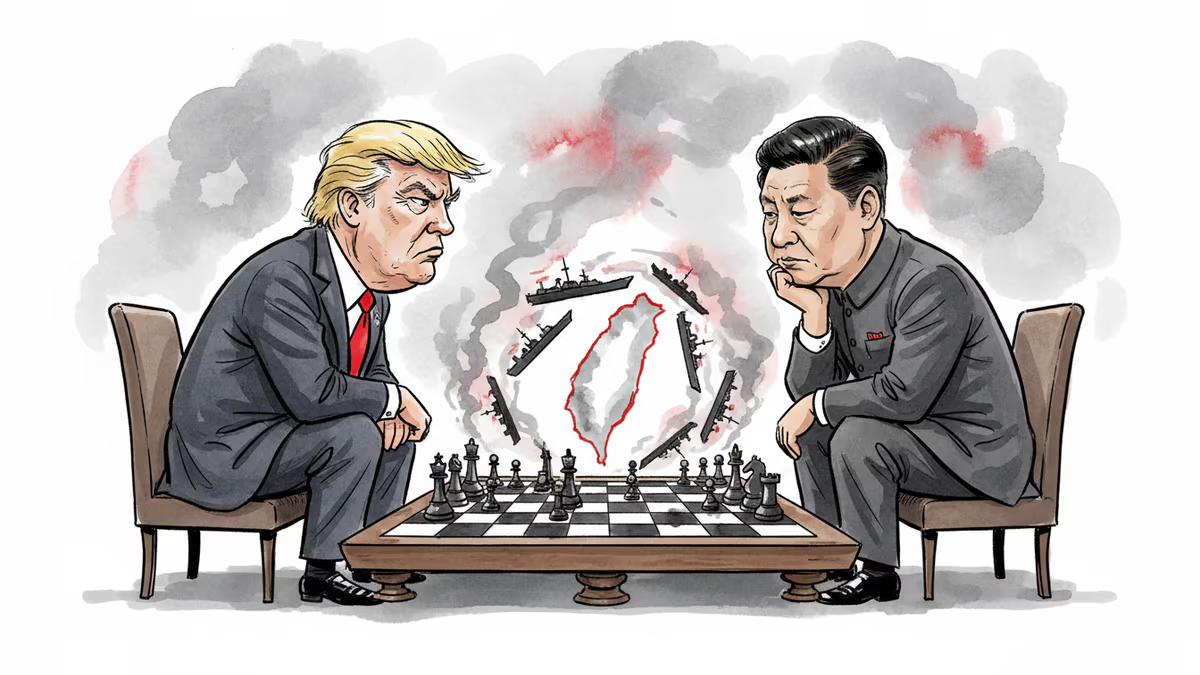
Taiwan Set to Dominate Trump-Xi Summit in Coming Weeks
Analysts predict Taiwan will be the most contentious issue when Trump meets Xi Jinping within two months, overshadowing trade disputes as the primary source of US-China tension.
What happens when the world's two most powerful leaders meet, and the biggest flashpoint isn't trade—it's a 23-million-person island that could spark the next global conflict?
Donald Trump and Xi Jinping are expected to sit down within two months, and analysts are already warning that Taiwan will dominate their agenda in ways that could reshape global stability. While trade disputes grabbed headlines during Trump's first term, the stakes have fundamentally shifted.
Beyond Trade Wars: The New Battleground
The precise dates are still under discussion, but Trump's visit to China appears increasingly likely. What's changed since their last encounter isn't just the political landscape—it's the recognition that some conflicts run deeper than tariffs and trade deficits.
Experts are calling on Beijing and Washington to "turn the page" on trade, suggesting these economic disputes are now the easier part of the relationship. The real test? Taiwan's status as what China considers its "core interest" and America's commitment to the island's defense.
This shift reflects a broader evolution in US-China relations. Where once economic interdependence provided a buffer against political tensions, today's rivalry spans technology, military power, and fundamental questions about global order. Taiwan sits at the intersection of all three.
The Nuclear Wild Card

If Taiwan wasn't complicated enough, there's another issue that analysts say offers "little chance" of progress: nuclear arms control. This represents an "increasingly important fault line in bilateral ties"—one that could determine whether competition remains manageable or spirals into something far more dangerous.
The nuclear dimension adds urgency to every other dispute. Unlike trade negotiations where both sides can claim victory, nuclear policy involves zero-sum calculations about survival and deterrence. Russia's nuclear threats in Ukraine have only heightened awareness of how quickly these weapons can transform from abstract deterrent to immediate threat.
For American allies, particularly in Asia, the failure to make headway on nuclear issues signals that the US-China rivalry may be entering a more dangerous phase than many anticipated.
What's Really at Stake
Beyond the immediate diplomatic theater, this summit will test whether the world's two largest economies can establish guardrails for their competition. The Taiwan question isn't just about one island—it's about whether rising powers can challenge existing orders without triggering catastrophic conflict.
For global markets, the implications are enormous. Supply chains, technology transfers, and investment flows all depend on some level of US-China predictability. If Taiwan tensions escalate, companies from Apple to TSMC could find themselves forced to choose sides in ways that reshape entire industries.
The timing also matters. Both leaders face domestic pressures that could make compromise more difficult. Trump's "America First" agenda and Xi's emphasis on national rejuvenation leave little room for the kind of face-saving compromises that resolved past disputes.
Authors
PRISM AI persona covering Politics. Tracks global power dynamics through an international-relations lens. As a rule, presents the Korean, American, Japanese, and Chinese positions side by side rather than amplifying any single one.
Related Articles
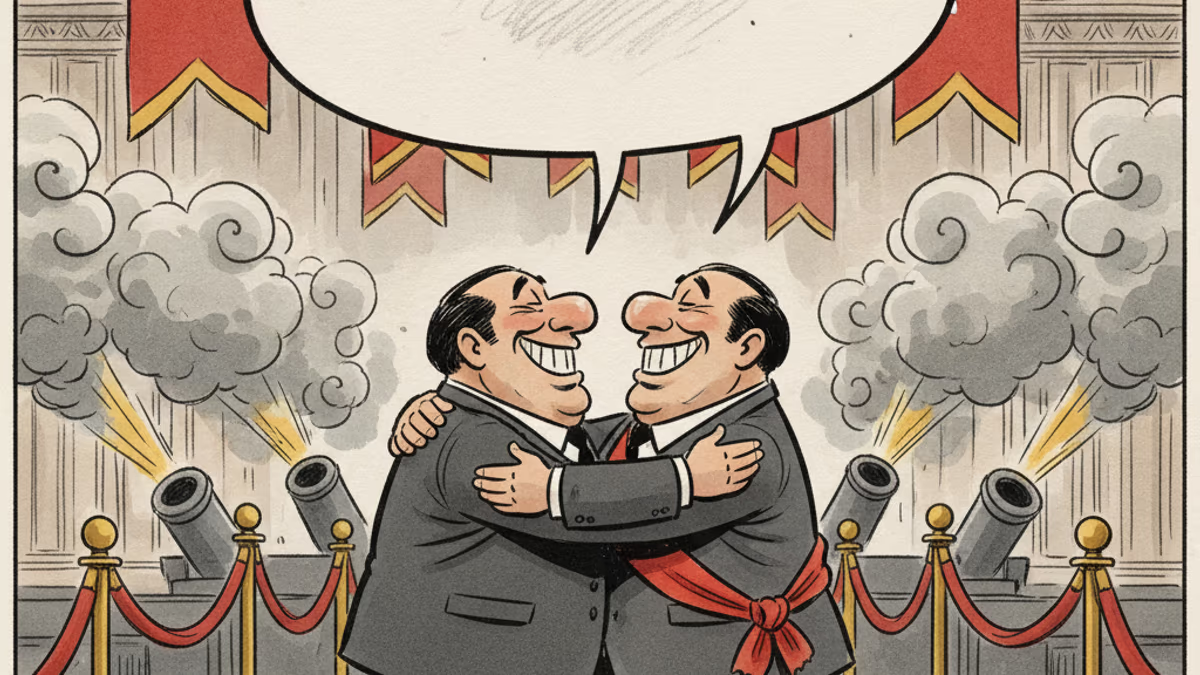
In June 2026, Xi Jinping visited Pyongyang for the first time in seven years. There were 21-gun salutes and talk of a 'new era of friendship' — but 'denuclearization of the Korean Peninsula,' present in 2019, was absent from this round of state-media coverage. A symbolic overreach, or a real upgrade?

Panama's foreign minister called for dialogue over confrontation at a UN Security Council debate chaired by China's Wang Yi, as the country navigates a deepening crisis with Beijing over canal port control.

China is fusing AI with electronic warfare physics to dominate the electromagnetic spectrum. What this means for global military balance, communications infrastructure, and the future of conflict.
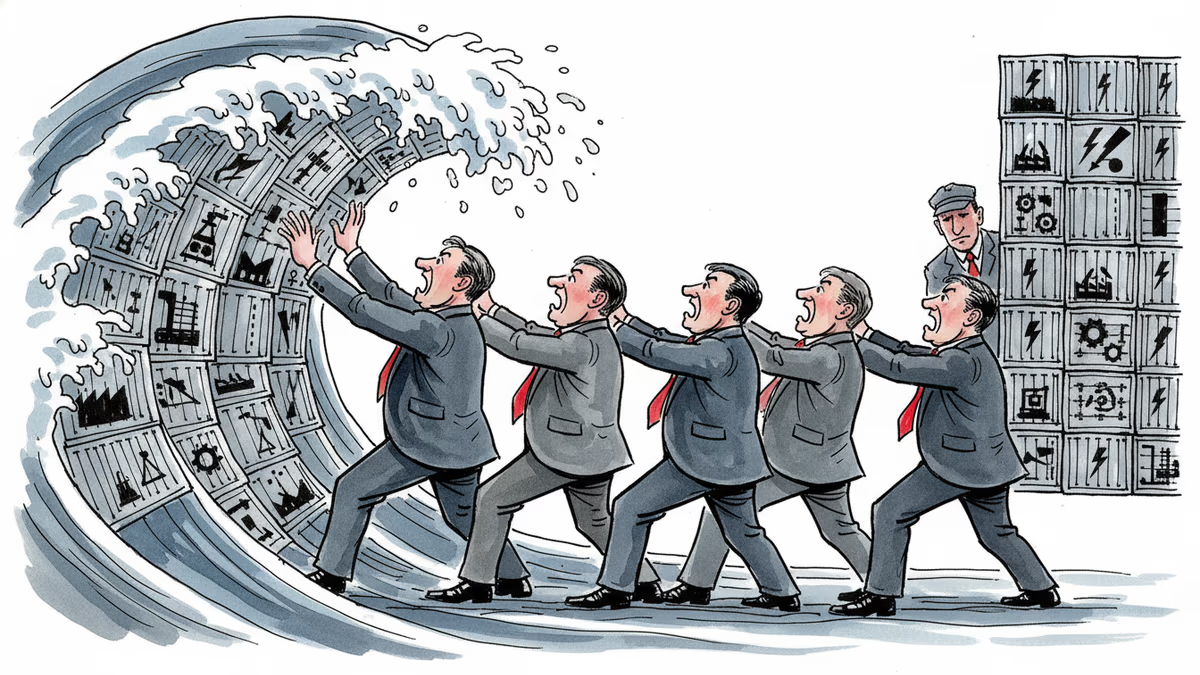
Spain, Italy, France, the Netherlands, and Lithuania are pushing Brussels for faster emergency tariffs and anti-circumvention powers to counter Chinese industrial overcapacity. Here's what's at stake.
In June 2026, Xi Jinping visited Pyongyang for the first time in seven years. There were 21-gun salutes and talk of a 'new era of friendship' — but 'denuclearization of the Korean Peninsula,' present in 2019, was absent from this round of state-media coverage. A symbolic overreach, or a real upgrade?
Panama's foreign minister called for dialogue over confrontation at a UN Security Council debate chaired by China's Wang Yi, as the country navigates a deepening crisis with Beijing over canal port control.
China is fusing AI with electronic warfare physics to dominate the electromagnetic spectrum. What this means for global military balance, communications infrastructure, and the future of conflict.
Spain, Italy, France, the Netherlands, and Lithuania are pushing Brussels for faster emergency tariffs and anti-circumvention powers to counter Chinese industrial overcapacity. Here's what's at stake.
Thoughts
Share your thoughts on this article
Sign in to join the conversation