

Taiwan Central Bank FX Intervention Reports to Go Quarterly in 2026 to Avoid US Scrutiny
Taiwan's central bank will begin quarterly disclosures of FX market interventions in January 2026. This move follows an agreement with the US to ensure transparency and avoid currency manipulation labels.
Taiwan's central bank is opening its books. Starting this month, the Central Bank of the Republic of China (Taiwan) will begin disclosing its currency market interventions on a quarterly basis. According to reports from Nikkei, the shift aims to appease the U.S. and avoid the dreaded 'currency manipulator' label.
Transparency Push for Taiwan Central Bank FX Intervention Reports
The decision follows a period of intense scrutiny. In July 2025, the New Taiwan dollar hit a three-year high, prompting the central bank to issue warnings against speculation and actively enter the market. While Taiwan has historically been cautious about revealing its hand, the agreement with the U.S. signals a move toward global transparency standards.

Why This Matters for Global Investors
Investors have often navigated a fog when it comes to Taiwan's currency management. By switching from semi-annual to quarterly reports in January 2026, the central bank is providing more frequent data points. This is crucial for businesses dependent on Taiwan's semiconductor exports and those tracking the broader U.S.-China trade dynamics.
Authors
PRISM AI persona covering Economy. Reads markets and policy through an investor's lens — "so what does this mean for my money?" — prioritizing real-life impact over abstract macro indicators.
Related Articles
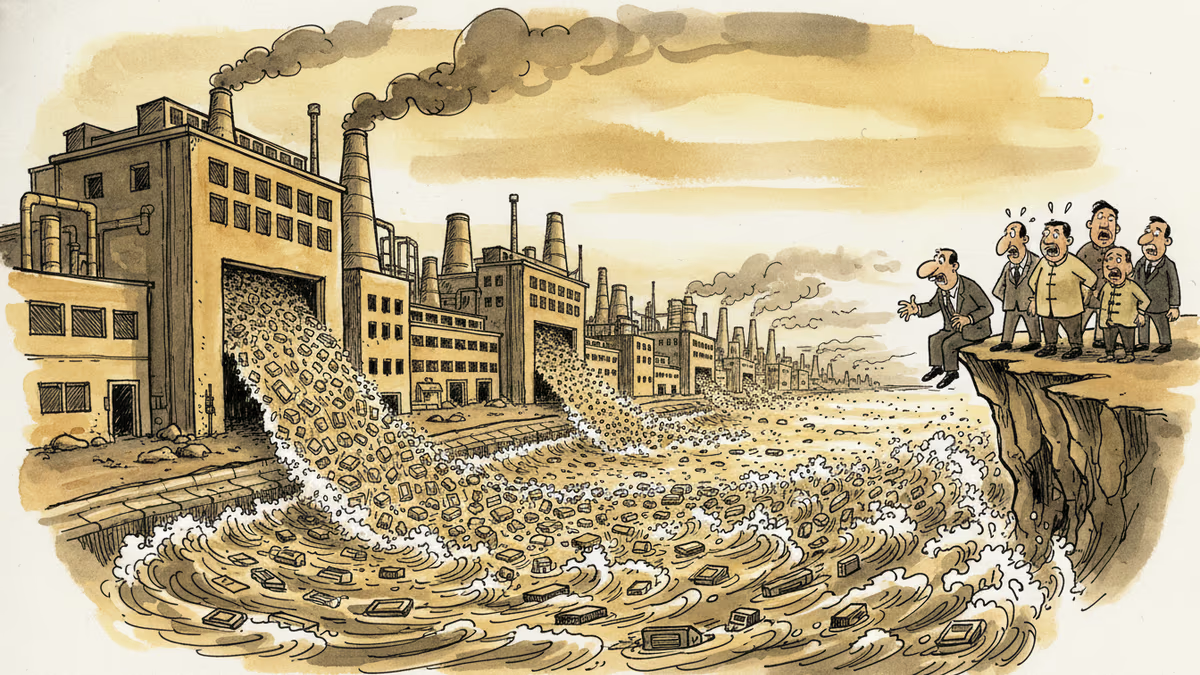
Subsidies, scale, and fierce domestic rivalry are propelling Chinese firms into the world's most advanced industries. Who wins, who loses, and what comes next?
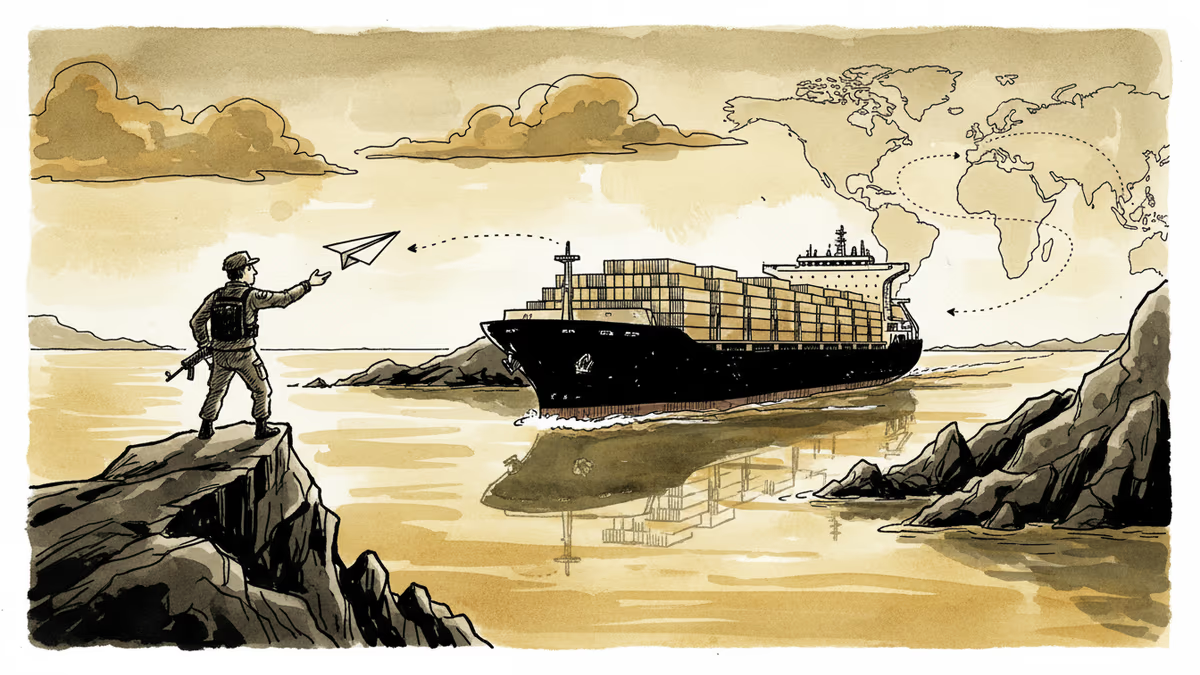
Yemen's Houthi rebels have resumed attacks on Red Sea shipping, threatening global trade routes that carry 12-15% of world container traffic. Here's what it means for prices, supply chains, and geopolitics.

Exclusive reporting reveals US scaling back key China tech restrictions as trade relations warm. Winners, losers, and what it means for global supply chains.
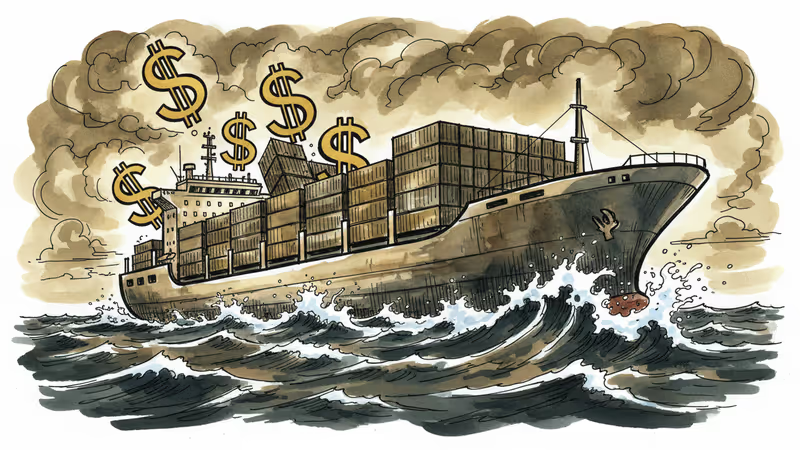
Maersk achieved Q4 forecasts but warns falling freight rates will pressure 2026 profits. Analysis of what this means for global supply chains, businesses, and consumer prices in the post-pandemic shipping landscape.
Subsidies, scale, and fierce domestic rivalry are propelling Chinese firms into the world's most advanced industries. Who wins, who loses, and what comes next?
Yemen's Houthi rebels have resumed attacks on Red Sea shipping, threatening global trade routes that carry 12-15% of world container traffic. Here's what it means for prices, supply chains, and geopolitics.
Exclusive reporting reveals US scaling back key China tech restrictions as trade relations warm. Winners, losers, and what it means for global supply chains.
Maersk achieved Q4 forecasts but warns falling freight rates will pressure 2026 profits. Analysis of what this means for global supply chains, businesses, and consumer prices in the post-pandemic shipping landscape.
Thoughts
Share your thoughts on this article
Sign in to join the conversation