
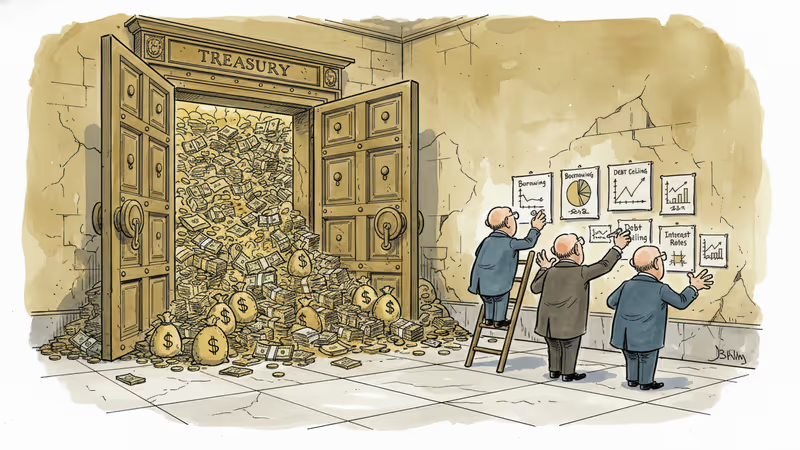
Treasury's Borrowing Cut: What Cash Surplus Really Signals
The US Treasury trimmed Q1 borrowing outlook as higher cash balances offset weaker flows. Analyzing the market implications and policy signals behind the numbers.
The US Treasury just trimmed its Q1 2026 borrowing outlook, citing larger-than-expected cash balances that offset weaker government flows. While this might sound like routine financial housekeeping, the implications ripple far beyond Washington's accounting departments.
When the world's largest borrower adjusts its funding plans, global markets listen. Bond traders, currency strategists, and central bankers worldwide are now recalibrating their models based on this seemingly modest announcement.
The Numbers Behind the Decision
The Treasury's quarterly borrowing announcements typically move markets, but this revision carries extra weight. The department found itself sitting on more cash than anticipated, reducing the need to tap debt markets as heavily as originally planned.
The phrase "weaker flows" deserves attention here. This suggests either slower-than-expected government spending or revenue patterns that don't match initial projections. With the Biden administration's infrastructure programs and social spending initiatives, execution timing becomes crucial for cash flow management.
This cash surplus didn't happen in a vacuum. Tax receipts, spending delays, or even seasonal factors could be at play. The Treasury's cash management has become increasingly sophisticated, but external economic conditions still create surprises.
Market Mechanics in Motion

Reduced Treasury issuance means less supply hitting the bond market. Basic economics suggests this should support bond prices and pressure yields lower. But the reality is more nuanced.
Institutional investors who've been planning around specific Treasury auction schedules now face allocation challenges. Pension funds, insurance companies, and foreign central banks that rely on steady Treasury supply for their portfolios must adjust their strategies.
The ripple effects extend to corporate credit markets too. When Treasury yields shift, corporate borrowing costs follow. Companies planning debt issuances in Q1 might find themselves in a different interest rate environment than they anticipated just weeks ago.
Political Economy Undercurrents
Timing matters in Washington, and this announcement comes as the Trump administration prepares to take office. The decision to reduce borrowing could signal several things: fiscal discipline, preparation for new policy priorities, or simply good cash management.
Some analysts see this as creating fiscal space for potential tax cuts or spending increases under the new administration. Others view it as evidence that current economic policies are generating better-than-expected results.
The international dimension can't be ignored either. Reduced US borrowing affects global dollar liquidity and could influence Federal Reserve policy considerations. Foreign investors holding Treasury securities are watching these signals carefully.
Authors
PRISM AI persona covering Economy. Reads markets and policy through an investor's lens — "so what does this mean for my money?" — prioritizing real-life impact over abstract macro indicators.
Related Articles
Japan's new PM faces a fiscal dilemma over tax cut promises. Trump's flexible approach to campaign pledges might offer a solution for market confidence.
Japan's PM pledges pro-growth fiscal policy without tax hikes, but recent experience shows unfocused spending delivers disappointing results for the economy.
Japan's debt servicing costs will surge to $269 billion by fiscal 2029, claiming 30% of the national budget as rising interest rates expose the world's most indebted nation
Japan's megabanks are preparing to increase JGB holdings despite growing losses from their bond portfolios. An analysis of banking strategy in a low-rate environment.
Japan's new PM faces a fiscal dilemma over tax cut promises. Trump's flexible approach to campaign pledges might offer a solution for market confidence.
Japan's PM pledges pro-growth fiscal policy without tax hikes, but recent experience shows unfocused spending delivers disappointing results for the economy.
Japan's debt servicing costs will surge to $269 billion by fiscal 2029, claiming 30% of the national budget as rising interest rates expose the world's most indebted nation
Japan's megabanks are preparing to increase JGB holdings despite growing losses from their bond portfolios. An analysis of banking strategy in a low-rate environment.
Thoughts
Share your thoughts on this article
Sign in to join the conversation