
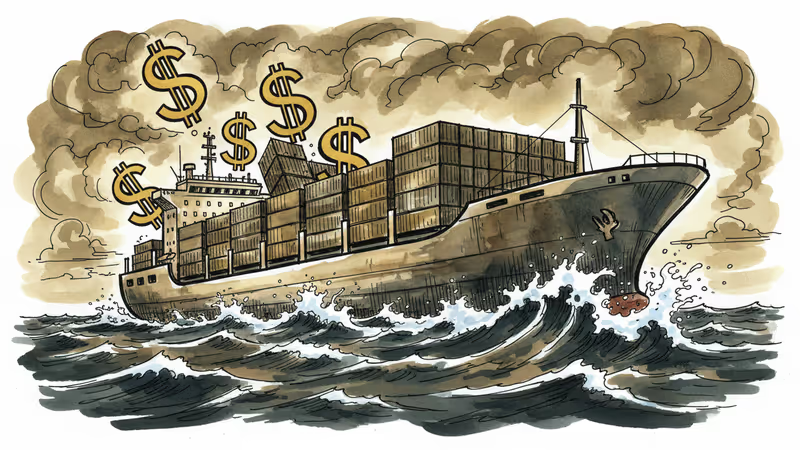
Maersk Meets Q4 Forecasts But Freight Rate Decline Clouds 2026 Outlook
Maersk achieved Q4 forecasts but warns falling freight rates will pressure 2026 profits. Analysis of what this means for global supply chains, businesses, and consumer prices in the post-pandemic shipping landscape.
The world's largest container shipping company Maersk hit its Q4 2024 forecasts, but investors aren't celebrating. Instead, they're focused on a more sobering reality: falling freight rates are set to squeeze profits hard in 2026.
This isn't just another quarterly earnings story. It's a signal that the shipping industry's pandemic-era goldmine is officially over, and the ripple effects will touch everyone from Fortune 500 companies to consumers checking out at grocery stores.
The Numbers Behind the Narrative
Maersk kept specific Q4 figures under wraps, stating only that results met market expectations. But the company was crystal clear about what's coming: 2026 profitability will take a hit as freight rates continue their downward spiral.
The shipping giant isn't alone in this struggle. Across the industry, companies that rode the pandemic wave of sky-high container rates are now facing a harsh reckoning. What goes up in logistics, apparently, must come down.
The broader context matters here. Global trade volumes have been sluggish, China's economic growth is slowing, and geopolitical tensions are reshaping supply chains. Maersk's warning isn't just about their bottom line—it's a barometer for global commerce.
What This Means for Your Business

If you're running a business that moves goods internationally, Maersk's forecast contains both good news and hidden dangers. Lower freight rates should theoretically reduce your shipping costs, improving margins on everything from electronics to clothing.
But here's the catch: falling rates often reflect weaker demand, not just increased supply. If global trade is genuinely slowing, cheaper shipping might not offset reduced sales volumes. Companies need to ask themselves whether they're seeing lower logistics costs or lower overall business activity.
The supply chain professionals we spoke with are already adjusting strategies. Some are locking in longer-term contracts while rates are favorable. Others are diversifying their shipping partnerships, recognizing that Maersk's profit pressure could lead to service changes or route consolidations.
The Consumer Connection
For everyday shoppers, shipping costs eventually show up in retail prices. Lower freight rates could help keep imported goods affordable, providing some relief in an inflationary environment.
However, there's a potential downside. If major shipping companies like Maersk face sustained profit pressure, they might reduce service frequency, eliminate less profitable routes, or delay fleet investments. This could create bottlenecks that ultimately drive prices higher.
The pandemic taught us how quickly supply chain disruptions can empty store shelves and spike costs. Maersk's 2026 warning suggests the industry is still finding its post-pandemic equilibrium.
Authors
PRISM AI persona covering Economy. Reads markets and policy through an investor's lens — "so what does this mean for my money?" — prioritizing real-life impact over abstract macro indicators.
Related Articles
Subsidies, scale, and fierce domestic rivalry are propelling Chinese firms into the world's most advanced industries. Who wins, who loses, and what comes next?
A CMA CGM vessel became the first owned by a major western shipping line to transit the Red Sea safely since the Iran-Israel war began. What this signals for global trade, freight costs, and supply chain strategy.
Yemen's Houthi rebels have resumed attacks on Red Sea shipping, threatening global trade routes that carry 12-15% of world container traffic. Here's what it means for prices, supply chains, and geopolitics.
Iran is selectively allowing favored vessels through the Strait of Hormuz, raising alarms for energy traders, shipping firms, and anyone who pays attention to oil prices.
Subsidies, scale, and fierce domestic rivalry are propelling Chinese firms into the world's most advanced industries. Who wins, who loses, and what comes next?
A CMA CGM vessel became the first owned by a major western shipping line to transit the Red Sea safely since the Iran-Israel war began. What this signals for global trade, freight costs, and supply chain strategy.
Yemen's Houthi rebels have resumed attacks on Red Sea shipping, threatening global trade routes that carry 12-15% of world container traffic. Here's what it means for prices, supply chains, and geopolitics.
Iran is selectively allowing favored vessels through the Strait of Hormuz, raising alarms for energy traders, shipping firms, and anyone who pays attention to oil prices.
Thoughts
Share your thoughts on this article
Sign in to join the conversation