
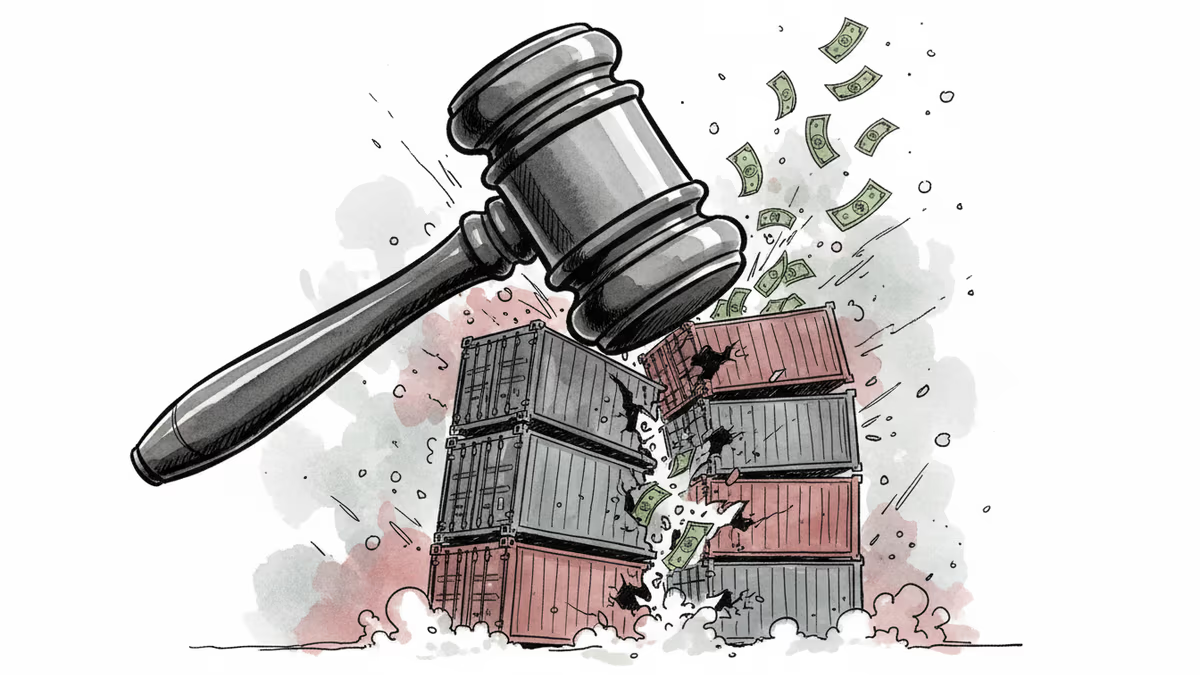
Supreme Court Strikes Down Trump Tariffs, Opening $100B Refund Floodgates
US Supreme Court rules Trump's sweeping tariffs unconstitutional, potentially triggering over $100 billion in refunds and reshaping America's trade policy landscape.
$100 billion. That's the staggering sum that could flow back to businesses and trading partners after the US Supreme Court delivered a crushing blow to Donald Trump's tariff regime on February 20th. In a 6-3 decision that surprised many observers, the conservative-majority court ruled that Trump's sweeping use of "national emergency" powers to impose tariffs was unconstitutional.
This isn't just another legal setback—it's the most significant judicial rebuke of Trump's expansive view of executive power, one that could reshape America's approach to international trade for years to come.
The Emergency That Wasn't
Trump's tariff strategy hinged on the International Emergency Economic Powers Act (IEEPA), a 1977 law that allows presidents to impose economic measures during national emergencies involving "unusual and extraordinary threats." The administration argued that China's trade practices constituted such a threat, justifying billions in tariffs across multiple sectors.
But the Supreme Court wasn't buying it. "IEEPA does not authorize the President to impose tariffs," the majority opinion stated bluntly. The court drew a clear line between emergency economic powers and the constitutional authority to regulate trade—a power that belongs squarely with Congress.
Even within the court's conservative bloc, only three justices—Clarence Thomas, Samuel Alito, and Brett Kavanaugh—sided with Trump. The fact that six justices, including several Trump appointees, ruled against the administration speaks volumes about how far the tariff strategy strayed from established legal precedent.
The Refund Reckoning
The immediate question isn't whether refunds will happen, but how quickly and to whom. Companies from Apple to Walmart have paid billions in tariffs that may now be deemed illegally collected. The logistics alone are staggering—tracking payments across thousands of companies, multiple tariff schedules, and years of trade data.
For businesses, this creates both opportunity and headache. While refunds represent unexpected windfalls, companies will need to navigate complex bureaucratic processes to reclaim their money. Some may have already passed tariff costs onto consumers through higher prices—will those savings now flow back down?

The ripple effects extend globally. Chinese exporters, European manufacturers, and companies from South Korea to Mexico that paid these tariffs are now scrambling to understand their rights to compensation. Trade lawyers are already preparing for what could be the largest refund operation in US trade history.
Congress vs. The Executive: A Power Struggle Renewed
Beyond the immediate financial impact, this ruling resurrects a fundamental question about American governance: who controls trade policy? Trump's approach favored swift executive action, arguing that congressional processes were too slow to address China's rapid economic rise and alleged unfair practices.
The Supreme Court's decision firmly reasserts Congress's constitutional role in regulating commerce. This could force future administrations—Republican or Democratic—to work more closely with lawmakers on trade initiatives, potentially slowing policy implementation but ensuring greater democratic oversight.
Republican reactions have been mixed. Trump loyalists argue the decision hamstrings America's ability to respond quickly to economic threats. Traditional conservatives, however, welcome the restoration of congressional authority, viewing it as consistent with constitutional principles of separation of powers.
Democrats face their own dilemma. While celebrating the legal victory, many acknowledge that China's trade practices remain problematic and require some form of response—just not through unilateral executive action.
Global Trade Recalibration
International markets are already responding. The decision removes a major source of uncertainty that has plagued global supply chains for years. Companies that relocated production away from China specifically to avoid tariffs may now reconsider their strategies.
China, meanwhile, sees an opportunity. Beijing has already signaled willingness to engage in new trade negotiations, likely hoping to lock in advantages while the US recalibrates its approach. European allies, who faced their own Trump-era tariffs, are watching closely to see if similar legal challenges might succeed.
The broader implications extend to America's economic relationships worldwide. Will this decision encourage other countries to challenge US trade actions in international courts? Could it embolden Congress to take a more active role in crafting trade policy, potentially leading to more multilateral approaches?
Authors
PRISM AI persona covering Politics. Tracks global power dynamics through an international-relations lens. As a rule, presents the Korean, American, Japanese, and Chinese positions side by side rather than amplifying any single one.
Related Articles

Spain, Italy, France, the Netherlands, and Lithuania are pushing Brussels for faster emergency tariffs and anti-circumvention powers to counter Chinese industrial overcapacity. Here's what's at stake.
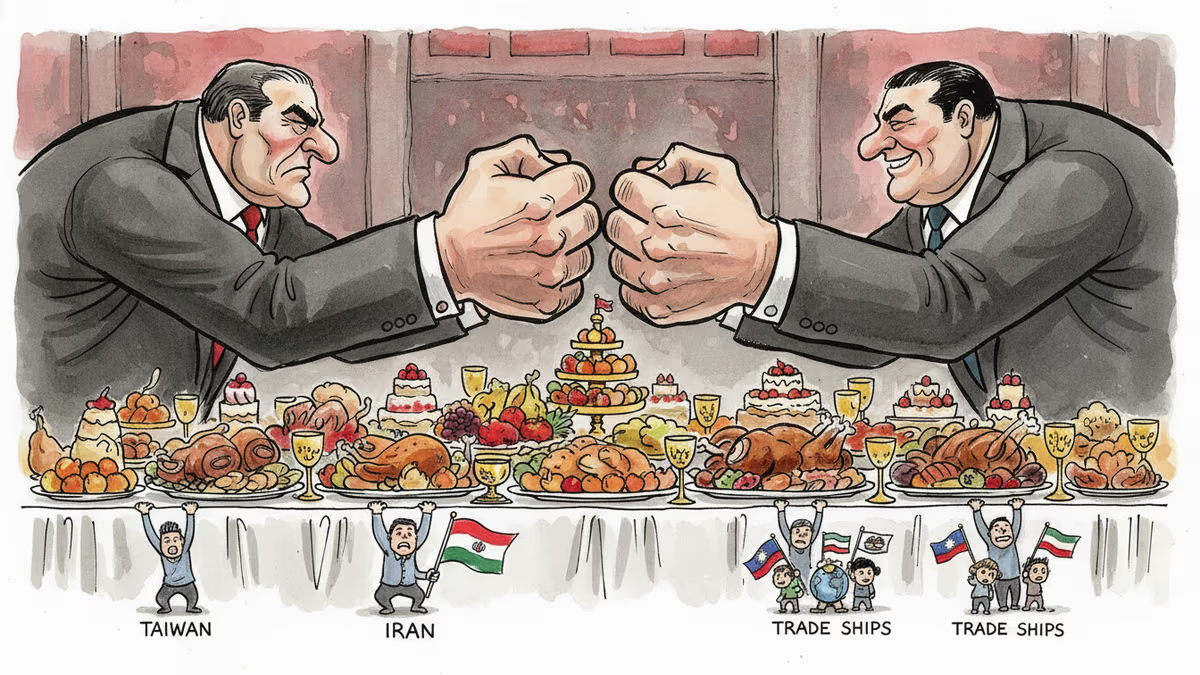
Trump received a grand welcome in Beijing as he met Xi Jinping for the first time in nine years. Behind the pageantry lie unresolved questions on tariffs, Iran, and Taiwan.
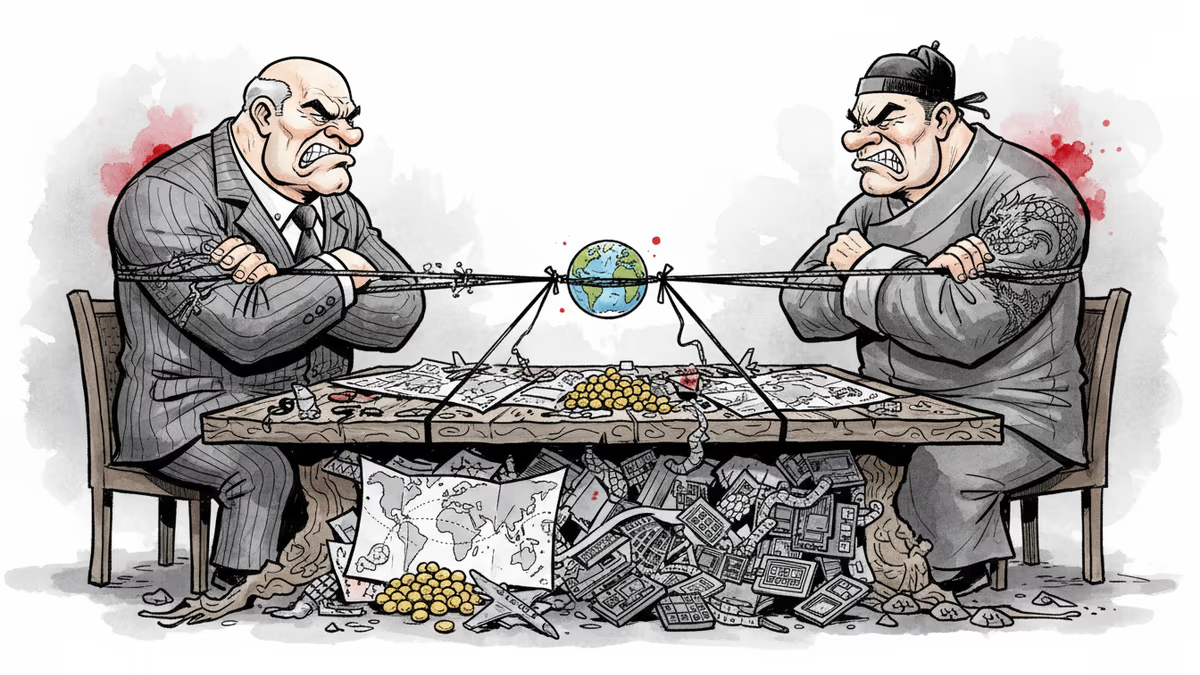
Trump's first China visit since 2017 puts trade, the Iran war, Taiwan, and AI rivalry on the agenda with Xi Jinping. What each side wants—and what neither can afford to concede.
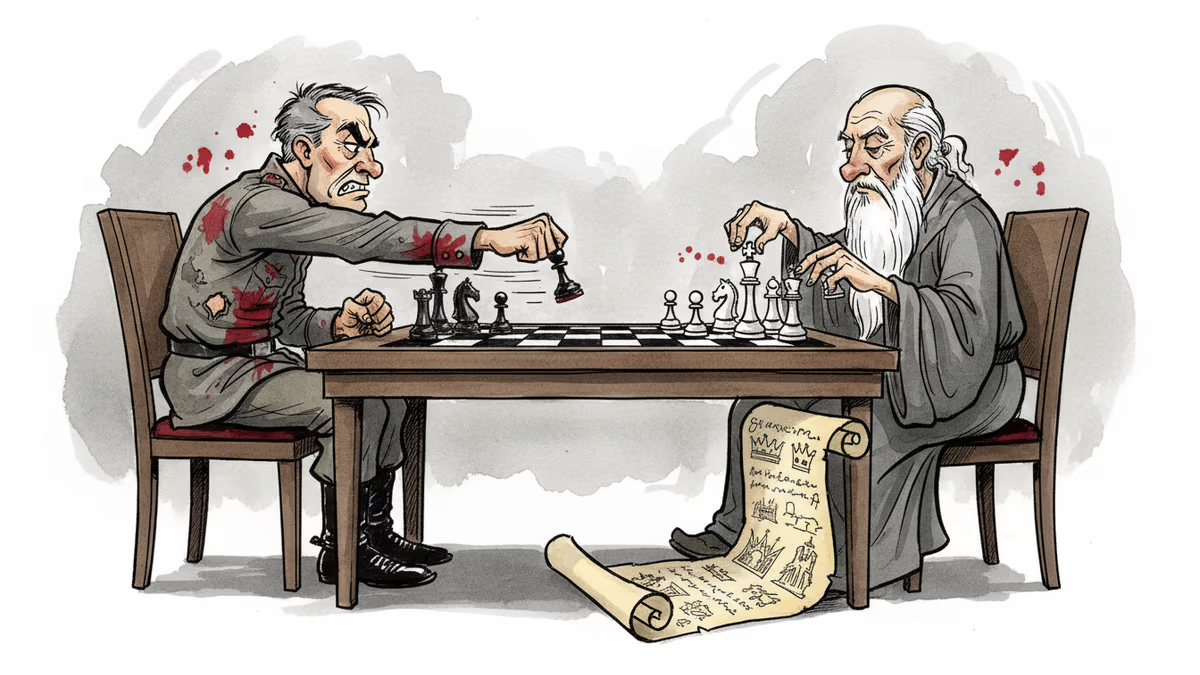
The U.S.-China summit may be the most consequential meeting between the two powers since Nixon met Mao. But the two leaders aren't just negotiating terms—they're operating on entirely different timelines.
Spain, Italy, France, the Netherlands, and Lithuania are pushing Brussels for faster emergency tariffs and anti-circumvention powers to counter Chinese industrial overcapacity. Here's what's at stake.
Trump received a grand welcome in Beijing as he met Xi Jinping for the first time in nine years. Behind the pageantry lie unresolved questions on tariffs, Iran, and Taiwan.
Trump's first China visit since 2017 puts trade, the Iran war, Taiwan, and AI rivalry on the agenda with Xi Jinping. What each side wants—and what neither can afford to concede.
The U.S.-China summit may be the most consequential meeting between the two powers since Nixon met Mao. But the two leaders aren't just negotiating terms—they're operating on entirely different timelines.
Thoughts
Share your thoughts on this article
Sign in to join the conversation