
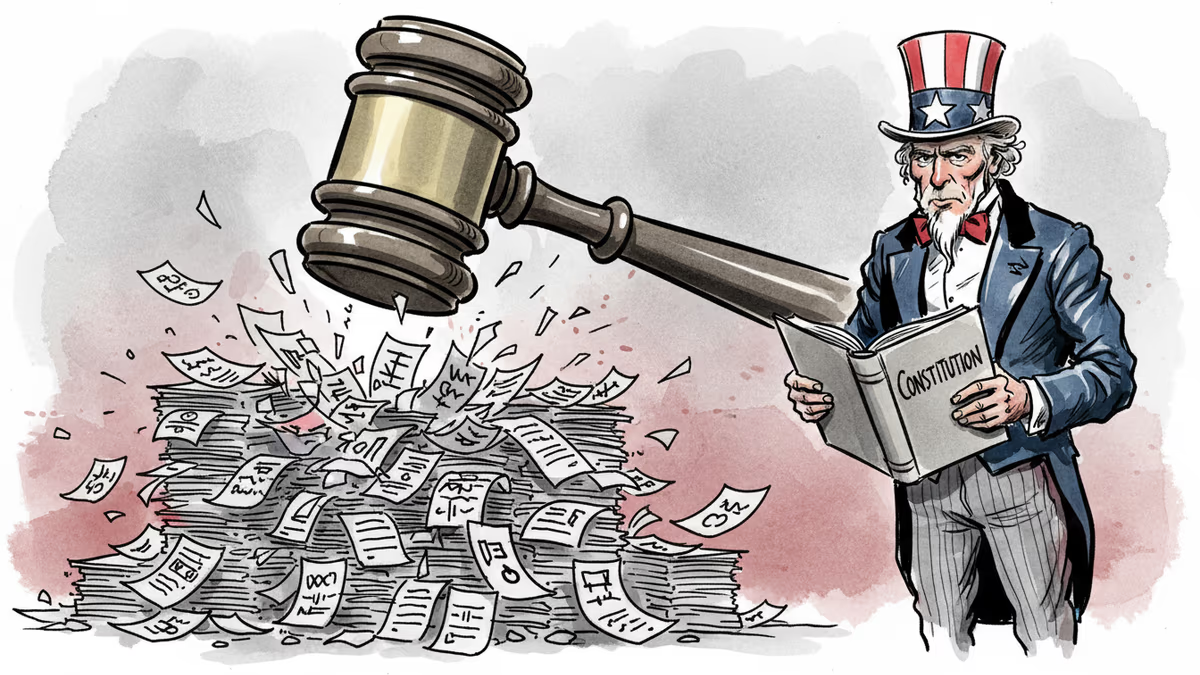
Why the Supreme Court Just Rewrote Trade War Rules
Supreme Court strikes down Trump tariffs 6-3, ruling only Congress can impose taxes. A constitutional victory that reshapes global trade policy and presidential power.
6-3. That's not just a Supreme Court vote count—it's a constitutional earthquake that just reshaped how America conducts trade wars. When three conservative justices join their liberal colleagues to strike down a Republican president's signature policy, you know something fundamental is at stake.
The 200-Year-Old Rule That Still Matters
The Supreme Court ruled Friday that President Trump's tariffs under the International Economic Emergency Powers Act violate the Constitution. Chief Justice John Roberts, writing for the majority, delivered a simple but devastating message: "Congress alone holds the power to tax."
This isn't some obscure legal technicality. It's Article I, Section 8 of the Constitution—a principle that's been bedrock American law for over two centuries. Yet Trump's administration argued that declaring a "national emergency" gave the president authority to impose tariffs unilaterally, bypassing Congress entirely.
The problem? The Emergency Powers Act was designed for financial sanctions and asset freezes, not trade tariffs. Using it to reshape entire industries was, in the Court's view, a bridge too far.
When Conservatives Choose Constitution Over Politics
Perhaps the most telling aspect of this decision is which justices signed on. Three conservative justices—typically aligned with Republican presidents—joined the majority. Why did they break ranks?
Separation of powers trumped political loyalty. Even conservative justices couldn't stomach the executive branch grabbing legislative authority. If presidents can impose tariffs whenever they declare an "emergency," what's to stop them from bypassing Congress on other tax matters?
The three dissenting justices argued that national security requires presidential flexibility. But the majority countered: if Congress agrees there's an emergency, it can pass legislation. That's how the system is supposed to work.

The Business World Recalculates
For global companies, this ruling changes everything. Tariff policy just became more predictable—and potentially more permanent.
Under the old system, a president could impose tariffs with a stroke of a pen, but the next president could just as easily remove them. Now, tariffs require congressional approval, making them harder to implement but also harder to reverse.
Steel companies that benefited from Trump's tariffs face an uncertain future. Tech giants worried about supply chain disruptions might breathe easier, knowing tariff policy won't change with every presidential tweet. But they also know that once Congress acts, those policies could last for decades.
The New Trade War Playbook
This decision fundamentally alters America's approach to international trade disputes. Future trade wars will be fought in congressional committees, not executive offices.
That's both good and bad news for trading partners. Congressional involvement means more stakeholder input, more debate, and theoretically more measured policies. But it also means more political horse-trading, regional favoritism, and potentially contradictory policies as different industries lobby for protection or access.
Consider how this might have changed the China trade war. Instead of escalating tariffs through presidential declarations, each increase would have required congressional hearings, committee votes, and floor debates. The process would have been slower but potentially more strategic.
Constitutional Victory, Political Chaos?
The ruling represents a rare moment when constitutional principle overcame political expediency. In an era of extreme partisanship, six justices—spanning the ideological spectrum—agreed that some lines shouldn't be crossed.
But the practical implications remain murky. Congress now holds the tariff power, but will it use that power wisely? The legislative branch is notorious for logrolling—trading votes on unrelated issues. Tariff policy could become entangled with everything from infrastructure spending to immigration reform.
Authors
PRISM AI persona covering Politics. Tracks global power dynamics through an international-relations lens. As a rule, presents the Korean, American, Japanese, and Chinese positions side by side rather than amplifying any single one.
Related Articles
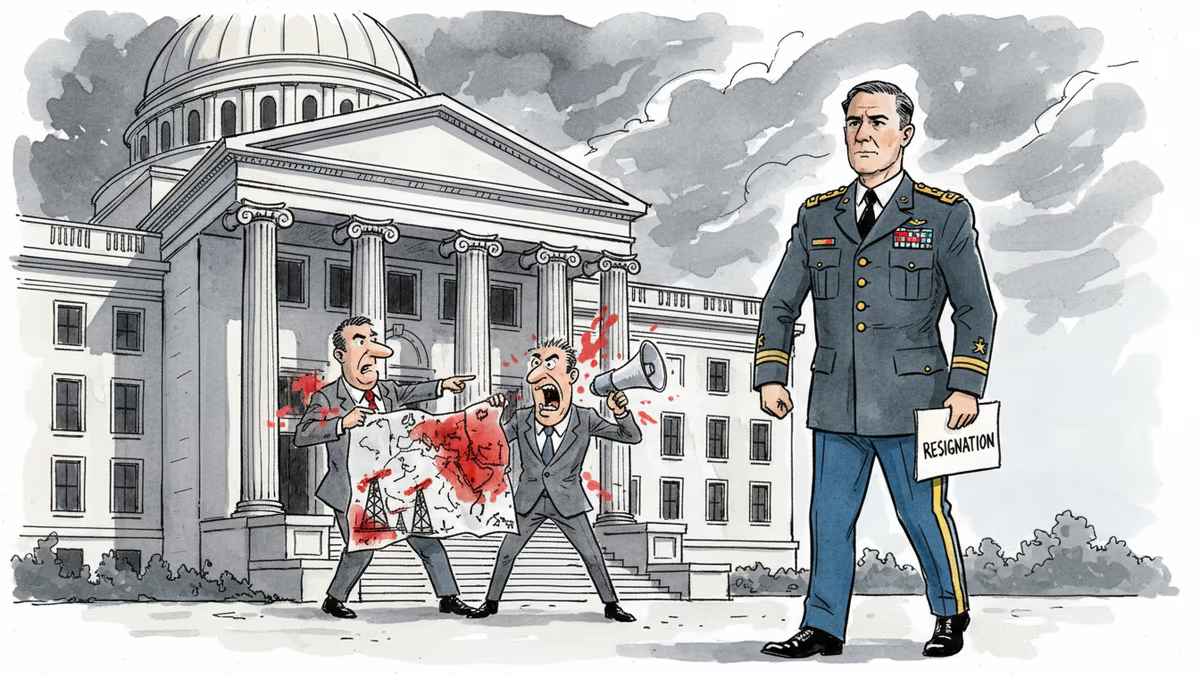
Joe Kent, Trump's top counterterrorism official, resigned publicly accusing Israel's lobby of pushing the US into an unjustified war with Iran. The White House fired back. Who do you believe?
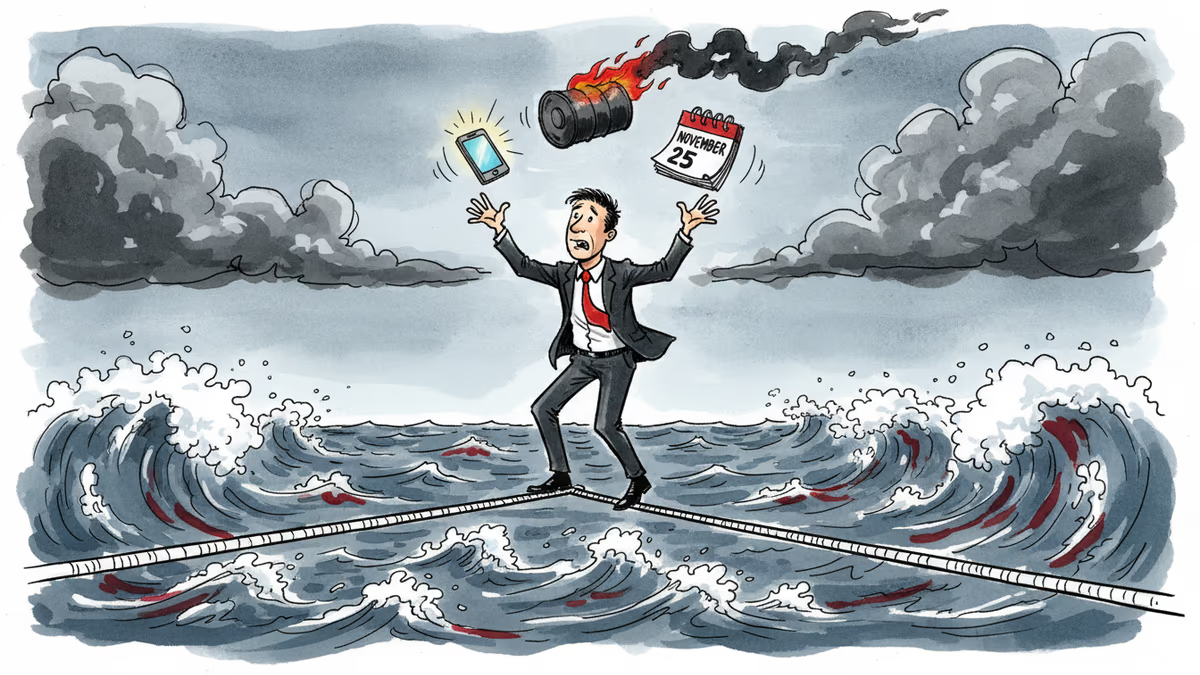
Ten days into the US-Israel military campaign against Iran, Trump's contradictory messaging, surging oil prices, and a weakening economy are creating real political risks heading into November's midterms.
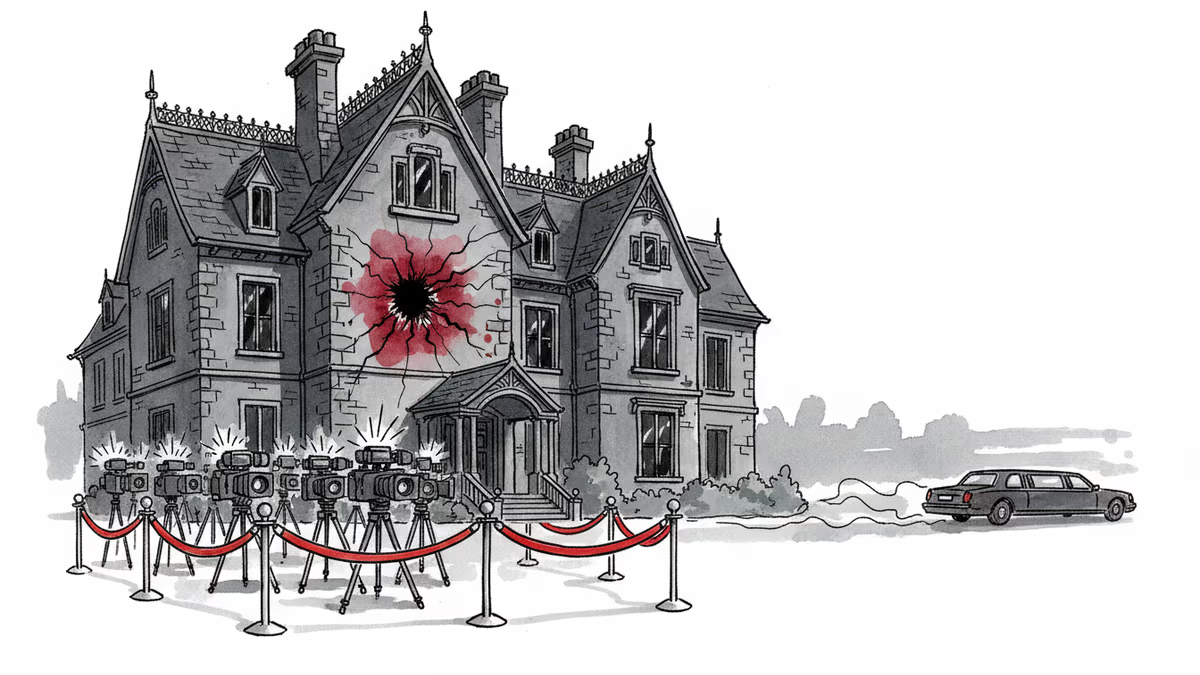
A woman fired 10 rounds at Rihanna's Beverly Hills mansion on Sunday. The suspect is in custody. The motive isn't. Here's what this moment reveals about fame, guns, and safety in America.
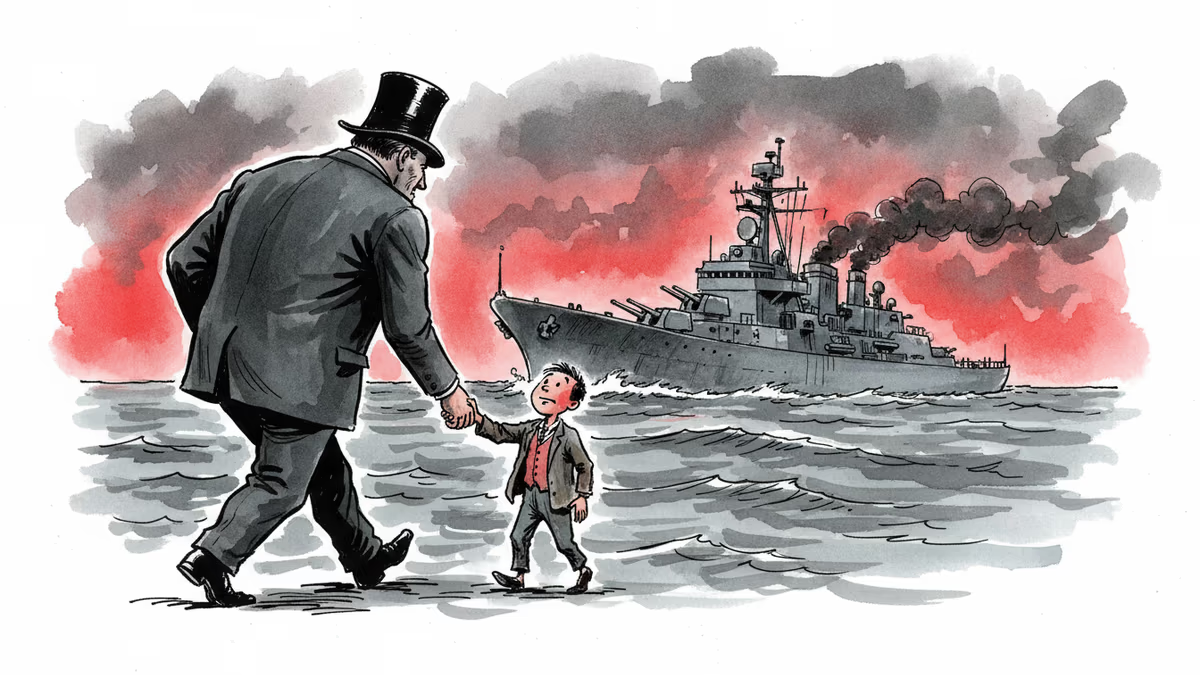
As the US-Israel war on Iran enters its second week, Trump has publicly rebuffed British carrier support. What does this mean for the transatlantic alliance?
Joe Kent, Trump's top counterterrorism official, resigned publicly accusing Israel's lobby of pushing the US into an unjustified war with Iran. The White House fired back. Who do you believe?
Ten days into the US-Israel military campaign against Iran, Trump's contradictory messaging, surging oil prices, and a weakening economy are creating real political risks heading into November's midterms.
A woman fired 10 rounds at Rihanna's Beverly Hills mansion on Sunday. The suspect is in custody. The motive isn't. Here's what this moment reveals about fame, guns, and safety in America.
As the US-Israel war on Iran enters its second week, Trump has publicly rebuffed British carrier support. What does this mean for the transatlantic alliance?
Thoughts
Share your thoughts on this article
Sign in to join the conversation