
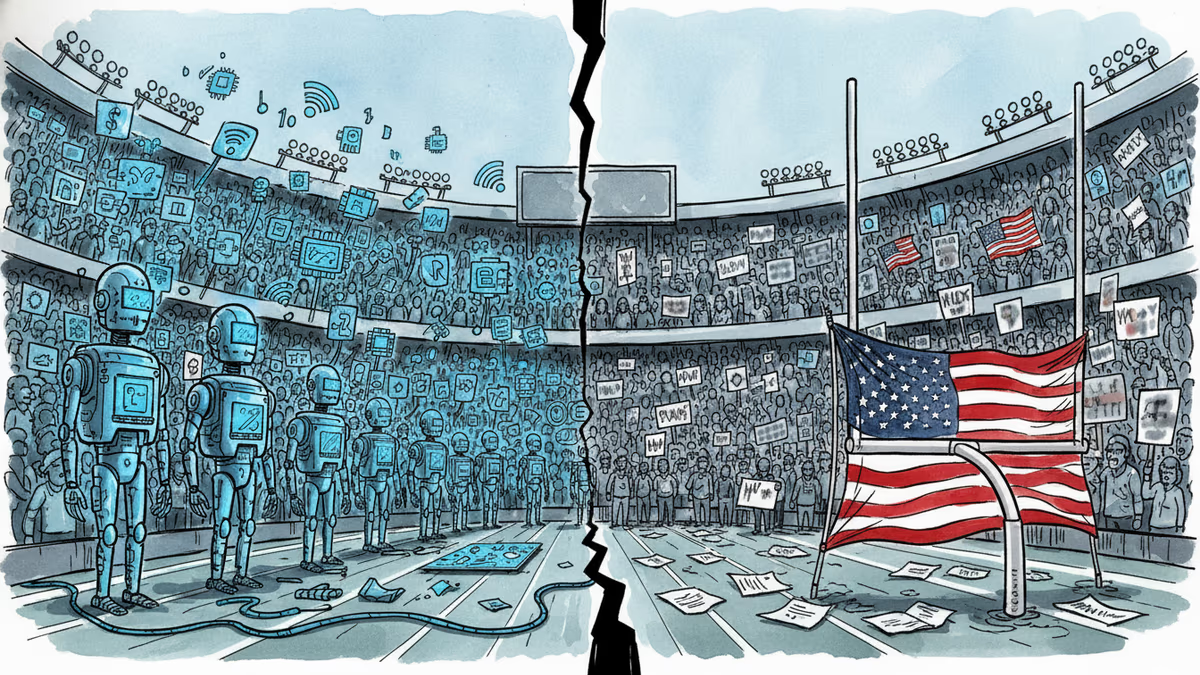
Silicon Valley's Super Bowl Reveals America's New Divides
From AI ad wars to Bad Bunny backlash, the Super Bowl in Silicon Valley exposed deep cultural, technological, and political fractures in American society
$7 billion. That's how much companies spent on Super Bowl ads this year, with OpenAI and Anthropic making their debut in the most expensive advertising real estate in America. But the real competition wasn't on the field.
The Super Bowl at Levi's Stadium wasn't just a game—it was a cultural battleground. Set in the heart of Silicon Valley, just miles from Nvidia and AMD headquarters, the event became a microcosm of America's deepest tensions: AI versus tradition, inclusion versus nativism, innovation versus skepticism.
When AI Giants Crash the Party
For the first time, artificial intelligence companies bought Super Bowl ads. OpenAI and Anthropic, bitter rivals in the AI arms race, chose America's biggest stage to pitch their vision of the future. The irony? They were advertising in the backyard of the chip companies that power their competition.
"It's constantly evolving and changing even our world of how we use technology," said Jared Postlethwaite from Washington state. "Sometimes it's a little overwhelming, but exciting what it can do."
But not everyone's buying the hype. Michael Bulzomi from Seattle expressed "very negative opinions" about prediction markets like Polymarket and Kalshi, preferring "official platforms like at MGM or any of the actual casino-run sportsbooks."
The Bad Bunny Backlash
Fresh off his historic Grammy win—the first Spanish-language Album of the Year—Puerto Rican artist Bad Bunny headlined the halftime show. The choice sparked predictable controversy.
"I think it's disgusting that there's a guy who doesn't speak English who's playing at the Super Bowl," said Jim Lockhart from Boston, who planned to "walk out" during the performance "in protest."

The backlash was so intense that Turning Point USA organized an alternative "All-American Halftime Show" featuring Kid Rock and Brantley Gilbert. Never mind that Bad Bunny, being Puerto Rican, is an American citizen.
Meanwhile, Scott Weber from Australia was thrilled: "I've been told by everyone at home, I need to videotape it, send it home, so I'm very excited about the halftime show."
Waymo Wows the Tourists
Perhaps the most universally positive reaction came from fans experiencing San Francisco's Waymo robotaxis. Weber called his first ride "awesome, a really unique experience," adding he "sat up front, videotaped it, sent it to everyone at home."
Even skeptics were intrigued. Lockhart admitted the autonomous vehicles were "unnerving" but conceded "they probably drive better than my wife." Ryan Jackson from Milwaukee was amazed: "I see cars driving with no drivers in them... That's crazy."
The Prediction Market Experiment
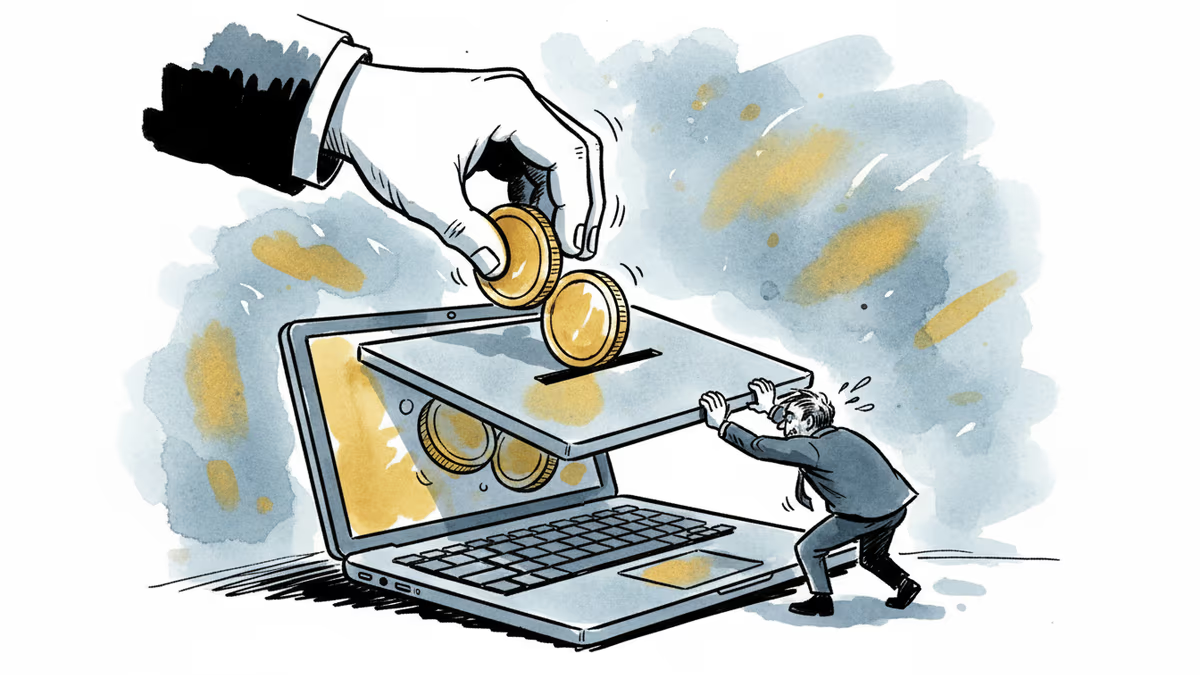
With traditional sports betting illegal in California, prediction markets like Kalshi and Polymarket saw explosive activity. Sunday could mark a breakthrough moment for these platforms as they enter mainstream consciousness.
But adoption remains uneven. While some embraced the new technology, others stuck to traditional bookies. "You can't bet out here on DraftKings," Lockhart explained. "So I had to put all my bets in with the bookie. Offline."
Immigration Fears Cast a Shadow
Rumors of ICE enforcement added another layer of tension. Despite assurances from the NFL and California Governor Gavin Newsom that there would be "no immigration enforcement tied to the game," anti-ICE protesters took to the streets.
Reactions split predictably along political lines. August Teacher hoped "there isn't any" ICE presence, while Lockhart from Boston quipped, "We love ICE. In my drinks and on the streets."
The fans we met suggest the answer is complicated. They're simultaneously excited by Waymo rides and suspicious of prediction markets, thrilled by AI possibilities and threatened by cultural change. Perhaps that's the most American response of all: embracing contradiction while the future unfolds around us.
Authors
Related Articles
Indian venture capital has quietly displaced Silicon Valley in its own backyard. Only one American VC made India's top 10 investor list last year. Here's why that matters beyond India.
After two weeks of witnesses calling him a liar, OpenAI CEO Sam Altman testified in his own defense, claiming Elon Musk tried to kill the company twice.
OpenAI CEO Sam Altman's San Francisco residence was attacked twice in three days — first a Molotov cocktail, then a shooting. What does this say about tech power, public anger, and the real-world risks facing AI leaders?
In CA-17, tech founder Ethan Agarwal is challenging five-term incumbent Ro Khanna — backed by billionaires opposed to a wealth tax. It's already getting dirty.
Indian venture capital has quietly displaced Silicon Valley in its own backyard. Only one American VC made India's top 10 investor list last year. Here's why that matters beyond India.
After two weeks of witnesses calling him a liar, OpenAI CEO Sam Altman testified in his own defense, claiming Elon Musk tried to kill the company twice.
OpenAI CEO Sam Altman's San Francisco residence was attacked twice in three days — first a Molotov cocktail, then a shooting. What does this say about tech power, public anger, and the real-world risks facing AI leaders?
In CA-17, tech founder Ethan Agarwal is challenging five-term incumbent Ro Khanna — backed by billionaires opposed to a wealth tax. It's already getting dirty.
Thoughts
Share your thoughts on this article
Sign in to join the conversation