
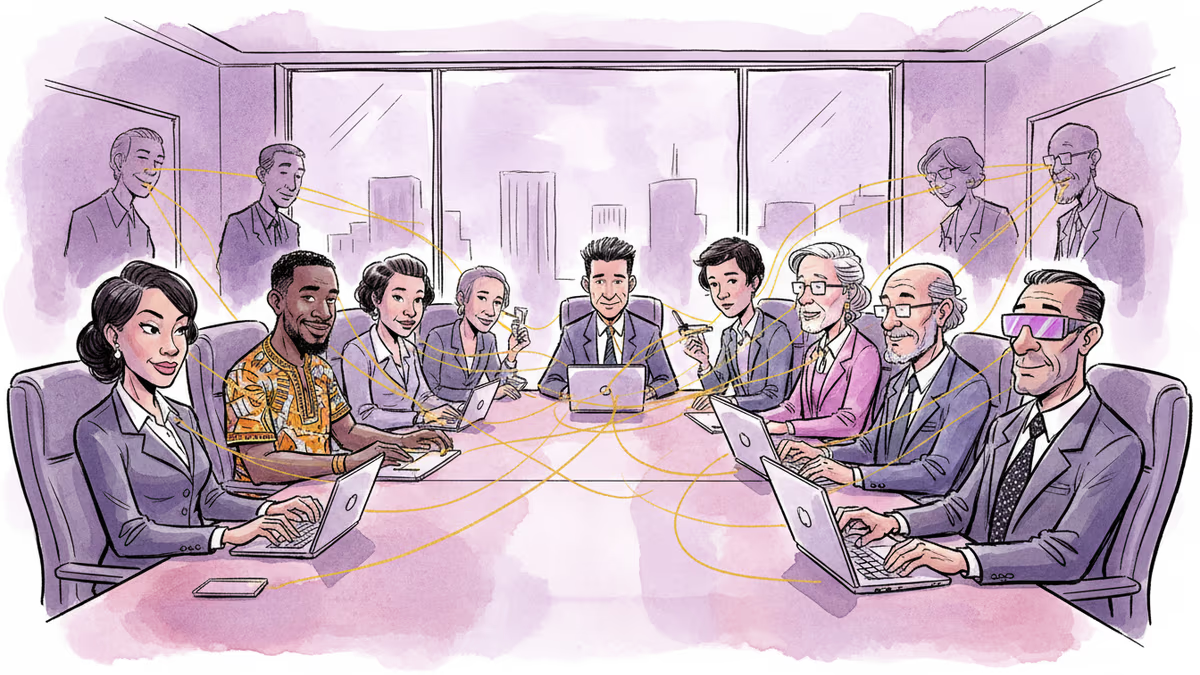
Is Silicon Valley Really Run by a 'Gay Tech Mafia'?
Rumors swirl about gay men dominating Silicon Valley's power structure. Conspiracy theory or the reality of new networking dynamics?
"Gays Run This Joint"
The whispers have been growing louder for years. Peter Thiel, Tim Cook, Sam Altman, Keith Rabois—the list of openly gay men in Silicon Valley's upper echelons keeps expanding. But recently, the tech world has been buzzing with something more provocative: the idea that these aren't just individual success stories, but evidence of a coordinated network wielding influence behind the scenes.
"Of course the gay tech mafia exists," a well-connected hedge fund manager tells me, audibly yawning at what he considers an obvious truth. "This is not some Illuminati conspiracy theory. And you do not have to be gay to join. They like straight guys who sleep with them even more."
The Y Combinator Sauna Photo That Launched a Thousand Theories
Last fall, a seemingly innocent photo appeared on X: Y Combinator-backed founders crowded near a sauna with Garry Tan, the incubator's president. Young, nerdy men in swim trunks, squinting into the camera. Nothing scandalous—until the internet made it so.
The image instantly triggered viral gossip about the "peculiar intimacies" of venture capital culture. Soon after, German founder Joschua Sutee posted a photo of himself and male cofounders apparently naked in bedsheets as part of what seemed to be a Y Combinator application. "Here I come, @ycombinator," read the caption.
Tan's explanation was straightforward: founders came over for dinner and asked to use his recently installed sauna. "Rejects" of Y Combinator, he says, "manufactured this meme that it was somehow more than that."
The Discrimination Paradox

At a Southern California VC party, a middle-aged investor complained about struggling to raise his new fund. Here was a white man with the Silicon Valley uniform down cold—crew cut, tasteless button-down, fluent AI enthusiasm. He looked exactly like the sort of person the Valley was built to reward.
Yet he insisted the system was rigged against him. "If I were gay, I wouldn't be having any trouble," he said. "The only way to catch a break is if you're gay."
Similar sentiments bubbled up across the industry. Engineers casually referred to top AI firms' offices as "twink town." Anonymous X accounts offered "fractional vizier services to the gay elite." The speculation had reached fever pitch.
The Reality Behind the Rumors
After interviewing 51 people—31 of them gay men, many influential investors and entrepreneurs—a more nuanced picture emerges. The portrait is "intricate, layered, and often contradictory," as sources describe a world where "power, desire, and ambition interweave in ways both visible and unseen."
One gay angel investor explains: "The gays who work in tech are succeeding vastly. There's the founder group of gays who all hang out with each other, because the gays always cluster together. They support each other, whether that's to hire someone or angel invest in their companies."
Formalizing the Network
Some of these networks are becoming visible. Jack Randall's Substack "Friend Of" chronicles gay ascendence into power centers. "We run the tech mafia (see Apple, OpenAI)," he writes. A new company called Sector, founded by Brian Tran, aims to formalize these connections.
But is this nepotism or natural networking? The same dynamics that created old boys' clubs at Harvard or country clubs in Connecticut may simply be manifesting in new forms. The difference: this time, it's not the traditional power structure doing the excluding.
Authors
Related Articles
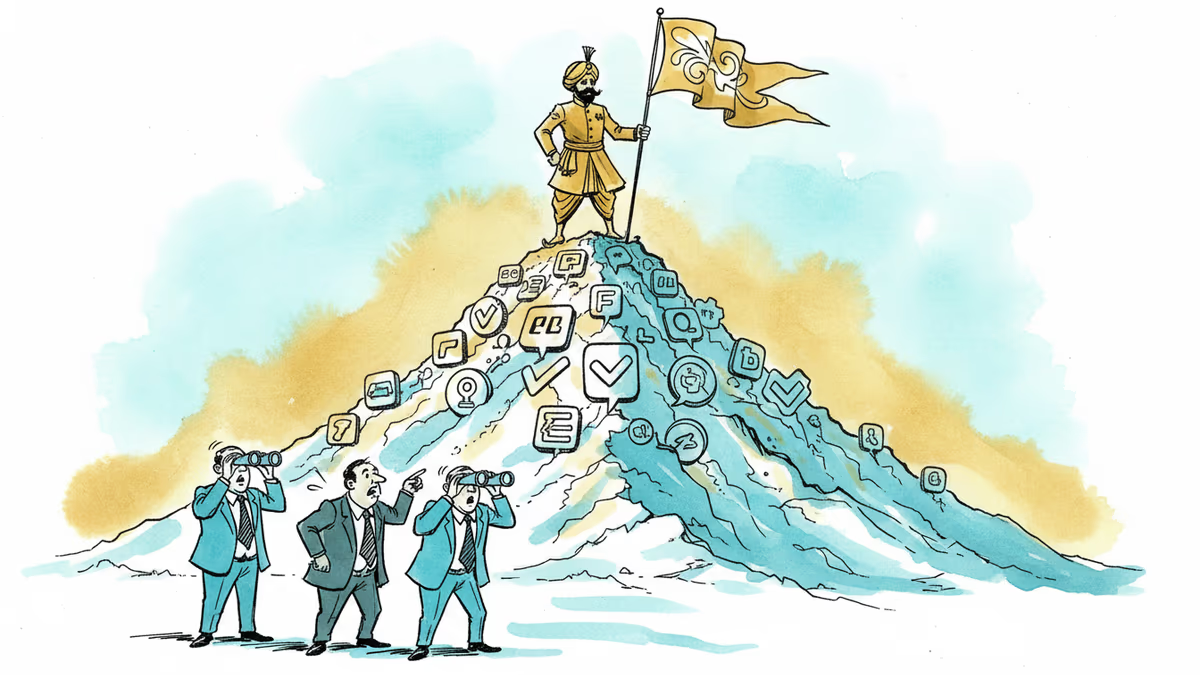
Indian venture capital has quietly displaced Silicon Valley in its own backyard. Only one American VC made India's top 10 investor list last year. Here's why that matters beyond India.
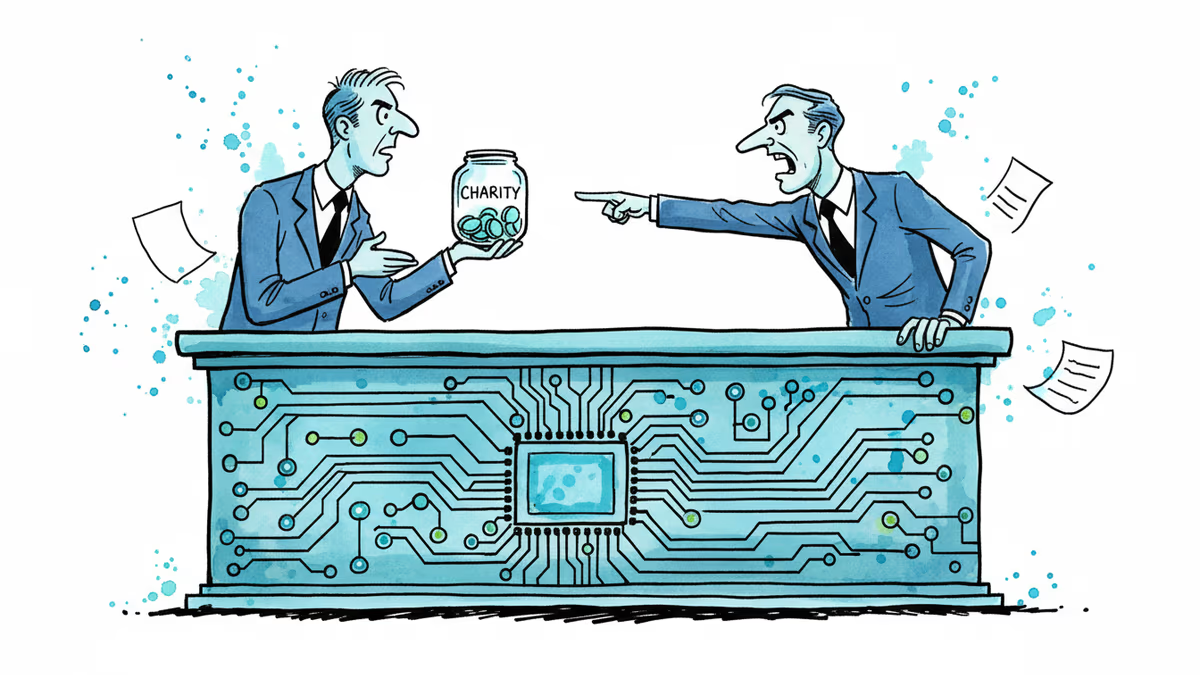
After two weeks of witnesses calling him a liar, OpenAI CEO Sam Altman testified in his own defense, claiming Elon Musk tried to kill the company twice.
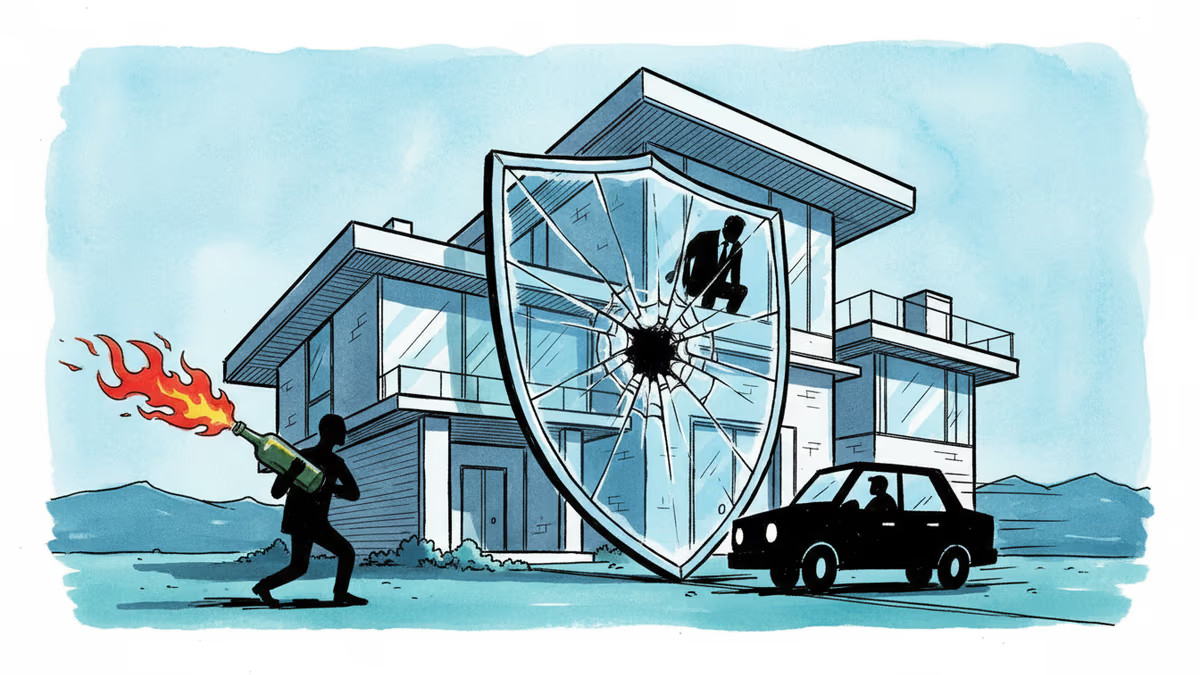
OpenAI CEO Sam Altman's San Francisco residence was attacked twice in three days — first a Molotov cocktail, then a shooting. What does this say about tech power, public anger, and the real-world risks facing AI leaders?
Grammarly rebranded as Superhuman, betting it can evolve from a spell-checker into a full AI productivity platform. But in a market dominated by Microsoft and Google, is there room for an independent player?
Indian venture capital has quietly displaced Silicon Valley in its own backyard. Only one American VC made India's top 10 investor list last year. Here's why that matters beyond India.
After two weeks of witnesses calling him a liar, OpenAI CEO Sam Altman testified in his own defense, claiming Elon Musk tried to kill the company twice.
OpenAI CEO Sam Altman's San Francisco residence was attacked twice in three days — first a Molotov cocktail, then a shooting. What does this say about tech power, public anger, and the real-world risks facing AI leaders?
Grammarly rebranded as Superhuman, betting it can evolve from a spell-checker into a full AI productivity platform. But in a market dominated by Microsoft and Google, is there room for an independent player?
Thoughts
Share your thoughts on this article
Sign in to join the conversation