
When 380 People Became Grass for 26 Minutes
The untold story of how Super Bowl halftime show producers turned humans into plants to fulfill Bad Bunny's Puerto Rican vision
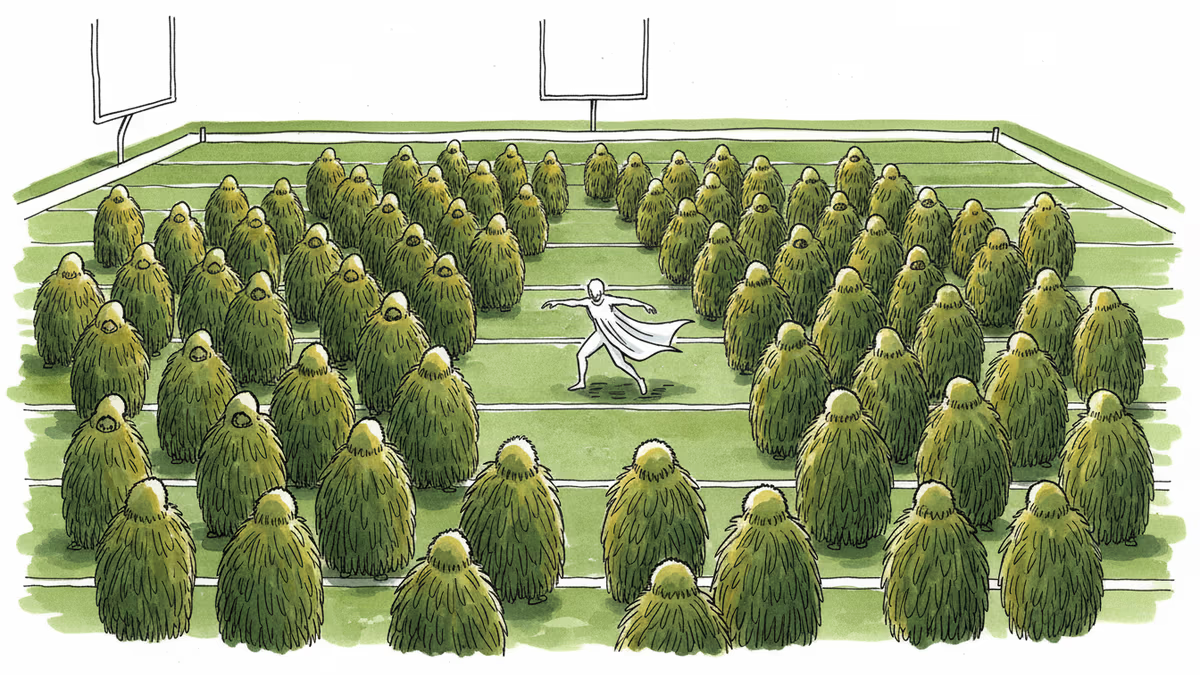
380 people dressed as grass blades stood motionless on the football field. What Super Bowl viewers saw as Bad Bunny's "Puerto Rican jungle" was actually an army of costumed humans.
The 26-Minute Miracle Makers
Bruce and Shelley Rodgers have been producing the Super Bowl halftime show for nearly two decades. Their company, Tribe Inc., has mastered the art of creating elaborate stage productions for 100 million viewers worldwide—all within a 26-minute window.
This year, Bad Bunny's request seemed straightforward: recreate his hometown of Vega Baja, Puerto Rico, complete with palm trees and sugar cane covering the stages.
The problem? Levi's Stadium uses natural grass. NFL guidelines limit stage carts to 25 maximum to protect the turf. The production team needed every single cart for stages and essential props.
When Humans Become Flora
Bruce Rodgers' solution was brilliantly simple: "Dress people up like plants."
The result was spectacular. As Bad Bunny performed hits from "NUEVAYoL" to "Monaco" in his white football jersey, 380 people transformed into towering grass stalks swayed around him. The palm trees and poles were wheeled out using the same "turf tire" cart system that brought Kendrick Lamar's streetlights to last year's show.
"It's all done in daylight," explains Shelley Rodgers, the show's Emmy-winning art director. Unlike Lamar's dramatic use of the Caesars Superdome's darkness, "you don't get the theatricality of nighttime" at the open-air venue.

The Biggest Fireworks Show in Decades
Effects consultant Bob Ross orchestrated what he calls the largest pyrotechnic display of any Super Bowl halftime show in the past 20 years. The production used 9,852 theatrical pyrotechnics—colored smoke, fireworks, and the massive Puerto Rican flags that lit up the sky during the finale.
"We're an exclamation mark to a performance," Ross says.
Art Meets Political Tension
The performance unfolded against a backdrop of unprecedented political tension. When the NFL announced Bad Bunny as headliner last September, MAGA influencers launched social media campaigns decrying that he "doesn't sing in English." The artist hasn't performed on the US mainland during his current world tour due to fears of ICE raids at his concerts.
A week before the game, Bad Bunny became the first artist to win Album of the Year for an all-Spanish record. During his Grammy acceptance speech, he declared: "ICE out. We're not savage; we're not animals; we're not aliens. We are humans and we are Americans."
The NFL stood firm. "Not everyone has to like everything we do," chief marketing officer Tim Ellis told The Athletic. "Bad Bunny is fucking awesome."
The Compressed Timeline Challenge
This year's production faced an unusual constraint: time. Typically, halftime show concepts get approved around Thanksgiving, giving teams months to fabricate and plan. Bad Bunny's vision wasn't greenlit until around New Year's Day—partially due to negotiations between his original request (carts full of vegetation) and the Rodgers' human-plant solution.
"It was very dramatic and intense," Bruce Rodgers admits. But the compressed timeline forced creative solutions that ultimately made for a better show.
Authors
Related Articles
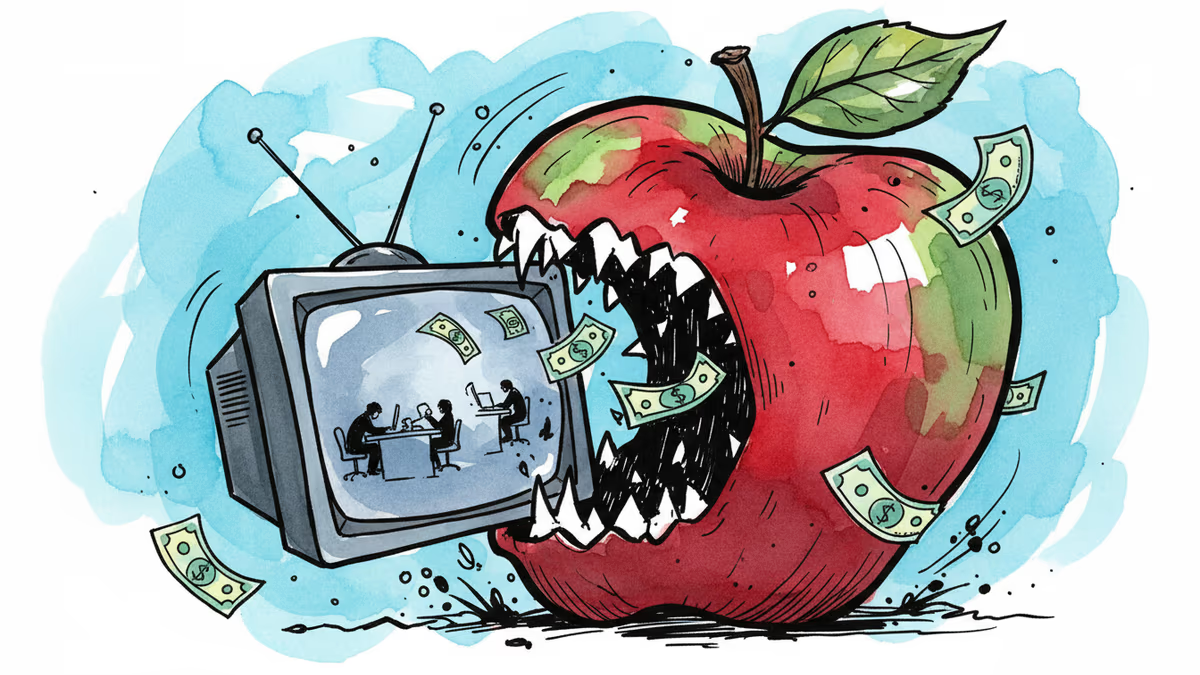
Apple acquired full rights to hit series Severance for nearly $70 million. It signals a major shift in streaming strategy from licensing to ownership.
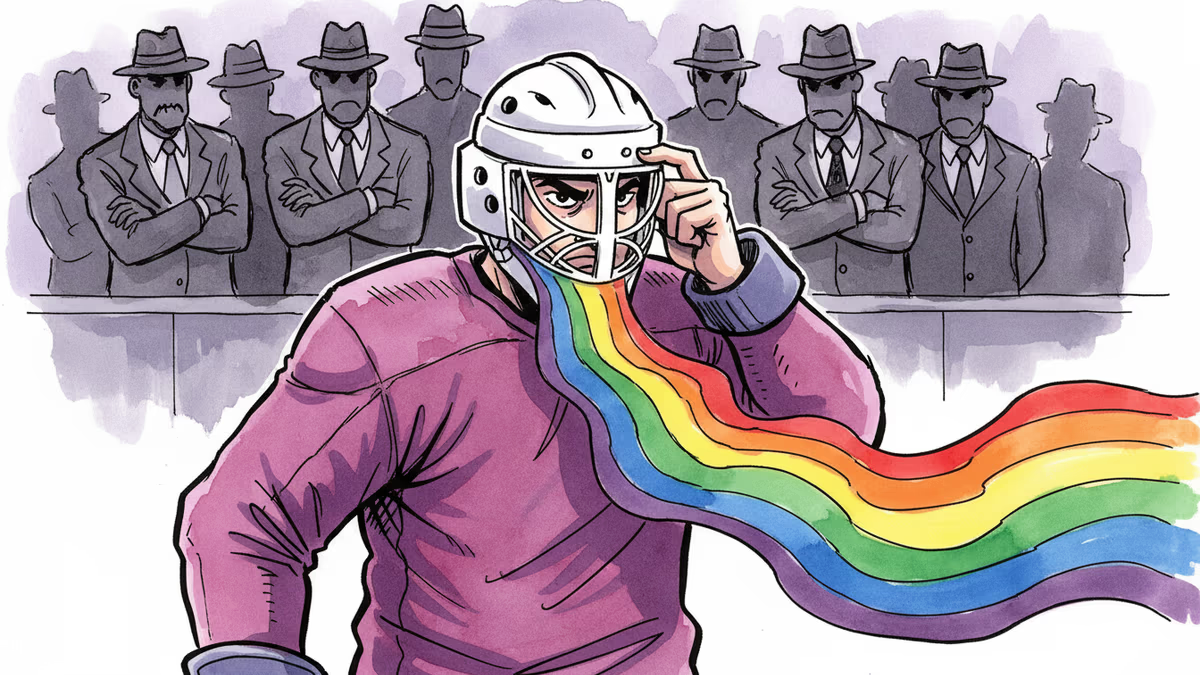
The global success of gay hockey drama 'Heated Rivalry' has sparked conversations about LGBTQ+ inclusion in professional sports, revealing a stark gap between entertainment and reality.
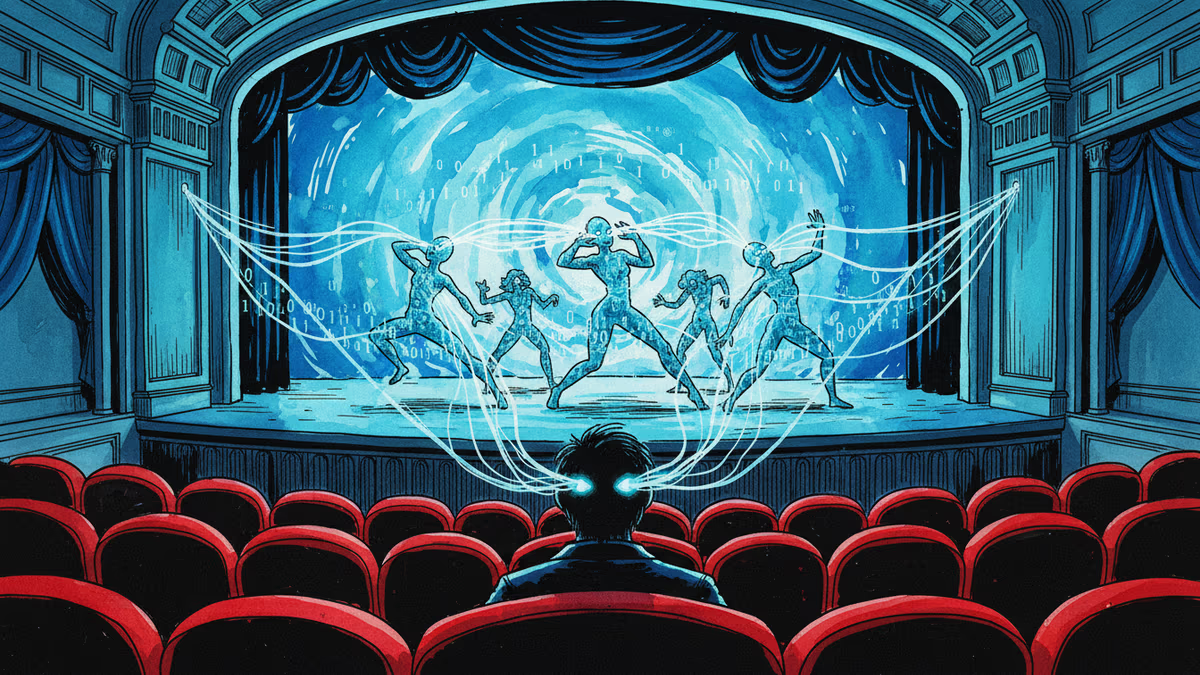
Ian McKellen and Golda Rosheuvel are brought back to life through AI to deliver personalized stories that know unsettling details about your life. The future of entertainment is getting personal.
Despite improved AI technology, 2026 Super Bowl commercials using generative AI failed to demonstrate real value to consumers, focusing on tech showcase over practical benefits.
Apple acquired full rights to hit series Severance for nearly $70 million. It signals a major shift in streaming strategy from licensing to ownership.
The global success of gay hockey drama 'Heated Rivalry' has sparked conversations about LGBTQ+ inclusion in professional sports, revealing a stark gap between entertainment and reality.
Ian McKellen and Golda Rosheuvel are brought back to life through AI to deliver personalized stories that know unsettling details about your life. The future of entertainment is getting personal.
Despite improved AI technology, 2026 Super Bowl commercials using generative AI failed to demonstrate real value to consumers, focusing on tech showcase over practical benefits.
Thoughts
Share your thoughts on this article
Sign in to join the conversation