
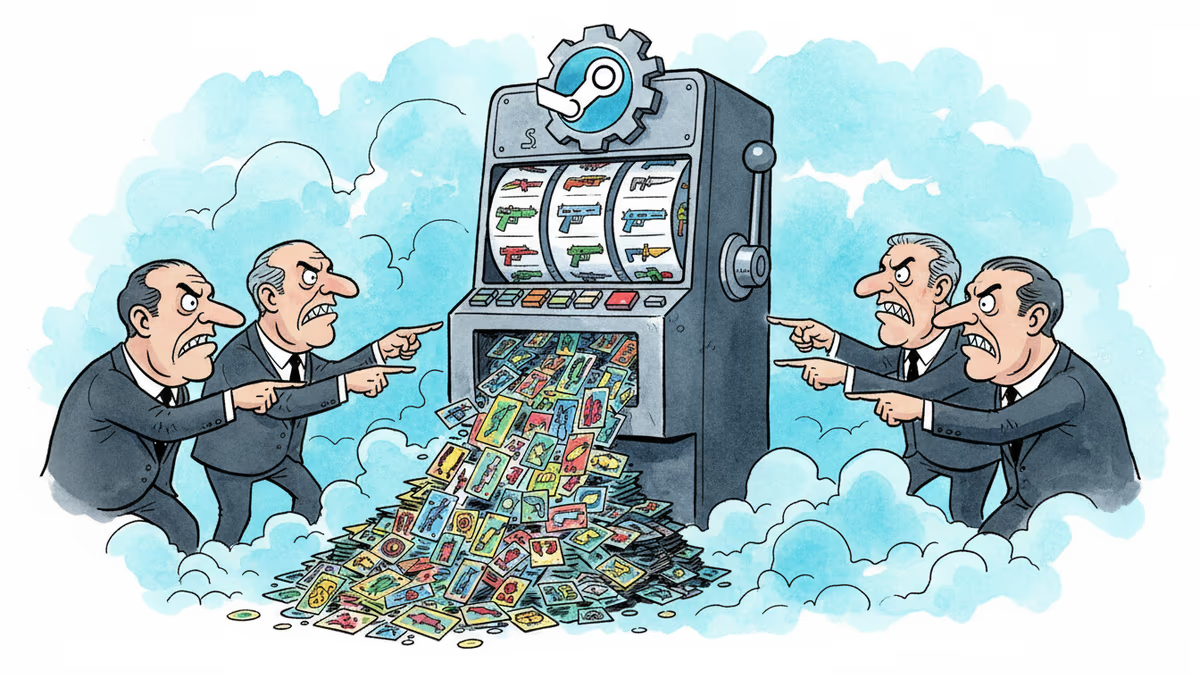
New York Calls Valve a $10 Billion Gambling Ring. Is It Right?
New York State sues Valve over loot box sales, claiming they constitute illegal gambling. A legal battle that could reshape the entire gaming industry
A rare CS:GO knife skin sells for $61,052 on the Steam marketplace. To gamers, it's a coveted digital trophy. To New York State, it's evidence of an illegal gambling operation worth tens of billions.
This week's lawsuit against Valve isn't just another legal skirmish—it's a potential earthquake that could reshape how the $180 billion gaming industry operates. The central question: when does a virtual cosmetic become "something of value" in the eyes of the law?
The Three-Pillar Test of Gambling
Legally, gambling requires three elements: paying money (✓), for a chance-based outcome (✓), hoping to receive something of value (?). Valve's loot boxes easily clear the first two hurdles—players pay $2.50 for keys to unlock random cosmetic items.
The third pillar is where things get murky. New York argues that because these virtual items trade for real money—sometimes thousands of dollars—they constitute "something of value." Valve counters that they're purely cosmetic with no real-world utility.
Legal experts who've studied similar cases tell us the state faces an uphill battle. Previous courts have generally sided with game companies, ruling that virtual items without guaranteed real-world value don't constitute gambling prizes.
Industry on Edge: The Domino Effect
The stakes extend far beyond Steam. Major publishers like Electronic Arts, Activision Blizzard, and Take-Two Interactive generate billions annually from similar loot box mechanics. Their stock prices have already shown volatility since the lawsuit's announcement.
"If New York wins, it's not just Valve that's in trouble," warns one gaming industry analyst. "Every major publisher will need to restructure their monetization strategies overnight."

The timing is particularly sensitive. With the gaming industry still recovering from recent layoffs affecting over 16,000 workers in 2024, additional regulatory pressure could accelerate consolidation.
The Consumer Protection Angle
Consumer advocates have long argued that loot boxes exploit psychological vulnerabilities, particularly in younger players. Stories of minors spending thousands of dollars on their parents' credit cards have fueled calls for stricter regulation.
"We're seeing the same dopamine-driven mechanics that casinos use," argues Dr. Sarah Chen, a behavioral economist studying digital gambling. "The only difference is the prize—but is that difference meaningful when virtual items have real-world markets?"
Yet the gaming community remains divided. Many players argue that cosmetic purchases are voluntary luxuries, not gambling stakes.
Global Regulatory Patchwork
The U.S. legal challenge comes as other jurisdictions have already acted. Belgium and the Netherlands have banned loot boxes outright. The UK is considering similar measures. China restricts virtual item purchases for minors to $57 per month.
This regulatory fragmentation creates compliance nightmares for global publishers. What's legal in one market becomes prohibited in another, forcing companies to develop region-specific versions of their games.
The Broader Digital Economy Question
Beyond gaming, this case could set precedents for the entire digital economy. If virtual items are deemed "something of value," it raises questions about NFTs, virtual real estate in metaverses, and even social media rewards programs.
Meta, Roblox, and other companies building virtual worlds are watching closely. Their business models increasingly depend on virtual asset transactions that could face similar legal challenges.
The answer may determine not just Valve's fate, but the future of digital commerce itself.
Authors
Related Articles
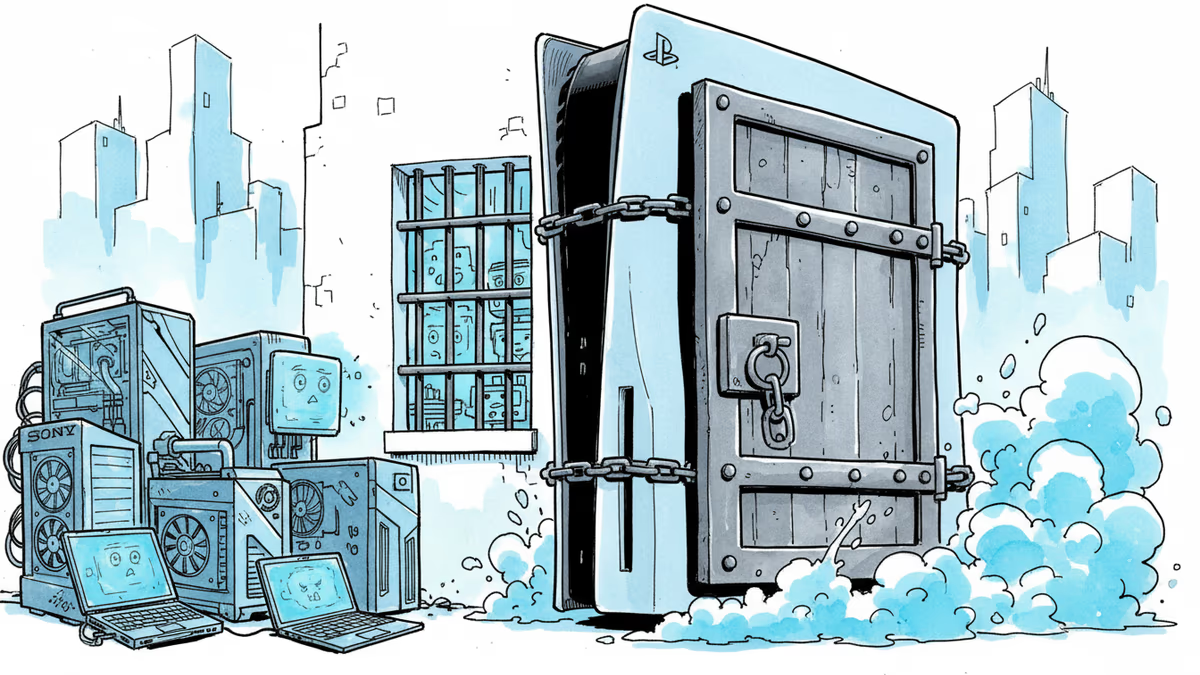
Sony is pulling its major single-player PlayStation games from PC. After six years of multiplatform expansion, the reversal raises hard questions about exclusivity, hardware sales, and who really controls gaming's future.
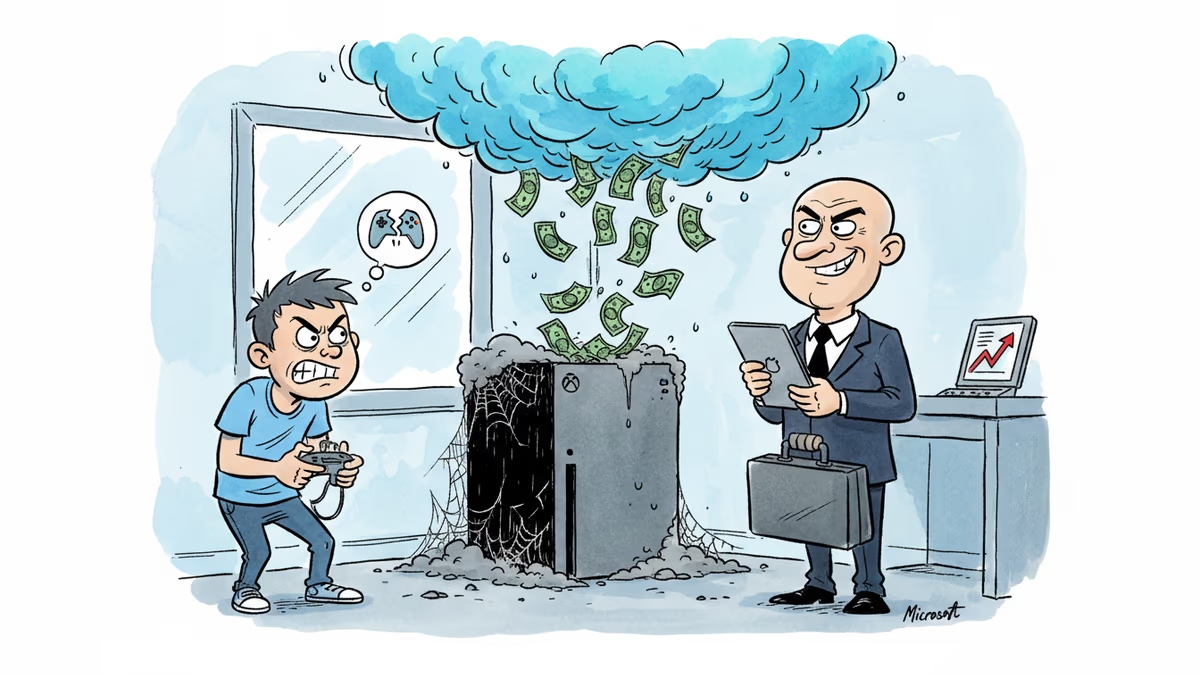
Xbox hardware revenue dropped 33% in Q1 2026, yet Microsoft posted $82.9B in total revenue. What this tells us about the future of gaming—and who actually loses.
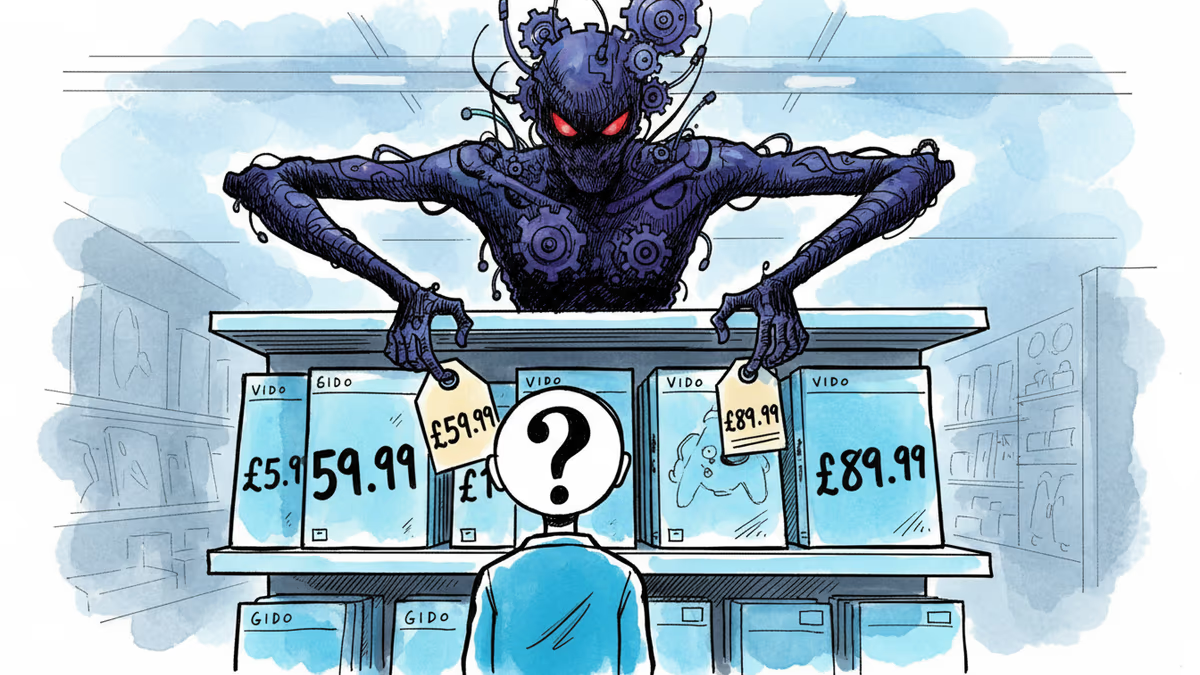
Sony's PlayStation Store has been quietly A/B testing personalized game prices across 150+ titles in 68 regions. Is dynamic pricing coming to gaming — and what does that mean for players?

Pokémon Pokopia debuts exclusively on Nintendo Switch 2. This isn't just a celebration—it's a calculated move that could reshape how we think about franchise expansion.
Sony is pulling its major single-player PlayStation games from PC. After six years of multiplatform expansion, the reversal raises hard questions about exclusivity, hardware sales, and who really controls gaming's future.
Xbox hardware revenue dropped 33% in Q1 2026, yet Microsoft posted $82.9B in total revenue. What this tells us about the future of gaming—and who actually loses.
Sony's PlayStation Store has been quietly A/B testing personalized game prices across 150+ titles in 68 regions. Is dynamic pricing coming to gaming — and what does that mean for players?
Pokémon Pokopia debuts exclusively on Nintendo Switch 2. This isn't just a celebration—it's a calculated move that could reshape how we think about franchise expansion.
Thoughts
Share your thoughts on this article
Sign in to join the conversation