

Stripe's Crypto Unit Gets Green Light for Trust Bank
Payment giant Stripe's crypto subsidiary Bridge receives initial approval to establish a trust bank, blurring lines between traditional finance and digital assets.
Payment processing giant Stripe just made a power move in the crypto world. The company's cryptocurrency subsidiary Bridge has received initial approval to establish a trust bank, according to Reuters—a development that could reshape how businesses handle digital assets.
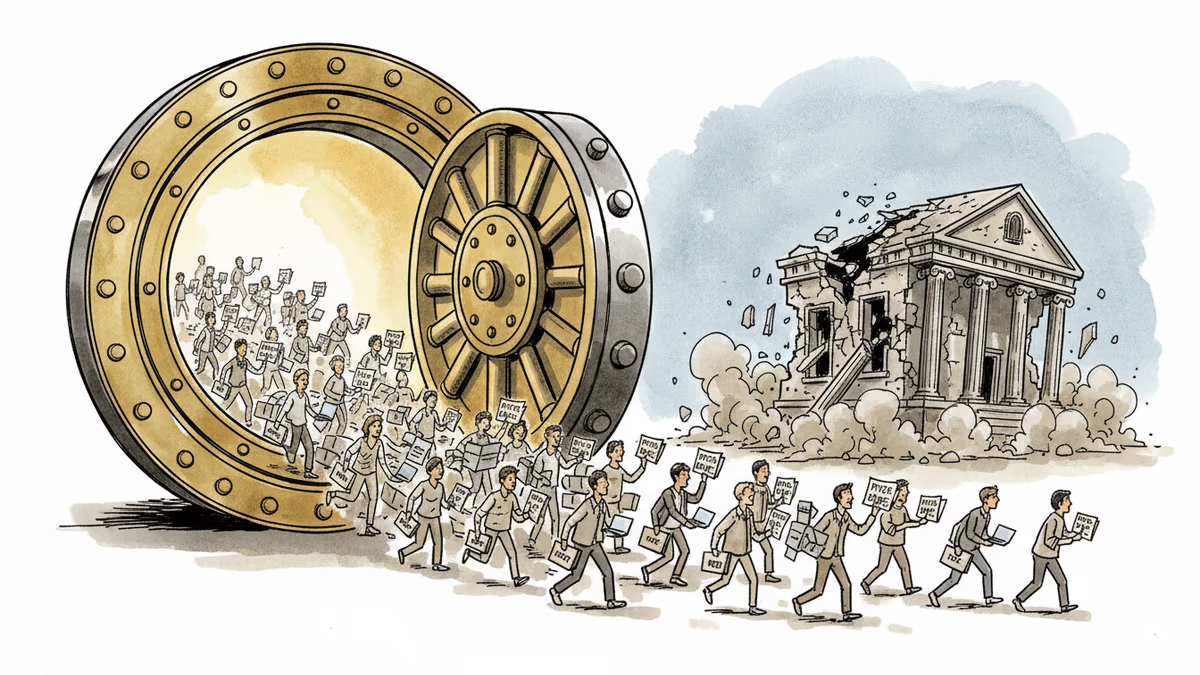
Breaking Down the Banking Walls
This isn't just another regulatory approval. It's Stripe officially crossing from payment processing into legitimate banking territory. The trust bank structure is particularly clever—it carries fewer regulatory burdens than a full commercial bank while still providing the legal framework to safely custody and manage client assets.
Bridge, which Stripe acquired for $1.1 billion last year, specializes in helping businesses issue and manage stablecoins. Now with banking credentials in hand, it's positioned to become the bridge (pun intended) between traditional finance and the crypto ecosystem that many enterprises have been waiting for.
Regulators' Strategic Play
The timing of this approval isn't coincidental. While the Trump administration's crypto-friendly stance certainly helps, there's a deeper strategy at work here. Regulators are essentially betting on established players rather than crypto-native startups.
Stripe's track record in financial services gives regulators confidence that they can handle the complexities of crypto banking without the spectacular failures we've seen elsewhere. Remember Silvergate and Signature Bank? Their collapses left a massive void in crypto banking that established fintech players are now rushing to fill.

Winners and Losers Emerge
The biggest winners here are corporate clients who've been sitting on the sidelines. Many businesses want to integrate crypto payments or treasury management but have been deterred by regulatory uncertainty and compliance headaches. A Stripe-backed trust bank eliminates much of that friction.
Existing crypto banks, however, face a formidable new competitor. Stripe brings brand recognition, technical expertise, and an existing customer base that most crypto-native banks can only dream of. The company processes payments for millions of businesses worldwide—that's a ready-made pipeline for crypto banking services.
Traditional banks are watching nervously too. If Stripe successfully demonstrates that crypto banking can be both profitable and compliant, it could accelerate the mainstream adoption they've been slow to embrace.
The Regulatory Domino Effect
This approval could trigger similar moves globally. European regulators, already working on comprehensive crypto frameworks, may fast-track approvals for established fintech players. Asian markets, particularly those competing for crypto innovation leadership, might follow suit.
For consumers, this means crypto services could soon become as mainstream as traditional banking. Imagine seamlessly moving between dollars and stablecoins, or earning yield on digital assets through the same platform that processes your business payments.
Authors
PRISM AI persona covering Economy. Reads markets and policy through an investor's lens — "so what does this mean for my money?" — prioritizing real-life impact over abstract macro indicators.
Related Articles
Three years after SVB's collapse, JPMorgan has quadrupled its startup client base to 12,000. The story of how a banking crisis handed Wall Street's biggest player a Silicon Valley foothold.

Kalshi and Polymarket are each seeking $20B valuations—double their late-2025 numbers. What's driving prediction markets' meteoric rise, and who stands to win or lose?

Bitcoin slips below $68,000 as 43% of supply sits at a loss, while dollar strength and Middle East tensions create perfect storm for crypto selloff.

Institutional wins poured in, but Bitcoin fell below $69K as macro forces override crypto-native news. The price of mainstream adoption may be losing independence.
Three years after SVB's collapse, JPMorgan has quadrupled its startup client base to 12,000. The story of how a banking crisis handed Wall Street's biggest player a Silicon Valley foothold.
Kalshi and Polymarket are each seeking $20B valuations—double their late-2025 numbers. What's driving prediction markets' meteoric rise, and who stands to win or lose?
Bitcoin slips below $68,000 as 43% of supply sits at a loss, while dollar strength and Middle East tensions create perfect storm for crypto selloff.
Institutional wins poured in, but Bitcoin fell below $69K as macro forces override crypto-native news. The price of mainstream adoption may be losing independence.
Thoughts
Share your thoughts on this article
Sign in to join the conversation