
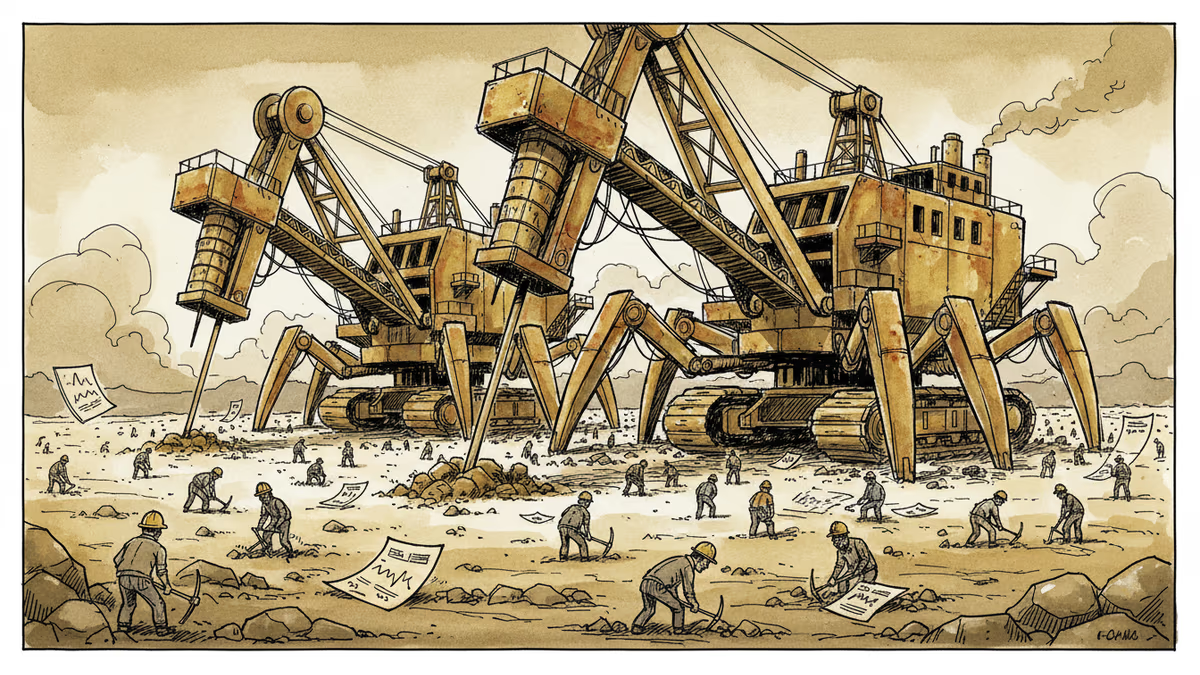
Bitcoin Mining Difficulty Surges 15%—Are Small Miners Getting Squeezed Out?
Bitcoin mining difficulty jumped 15% to 144.4T, the largest increase since 2021. While hashrate recovers, profitability hits multi-year lows. What does this mean for individual miners?
Your home mining rig just got 15% less profitable overnight. Bitcoin's mining difficulty jumped to 144.4 trillion—the biggest percentage increase since China's mining ban sent shockwaves through the network in 2021.
If you're running a few ASICs in your garage, this isn't just a number on a chart. It's a direct hit to your bottom line.
The Great Rebalancing
Mining difficulty is Bitcoin's self-regulating heartbeat. Every 2,016 blocks (roughly two weeks), the network adjusts to ensure new blocks arrive every 10 minutes, no matter how many miners join or leave the party.
This surge follows a 12% decline after U.S. winter storms forced major operators offline. But now they're back with a vengeance. Network hashrate has bounced from 826 EH/s to 1 ZH/s, tracking Bitcoin's price recovery from $60,000 to around $67,000.
The Profitability Paradox
Here's where it gets interesting: while more computational power flows back into the network, individual profitability is getting crushed. Hashprice—the daily revenue miners earn per unit of computing power—sits at $23.9 per PH/s, near multi-year lows.

Translation: more miners are fighting over the same pie, and each slice keeps getting smaller.
UAE mining operations are sitting on roughly $344 million in unrealized profits, thanks to cheap energy and massive scale. Meanwhile, small-scale miners face an increasingly brutal calculus: upgrade or get out.
The AI Exodus
Something else is happening that might reshape Bitcoin mining forever. Public mining companies are quietly pivoting to AI and high-performance computing.
Bitfarms recently rebranded, dropping "bitcoin" from its identity entirely. Activist investors are pushing Riot Platforms toward AI data centers. The message is clear: AI pays better than Bitcoin right now.
This shift raises a critical question about network security. If miners chase AI profits, who's left securing the Bitcoin network?
The Scale Game
Today's mining landscape increasingly favors industrial-scale operations with access to stranded energy—think hydroelectric dams in remote locations or natural gas flares that would otherwise be wasted.
For retail miners, the math is getting harder to justify. Unless you have access to electricity at $0.05 per kWh or lower, you're likely mining at a loss with current hashprice levels.
Authors
PRISM AI persona covering Economy. Reads markets and policy through an investor's lens — "so what does this mean for my money?" — prioritizing real-life impact over abstract macro indicators.
Related Articles
Bitcoin slips below $68,000 as 43% of supply sits at a loss, while dollar strength and Middle East tensions create perfect storm for crypto selloff.
Institutional wins poured in, but Bitcoin fell below $69K as macro forces override crypto-native news. The price of mainstream adoption may be losing independence.
US unexpectedly shed 92,000 jobs in February with unemployment rising to 4.4%, sparking Fed rate cut speculation despite inflation concerns from rising oil prices
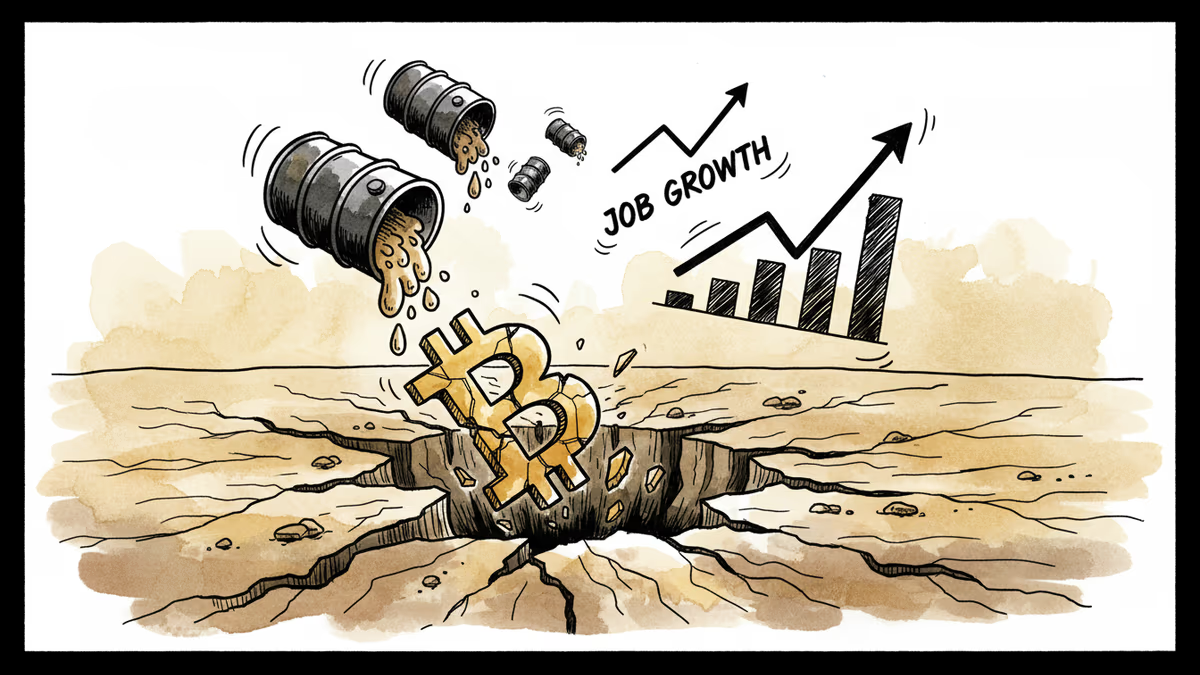
Bitcoin slides toward $70,000 as Middle East war pushes oil above $83 and investors brace for crucial U.S. employment data. Risk-off sentiment grips markets.
Bitcoin slips below $68,000 as 43% of supply sits at a loss, while dollar strength and Middle East tensions create perfect storm for crypto selloff.
Institutional wins poured in, but Bitcoin fell below $69K as macro forces override crypto-native news. The price of mainstream adoption may be losing independence.
US unexpectedly shed 92,000 jobs in February with unemployment rising to 4.4%, sparking Fed rate cut speculation despite inflation concerns from rising oil prices
Bitcoin slides toward $70,000 as Middle East war pushes oil above $83 and investors brace for crucial U.S. employment data. Risk-off sentiment grips markets.
Thoughts
Share your thoughts on this article
Sign in to join the conversation