

Stripe Alumni Strike Again with €30M for Business Identity Startup
Former Stripe employees launch Duna, raising €30M Series A to build global business identity infrastructure. Can they create the 'digital passport' for companies?
OpenAI's Gregory Brockman and Anthropic's Daniela Amodei lead rival AI companies, but they share one thing: both are Stripe alumni.
The payment giant has become one of tech's most prolific "founder factories," with former employees launching dozens of startups. And the money is following. The latest example: business identity verification startup Duna, which just raised a €30 million Series A to become the best-funded European member of the so-called "Stripe mafia."
When Competitors Become Investors
The funding round was led by Alphabet's growth fund CapitalG, which has also backed Stripe since co-leading its Series D in 2016. Based in Germany and the Netherlands, Duna was co-founded by Stripe alumni Duco van Lanschot and David Schreiber.
With customers including Plaid, the startup helps fintech companies onboard business customers more efficiently, reducing the typical churn associated with corporate ID checks and fraud prevention measures.
Here's where it gets interesting: Stripe isn't a customer of Duna, van Lanschot said, but its executives were well-placed to understand the opportunity. The company's angel investors include current Stripe COO Michael Coogan and former executives David Singleton (CTO) and Claire Hughes Johnson (COO). Even Stripe rival Adyen got involved, with CRCO Mariëtte Swart and CFO Ethan Tandowsky joining as angels.
Why would competitors invest instead of building their own solution? Van Lanschot's explanation reveals the complexity: "It requires such fine-grained controls that change on a company-by-company basis, that an Adyen or a Stripe isn't going to spin out their business onboarding as a separate product where another enterprise customer can change all of the configurations."
The Digital Passport Vision
Duna's immediate business case is clear: help companies onboard corporate users faster and cheaper. But the startup's bigger ambition is what caught investors' attention.

"What we want to build over time is a global trust infrastructure where we provide a digital passport for every business," van Lanschot explained. "So you can reuse your file from onboarding on [German spend management platform] Moss to onboard with Plaid, or you can reuse it to open up a bank account."
This vision resonated with Alex Nichols, the general partner who led CapitalG's investment. "The common thing I look for in my investments are some sort of network effects, or more formal scale advantage," he told TechCrunch. "I also love it when founders have an earned insight about a problem they may not know about otherwise, and this is a very good example of that."
The Scale of the Opportunity
Duna has competitors in the KYB (Know Your Business) category, including vendors like Jumio and Veriff. But for Nichols, what sets Duna apart is its decision to generate its own data rather than aggregating existing sources that are often lacking.
"It's the rare opportunity to rebuild something as foundational as a Visa and create an amazing business in the process," he said.
The numbers suggest there's room for disruption. Van Lanschot points to the Netherlands as an example: "In the Netherlands alone — a tiny, tiny country — the four biggest banks employ 14,000 people in compliance, and half of them are working on businesses."
The Network Effects Challenge
Existing investors are doubling down. Index Ventures, which led Duna's €10.7 million seed round in May 2025, participated in the Series A, as did Puzzle Ventures and Snowflake chairman Frank Slootman.
But the startup's bigger ambition won't pay off until Duna reaches significant scale. So the company is looking for shortcuts by identifying "patches of networks" — small clusters of companies that already overlap with each other. These include manufacturing companies with shared customers, investment firms with overlapping LPs, or companies in the same small country.
In these tight-knit groups, the ability to reuse verification becomes valuable immediately, even before Duna achieves full network effects.
Authors
Related Articles
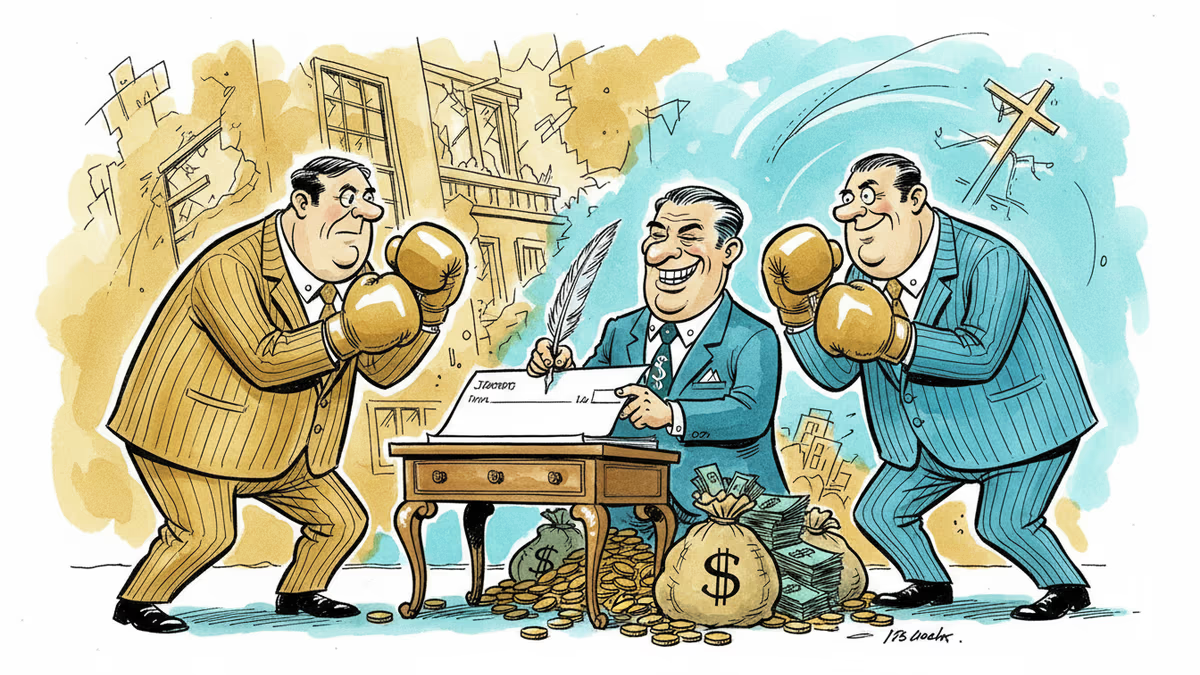
Despite fierce competition, the CEOs of Polymarket and Kalshi have co-invested in 5(c) Capital, a $35M VC fund targeting prediction market infrastructure. What this signals for the industry.
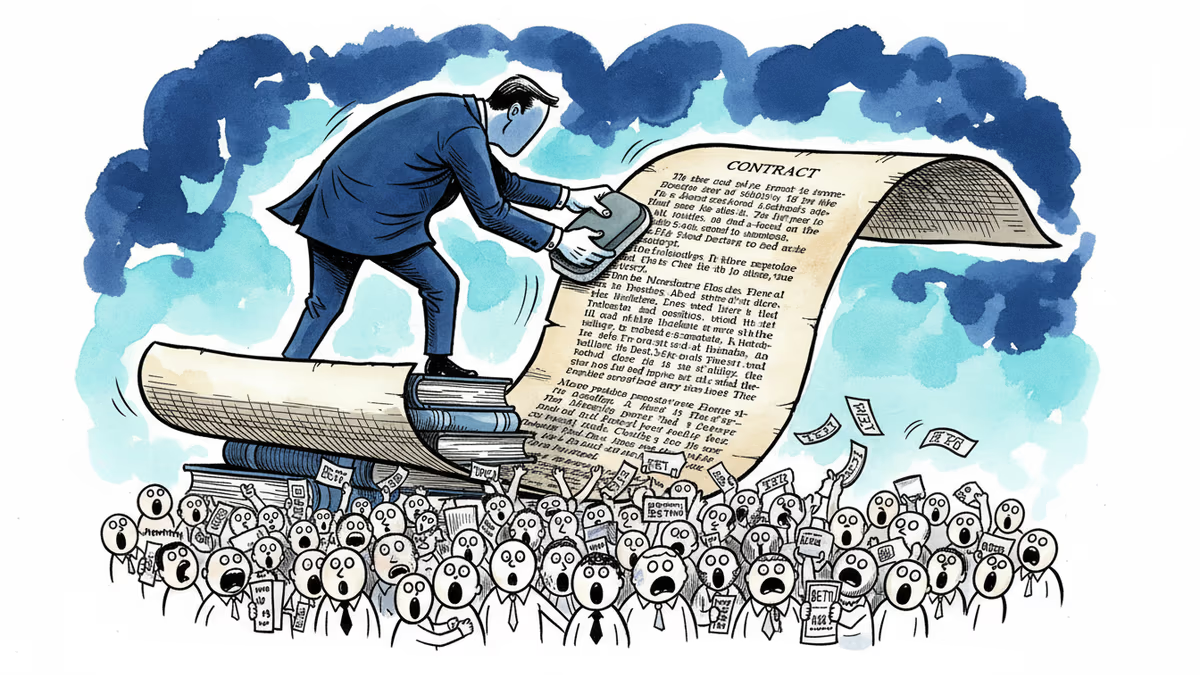
A class action lawsuit accuses Kalshi of changing payout rules after Iran's Supreme Leader Khamenei was killed. The case cuts to the heart of prediction market credibility.

Finnish startup Donut Lab has cleared its biggest credibility hurdle: independent testing by state-owned VTT confirms its solid-state battery is the real thing. What does this mean for the race to commercialize next-gen batteries?
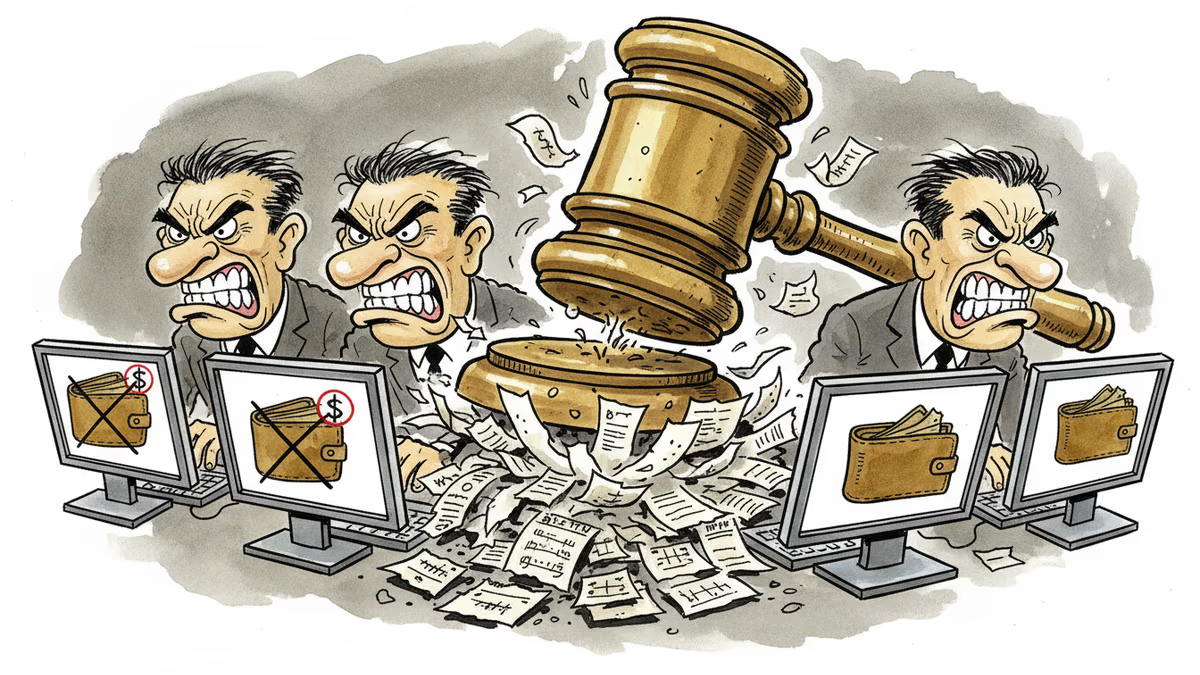
A massive dispute over Iran's supreme leader prediction market exposes the dark side of betting on world events. How Kalshi's rule interpretation sparked trader revolt.
Despite fierce competition, the CEOs of Polymarket and Kalshi have co-invested in 5(c) Capital, a $35M VC fund targeting prediction market infrastructure. What this signals for the industry.
A class action lawsuit accuses Kalshi of changing payout rules after Iran's Supreme Leader Khamenei was killed. The case cuts to the heart of prediction market credibility.
Finnish startup Donut Lab has cleared its biggest credibility hurdle: independent testing by state-owned VTT confirms its solid-state battery is the real thing. What does this mean for the race to commercialize next-gen batteries?
A massive dispute over Iran's supreme leader prediction market exposes the dark side of betting on world events. How Kalshi's rule interpretation sparked trader revolt.
Thoughts
Share your thoughts on this article
Sign in to join the conversation