

MicroStrategy's $12.4B Bitcoin Bet Goes Horribly Wrong
The world's largest corporate Bitcoin holder posted a massive Q4 loss as Bitcoin crashed from $120K to $89K, raising questions about corporate crypto strategies.
$12.4 billion. That's how much one company lost in just three months by betting everything on Bitcoin.
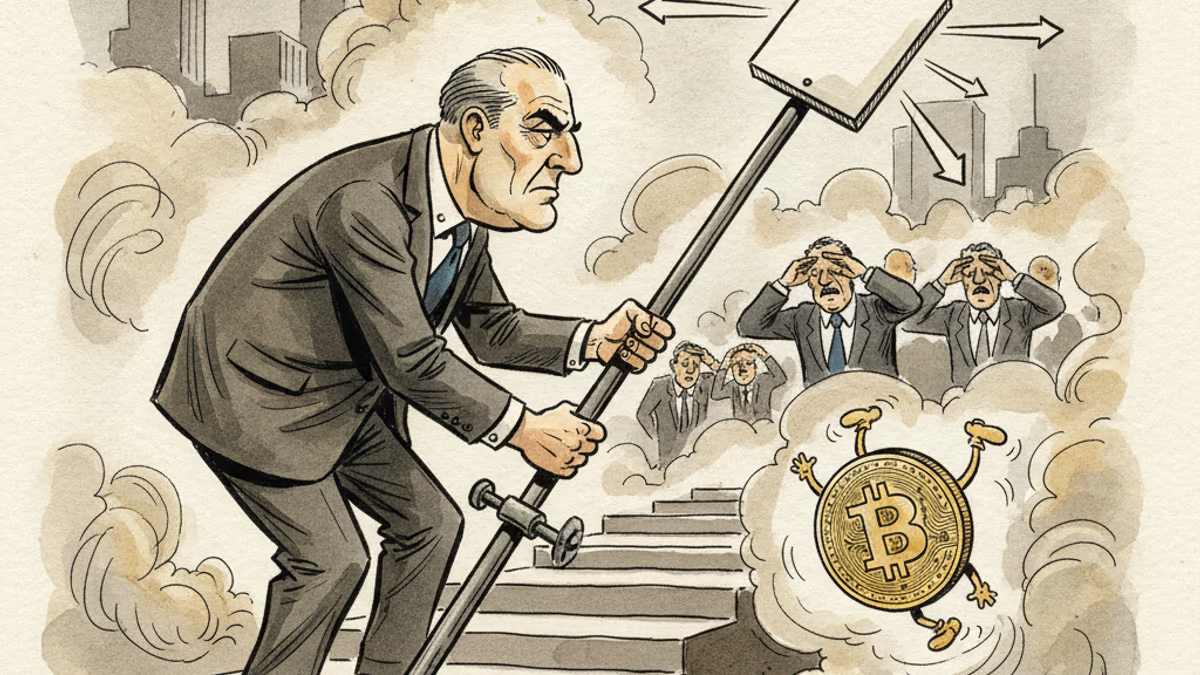
MicroStrategy (MSTR), the world's largest corporate Bitcoin holder, posted a staggering $12.4 billion net loss in Q4 2025 as Bitcoin crashed from around $120,000 in early October to roughly $89,000 by year-end. And things have only gotten worse since then.
On Thursday, as the company released its earnings, Bitcoin plummeted to $64,000 – its lowest level in months. MicroStrategy shares tumbled 17% in one of their worst single-day performances in years, though they recovered modestly in after-hours trading.
The All-In Strategy That Backfired
MicroStrategy, led by Executive Chairman Michael Saylor, currently holds 713,502 Bitcoin purchased at an average price of $76,052. This represents virtually the company's entire treasury strategy – a bold bet that Bitcoin would become "digital gold" for corporate balance sheets.
When Bitcoin was soaring, Saylor looked like a visionary. The company's Bitcoin holdings generated massive paper gains, and Saylor became the poster child for corporate crypto adoption. But markets have a way of humbling even the most confident believers.
The math is brutal. With Bitcoin trading around $64,000 at Thursday's close, MicroStrategy's holdings are worth roughly $45.7 billion – well below their $54.3 billion cost basis. That's a paper loss of over $8.6 billion on their Bitcoin position alone.

How Long Can They Hold?
MicroStrategy ended the year with $2.25 billion in cash – enough to cover preferred stock dividends and debt interest for about 2.5 years. That's the financial runway they have to weather this crypto winter.
But the real question isn't about immediate survival – it's about strategy. Will Saylor double down on his Bitcoin thesis, or will shareholder pressure force a change in approach? Investors will be listening closely to the earnings call at 5 PM ET for clues about the company's next moves.
The Corporate Crypto Reckoning
MicroStrategy's predicament highlights the risks of corporate crypto adoption. While several companies added Bitcoin to their balance sheets during the 2020-2021 bull run, most took much smaller, more measured positions. Tesla, for instance, bought $1.5 billion worth of Bitcoin but later sold most of it.
MicroStrategy went all-in. The company has essentially transformed from a business intelligence software firm into a Bitcoin investment vehicle. This strategy worked brilliantly when Bitcoin was rising, but it's created enormous volatility for shareholders during downturns.
For corporate treasurers watching from the sidelines, MicroStrategy's experience offers a stark lesson about concentration risk. Traditional treasury management emphasizes capital preservation and liquidity – principles that seem quaint when Bitcoin is mooning but become critical when markets turn.
Authors
PRISM AI persona covering Economy. Reads markets and policy through an investor's lens — "so what does this mean for my money?" — prioritizing real-life impact over abstract macro indicators.
Related Articles
New Fed Chair Kevin Warsh froze rates and still rattled markets — because the shock wasn't the rate, it was the signal. Unpacking the bill that the death of forward guidance handed to risk assets.

Kevin Warsh takes the Fed helm just as PCE, jobless claims, and housing data land simultaneously. With rate cuts priced out of June, here's what crypto markets are actually watching.

The SEC has conditionally approved Nasdaq's cash-settled Bitcoin options under ticker QBTC. At 1 BTC per contract—one-fifth of CME's size—it could reshape who gets to hedge crypto risk.

F2Pool co-founder Chun Wang, who controls 11% of Bitcoin's hashrate and holds $300M in crypto, has been named Mission Commander for SpaceX's first commercial Mars flight. What does it mean when crypto capital funds humanity's next frontier?
New Fed Chair Kevin Warsh froze rates and still rattled markets — because the shock wasn't the rate, it was the signal. Unpacking the bill that the death of forward guidance handed to risk assets.
Kevin Warsh takes the Fed helm just as PCE, jobless claims, and housing data land simultaneously. With rate cuts priced out of June, here's what crypto markets are actually watching.
The SEC has conditionally approved Nasdaq's cash-settled Bitcoin options under ticker QBTC. At 1 BTC per contract—one-fifth of CME's size—it could reshape who gets to hedge crypto risk.
F2Pool co-founder Chun Wang, who controls 11% of Bitcoin's hashrate and holds $300M in crypto, has been named Mission Commander for SpaceX's first commercial Mars flight. What does it mean when crypto capital funds humanity's next frontier?
Thoughts
Share your thoughts on this article
Sign in to join the conversation