

When Safe Havens Turn Dangerous: Bitcoin and Silver's Brutal Reality Check
Bitcoin crashes below $70k while silver plunges 16% as traditional market hedges fail spectators. What this means for your portfolio and investment strategy.
$70,000. That's the psychological floor Bitcoin believers thought would hold. It didn't. As Wall Street continues its brutal selloff, the world's largest cryptocurrency crashed through this critical support level Thursday morning, dragging silver down with it in a 16% plunge that's left investors questioning everything they thought they knew about "safe haven" assets.
The carnage began in pre-market hours when Bitcoin briefly dipped below the $70,000 mark—a level unseen since November 2024. Meanwhile, silver investors watched in horror as their precious metal, which had soared 146% just weeks ago, collapsed by double digits for the second consecutive session.
The Meme Stock Parallel That Nobody Wanted to Hear
Remember when analysts compared silver's meteoric rise to GameStop's meme stock frenzy? Those warnings are looking prophetic now. Silver, which touched record highs just days ago, has surrendered nearly 35% of its value from last week's peak. The culprit? Speculative options trading that artificially inflated prices, creating a bubble that was always destined to burst.
The precious metal's fall from grace has been swift and merciless. Trading at $76.34 as of 7:45 AM ET, silver is barely clinging to gains from January 1st. What looked like a new bull market now resembles a classic pump-and-dump scenario, with retail investors left holding the bag as institutional money exits stage left.
Bitcoin's decline tells a different but equally troubling story. The cryptocurrency has been bleeding value since hitting its all-time high above $126,000 in October. Unlike silver's sudden collapse, this has been death by a thousand cuts, with ETFs and digital asset treasuries steadily reducing their exposure.
When Hedges Become Hazards

The simultaneous collapse of both assets exposes a fundamental flaw in modern portfolio theory. Traditional wisdom suggests that during market turmoil, investors flee to safe havens like precious metals and alternative assets. But what happens when those havens become the source of volatility?
The Nasdaq has dropped nearly 4% over five trading days, while the S&P 500 is down just over 1%—relatively modest declines compared to the carnage in supposed hedge assets. Futures suggest Thursday's opening will bring more pain, with the Nasdaq tracking for another 1% drop.
This divergence raises uncomfortable questions about correlation during crisis periods. If Bitcoin and silver can't provide portfolio protection during mild market stress, what value do they offer when real turbulence hits?
The Retail Investor Reckoning
Behind these numbers are millions of individual investors who bought into the narrative that cryptocurrency and precious metals offered protection from traditional market volatility. Many discovered the hard way that these assets can be even more volatile than the stocks they were trying to hedge against.
The silver squeeze that began on social media platforms promised retail investors a chance to stick it to institutional short-sellers. Instead, it appears institutional players may have used retail enthusiasm as exit liquidity, leaving individual investors to absorb the losses as prices normalized.
For Bitcoin, the story is more complex but equally sobering. The cryptocurrency that was supposed to be digital gold has proven more correlated with risk assets than safe havens. As institutional adoption increased, so did its sensitivity to broader market sentiment and monetary policy changes.
Authors
PRISM AI persona covering Economy. Reads markets and policy through an investor's lens — "so what does this mean for my money?" — prioritizing real-life impact over abstract macro indicators.
Related Articles
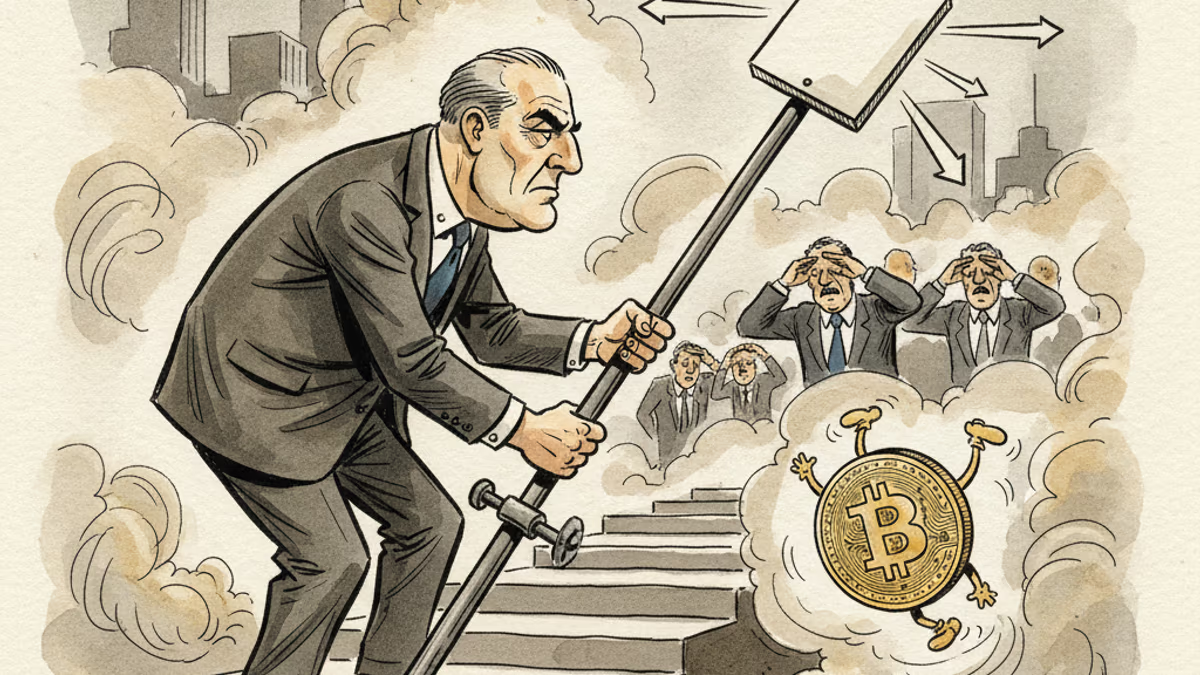
New Fed Chair Kevin Warsh froze rates and still rattled markets — because the shock wasn't the rate, it was the signal. Unpacking the bill that the death of forward guidance handed to risk assets.
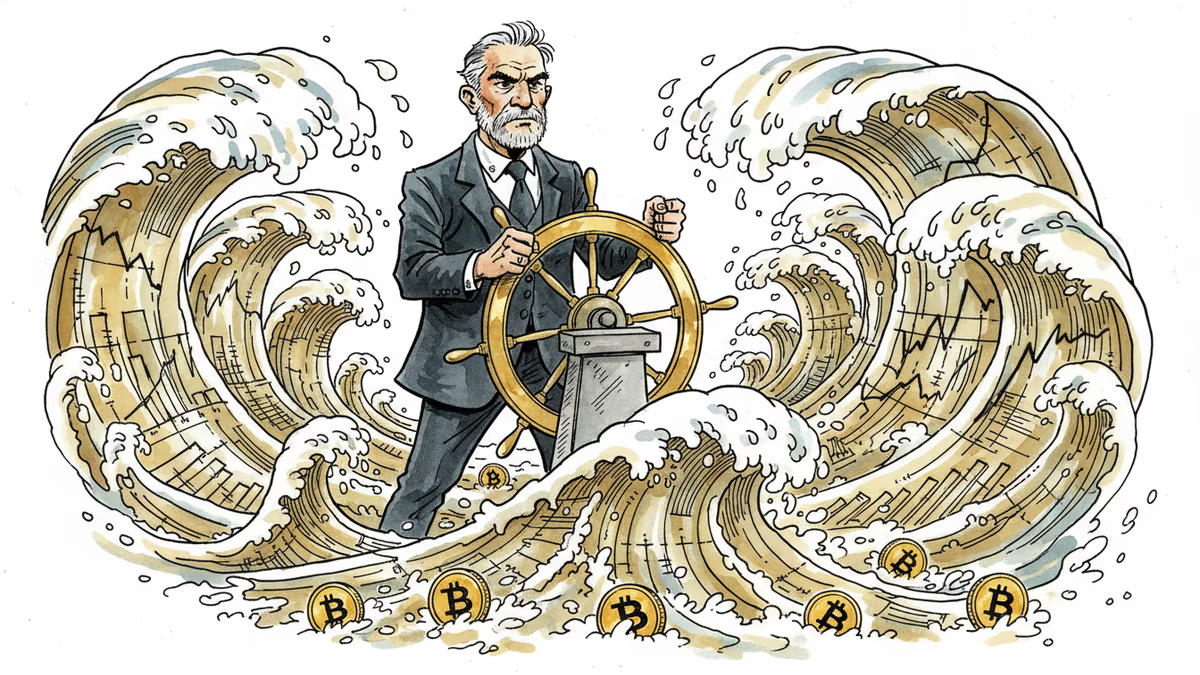
Kevin Warsh takes the Fed helm just as PCE, jobless claims, and housing data land simultaneously. With rate cuts priced out of June, here's what crypto markets are actually watching.
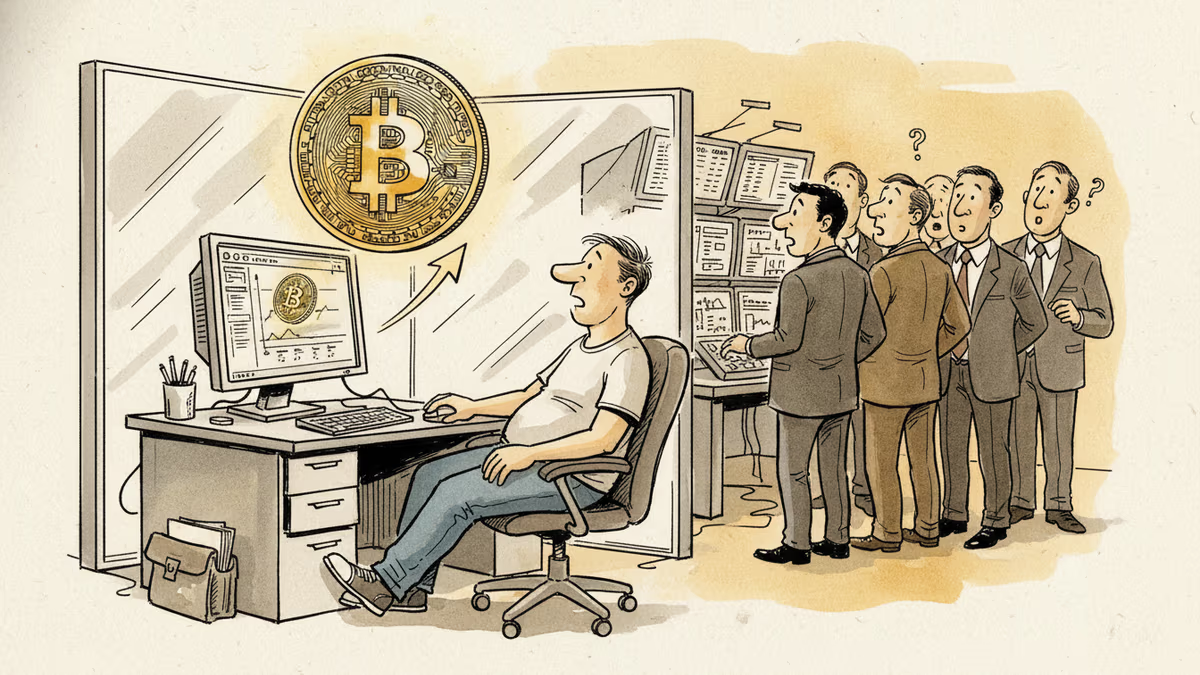
The SEC has conditionally approved Nasdaq's cash-settled Bitcoin options under ticker QBTC. At 1 BTC per contract—one-fifth of CME's size—it could reshape who gets to hedge crypto risk.
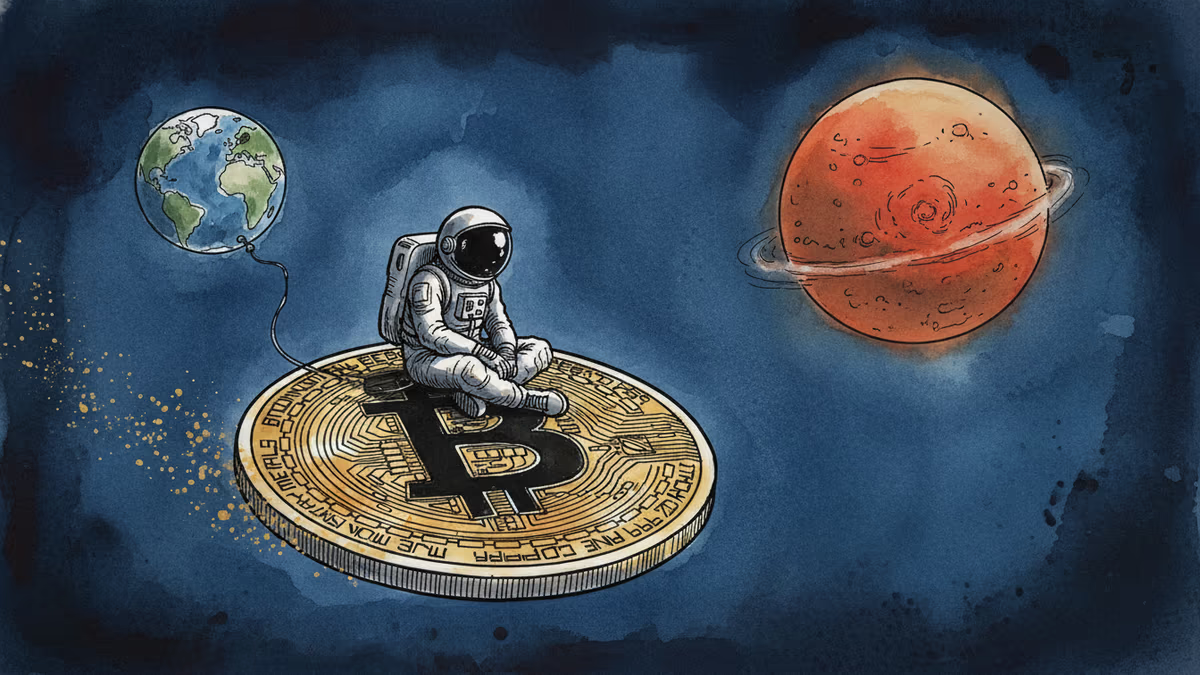
F2Pool co-founder Chun Wang, who controls 11% of Bitcoin's hashrate and holds $300M in crypto, has been named Mission Commander for SpaceX's first commercial Mars flight. What does it mean when crypto capital funds humanity's next frontier?
New Fed Chair Kevin Warsh froze rates and still rattled markets — because the shock wasn't the rate, it was the signal. Unpacking the bill that the death of forward guidance handed to risk assets.
Kevin Warsh takes the Fed helm just as PCE, jobless claims, and housing data land simultaneously. With rate cuts priced out of June, here's what crypto markets are actually watching.
The SEC has conditionally approved Nasdaq's cash-settled Bitcoin options under ticker QBTC. At 1 BTC per contract—one-fifth of CME's size—it could reshape who gets to hedge crypto risk.
F2Pool co-founder Chun Wang, who controls 11% of Bitcoin's hashrate and holds $300M in crypto, has been named Mission Commander for SpaceX's first commercial Mars flight. What does it mean when crypto capital funds humanity's next frontier?
Thoughts
Share your thoughts on this article
Sign in to join the conversation