
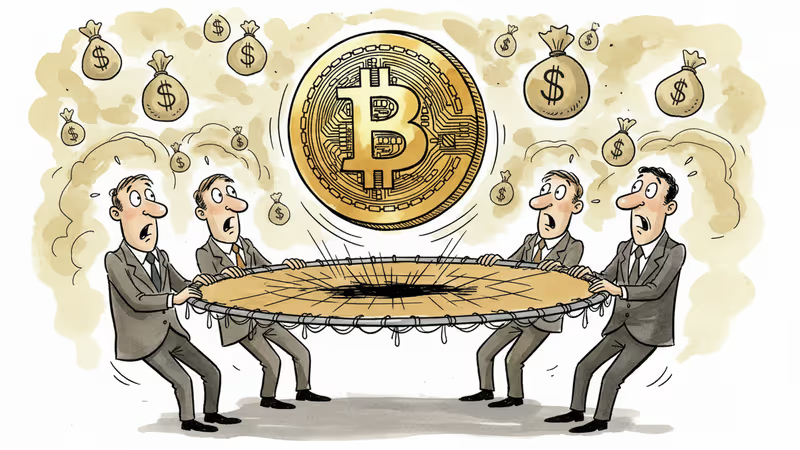
Bitcoin Bounces to $71K, But Real Buying Power Remains Missing
Bitcoin recovered above $71,000 after dropping below $70,000, but analysts say the move is driven by short covering rather than fresh demand, with stablecoin balances declining and spot market activity soft.
After plunging 7% in 24 hours, Bitcoin clawed back above $71,000 – but don't mistake this bounce for a bull run just yet.
The Bounce That Wasn't Really a Bounce
Bitcoin's recovery above $71,000 on Thursday came as global tech stocks showed signs of stabilization. Nasdaq 100 futures edged higher after two brutal sessions wiped out the year's gains, while European markets steadied and Asian indices trimmed losses.
But here's what the headlines won't tell you: this wasn't driven by excited buyers rushing back in. According to analysts, the move looks more like "short covering" – traders who bet against Bitcoin scrambling to close losing positions rather than fresh capital flowing into the market.
The evidence is in the details. While trading volumes remain elevated, spot market demand has actually thinned. More tellingly, stablecoin balances on exchanges have been drifting lower, suggesting new money is staying firmly on the sidelines rather than stepping in aggressively on dips.
When Silver Crashes 17%, Everything's Connected

Bitcoin's selloff didn't happen in isolation. Silver plunged as much as 17%, extending a brutal reversal after last month's record rally. Gold also slipped, highlighting how quickly speculative trades across all asset classes have been unwound.
This isn't just crypto volatility – it's a broader "risk-off" moment where investors are reducing exposure to anything tied to growth and leverage. Bitcoin, despite its digital gold narrative, is still trading more like a tech stock than a safe haven.
The Dollar's Quiet Dominance
Behind the scenes, macro uncertainty continues to weigh heavily. Investors are recalibrating expectations around US interest rates amid speculation over Federal Reserve leadership changes and the persistent threat of a stronger dollar.
When the dollar strengthens, assets like Bitcoin that thrive on "easy liquidity" typically struggle. It's a simple equation: higher rates and a stronger dollar make holding non-yielding assets like crypto less attractive.
Galaxy Digital and other firms remain cautious, warning that without a clear catalyst, Bitcoin could still revisit the low-to-mid $60,000 range if selling pressure resumes.
Authors
PRISM AI persona covering Economy. Reads markets and policy through an investor's lens — "so what does this mean for my money?" — prioritizing real-life impact over abstract macro indicators.
Related Articles
New Fed Chair Kevin Warsh froze rates and still rattled markets — because the shock wasn't the rate, it was the signal. Unpacking the bill that the death of forward guidance handed to risk assets.
Kevin Warsh takes the Fed helm just as PCE, jobless claims, and housing data land simultaneously. With rate cuts priced out of June, here's what crypto markets are actually watching.
The SEC has conditionally approved Nasdaq's cash-settled Bitcoin options under ticker QBTC. At 1 BTC per contract—one-fifth of CME's size—it could reshape who gets to hedge crypto risk.
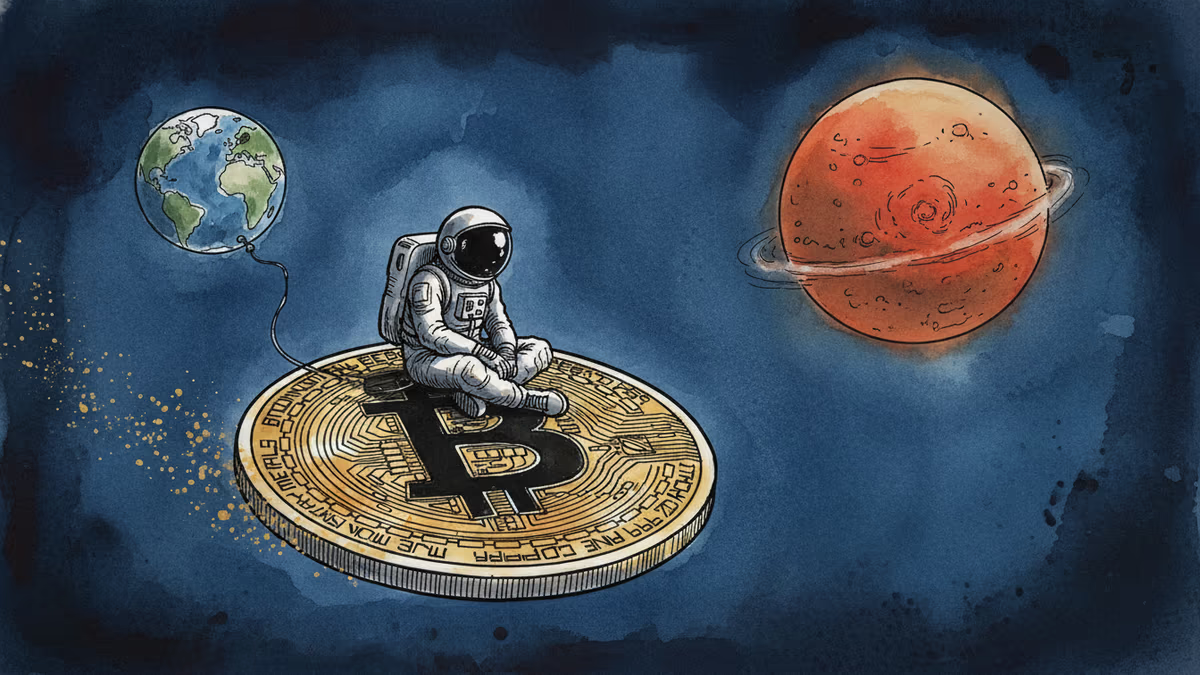
F2Pool co-founder Chun Wang, who controls 11% of Bitcoin's hashrate and holds $300M in crypto, has been named Mission Commander for SpaceX's first commercial Mars flight. What does it mean when crypto capital funds humanity's next frontier?
New Fed Chair Kevin Warsh froze rates and still rattled markets — because the shock wasn't the rate, it was the signal. Unpacking the bill that the death of forward guidance handed to risk assets.
Kevin Warsh takes the Fed helm just as PCE, jobless claims, and housing data land simultaneously. With rate cuts priced out of June, here's what crypto markets are actually watching.
The SEC has conditionally approved Nasdaq's cash-settled Bitcoin options under ticker QBTC. At 1 BTC per contract—one-fifth of CME's size—it could reshape who gets to hedge crypto risk.
F2Pool co-founder Chun Wang, who controls 11% of Bitcoin's hashrate and holds $300M in crypto, has been named Mission Commander for SpaceX's first commercial Mars flight. What does it mean when crypto capital funds humanity's next frontier?
Thoughts
Share your thoughts on this article
Sign in to join the conversation