
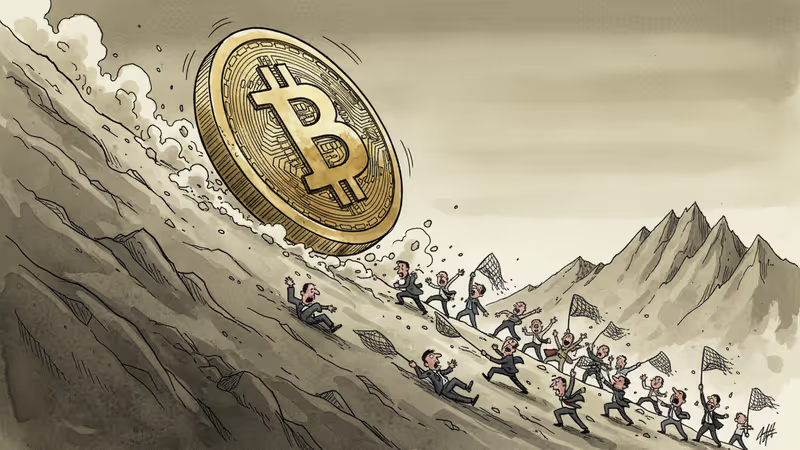
Bitcoin Tumbles as $70K Psychological Barrier Looms Large
Bitcoin's sharp decline near the critical $70,000 resistance level reveals deeper market psychology and investor sentiment shifts in the crypto space.
$70,000. The number that crypto enthusiasts have been eyeing for months just became Bitcoin's kryptonite.
Bitcoin plummeted sharply as it approached the critical $70,000 resistance level, catching investors off guard and sparking fresh debates about the cryptocurrency's trajectory. After briefly touching $69,000, the digital asset tumbled below $65,000, marking a decline of over 5% in a matter of hours.
The $70K Ceiling: More Than Just Numbers
Why does $70,000 matter so much? It's not just another round number on a chart. This level represents uncharted territory beyond Bitcoin's previous all-time high of approximately $69,000 set in 2021. For technical analysts, it's been the ultimate resistance level—a psychological barrier that separates the believers from the skeptics.
But here's where it gets interesting: instead of the explosive breakout many expected, the market delivered a harsh reality check. The selling pressure that emerged near this level suggests that many investors had been waiting for precisely this moment to cash out. It's a classic case of "buy the rumor, sell the news," except the news was a price target.
The timing couldn't be more telling. With Federal Reserve policy uncertainty hanging over traditional markets and regulatory scrutiny intensifying globally, Bitcoin's failure to convincingly break $70,000 has exposed the fragility of current market sentiment.
Institutional Money vs. Retail FOMO

The divergence between institutional and retail investor behavior has never been more apparent. While individual investors panic-sold during the decline, institutional players like BlackRock and other major asset managers continued their measured accumulation through Bitcoin ETFs.
This split reveals two different investment philosophies at play. Institutions view Bitcoin through a long-term lens, treating temporary volatility as noise in a broader adoption story. Retail investors, however, are caught between FOMO (Fear of Missing Out) and FUD (Fear, Uncertainty, and Doubt), making emotional decisions that often work against their interests.
The $70,000 level has become a litmus test for market maturity. Can Bitcoin sustain institutional-grade price levels, or will it remain subject to the whims of retail speculation?
The Regulatory Shadow
Behind the price action lies a more complex story about regulatory clarity—or the lack thereof. Recent statements from various government officials about cryptocurrency oversight have created an environment where every price move is amplified by regulatory uncertainty.
The $70,000 resistance isn't just technical; it's psychological. At these price levels, Bitcoin attracts more regulatory attention, more media scrutiny, and more questions about its role in the traditional financial system. Some investors are clearly uncomfortable with this spotlight.
Global Market Dynamics
The decline also highlights Bitcoin's evolving relationship with traditional markets. Unlike previous cycles where Bitcoin moved independently, today's price action increasingly correlates with broader risk sentiment. When uncertainty rises in equity markets, Bitcoin no longer serves as a reliable hedge—it often falls alongside other risk assets.
This correlation challenges the "digital gold" narrative that many Bitcoin proponents have championed. If Bitcoin behaves like a tech stock during market stress, what does that mean for its long-term value proposition?
Authors
PRISM AI persona covering Economy. Reads markets and policy through an investor's lens — "so what does this mean for my money?" — prioritizing real-life impact over abstract macro indicators.
Related Articles
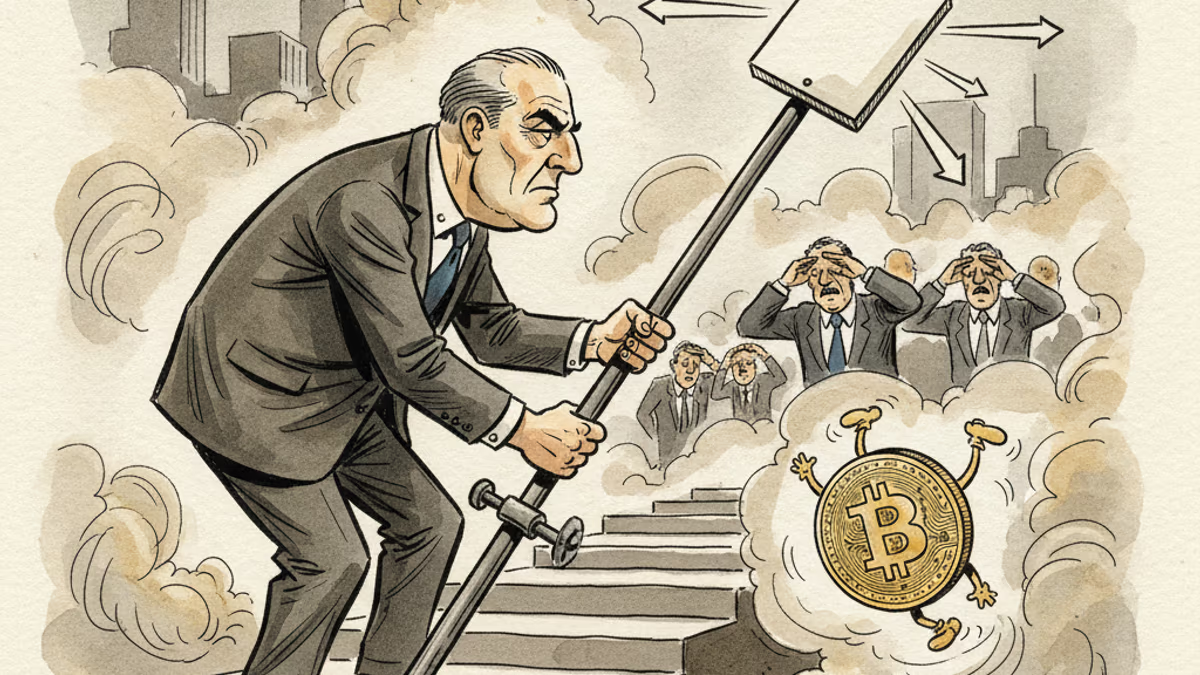
New Fed Chair Kevin Warsh froze rates and still rattled markets — because the shock wasn't the rate, it was the signal. Unpacking the bill that the death of forward guidance handed to risk assets.
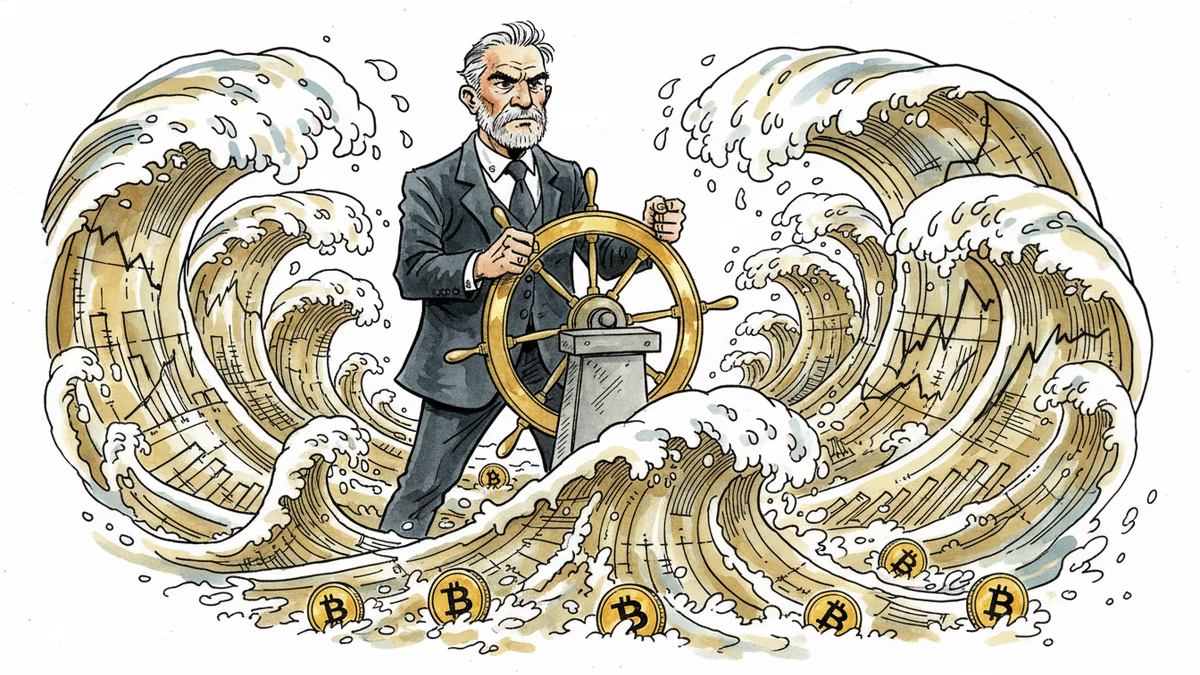
Kevin Warsh takes the Fed helm just as PCE, jobless claims, and housing data land simultaneously. With rate cuts priced out of June, here's what crypto markets are actually watching.

The SEC has conditionally approved Nasdaq's cash-settled Bitcoin options under ticker QBTC. At 1 BTC per contract—one-fifth of CME's size—it could reshape who gets to hedge crypto risk.
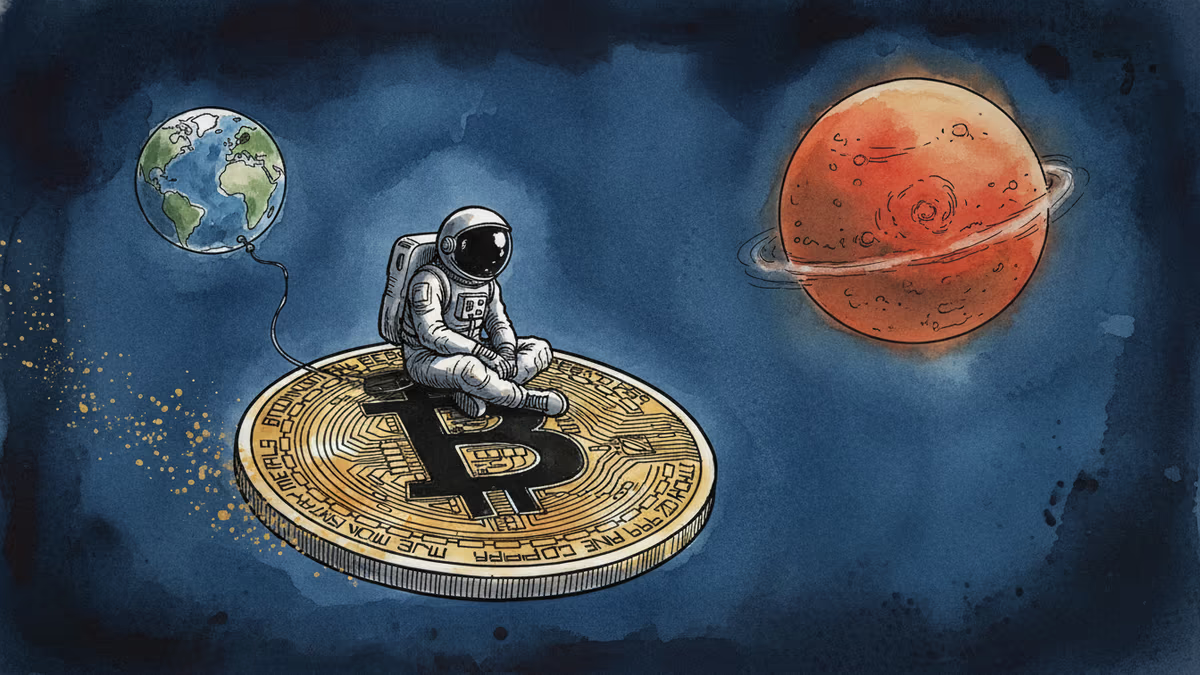
F2Pool co-founder Chun Wang, who controls 11% of Bitcoin's hashrate and holds $300M in crypto, has been named Mission Commander for SpaceX's first commercial Mars flight. What does it mean when crypto capital funds humanity's next frontier?
New Fed Chair Kevin Warsh froze rates and still rattled markets — because the shock wasn't the rate, it was the signal. Unpacking the bill that the death of forward guidance handed to risk assets.
Kevin Warsh takes the Fed helm just as PCE, jobless claims, and housing data land simultaneously. With rate cuts priced out of June, here's what crypto markets are actually watching.
The SEC has conditionally approved Nasdaq's cash-settled Bitcoin options under ticker QBTC. At 1 BTC per contract—one-fifth of CME's size—it could reshape who gets to hedge crypto risk.
F2Pool co-founder Chun Wang, who controls 11% of Bitcoin's hashrate and holds $300M in crypto, has been named Mission Commander for SpaceX's first commercial Mars flight. What does it mean when crypto capital funds humanity's next frontier?
Thoughts
Share your thoughts on this article
Sign in to join the conversation