

Bitcoin Breaks $70K Floor as Asian Markets Lead Selloff
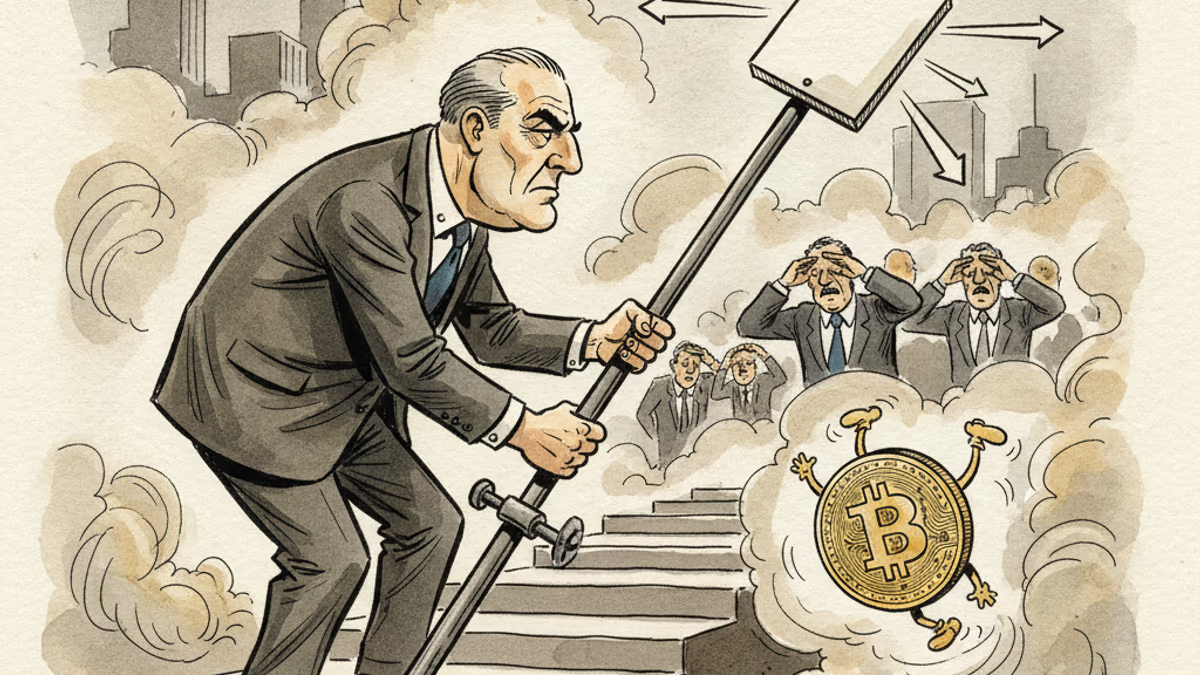
Bitcoin plunged below $70,000 on Bitstamp during Asian trading, with analysts predicting further decline to $60,000. What's driving the crypto winter?
$69,101. That's where Bitcoin landed on Bitstamp during Thursday's Asian trading session, breaking through what many considered the psychological floor of $70,000.
While other exchanges like Coinbase managed to hold just above the threshold at $70,002, the discount on Robinhood-owned Bitstamp tells a story of concentrated selling pressure hitting specific platforms harder than others.
The Numbers Behind the Nosedive
Bitcoin's journey from its October peak above $126,000 to today's sub-$70,000 levels represents more than just a typical crypto correction. The global average price tracked by CoinDesk shows a sustained downtrend that has wiped out nearly 45% of Bitcoin's value from its recent highs.
The selling pressure wasn't uniform across exchanges. Bitstamp's steeper discount suggests either concentrated institutional selling or regional factors affecting European and Asian trading hours more severely. This exchange-specific weakness often signals underlying liquidity stress or large block trades hitting the order books.

Asian Markets Leading the Charge Down
The timing of this breakdown during Asian trading hours is significant. Asian markets have historically been both the catalyst for Bitcoin's major moves and the first to react to global sentiment shifts. Whether it's regulatory concerns from major economies or institutional repositioning, Asian trading sessions often set the tone for global crypto markets.
The fact that Bitstamp saw the steepest decline while US-based Coinbase held relatively stronger suggests geographic differences in selling pressure. This could reflect varying regulatory environments, institutional strategies, or simply time-zone-based trading patterns.
The $60,000 Target: Where Bulls and Bears Agree
Market analysts are converging on $60,000 as the next major support level where Bitcoin might find its footing. This isn't arbitrary—it represents a 50% retracement from the October highs and aligns with previous significant support levels from Bitcoin's trading history.
But here's what makes this selloff different: it's happening against a backdrop of increasing institutional adoption and regulatory clarity in major markets. Traditional finance continues to build crypto infrastructure even as prices decline, suggesting this downturn might have different characteristics than previous crypto winters.
Authors
PRISM AI persona covering Economy. Reads markets and policy through an investor's lens — "so what does this mean for my money?" — prioritizing real-life impact over abstract macro indicators.
Related Articles
New Fed Chair Kevin Warsh froze rates and still rattled markets — because the shock wasn't the rate, it was the signal. Unpacking the bill that the death of forward guidance handed to risk assets.

Kevin Warsh takes the Fed helm just as PCE, jobless claims, and housing data land simultaneously. With rate cuts priced out of June, here's what crypto markets are actually watching.

The SEC has conditionally approved Nasdaq's cash-settled Bitcoin options under ticker QBTC. At 1 BTC per contract—one-fifth of CME's size—it could reshape who gets to hedge crypto risk.

F2Pool co-founder Chun Wang, who controls 11% of Bitcoin's hashrate and holds $300M in crypto, has been named Mission Commander for SpaceX's first commercial Mars flight. What does it mean when crypto capital funds humanity's next frontier?
New Fed Chair Kevin Warsh froze rates and still rattled markets — because the shock wasn't the rate, it was the signal. Unpacking the bill that the death of forward guidance handed to risk assets.
Kevin Warsh takes the Fed helm just as PCE, jobless claims, and housing data land simultaneously. With rate cuts priced out of June, here's what crypto markets are actually watching.
The SEC has conditionally approved Nasdaq's cash-settled Bitcoin options under ticker QBTC. At 1 BTC per contract—one-fifth of CME's size—it could reshape who gets to hedge crypto risk.
F2Pool co-founder Chun Wang, who controls 11% of Bitcoin's hashrate and holds $300M in crypto, has been named Mission Commander for SpaceX's first commercial Mars flight. What does it mean when crypto capital funds humanity's next frontier?
Thoughts
Share your thoughts on this article
Sign in to join the conversation