
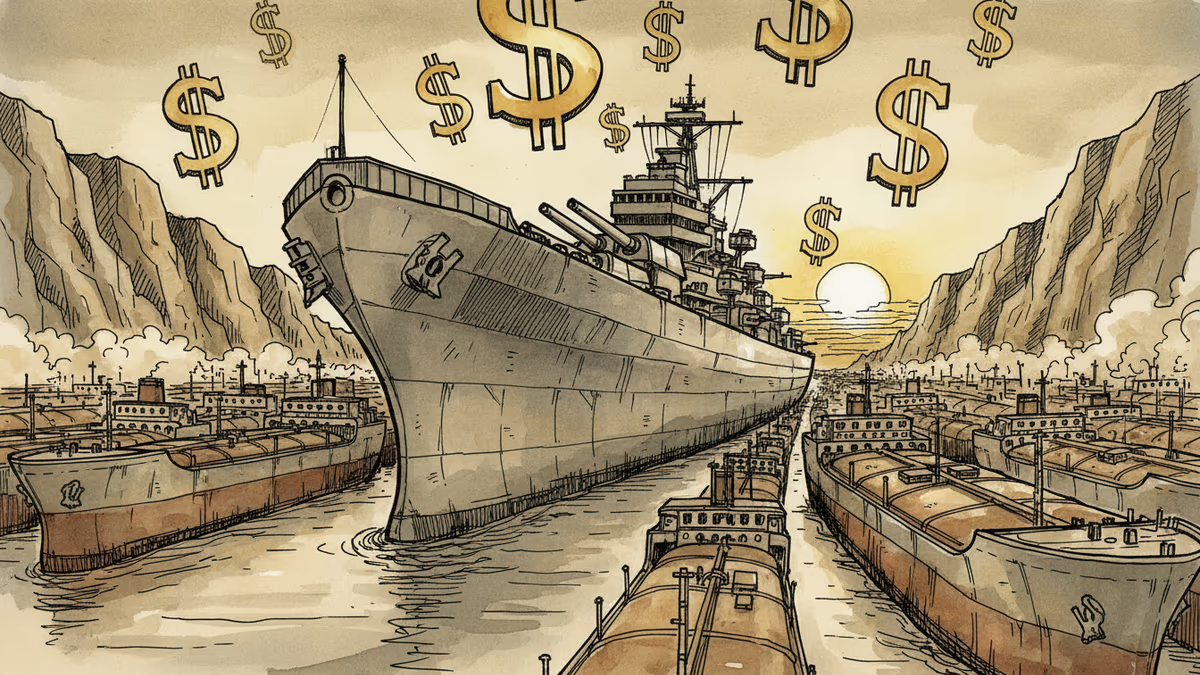
Your Gas Bill Just Got More Expensive: Iran Shuts Key Oil Route
Iran's navy blocks Strait of Hormuz, disrupting 21% of global oil shipments. Energy prices set to surge as major shipping companies halt operations through vital Middle East corridor.
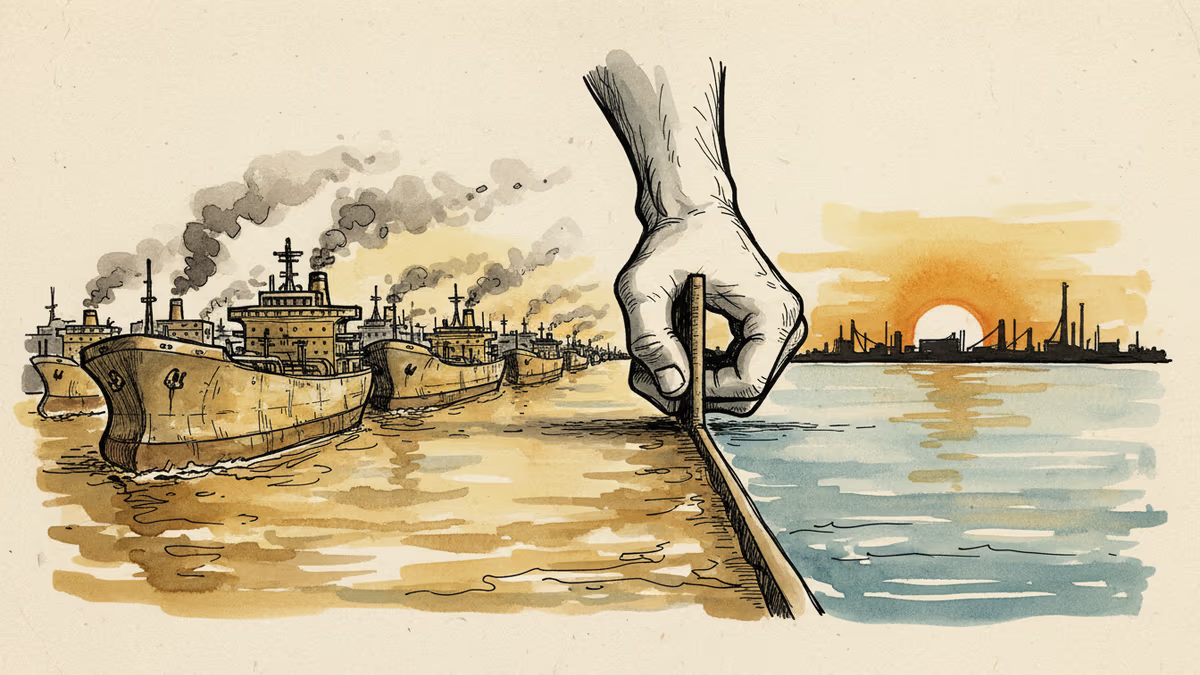
The world's most critical oil chokepoint just slammed shut. Iran's navy has banned all traffic through the Strait of Hormuz, forcing Japan's largest shipping group to halt operations through the narrow waterway that carries 21% of global oil shipments. Your energy bill is about to feel the impact.
The $2 Trillion Bottleneck
Japan's major maritime shipping group delivered the news that sent shockwaves through energy markets Sunday: Iran's navy has issued a complete sailing ban through the Strait of Hormuz. This 33-kilometer-wide chokepoint might seem insignificant on a map, but it's the jugular vein of the global economy.
Every day, 17 million barrels of crude oil and massive volumes of liquefied natural gas flow through these waters from Saudi Arabia, UAE, Kuwait, and Iraq to energy-hungry Asia and Europe. Multiple tanker owners, oil majors, and trading houses have already suspended shipments, according to Reuters.
The math is brutal: one-fifth of the world's oil supply suddenly needs to find another route. There isn't one that can handle this volume.
Winners and Losers in the New Energy Game
Who benefits from this chaos? Russia and Venezuela just hit the jackpot. Their oil, previously discounted due to sanctions and political issues, suddenly commands premium prices. U.S. shale producers are also celebrating as West Texas Intermediate crude futures spike.
The losers? Energy-importing nations, especially in Asia. Japan is already warning that prolonged crude oil and LNG stoppages could stoke inflation. South Korea, which imports over 70% of its oil from the Middle East, faces similar pressures.
For American consumers, this means higher gasoline prices just as driving season approaches. The $3.50 per gallon you're paying now could easily jump to $4.50 or higher if this blockade persists.

The Detour That Breaks the Bank
The alternative routes tell the story of why this matters so much. Oil tankers can sail around Africa's Cape of Good Hope, but that adds 2-3 weeks to journey time and $2-3 per barrel in shipping costs. When you're moving millions of barrels daily, those numbers become astronomical.
Saudi Arabia has east-west pipelines that can bypass the strait, and the UAE offers alternative routes through Fujairah port. But combined, these alternatives can handle maybe 30% of normal Hormuz traffic. The remaining 70% either finds expensive workarounds or doesn't move at all.
This is why energy companies are scrambling. ExxonMobil, Shell, and BP are all recalculating supply chains that were optimized for a world where Hormuz stayed open.
Iran's High-Stakes Gamble
This blockade isn't happening in a vacuum. Iran's new leadership, following Supreme Leader Khamenei's recent death, appears to be flexing military muscle during a precarious power transition. It's a dangerous game that could backfire spectacularly.
The move risks triggering international intervention. The U.S. Fifth Fleet, based in nearby Bahrain, exists largely to keep these shipping lanes open. European allies, equally dependent on Middle Eastern energy, won't stand idle either.
But Iran calculates that global powers need their oil exports more than they want confrontation. With 4 million barrels per day of Iranian crude potentially returning to markets if sanctions ease, they're betting on economic leverage over military might.
Strategic Reserves Won't Last Forever
Governments are already eyeing their strategic petroleum reserves. The U.S. has 714 million barrels stockpiled, enough for roughly 40 days of imports. Japan holds 145 days worth, while European nations maintain 90-day minimums under International Energy Agency agreements.
These reserves can cushion immediate shocks, but they're not solutions. If Hormuz stays closed for months, not weeks, even the largest stockpiles become inadequate. And releasing reserves now means less insurance against future crises.
Authors
PRISM AI persona covering Economy. Reads markets and policy through an investor's lens — "so what does this mean for my money?" — prioritizing real-life impact over abstract macro indicators.
Related Articles
Geopolitical tensions and supply chain disruptions are sending shockwaves through global energy markets. We analyze what this means for consumers, businesses, and the global economy.
Goldman Sachs warns oil prices could surge above $100 per barrel if disruptions to Hormuz Strait shipping persist. The critical waterway handles a fifth of global oil supplies.
Iran threatens to close Strait of Hormuz amid escalating conflict. A 2-week blockade could trigger global energy crisis. How prepared is Asia for the worst-case scenario?
Iran's Strait of Hormuz blockade hits Asia's top energy importers hard. We break down what this means for consumers, businesses, and the global economy.
Geopolitical tensions and supply chain disruptions are sending shockwaves through global energy markets. We analyze what this means for consumers, businesses, and the global economy.
Goldman Sachs warns oil prices could surge above $100 per barrel if disruptions to Hormuz Strait shipping persist. The critical waterway handles a fifth of global oil supplies.
Iran threatens to close Strait of Hormuz amid escalating conflict. A 2-week blockade could trigger global energy crisis. How prepared is Asia for the worst-case scenario?
Iran's Strait of Hormuz blockade hits Asia's top energy importers hard. We break down what this means for consumers, businesses, and the global economy.
Thoughts
Share your thoughts on this article
Sign in to join the conversation