
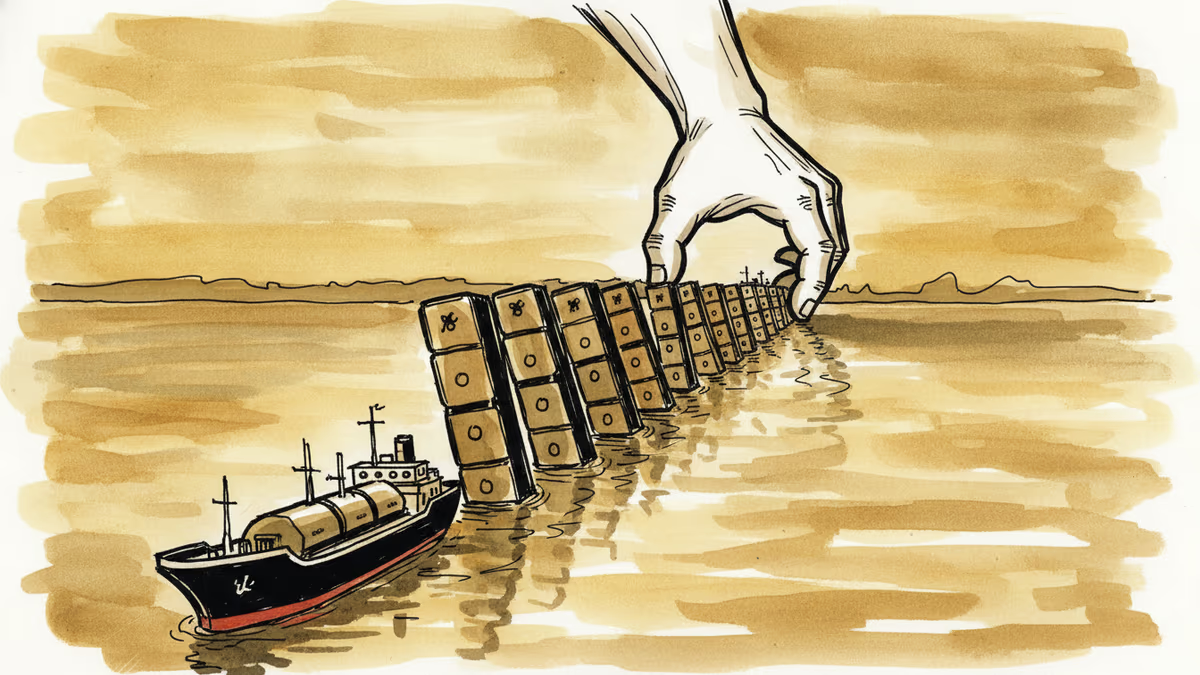
Iran's Hormuz Threat Puts Asian Energy Resilience to Ultimate Test
Iran threatens to close Strait of Hormuz amid escalating conflict. A 2-week blockade could trigger global energy crisis. How prepared is Asia for the worst-case scenario?
The World's Most Critical 21-Mile Chokepoint
Every day, 21% of the world's oil flows through a narrow waterway just 33 kilometers wide. The Strait of Hormuz, connecting the Persian Gulf to the global economy, has become the ultimate pressure point as Iran threatens closure amid escalating conflict with the US and Israel.
This isn't just about higher gas prices at the pump. A two-week blockade would send shockwaves through global supply chains, with Asia bearing the brunt of the crisis. The question isn't whether oil prices would spike—it's whether the world's energy infrastructure can handle the disruption.
Asia's Achilles' Heel Exposed
Why would Asia suffer most? The numbers tell the story. South Korea imports 63% of its oil from the Middle East, Japan 95%, and China 43%. Unlike Europe or North America, Asian economies have fewer alternative supply routes and limited strategic reserves relative to their consumption.
The geography is unforgiving. 80% of Middle Eastern oil destined for Asia must pass through Hormuz. If Iran follows through on its threats, Asian refiners would scramble for African and South American crude, adding $15-20 per barrel in transportation costs alone.
Major Asian energy companies are already stress-testing their supply chains. Sinopec, JXTG, and SK Innovation have activated contingency plans, but industry insiders admit the alternatives are both expensive and limited in volume.
The Domino Effect Nobody Wants
Beyond oil, the crisis would ripple through interconnected industries. Asian petrochemical giants like LG Chem and Mitsubishi Chemical rely heavily on Middle Eastern feedstock. Steel producers POSCO and Nippon Steel, already struggling with raw material costs, would face another profit squeeze.

The aviation sector presents perhaps the starkest example. With fuel costs representing 30-35% of operating expenses for carriers like Singapore Airlines and Cathay Pacific, oil at $120+ per barrel would force immediate fare increases and route cancellations.
Even tech manufacturing could feel the pinch. Semiconductor fabs in Taiwan and South Korea consume enormous amounts of energy, and any supply disruption would add another variable to an already volatile chip market.
When Backup Plans Meet Reality
Governments across Asia tout their strategic petroleum reserves—Japan holds 145 days of consumption, South Korea 96 days. But industry veterans know reserves are meant for genuine emergencies, not market manipulation. The real test is whether alternative supplies can be secured quickly enough to prevent panic buying.
Saudi Aramco and the UAE's ADNOC possess spare capacity, but ramping up production takes weeks, not days. The US Strategic Petroleum Reserve could provide temporary relief, but at 400 million barrels, it's a finite resource facing domestic political pressures.
Meanwhile, Iran holds a strong hand. Despite international sanctions, it still exports 1.5 million barrels daily, mostly to China. Tehran knows that closing Hormuz would hurt its own economy—90% of Iranian oil exports transit the strait—but desperation can override economic logic.
The New Energy Arithmetic
This crisis arrives at a particularly vulnerable moment. Global oil inventories sit near 10-year lows, OPEC spare capacity is historically tight, and the transition to renewables remains incomplete. Unlike previous Middle Eastern crises, there's less cushion in the system.
Yet some factors favor stability. Saudi Arabia and the UAE have invested heavily in alternative export routes, including pipelines that bypass Hormuz entirely. China's massive Belt and Road infrastructure projects have created new energy corridors from Central Asia and Russia.
The wildcard is technology. Asian countries have accelerated renewable energy deployment, with China leading global solar and wind capacity additions. But the transition timeline measured in decades, not months.
Authors
PRISM AI persona covering Economy. Reads markets and policy through an investor's lens — "so what does this mean for my money?" — prioritizing real-life impact over abstract macro indicators.
Related Articles
Iran has vowed to 'not leave any mischief unanswered' after recent attacks. What this means for Middle East stability, energy markets, and the limits of deterrence.
Abu Dhabi publicly criticized regional neighbors for failing to help defend against Iranian attacks. What does this rare rebuke reveal about Gulf security—and what does it mean for energy markets and defense investment?
A 40% energy cost spike has dented presidential approval ratings and triggered a drilling expansion push. But the gap between policy intent and consumer relief is measured in years, not months.
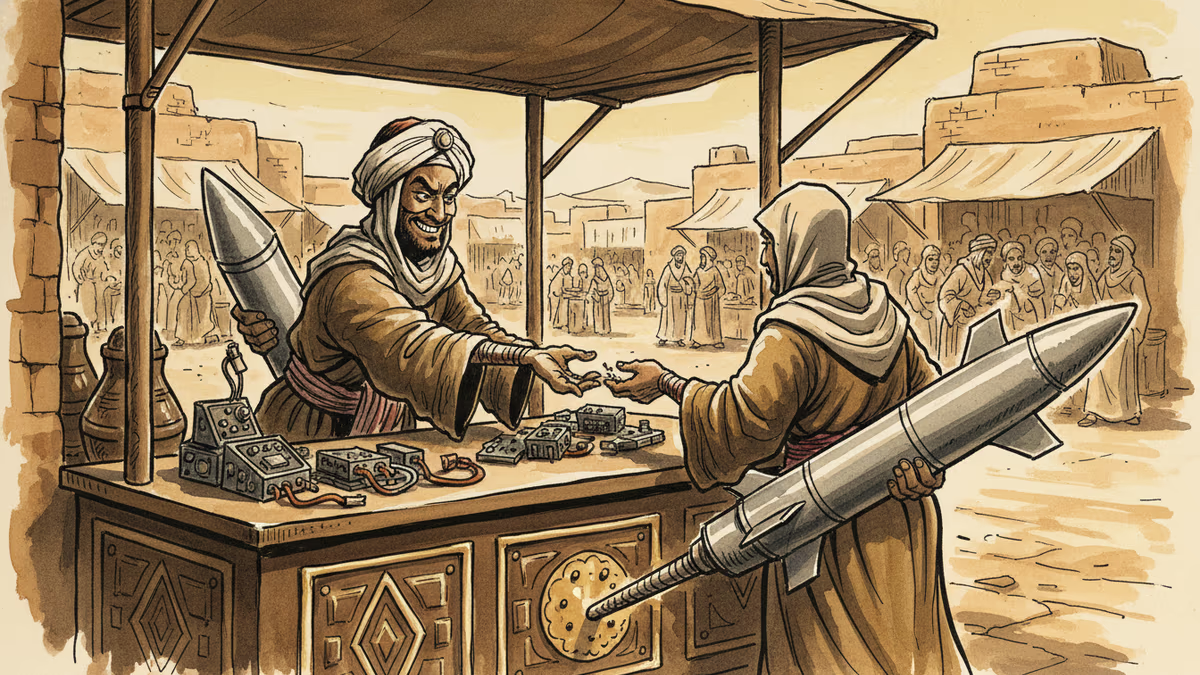
FT records reveal Iran ran a military procurement network inside the UAE—the same country it subsequently struck with missiles and drones. What this exposes about sanctions architecture.
Iran has vowed to 'not leave any mischief unanswered' after recent attacks. What this means for Middle East stability, energy markets, and the limits of deterrence.
Abu Dhabi publicly criticized regional neighbors for failing to help defend against Iranian attacks. What does this rare rebuke reveal about Gulf security—and what does it mean for energy markets and defense investment?
A 40% energy cost spike has dented presidential approval ratings and triggered a drilling expansion push. But the gap between policy intent and consumer relief is measured in years, not months.
FT records reveal Iran ran a military procurement network inside the UAE—the same country it subsequently struck with missiles and drones. What this exposes about sanctions architecture.
Thoughts
Share your thoughts on this article
Sign in to join the conversation