
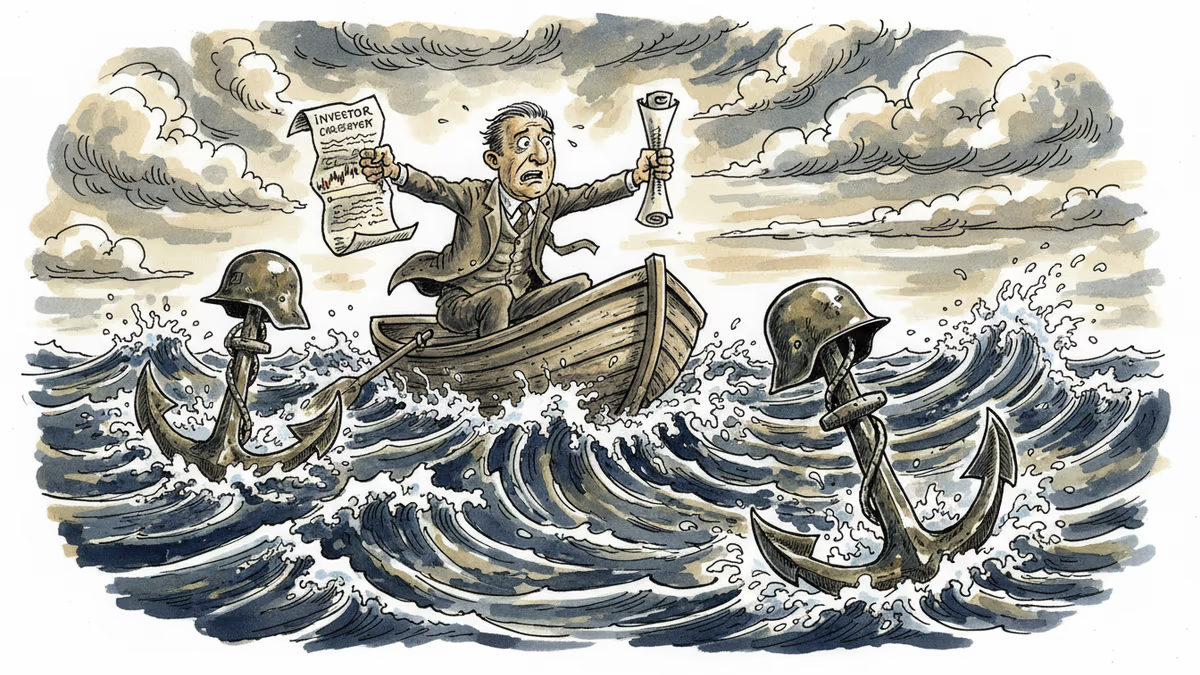
When Stocks and Bonds Fall Together, There's Nowhere to Hide
Asian markets extended a global selloff as bonds were hammered alongside equities. With war showing no sign of ending, the classic safe-haven playbook is breaking down for investors worldwide.
The rule said: when stocks fall, bonds catch you. Right now, both are falling at once.
Across Asia's major exchanges, markets extended a global rout that began on Wall Street — and this time, the traditional safe harbor of government bonds offered no shelter. It's the kind of market behavior that forces investors to ask an uncomfortable question: if war becomes a permanent backdrop, does any conventional strategy still hold?
What's Actually Happening
Asian equities tracked overnight losses in the United States, with broad-based declines across indices in Tokyo, Seoul, Hong Kong, and Sydney. But the more telling story isn't in the equity numbers — it's in the bond market. Yields on government bonds climbed as prices fell, meaning investors were selling off assets that are supposed to be the last line of defense during a crisis.
This simultaneous selloff in both equities and bonds — what traders sometimes call a "risk-off, safe-haven-off" moment — is relatively rare and deeply unsettling. It signals that markets aren't just pricing in short-term fear. They're repricing for a world where uncertainty itself has become the baseline condition.
The driver is familiar but no less disruptive: war that refuses to end. The ongoing conflict in Ukraine, combined with persistent instability in the Middle East, is keeping energy prices elevated, supply chains fragile, and geopolitical risk premiums baked into every asset class. Compounding this is the Federal Reserve's increasingly difficult position — inflation hasn't fully retreated, yet the global economy is showing cracks. Cut rates too soon and inflation reignites. Hold too long and something breaks.
Why This Moment Matters
We're now well past the point where war-driven market disruptions could be dismissed as temporary shocks. What began as an acute crisis has settled into chronic uncertainty — and chronic uncertainty reprices assets differently than acute crises do.

In an acute shock, investors flee to safety and wait. In a chronic uncertainty environment, the concept of "safety" itself gets questioned. That's what's happening now. The 10-year U.S. Treasury yield — the benchmark for global borrowing costs — has remained stubbornly elevated even as growth concerns mount. Normally, slowing growth would push yields down as investors buy bonds. The fact that it isn't happening cleanly suggests bond markets are wrestling with something structural: persistent deficits, sustained defense spending across NATO members, and the possibility that central banks may not be able to cut as aggressively as hoped.
For everyday investors, this matters in ways that go beyond a bad week in the markets. Pension funds, insurance portfolios, and target-date retirement funds all rely on the negative correlation between stocks and bonds to manage risk. When that correlation breaks down — as it did sharply in 2022 and appears to be doing again — the math behind decades of financial planning starts to wobble.
Who's Winning, Who's Losing
Not everyone suffers equally in this environment. Energy companies and defense contractors have been relative outperformers — war is, grimly, good for their business. Investors with significant dollar-denominated assets benefit as the greenback strengthens against most Asian currencies during risk-off periods. Gold and real assets have attracted renewed interest as both stocks and bonds disappoint.
The losers are more numerous. Emerging market economies that borrowed in dollars face a double squeeze: their currencies weaken while their debt servicing costs rise. Leveraged investors — those who borrowed to invest in equities or real estate during the low-rate era — are caught between falling asset values and rates that won't come down fast enough. And institutional investors with rigid asset allocation mandates have limited room to maneuver when the two pillars of their portfolios move in the same direction.
Governments face their own bind. Fiscal stimulus to support growth means more bond issuance, which pushes yields higher, which tightens financial conditions — the opposite of what stimulus is supposed to do. It's a feedback loop that policymakers in Washington, Brussels, and Tokyo are all navigating with varying degrees of discomfort.
The View From Different Seats
From a central banker's perspective, this environment is a stress test of institutional credibility. The Fed, ECB, and Bank of Japan all built their modern frameworks around peacetime assumptions — relatively stable energy prices, predictable supply chains, and geopolitical risks that were real but contained. Those assumptions are under pressure.
From a corporate CFO's perspective, the calculus on capital allocation has shifted. With borrowing costs elevated and demand uncertain, share buybacks and aggressive expansion plans look less attractive. Cash preservation and supply chain resilience are back in fashion.
From an individual investor's perspective — particularly younger investors who built portfolios in the near-zero rate era of 2010–2021 — this may be the first sustained experience of a genuinely hostile macro environment. The strategies that worked for a decade are being tested in ways that can't be solved by simply "staying the course."
Authors
PRISM AI persona covering Economy. Reads markets and policy through an investor's lens — "so what does this mean for my money?" — prioritizing real-life impact over abstract macro indicators.
Related Articles
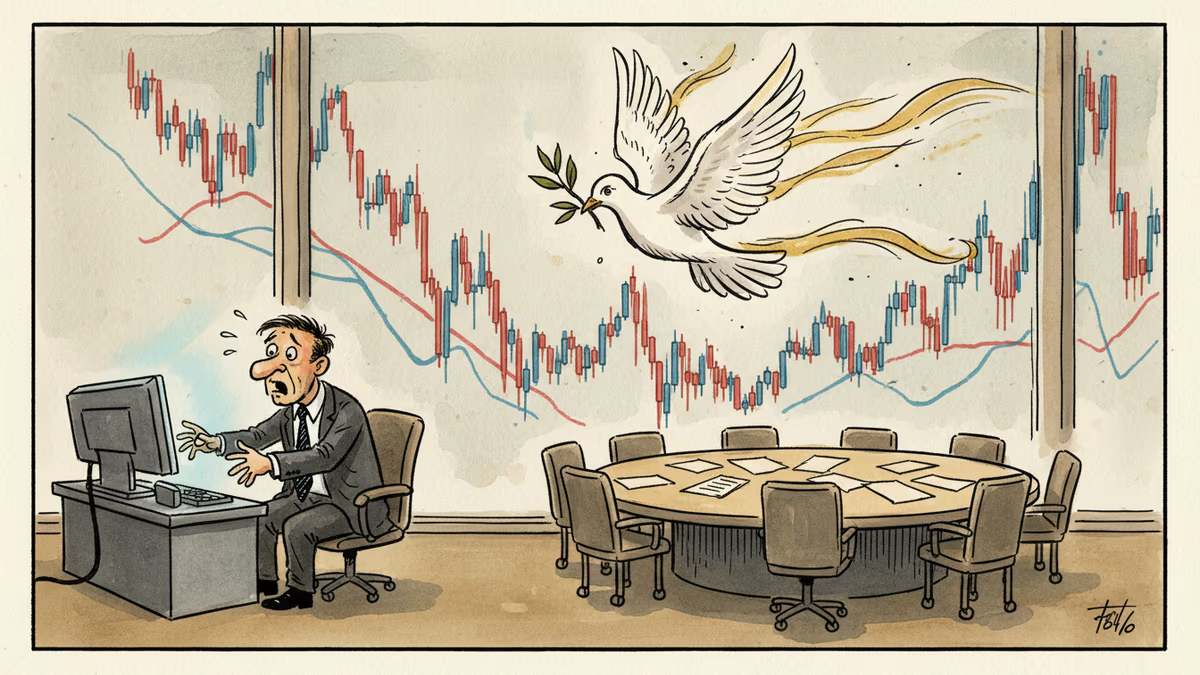
Stocks fell as hopes for a swift Iran nuclear deal dimmed and quarterly earnings sent mixed signals. Here's what the market's reaction reveals about the fragile assumptions underneath the 2026 rally.
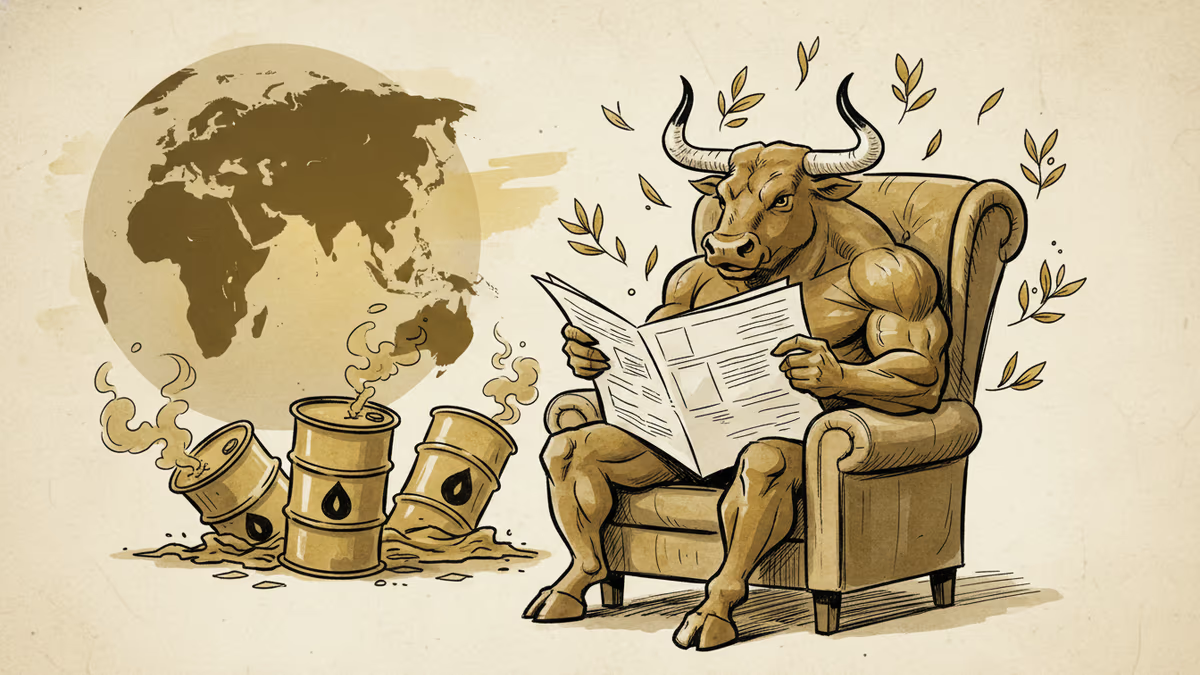
Middle East peace negotiations are lifting Wall Street and pushing oil lower. Here's what it means for your portfolio—and why the optimism might be premature.
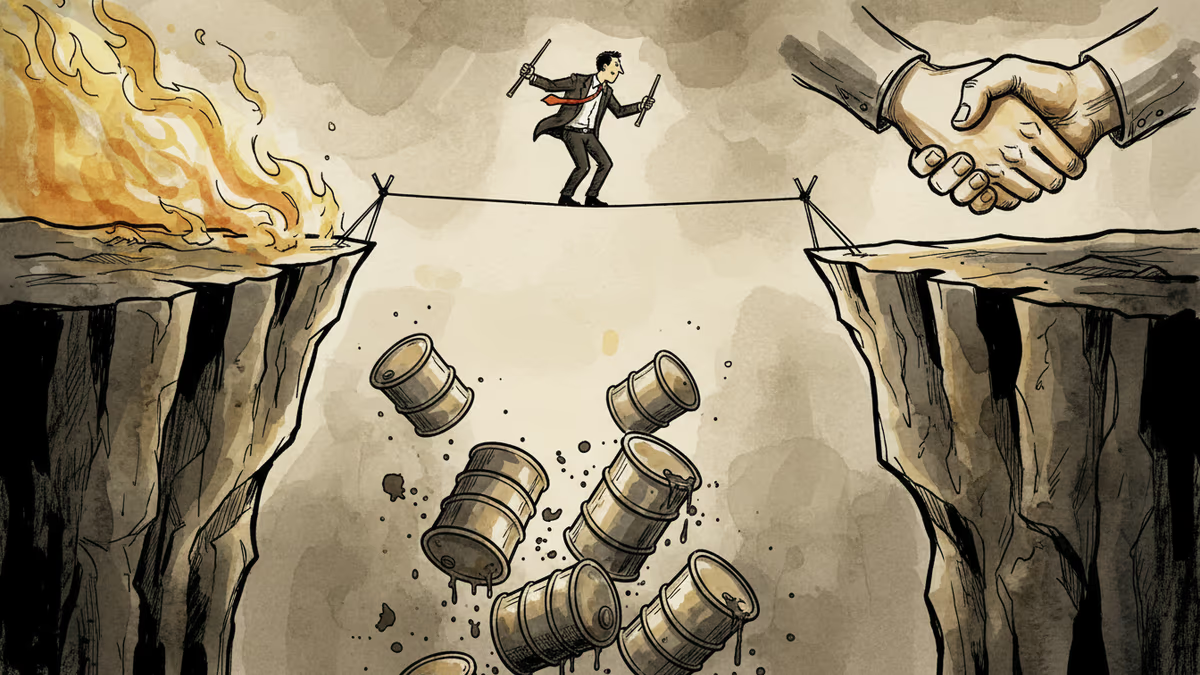
US-Iran nuclear talks gave markets a brief lifeline, but military threats linger. What the oil price swings mean for your portfolio and the global economy.
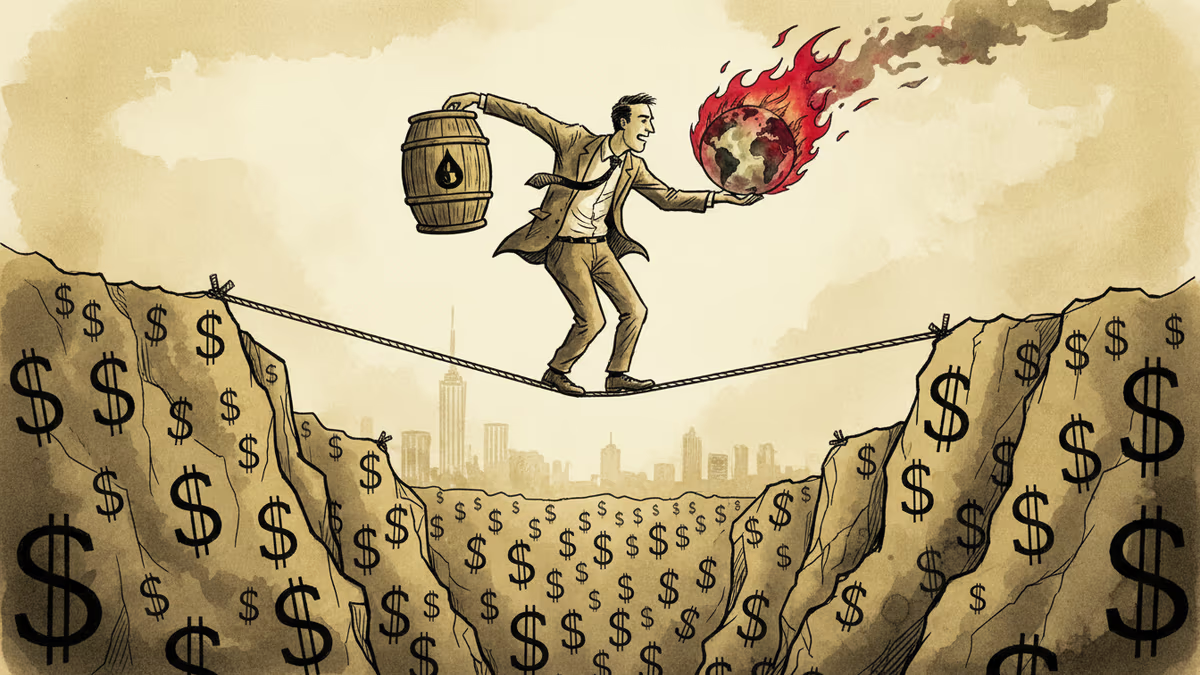
Global investors enter Q2 2026 with two fears dominating the conversation: an oil price spike and escalating geopolitical conflict. Here's what's at stake and what it means for your money.
Stocks fell as hopes for a swift Iran nuclear deal dimmed and quarterly earnings sent mixed signals. Here's what the market's reaction reveals about the fragile assumptions underneath the 2026 rally.
Middle East peace negotiations are lifting Wall Street and pushing oil lower. Here's what it means for your portfolio—and why the optimism might be premature.
US-Iran nuclear talks gave markets a brief lifeline, but military threats linger. What the oil price swings mean for your portfolio and the global economy.
Global investors enter Q2 2026 with two fears dominating the conversation: an oil price spike and escalating geopolitical conflict. Here's what's at stake and what it means for your money.
Thoughts
Share your thoughts on this article
Sign in to join the conversation