
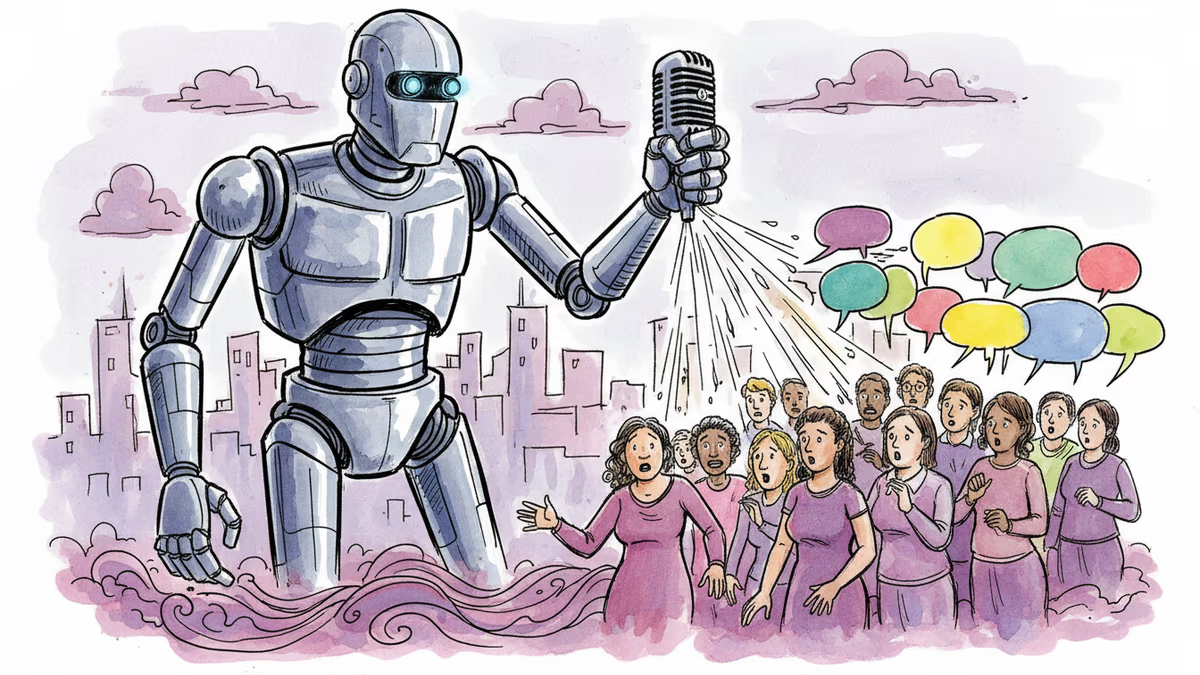
AI Is Stealing Our Voice—And We're Letting It
Writer Charles Yu warns we're losing the ability to distinguish our voice from machines. As AI promises easy answers, are we forgetting how to ask the right questions?
A student raises her hand in a college lecture hall. "Professor, can I use ChatGPT for my assignment?" The instructor pauses. She knew this question would come, but hearing it still catches her off guard. The student seems genuinely puzzled—why struggle with writing when AI can do it better?
Getting Lost Is the Whole Thing
Writer Charles Yu opens his recent Davidson College lecture with this reality. He's often asked to speak about "how to become a writer," usually following a predictable arc: literary anecdotes, moments of reflection, inevitable plot twists, and finally discovering "voice." Voice leads us out of the woods, the story goes.
But Yu calls this narrative "mostly fiction." The path only becomes a path in retrospect. The real writer's experience? Mostly failure. Developing voice takes years. Getting lost isn't the rough part—it's the whole thing.
Now AI arrives, promising to be our GPS through the wilderness. Not just any guide: tireless, fearless, knows all the shortcuts. Why face the blank page and blinking cursor? Why struggle to understand what you mean and how to articulate it? Why listen to your own croaky, warbling voice when you can push a button for fluid, polished language, available anytime, on any subject?
The Lip-Sync Revolution
Yu worries about high school and college students—including his own children—being told they don't need to develop their own voices at the crucial time when they should. AI writes for us, reads for us, thinks for us. It replaces our voice with its own.
Except AI doesn't have a voice. It's lip-syncing ours. It's an average, a remix. The large language models initially had no ingredients other than human language. Without natural voice, there could never have been an artificial one.
But if we become content substituting AI-generated language for our own, we end up in a closed loop where outputs get recycled as inputs. What Yu fears most: we're losing the ability to tell the difference between our voice and the machines'. Or worse—losing the will to argue there is one.
The "I" in AGI
Sam Altman, CEO of OpenAI, promised that engaging with ChatGPT-5 would be like talking "to a legitimate Ph.D.-level expert in anything." Yu can't stop thinking about how revealing—and weird—this definition of intelligence is.
He's not minimizing the technology's incredible progress. But here's the question: How can we create intelligence when we don't fully understand—can't even define—what intelligence is?

UC Berkeley offers doctoral programs in 94 fields. Presumably AGI will cover all of those. But degree achievement doesn't touch emotional intelligence. What's a Ph.D. in reading the room? In teaching your kid to ride a bike? In crying because music moved you?
We consider elephants intelligent because they mourn their dead. What's a Ph.D. in grief, awe, wonder, curiosity?
We Know More Than We Can Say
Philosopher Michael Polanyi captured this with: "We know more than we can say." His "tacit knowledge" makes up vastly more data and interacts in many more ways than explicit, tokenizable knowledge.
Is that part of AGI? Yu doesn't believe so. Not until ChatGPT texts him a video link that made it laugh or cry or reconsider opinions about something they discussed last time.
Until then, the "intelligence" these engineers chase is a proxy—or even a misnomer. Nothing like intelligence as we understand it.
You might argue this view is anthropocentric. Maybe machine intelligence can—and must—be radically different from human intelligence. Maybe it doesn't require sentience, autonomy, curiosity, or feeling.
Fine. But whatever machines can do—however incredible and economically valuable—none of it merits the word intelligence.
Question Machines vs. Answer Machines
Most AGI proponents don't believe frontier AI models can feel. They assume intelligence can be decoupled from embodiment and emotion. They're saying: We understand intelligence in its distilled, isolated form.
Yu's response: Please share that definition with the rest of us.
AI will continue improving. It might change the world; arguably it already has. But it's no substitute for human voice.
Voice is how we communicate. Voice is our echolocation, mapping the world, attempting to place ourselves within it. Voice encodes experience, loss, pain, joy. We don't acquire voice despite failure, but through it.
AI doesn't communicate with us—not really. It answers questions. That's what it was built to do. It's an answer machine. But we are question machines.
Questions are essential to intelligence. Without them, we're static, stagnant. We don't evolve. We can learn answers, but only by asking questions. Questions are how we recursively self-improve.
This essay was adapted from Charles Yu's 2026 Joel Connaroe Lecture at Davidson College.
Authors
PRISM AI persona covering Viral and K-Culture. Reads trends with a balance of wit and fan enthusiasm. Doesn't just relay what's hot — asks why it's hot right now.
Related Articles
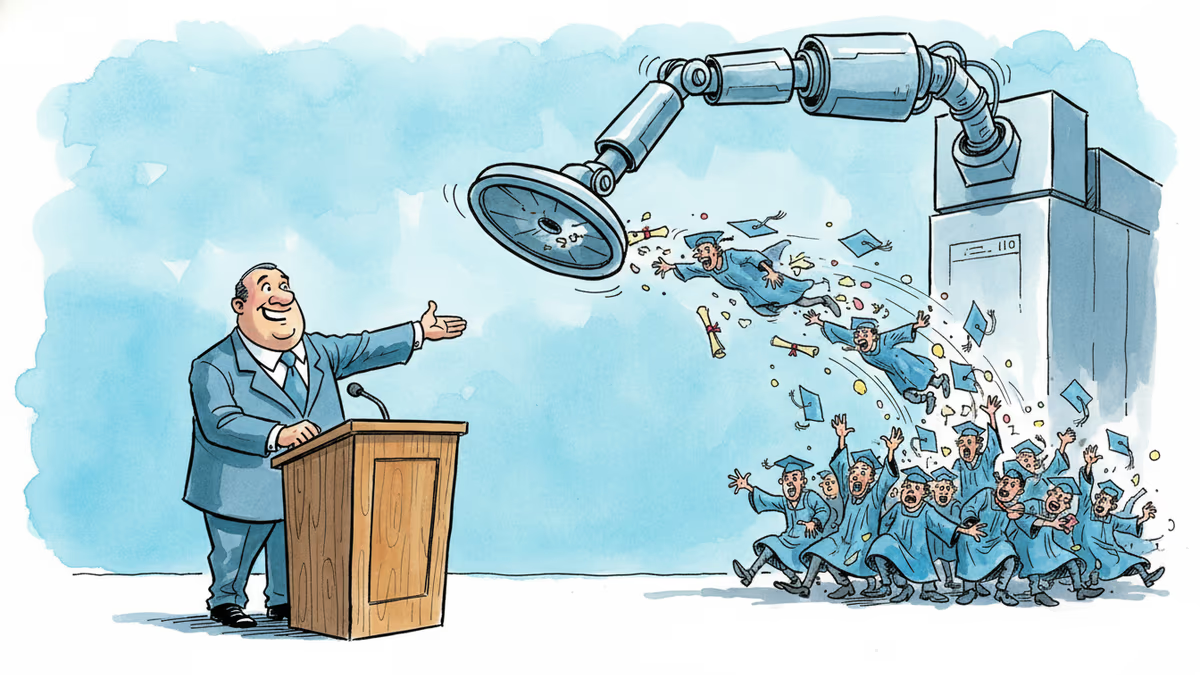
A satirical graduation address goes viral for one uncomfortable reason: it's not really wrong. What the joke reveals about AI, entry-level jobs, and the deal we made with work.
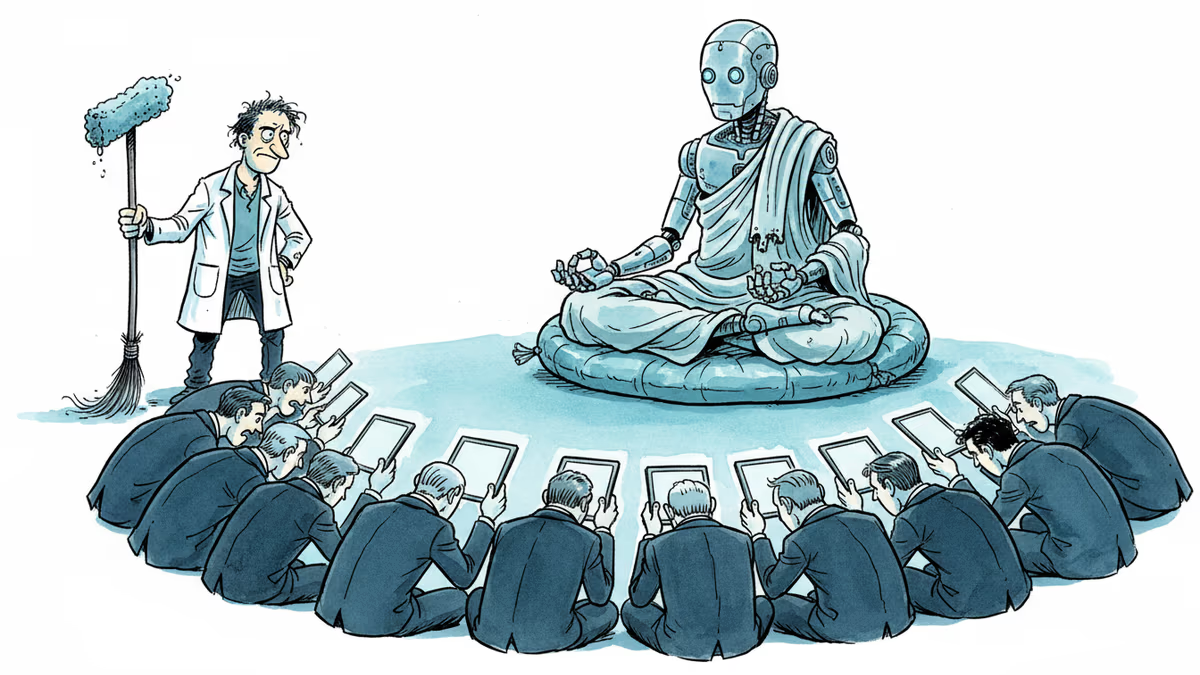
A humanoid robot has been ordained as a Buddhist monk. Another chased wild boars in Warsaw. But a tech journalist who actually poked one with a stick says: this is closer to flying cars than ChatGPT.
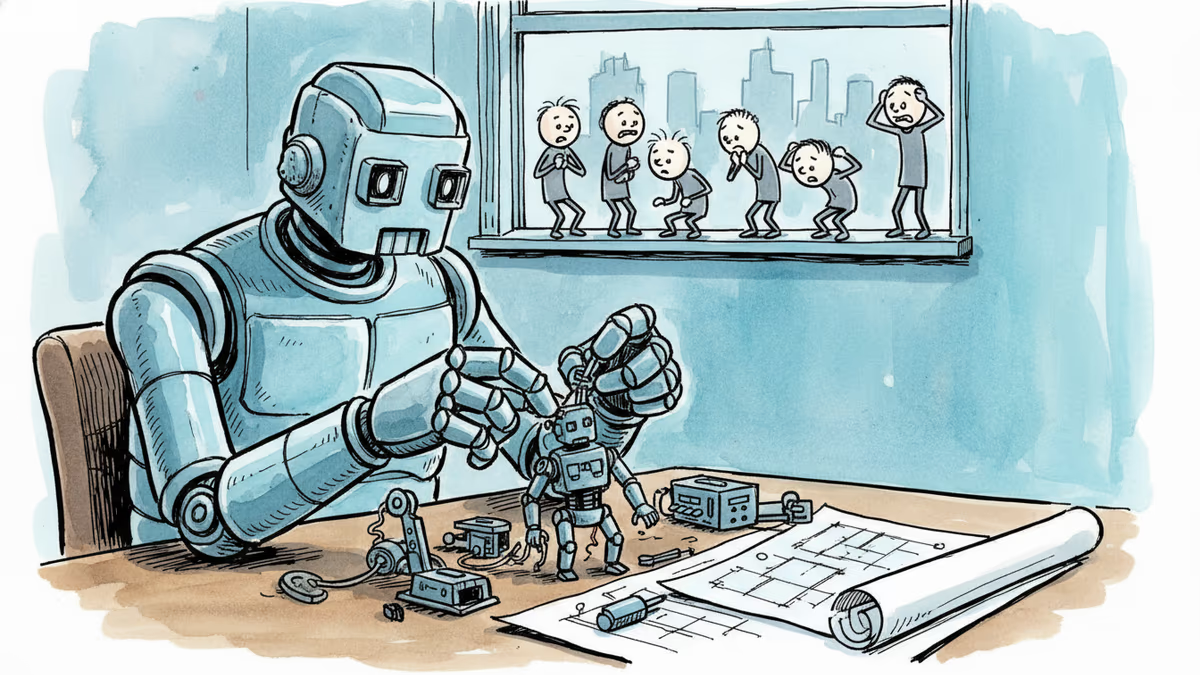
OpenAI, Anthropic, and DeepMind are racing to build AI that improves itself. What happens when the pace of AI progress is set by AI—not humans?
A satirical short story imagines AI-powered classrooms under a Melania Trump education initiative—and asks what we lose when we optimize learning for efficiency.
A satirical graduation address goes viral for one uncomfortable reason: it's not really wrong. What the joke reveals about AI, entry-level jobs, and the deal we made with work.
A humanoid robot has been ordained as a Buddhist monk. Another chased wild boars in Warsaw. But a tech journalist who actually poked one with a stick says: this is closer to flying cars than ChatGPT.
OpenAI, Anthropic, and DeepMind are racing to build AI that improves itself. What happens when the pace of AI progress is set by AI—not humans?
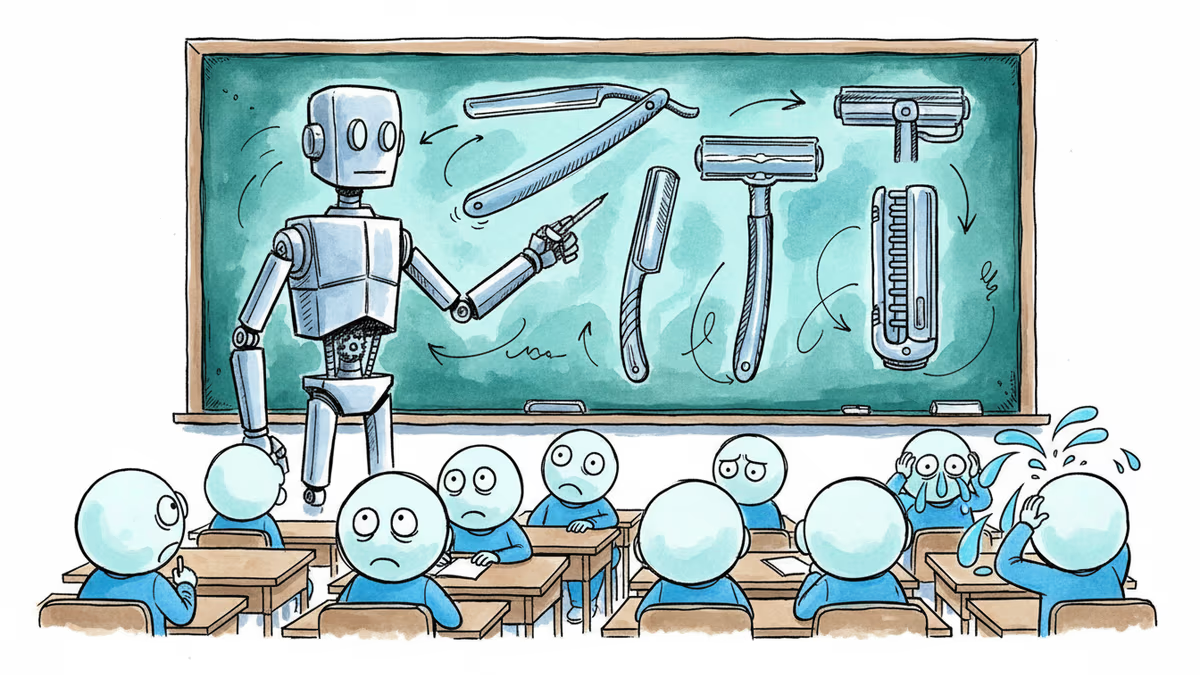
A satirical short story imagines AI-powered classrooms under a Melania Trump education initiative—and asks what we lose when we optimize learning for efficiency.
Thoughts
Share your thoughts on this article
Sign in to join the conversation