
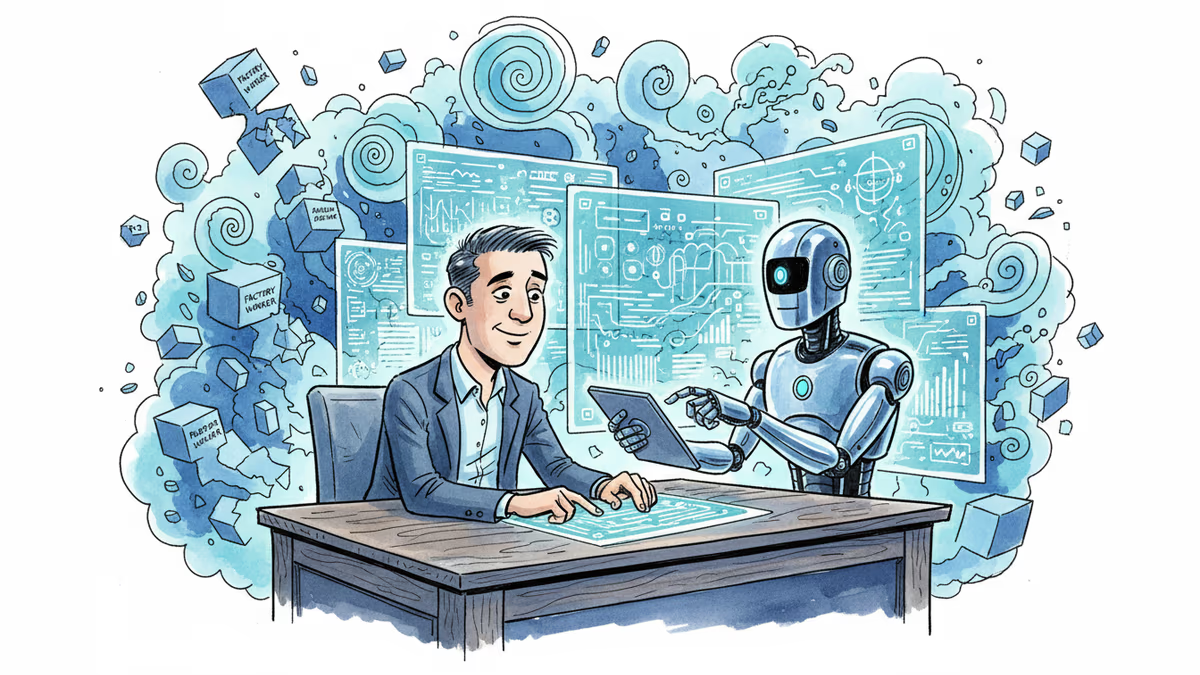
The AI Job Scare Is Missing the Real Story
While everyone debates AI replacing humans, companies actually using AI reveal a different reality: jobs aren't disappearing, they're evolving. Here's what's really happening.
Five people serve millions of users. That's the customer service reality at Read AI, a meeting intelligence company. This seemingly impossible math works because AI handles the routine stuff, freeing humans for what actually matters: complex problem-solving and relationship building.
While headlines scream about AI stealing jobs, companies actually deploying these tools tell a different story. Jobs aren't vanishing—they're transforming.
It's Like GPS, Not Autopilot
Read AI CEO David Shim offers a driving analogy: "We used to unfold paper maps and figure out routes ourselves. Now Google Maps tells us where to go, but we're still the ones holding the steering wheel, making the final calls."
The human remains in the loop, but with superpowers.
Lucidya founder Abdullah Asiri sees the same pattern with his AI customer support platform. "AI replaces tasks, not roles," he explains. Customer service agents at client companies aren't getting fired—they're becoming supervisors, relationship builders, and business developers.
The New Hiring Reality
Here's what's actually happening in recruitment: companies want "AI-native" talent. Not people who build AI, but people who can work with AI effectively.

"We're looking for people who can create agents to help them do their jobs better," Asiri notes. The premium goes to workers who can turn AI tools into productivity multipliers.
Read AI keeps its team lean by design—those five customer service reps are incredibly productive because AI amplifies their capabilities. The company's sales tool has helped approve $200 million worth of deals by predicting outcomes using CRM data.
Customer Acceptance Is Shifting
Remember when people freaked out about AI bots joining meetings? That resistance is fading, as long as users maintain control over recording and data usage.
Lucidya is transparent about AI involvement in customer interactions. "People care about getting their issues resolved quickly and accurately," Asiri observes. "Whether it's AI or human doesn't matter if the problem gets fixed."
The key insight: customers judge results, not methods.
The Productivity Paradox
Both companies embody a new business philosophy: "scale outcomes without scaling headcount." Read AI captures 23% more context with each update, giving sales teams richer insights for decision-making. Time previously spent on note-taking and information gathering now goes toward analysis and action.
This isn't about doing more with less people—it's about doing better with the same people.
Authors
Related Articles
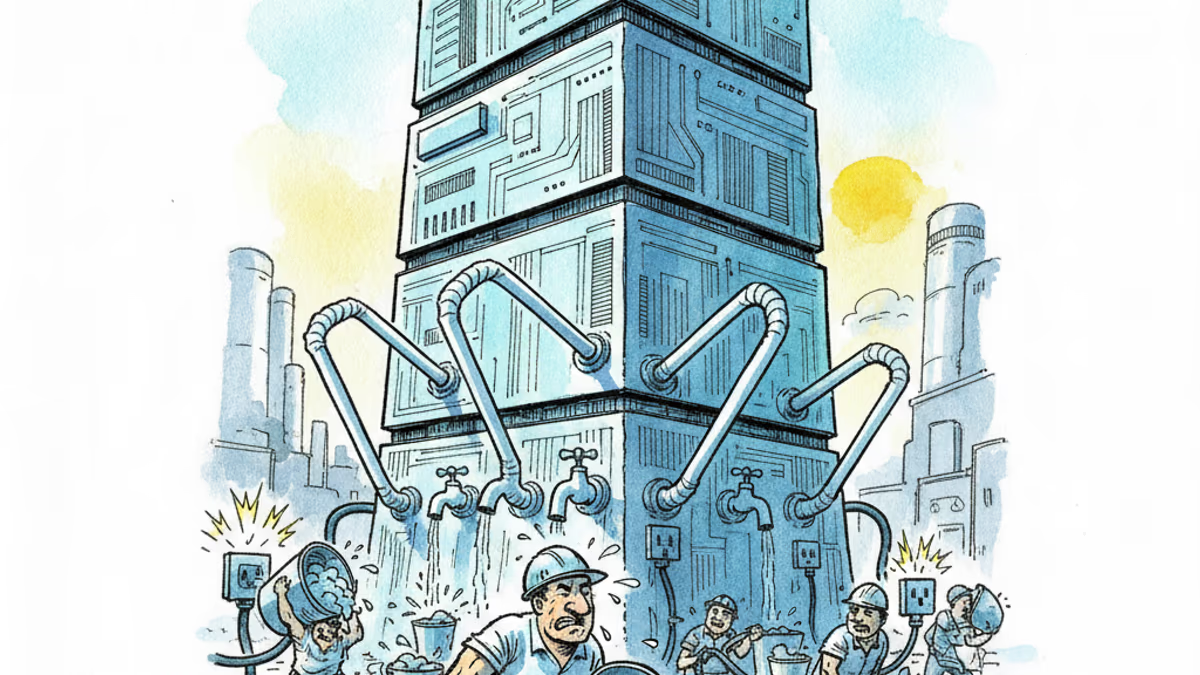
Samsung and SK unveiled a chip and AI investment package worth thousands of trillions of won on June 29. The headline number swings wildly by outlet, but the real contest isn't capital — it's water and power.
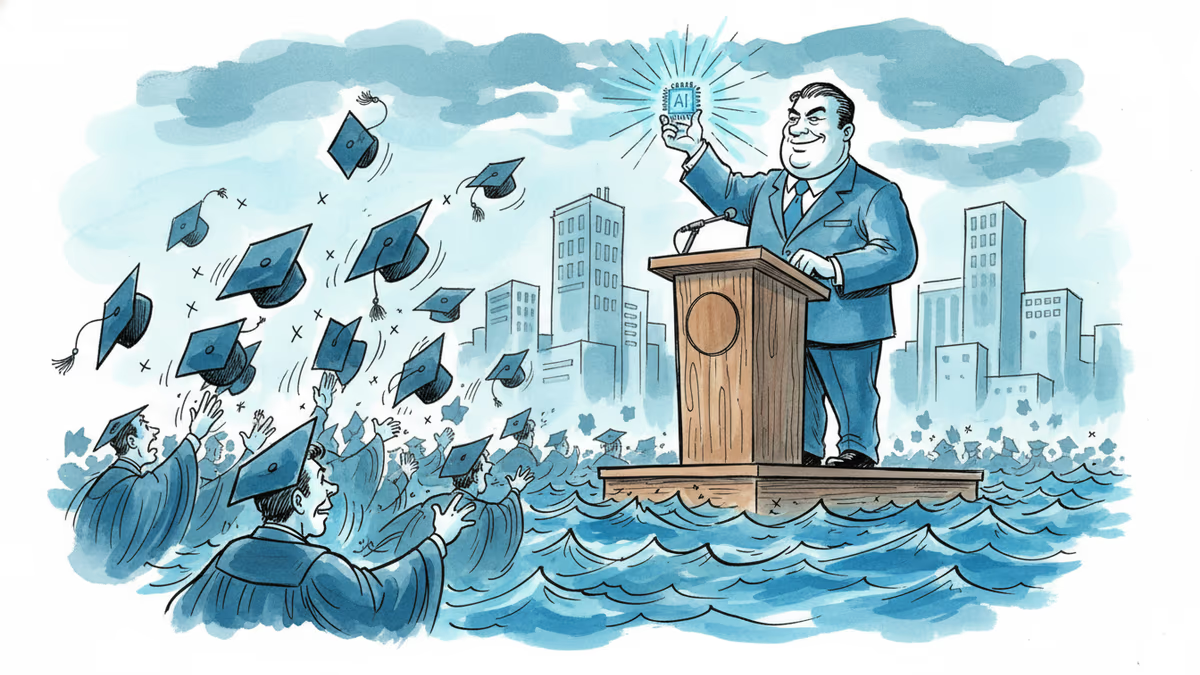
Viral videos show 2026 graduates jeering executives who praise AI at commencement ceremonies. It's not just rudeness — it's a signal about who pays for technological optimism.
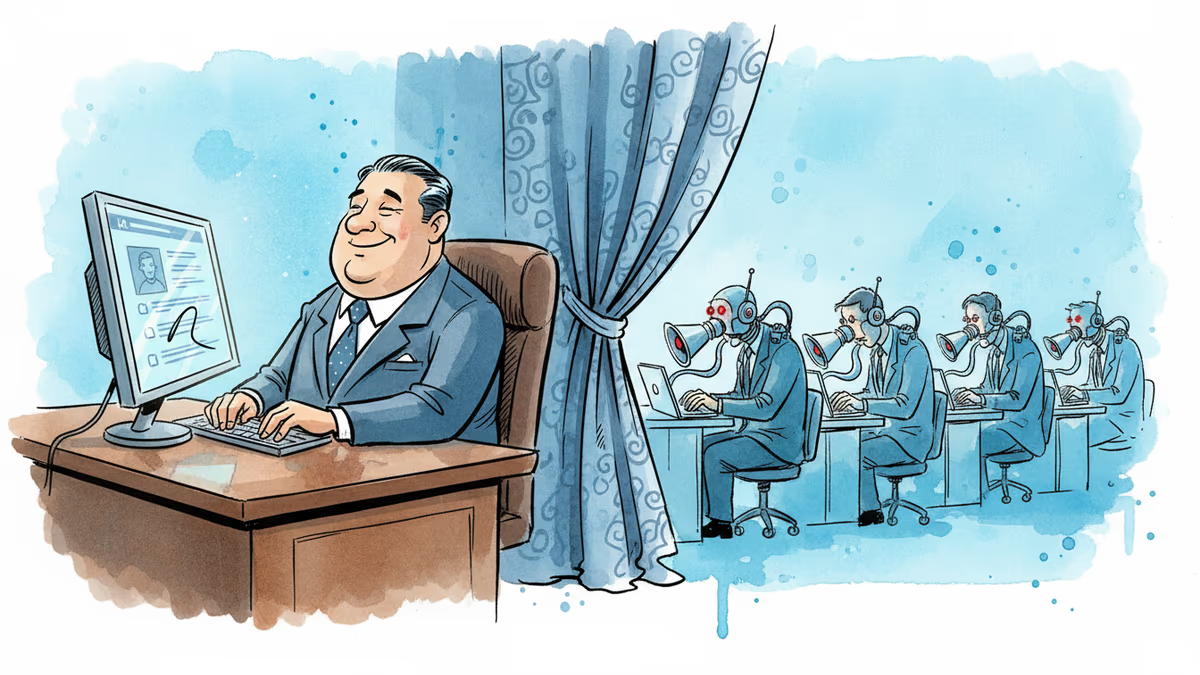
Filipino virtual assistants using AI to ghost-manage LinkedIn profiles for executives is now a structured industry. 30 comments a day, fake engagement rings, and a platform struggling to tell real from fabricated.
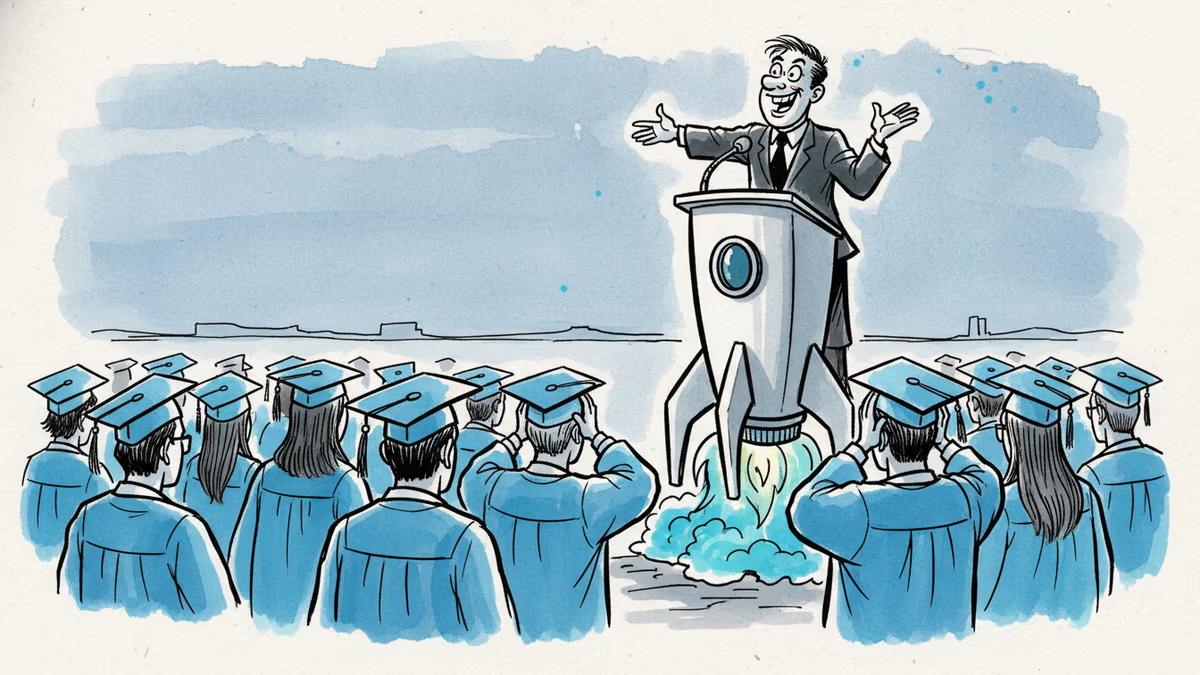
Two commencement speakers learned the hard way that AI enthusiasm doesn't land well with today's graduates. The backlash reveals a widening gap between tech optimism and Gen Z's economic reality.
Samsung and SK unveiled a chip and AI investment package worth thousands of trillions of won on June 29. The headline number swings wildly by outlet, but the real contest isn't capital — it's water and power.
Viral videos show 2026 graduates jeering executives who praise AI at commencement ceremonies. It's not just rudeness — it's a signal about who pays for technological optimism.
Filipino virtual assistants using AI to ghost-manage LinkedIn profiles for executives is now a structured industry. 30 comments a day, fake engagement rings, and a platform struggling to tell real from fabricated.
Two commencement speakers learned the hard way that AI enthusiasm doesn't land well with today's graduates. The backlash reveals a widening gap between tech optimism and Gen Z's economic reality.
Thoughts
Share your thoughts on this article
Sign in to join the conversation