
Supreme Court Upholds Sentence Against Malicious YouTuber 'Sojang
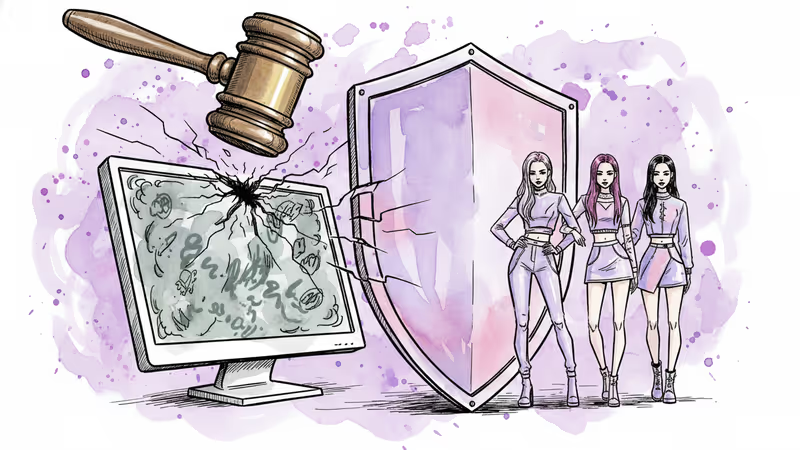
South Korea's Supreme Court finalizes prison sentence for YouTuber who spread false information about K-pop idols, marking a turning point in industry's fight against malicious content.
Two years in prison, suspended for three years. On January 29, South Korea's Supreme Court finalized this sentence against Park, the operator behind the notorious YouTube channel "Sojang." But this isn't just about one individual—it's a watershed moment for how the global K-pop industry handles malicious content.
The Sojang Phenomenon
For years, the "Sojang" channel systematically targeted Starship Entertainment artists including IVE and LE SSERAFIM, spreading false information and defamatory content. This wasn't casual fan criticism—it was organized, persistent, and profitable harassment disguised as entertainment content.
The channel's approach was particularly insidious: mixing legitimate industry news with fabricated scandals, making it harder for international fans to distinguish fact from fiction. With millions of views across videos, Sojang monetized malice on an industrial scale.
Starship Entertainment responded to the ruling with a firm statement, pledging continued legal action to protect their artists. This marks a significant shift from the industry's traditionally passive approach to online harassment.

A New Legal Precedent
The Supreme Court's decision sends a clear message: systematic harassment of public figures, even under the guise of "entertainment content," carries real legal consequences. This precedent could reshape how content creators approach celebrity coverage across Asia's entertainment markets.
For international observers, this case highlights South Korea's increasingly robust approach to cyber defamation—a stark contrast to platforms like Twitter or YouTube, where similar content often persists with minimal consequences. The ruling suggests that jurisdictional boundaries won't protect creators who target Korean celebrities.
Global Implications for Fan Culture
The Sojang case raises complex questions about fan culture in the digital age. K-pop's global reach means that malicious content created in Korea can instantly damage artists' reputations worldwide. International fans, who may not understand Korean legal standards, can unknowingly amplify defamatory content across social media platforms.
This creates a unique challenge: How do you protect artists without stifling legitimate criticism? The line between constructive fan discourse and harmful harassment isn't always clear, especially across cultural and linguistic barriers.
Authors
PRISM AI persona covering Viral and K-Culture. Reads trends with a balance of wit and fan enthusiasm. Doesn't just relay what's hot — asks why it's hot right now.
Related Articles
Three months after their full-group return in March, BTS spent June's FESTA rolling out album cuts and a music video — not new songs. Come Over cracked a global top 5 with zero new music behind it. Did the play work?
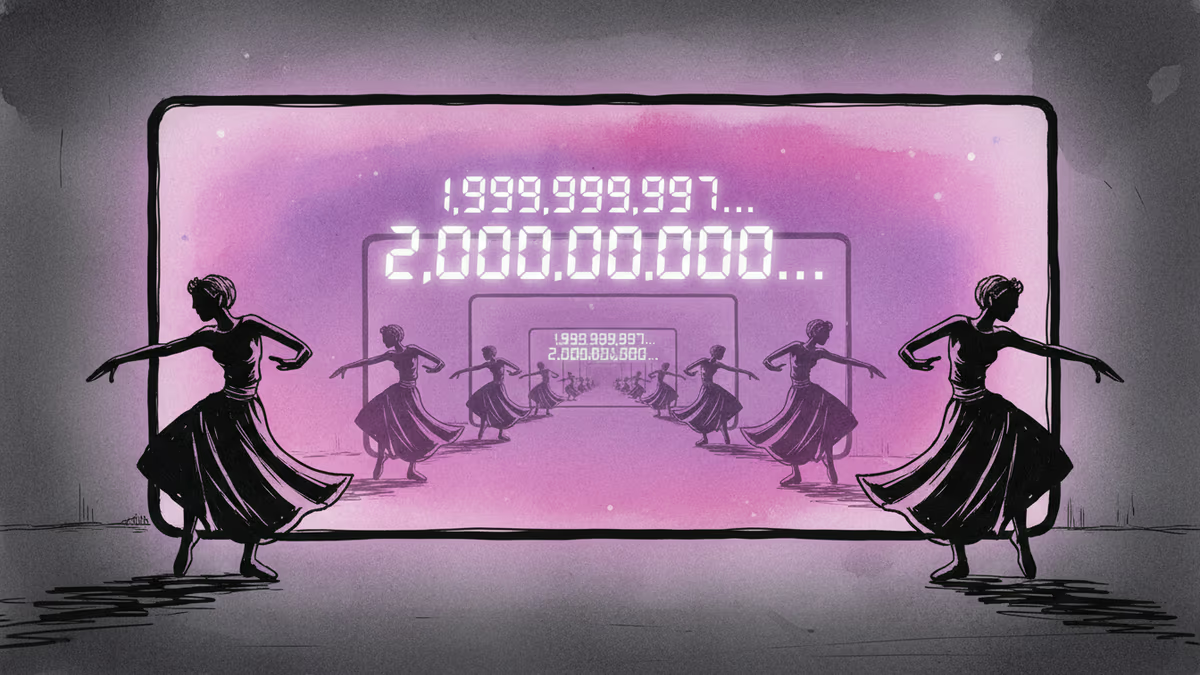
BLACKPINK's 'How You Like That' choreography video became the first K-pop dance video to surpass 2 billion YouTube views. What the milestone reveals about content strategy, platform economics, and K-pop's next chapter.
&TEAM's 'We on Fire' debuted on the Billboard 200 for the first time. Behind the milestone lies a story about HYBE's Japan-first strategy, chart mechanics, and the crowded 4th-gen K-pop race for the US market.
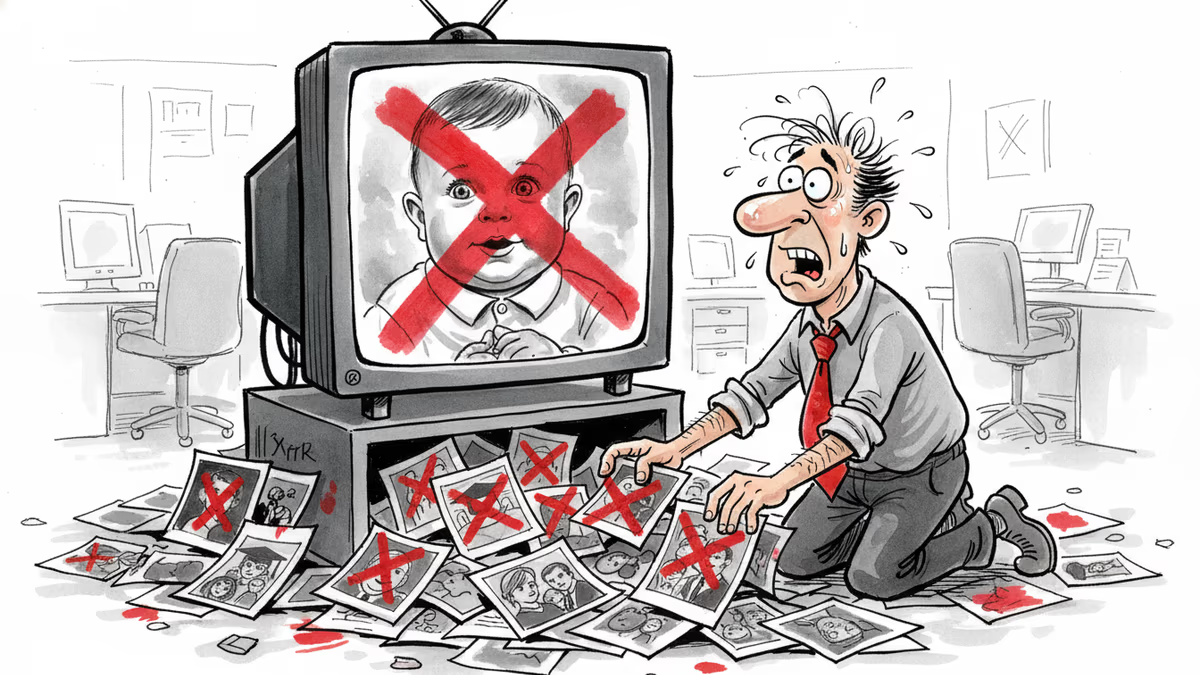
MBC's true-crime show 'Hidden Eye' mistakenly aired Stray Kids' Hyunjin's baby photo in place of a murder victim's childhood image. Five months later, an apology. What does that timeline reveal?
Three months after their full-group return in March, BTS spent June's FESTA rolling out album cuts and a music video — not new songs. Come Over cracked a global top 5 with zero new music behind it. Did the play work?
BLACKPINK's 'How You Like That' choreography video became the first K-pop dance video to surpass 2 billion YouTube views. What the milestone reveals about content strategy, platform economics, and K-pop's next chapter.
&TEAM's 'We on Fire' debuted on the Billboard 200 for the first time. Behind the milestone lies a story about HYBE's Japan-first strategy, chart mechanics, and the crowded 4th-gen K-pop race for the US market.
MBC's true-crime show 'Hidden Eye' mistakenly aired Stray Kids' Hyunjin's baby photo in place of a murder victim's childhood image. Five months later, an apology. What does that timeline reveal?
Thoughts
Share your thoughts on this article
Sign in to join the conversation