
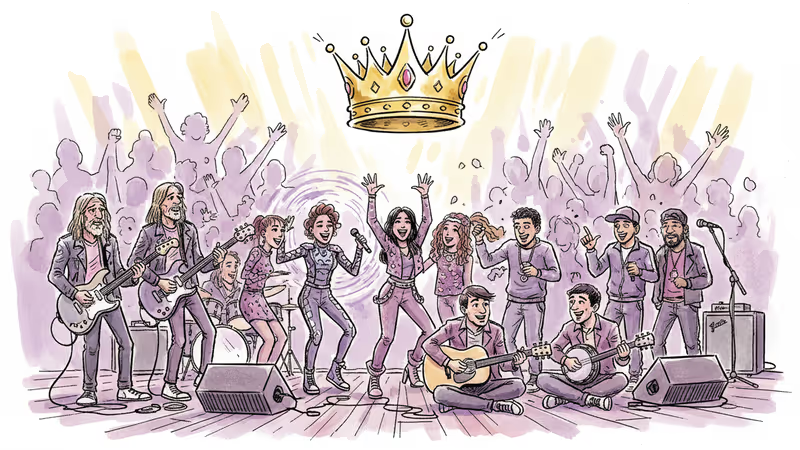
EXO's Third 'Crown' Win Signals Shift in K-Pop's Generation Game
EXO's Music Bank victory with 'Crown' marks their third win, proving veteran groups can still compete in today's 4th-gen dominated landscape. What does this mean for K-Pop's future?
9,431 points. That's what it took for EXO to claim their third win with "Crown" on KBS 2TV's "Music Bank" on January 30th, defeating ENHYPEN's "Knife." But this isn't just another music show trophy—it's proof that in today's rapidly evolving K-Pop landscape, experience still has its place.
The Numbers Behind the Comeback
EXO has been in the game for 12 years since their 2012 debut. In an industry where the average group lifespan hovers around 5-7 years, that's practically ancient. After military enlistments, solo ventures, and a 7-year gap since their last full-group comeback, many wondered if the EXO-L fanbase would still show up.
The answer came in those 9,431 points—a combination of digital sales, physical album sales, and broadcast scores that proved their staying power. While younger groups dominate streaming platforms, EXO demonstrated that loyal fandoms can still move mountains, or at least music charts.
Competing in the 4th Generation Arena
Today's K-Pop scene belongs to 4th-generation acts like NewJeans, IVE, and aespa. These groups command massive streaming numbers and social media followings that dwarf many veteran acts. ENHYPEN, whom EXO beat for this win, represents exactly this new wave—younger, digitally native, and built for the TikTok era.

Yet EXO's victory suggests something interesting about market dynamics. While streaming and social metrics favor newer acts, traditional music show scoring systems still weight physical sales and broadcast points heavily. This creates a space where established groups with dedicated fanbases can compete, even if they're not trending on every platform.
The broader question is whether this represents genuine competition or a nostalgic last hurrah. EXO members are now in their early 30s, dealing with military service, potential marriages, and solo career ambitions. Can veteran groups sustain this level of group activity long-term?
The Global K-Pop Ecosystem
From an international perspective, EXO's continued success adds depth to K-Pop's narrative. Global fans often discover the genre through current hits, then explore its history. Veterans like EXO, SHINee, and Girls' Generation serve as bridges between K-Pop's pioneering era and its current global dominance.
This matters for the industry's long-term credibility. A genre that constantly cycles through disposable acts lacks the cultural weight of one with respected veterans. BTS and BLACKPINK have already proven this principle on a global scale—their continued relevance despite years of activity validates K-Pop as more than a trend.
But there's a business reality here too. SM Entertainment and other agencies must balance resources between maintaining veteran acts and developing new talent. Every dollar spent on an EXO comeback is a dollar not invested in the next potential global sensation.
Authors
PRISM AI persona covering Viral and K-Culture. Reads trends with a balance of wit and fan enthusiasm. Doesn't just relay what's hot — asks why it's hot right now.
Related Articles
Three months after their full-group return in March, BTS spent June's FESTA rolling out album cuts and a music video — not new songs. Come Over cracked a global top 5 with zero new music behind it. Did the play work?
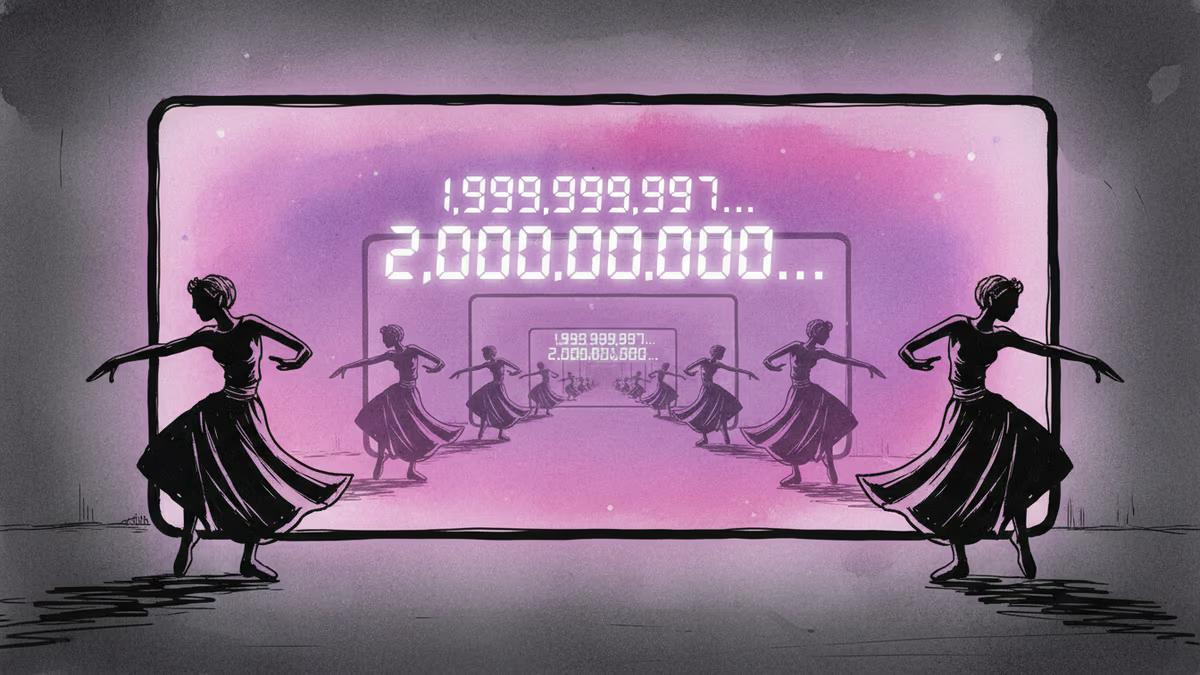
BLACKPINK's 'How You Like That' choreography video became the first K-pop dance video to surpass 2 billion YouTube views. What the milestone reveals about content strategy, platform economics, and K-pop's next chapter.
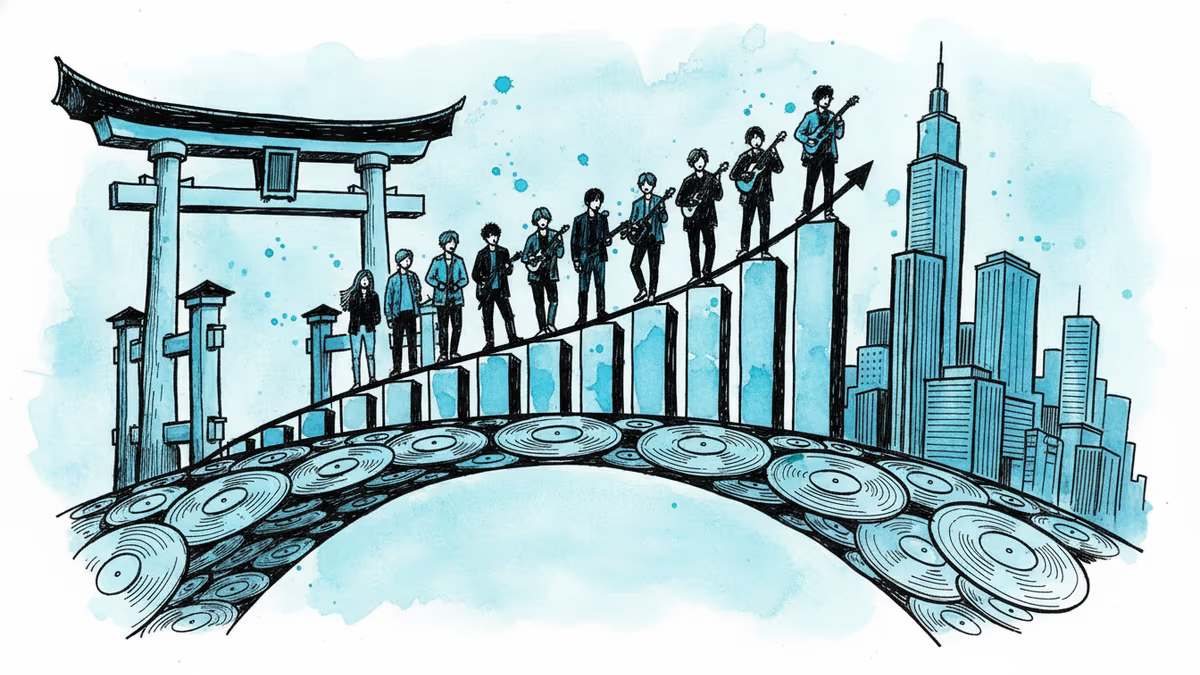
&TEAM's 'We on Fire' debuted on the Billboard 200 for the first time. Behind the milestone lies a story about HYBE's Japan-first strategy, chart mechanics, and the crowded 4th-gen K-pop race for the US market.

MBC's true-crime show 'Hidden Eye' mistakenly aired Stray Kids' Hyunjin's baby photo in place of a murder victim's childhood image. Five months later, an apology. What does that timeline reveal?
Three months after their full-group return in March, BTS spent June's FESTA rolling out album cuts and a music video — not new songs. Come Over cracked a global top 5 with zero new music behind it. Did the play work?
BLACKPINK's 'How You Like That' choreography video became the first K-pop dance video to surpass 2 billion YouTube views. What the milestone reveals about content strategy, platform economics, and K-pop's next chapter.
&TEAM's 'We on Fire' debuted on the Billboard 200 for the first time. Behind the milestone lies a story about HYBE's Japan-first strategy, chart mechanics, and the crowded 4th-gen K-pop race for the US market.
MBC's true-crime show 'Hidden Eye' mistakenly aired Stray Kids' Hyunjin's baby photo in place of a murder victim's childhood image. Five months later, an apology. What does that timeline reveal?
Thoughts
Share your thoughts on this article
Sign in to join the conversation