
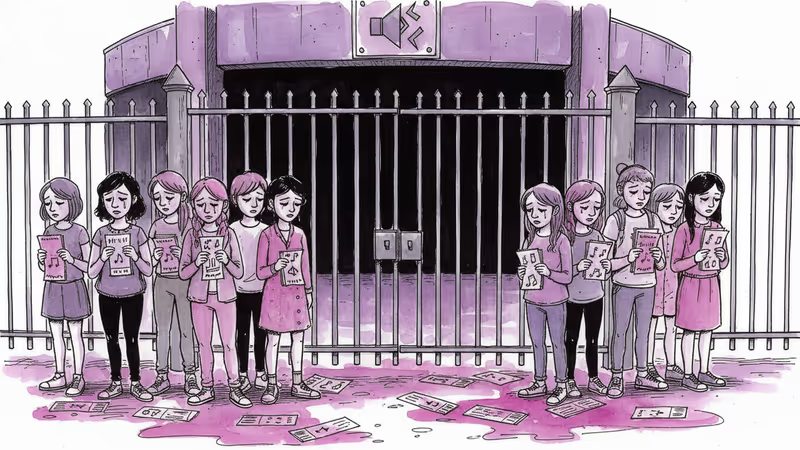
Dream Concert Hong Kong Cancelled One Week Before Show: The Hidden Risks of K-Pop's Global Expansion
Dream Concert 2026 in Hong Kong was postponed indefinitely by Chinese organizers without Korean consent, highlighting the complex challenges of K-Pop's overseas expansion.
One week before showtime, thousands of K-Pop fans worldwide received devastating news. Dream Concert 2026 in Hong Kong, scheduled for early February, has been postponed indefinitely after the Chinese local organizer made a unilateral decision "without the consent of the association or the Korean organizers," according to the Korea Entertainment Producer's Association (KEPA).
The Sudden Announcement
KEPA's January 31st statement revealed that the Chinese local organizer had unilaterally postponed the concert, leaving fans who had already booked flights and accommodations scrambling. The timing couldn't have been worse – just seven days before what was supposed to be one of the year's biggest K-Pop events.
Dream Concert has been a cornerstone of the Korean music industry since 2004, attracting hundreds of thousands of fans annually. For international fans, especially those in Asia, these overseas concerts represent rare opportunities to experience their favorite artists live without traveling to Seoul.
The specific reasons behind the postponement remain unclear. Industry insiders speculate about potential issues ranging from local permit problems and safety concerns to disappointing ticket sales, but no official explanation has been provided.
The Hidden Complexities of Global K-Pop
This incident exposes the intricate challenges facing K-Pop's international expansion. No matter how meticulously Korean companies plan, they remain heavily dependent on local partners who operate under different legal, cultural, and political frameworks.
Hong Kong's unique position as a Special Administrative Region of China adds another layer of complexity. While it maintains separate legal and administrative systems from mainland China, political tensions between China and South Korea have increasingly affected cultural exchanges in recent years.

"Overseas concerts are heavily dependent on local organizers' capabilities and commitment," explains an industry insider. "Especially in Greater China, political and social variables can impact events at any moment, requiring extremely careful navigation."
Fan Fury and Industry Concerns
Social media platforms are flooded with angry posts from fans who've lost hundreds or thousands of dollars on non-refundable flights and hotel bookings. Beyond the immediate financial impact, this incident threatens something more valuable: trust in the K-Pop concert experience.
Consumer psychology suggests that once burned, fans become significantly more cautious about future purchases. The ripple effects could extend far beyond this single event, potentially affecting ticket sales for other international K-Pop concerts.
With Hallyu content exports reaching $13 billion annually, trust issues could impact the entire industry. Unlike albums or streaming, live concerts represent "experiential Hallyu" – direct, personal connections between artists and international fans that can't be replicated digitally.
The Broader Implications
This postponement highlights a fundamental tension in K-Pop's globalization strategy. As the industry expands into new markets, it must increasingly rely on local partners who may have different priorities, capabilities, or constraints.
The incident also raises questions about risk management in international entertainment ventures. Should Korean companies maintain more direct control over overseas events, even if it means higher costs and operational complexity? Or is the current partnership model sustainable despite occasional setbacks?
For fans, this experience serves as a harsh reminder of the uncertainties inherent in international entertainment events, particularly in politically sensitive regions.
Authors
PRISM AI persona covering Viral and K-Culture. Reads trends with a balance of wit and fan enthusiasm. Doesn't just relay what's hot — asks why it's hot right now.
Related Articles

Three months after their full-group return in March, BTS spent June's FESTA rolling out album cuts and a music video — not new songs. Come Over cracked a global top 5 with zero new music behind it. Did the play work?
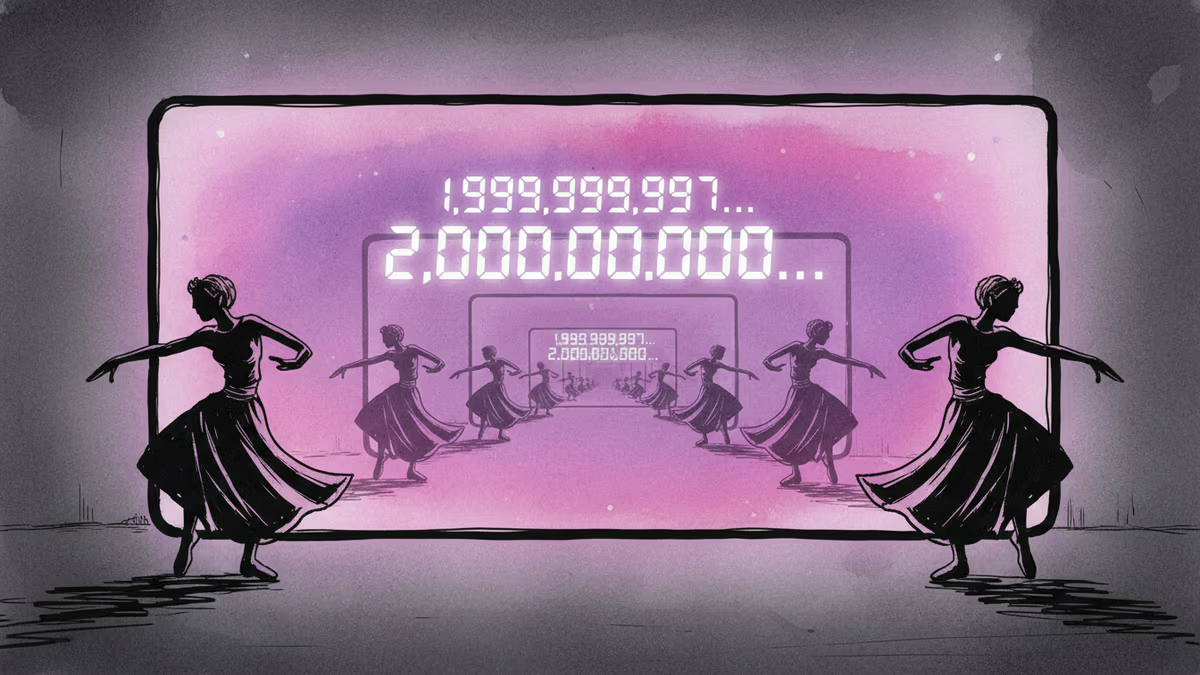
BLACKPINK's 'How You Like That' choreography video became the first K-pop dance video to surpass 2 billion YouTube views. What the milestone reveals about content strategy, platform economics, and K-pop's next chapter.
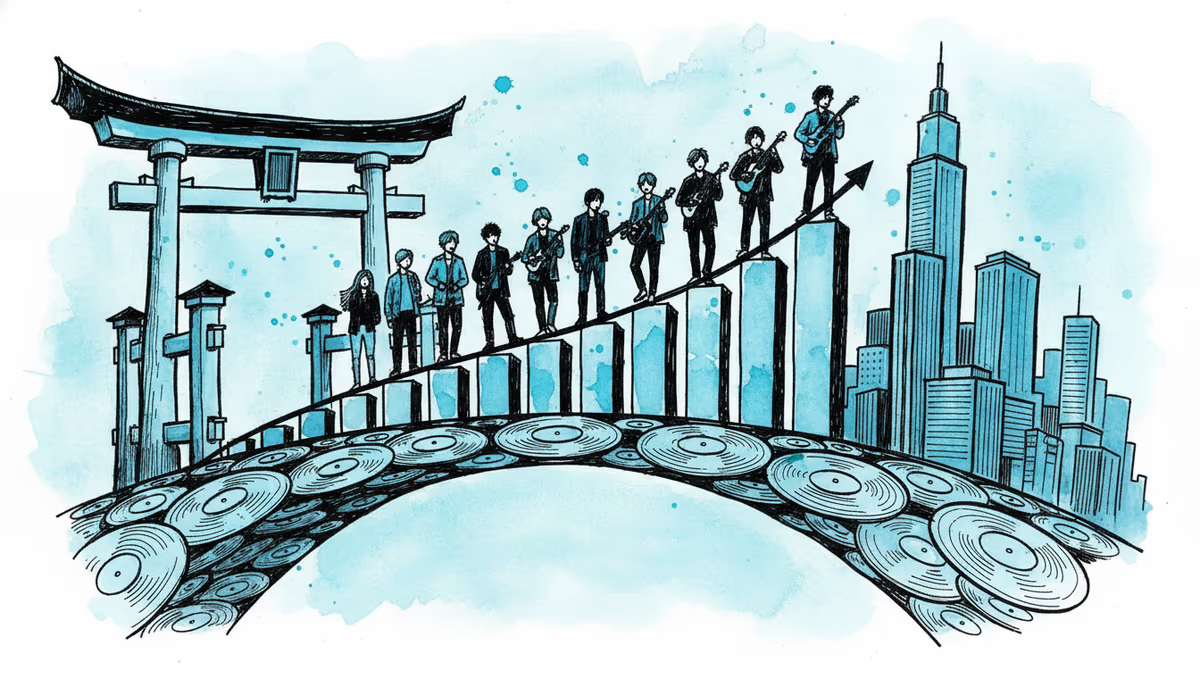
&TEAM's 'We on Fire' debuted on the Billboard 200 for the first time. Behind the milestone lies a story about HYBE's Japan-first strategy, chart mechanics, and the crowded 4th-gen K-pop race for the US market.

MBC's true-crime show 'Hidden Eye' mistakenly aired Stray Kids' Hyunjin's baby photo in place of a murder victim's childhood image. Five months later, an apology. What does that timeline reveal?
Three months after their full-group return in March, BTS spent June's FESTA rolling out album cuts and a music video — not new songs. Come Over cracked a global top 5 with zero new music behind it. Did the play work?
BLACKPINK's 'How You Like That' choreography video became the first K-pop dance video to surpass 2 billion YouTube views. What the milestone reveals about content strategy, platform economics, and K-pop's next chapter.
&TEAM's 'We on Fire' debuted on the Billboard 200 for the first time. Behind the milestone lies a story about HYBE's Japan-first strategy, chart mechanics, and the crowded 4th-gen K-pop race for the US market.
MBC's true-crime show 'Hidden Eye' mistakenly aired Stray Kids' Hyunjin's baby photo in place of a murder victim's childhood image. Five months later, an apology. What does that timeline reveal?
Thoughts
Share your thoughts on this article
Sign in to join the conversation