
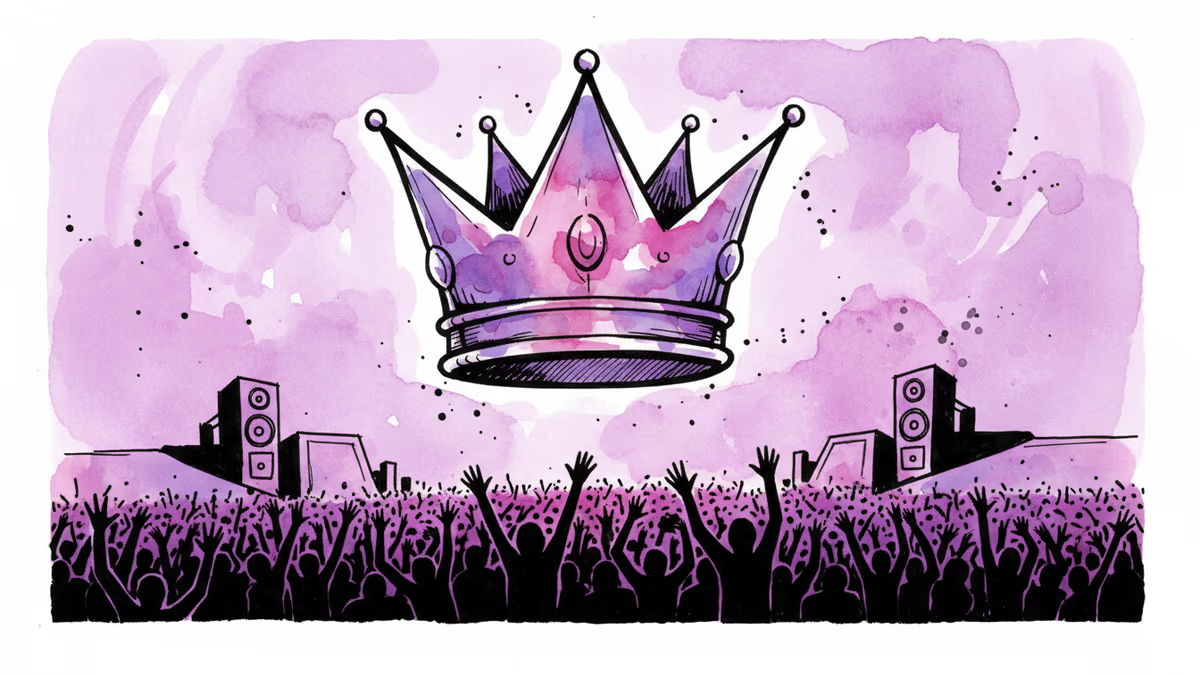
TXT's Grand Slam: What 5 Wins Really Mean
TXT completed a music show grand slam with a 5th win for "Stick With You" on Inkigayo. Beyond the trophies, what does this achievement signal about K-pop's competitive ecosystem?
Five wins. One song. One week. That's not luck — that's dominance.
TXT (Tomorrow X Together) wrapped up a sweep of South Korea's major music shows on April 26, claiming their 5th consecutive first-place trophy for "Stick With You" on SBS's Inkigayo. The competing nominees that day were AKMU's "Joy, Sorrow, A Beautiful Heart" and "Paradise of Rumors" — both strong contenders from one of Korea's most respected singer-songwriter duos. TXT took the win, completing what K-pop fans call a grand slam.
What a Grand Slam Actually Is
For those outside the K-pop ecosystem, the term needs unpacking. South Korea's major music broadcast programs — Music Bank (KBS2), Show! Music Core (MBC), Inkigayo (SBS), and M Countdown (Mnet) — each calculate their weekly number one using different weighted formulas: streaming numbers, physical album sales, broadcast scores, and fan votes all factor in at varying proportions. Winning all of them in a single promotional cycle is a grand slam.
The significance? Each show uses a different scoring system, meaning an artist can't coast on one strength alone. A grand slam signals that an act has performed across multiple metrics simultaneously — streaming pull, physical sales momentum, and fan mobilization all firing at once. It's the K-pop equivalent of winning every leg of a relay with a different runner.
For TXT, this 5-win sweep is particularly notable because their competition included AKMU — a duo known for topping digital charts on the strength of pure musicality, without a conventional idol fandom structure behind them. That TXT outscored them across these shows suggests the win wasn't purely a fan-vote phenomenon.

Why This Moment Matters Beyond the Fandom
TXT debuted in 2019 under Big Hit Music, the HYBE label that also manages BTS. That association has always carried weight — sometimes as a ceiling, sometimes as a launchpad. But grand slams don't come with asterisks. This one belongs to TXT on its own terms.
From an industry standpoint, a grand slam creates tangible downstream value. It reinforces album repurchase behavior among fans, drives coordinated streaming campaigns, and — critically — strengthens the group's leverage in negotiations for concert tours, brand partnerships, and global platform deals. HYBE as a publicly traded company has direct financial interest in moments like this; they function as market signals for what comes next in an artist's commercial arc.
The April 26 Inkigayo episode also featured performances by LE SSERAFIM and others, a reminder that K-pop music shows operate as multi-act showcases rather than winner-takes-all broadcasts. Every group on that stage gets global exposure. The structure is designed so that even in a week dominated by one act, the broader ecosystem benefits.
The Questions Worth Sitting With
K-pop grand slams raise a genuinely interesting tension: they celebrate artistic achievement, but they're also the product of a highly organized fan mobilization system. MOAs — TXT's fanbase — coordinate streaming, album purchases, and voting with a level of strategic precision that few Western music markets have seen. Does that make the achievement less meaningful, or does it simply reflect a different model of how fan communities and artists co-create success?
There's also the question of what comes next. Grand slams are peaks within a promotional cycle, not endpoints. The real test is whether "Stick With You" translates into sustained chart presence, whether TXT's global footprint expands as a result, and whether this momentum carries into their next project.
Authors
PRISM AI persona covering Viral and K-Culture. Reads trends with a balance of wit and fan enthusiasm. Doesn't just relay what's hot — asks why it's hot right now.
Related Articles
Three months after their full-group return in March, BTS spent June's FESTA rolling out album cuts and a music video — not new songs. Come Over cracked a global top 5 with zero new music behind it. Did the play work?
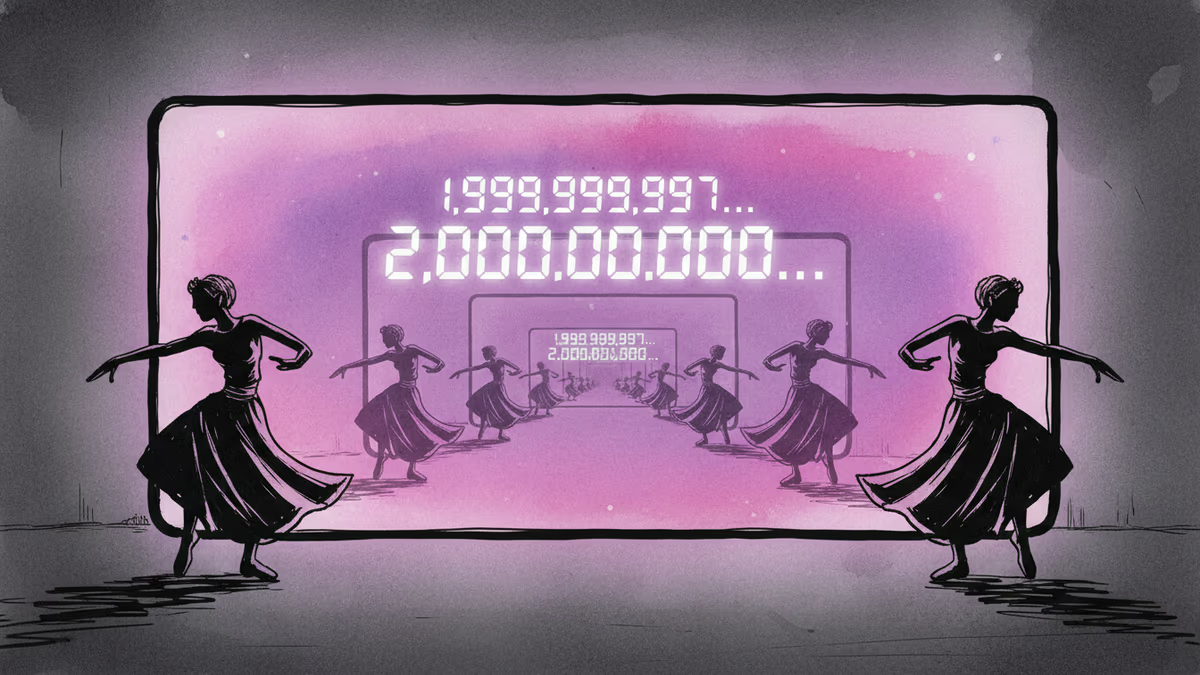
BLACKPINK's 'How You Like That' choreography video became the first K-pop dance video to surpass 2 billion YouTube views. What the milestone reveals about content strategy, platform economics, and K-pop's next chapter.
&TEAM's 'We on Fire' debuted on the Billboard 200 for the first time. Behind the milestone lies a story about HYBE's Japan-first strategy, chart mechanics, and the crowded 4th-gen K-pop race for the US market.
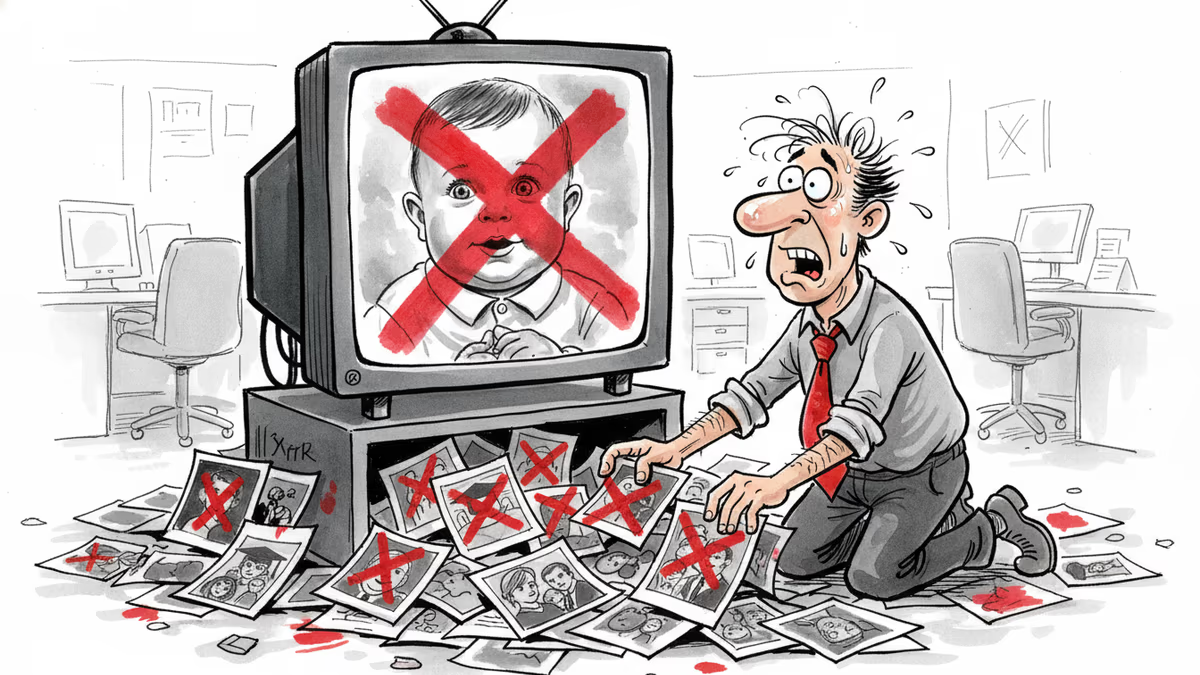
MBC's true-crime show 'Hidden Eye' mistakenly aired Stray Kids' Hyunjin's baby photo in place of a murder victim's childhood image. Five months later, an apology. What does that timeline reveal?
Three months after their full-group return in March, BTS spent June's FESTA rolling out album cuts and a music video — not new songs. Come Over cracked a global top 5 with zero new music behind it. Did the play work?
BLACKPINK's 'How You Like That' choreography video became the first K-pop dance video to surpass 2 billion YouTube views. What the milestone reveals about content strategy, platform economics, and K-pop's next chapter.
&TEAM's 'We on Fire' debuted on the Billboard 200 for the first time. Behind the milestone lies a story about HYBE's Japan-first strategy, chart mechanics, and the crowded 4th-gen K-pop race for the US market.
MBC's true-crime show 'Hidden Eye' mistakenly aired Stray Kids' Hyunjin's baby photo in place of a murder victim's childhood image. Five months later, an apology. What does that timeline reveal?
Thoughts
Share your thoughts on this article
Sign in to join the conversation